Feeds:
Entradas
Comentarios

Archive for the ‘Imperialismo norteamericano’ Category

The Two Faces of Empire 
Melville Knew Them, We Still Live With Them 
By Greg Grandin

TomDispatch.com   January 26, 2014

A captain ready to drive himself and all around him to ruin in the hunt for a white whale. It’s a well-known story, and over the years, mad Ahab in Herman Melville’s most famous novel, Moby-Dick, has been used as an exemplar of unhinged American power, most recently of George W. Bush’s disastrous invasion of Iraq.

But what’s really frightening isn’t our Ahabs, the hawks who periodically want to bomb some poor country, be it Vietnam or Afghanistan, back to the Stone Age.  The respectable types are the true “terror of our age,” as Noam Chomsky called them collectively nearly 50 years ago.  The really scary characters are our soberest politiciansscholarsjournalistsprofessionals, andmanagers, men and women (though mostly men) who imagine themselves asmorally serious, and then enable the wars, devastate the planet, and rationalize the atrocities.  They are a type that has been with us for a long time.  More than a century and a half ago, Melville, who had a captain for every face of empire, found their perfect expression — for his moment and ours.

For the last six years, I’ve been researching the life of an American seal killer, a ship captain named Amasa Delano who, in the 1790s, was among the earliest New Englanders to sail into the South Pacific.  Money was flush, seals were many, and Delano and his fellow ship captains established the first unofficial U.S. colonies on islands off the coast of Chile.  They operated under an informal council of captains, divvied up territory, enforced debt contracts, celebrated the Fourth of July, and set up ad hoc courts of law.  When no bible was available, the collected works of William Shakespeare, found in the libraries of most ships, were used to swear oaths.

From his first expedition, Delano took hundreds of thousands of sealskins to China, where he traded them for spices, ceramics, and tea to bring back to Boston.  During a second, failed voyage, however, an event took place that would make Amasa notorious — at least among the readers of the fiction of Herman Melville.

Here’s what happened: One day in February 1805 in the South Pacific, Amasa Delano spent nearly a full day on board a battered Spanish slave ship, conversing with its captain, helping with repairs, and distributing food and water to its thirsty and starving voyagers, a handful of Spaniards and about 70 West African men and women he thought were slaves. They weren’t.

Those West Africans had rebelled weeks earlier, killing most of the Spanish crew, along with the slaver taking them to Peru to be sold, and demanded to be returned to Senegal.  When they spotted Delano’s ship, they came up with a plan: let him board and act as if they were still slaves, buying time to seize the sealer’s vessel and supplies.  Remarkably, for nine hours, Delano, an experienced mariner and distant relative of future president Franklin Delano Roosevelt, was convinced that he was on a distressed but otherwise normally functioning slave ship.

Having barely survived the encounter, he wrote about the experience in his memoir, which Melville read and turned into what many consider his “other” masterpiece.  Published in 1855, on the eve of the Civil War, Benito Cereno is one of the darkest stories in American literature.  It’s told from the perspective of Amasa Delano as he wanders lost through a shadow world of his own racial prejudices.

One of the things that attracted Melville to the historical Amasa was undoubtedly the juxtaposition between his cheerful self-regard — he considers himself a modern man, a liberal opposed to slavery — and his complete obliviousness to the social world around him.  The real Amasa was well meaning, judicious, temperate, and modest.

In other words, he was no Ahab, whose vengeful pursuit of a metaphysical whale has been used as an allegory for every American excess, every catastrophic war, every disastrous environmental policy, from Vietnam and Iraq to the explosion of the BP oil rig in the Gulf of Mexico in 2010.

Ahab, whose peg-legged pacing of the quarterdeck of his doomed ship enters the dreams of his men sleeping below like the “crunching teeth of sharks.”  Ahab, whose monomania is an extension of the individualism born out of American expansion and whose rage is that of an ego that refuses to be limited by nature’s frontier.  “Our Ahab,” as a soldier in Oliver Stone’s moviePlatoon calls a ruthless sergeant who senselessly murders innocent Vietnamese.

Ahab is certainly one face of American power. In the course of writing a book on the history that inspired Benito Cereno, I’ve come to think of it as not the most frightening — or even the most destructive of American faces.  Consider Amasa.

Killing Seals

Since the end of the Cold War, extractive capitalism has spread over our post-industrialized world with a predatory force that would shock even Karl Marx.  From the mineral-rich Congo to the open-pit gold mines of Guatemala, from Chile’s until recently pristine Patagonia to the fracking fields of Pennsylvania and the melting Arctic north, there is no crevice where some useful rock, liquid, or gas can hide, no jungle forbidden enough to keep out the oil rigs and elephant killers, no citadel-like glacier, no hard-baked shale that can’t be cracked open, no ocean that can’t be poisoned.

And Amasa was there at the beginning.  Seal fur may not have been the world’s first valuable natural resource, but sealing represented one of young America’s first experiences of boom-and-bust resource extraction beyond its borders.

With increasing frequency starting in the early 1790s and then in a mad rush beginning in 1798, ships left New Haven, Norwich, Stonington, New London, and Boston, heading for the great half-moon archipelago of remote islands running from Argentina in the Atlantic to Chile in the Pacific.  They were on the hunt for the fur seal, which wears a layer of velvety down like an undergarment just below an outer coat of stiff gray-black hair.

In Moby-Dick, Melville portrayed whaling as the American industry.  Brutal and bloody but also humanizing, work on a whale ship required intense coordination and camaraderie.  Out of the gruesomeness of the hunt, the peeling of the whale’s skin from its carcass, and the hellish boil of the blubber or fat, something sublime emerged: human solidarity among the workers.  And like the whale oil that lit the lamps of the world, divinity itself glowed from the labor: “Thou shalt see it shining in the arm that wields a pick or drives a spike; that democratic dignity which, on all hands, radiates without end from God.”

Sealing was something else entirely.  It called to mind not industrial democracy but the isolation and violence of conquest, settler colonialism, and warfare.  Whaling took place in a watery commons open to all.  Sealing took place on land.  Sealers seized territory, fought one another to keep it, and pulled out what wealth they could as fast as they could before abandoning their empty and wasted island claims.  The process pitted desperate sailors against equally desperate officers in as all-or-nothing a system of labor relations as can be imagined.

In other words, whaling may have represented the promethean power of proto-industrialism, with all the good (solidarity, interconnectedness, and democracy) and bad (the exploitation of men and nature) that went with it, but sealing better predicted today’s postindustrial extracted, hunted, drilled, fracked, hot, and strip-mined world.

Seals were killed by the millions and with a shocking casualness.  A group of sealers would get between the water and the rookeries and simply start clubbing.  A single seal makes a noise like a cow or a dog, but tens of thousands of them together, so witnesses testified, sound like a Pacific cyclone.  Once we “began the work of death,” one sealer remembered, “the battle caused me considerable terror.”

South Pacific beaches came to look like Dante’s Inferno.  As the clubbing proceeded, mountains of skinned, reeking carcasses piled up and the sands ran red with torrents of blood.  The killing was unceasing, continuing into the night by the light of bonfires kindled with the corpses of seals and penguins.

And keep in mind that this massive kill-off took place not for something like whale oil, used by all for light and fire.  Seal fur was harvested to warm the wealthy and meet a demand created by a new phase of capitalism: conspicuous consumption.  Pelts were used for ladies’ capes, coats, muffs, and mittens, and gentlemen’s waistcoats.  The fur of baby pups wasn’t much valued, so some beaches were simply turned into seal orphanages, with thousands of newborns left to starve to death.  In a pinch though, their downy fur, too, could be used — to make wallets.

Occasionally, elephant seals would be taken for their oil in an even more horrific manner: when they opened their mouths to bellow, their hunters would toss rocks in and then begin to stab them with long lances.  Pierced in multiple places like Saint Sebastian, the animals’ high-pressured circulatory system gushed “fountains of blood, spouting to a considerable distance.”

At first the frenetic pace of the killing didn’t matter: there were so many seals.  On one island alone, Amasa Delano estimated, there were “two to three millions of them” when New Englanders first arrived to make “a business of killing seals.”

“If many of them were killed in a night,” wrote one observer, “they would not be missed in the morning.”  It did indeed seem as if you could kill every one in sight one day, then start afresh the next.  Within just a few years, though, Amasa and his fellow sealers had taken so many seal skins to China that Canton’s warehouses couldn’t hold them.  They began to pile up on the docks, rotting in the rain, and their market price crashed.

To make up the margin, sealers further accelerated the pace of the killing — until there was nothing left to kill.  In this way, oversupply and extinction went hand in hand.  In the process, cooperation among sealers gave way to bloody battles over thinning rookeries.  Previously, it only took a few weeks and a handful of men to fill a ship’s hold with skins.  As those rookeries began to disappear, however, more and more men were needed to find and kill the required number of seals and they were often left on desolate islands for two- or three-year stretches, living alone in miserable huts in dreary weather, wondering if their ships were ever going to return for them.

“On island after island, coast after coast,” one historian wrote, “the seals had been destroyed to the last available pup, on the supposition that if sealer Tom did not kill every seal in sight, sealer Dick or sealer Harry would not be so squeamish.”  By 1804, on the very island where Amasa estimated that there had been millions of seals, there were more sailors than prey.  Two years later, there were no seals at all.

The Machinery of Civilization

There exists a near perfect inverse symmetry between the real Amasa and the fictional Ahab, with each representing a face of the American Empire.  Amasa is virtuous, Ahab vengeful.  Amasa seems trapped by the shallowness of his perception of the world.  Ahab is profound; he peers into the depths.  Amasa can’t see evil (especially his own). Ahab sees only nature’s “intangible malignity.”

Both are representatives of the most predatory industries of their day, their ships carrying what Delano once called the “machinery of civilization” to the Pacific, using steel, iron, and fire to kill animals and transform their corpses into value on the spot.

Yet Ahab is the exception, a rebel who hunts his white whale against all rational economic logic.  He has hijacked the “machinery” that his ship represents and rioted against “civilization.”  He pursues his quixotic chase in violation of the contract he has with his employers.  When his first mate, Starbuck, insists that his obsession will hurt the profits of the ship’s owners, Ahab dismisses the concern: “Let the owners stand on Nantucket beach and outyell the Typhoons. What cares Ahab?  Owners, Owners?  Thou art always prating to me, Starbuck, about those miserly owners, as if the owners were my conscience.”

Insurgents like Ahab, however dangerous to the people around them, are not the primary drivers of destruction.  They are not the ones who will hunt animals to near extinction — or who are today forcing the world to the brink.  Those would be the men who never dissent, who either at the frontlines of extraction or in the corporate backrooms administer the destruction of the planet, day in, day out, inexorably, unsensationally without notice, their actions controlled by an ever greater series of financial abstractions and calculations made in the stock exchanges of New York, London, and Shanghai.

If Ahab is still the exception, Delano is still the rule.  Throughout his long memoir, he reveals himself as ever faithful to the customs and institutions of maritime law, unwilling to take any action that would injure the interests of his investors and insurers.  “All bad consequences,” he wrote, describing the importance of protecting property rights, “may be avoided by one who has a knowledge of his duty, and is disposed faithfully to obey its dictates.”

It is in Delano’s reaction to the West African rebels, once he finally realizes he has been the target of an elaborately staged con, that the distinction separating the sealer from the whaler becomes clear.  The mesmeric Ahab — the “thunder-cloven old oak” — has been taken as a prototype of the twentieth-century totalitarian, a one-legged Hitler or Stalin who uses an emotional magnetism to convince his men to willingly follow him on his doomed hunt for Moby Dick.

Delano is not a demagogue.  His authority is rooted in a much more common form of power: the control of labor and the conversion of diminishing natural resources into marketable items.  As seals disappeared, however, so too did his authority.  His men first began to grouse and then conspire.  In turn, Delano had to rely ever more on physical punishment, on floggings even for the most minor of offences, to maintain control of his ship — until, that is, he came across the Spanish slaver.  Delano might have been personally opposed to slavery, yet once he realized he had been played for a fool, he organized his men to retake the slave ship and violently pacify the rebels.  In the process, they disemboweled some of the rebels and left them writhing in their viscera, using their sealing lances, which Delano described as “exceedingly sharp and as bright as a gentleman’s sword.”

Caught in the pincers of supply and demand, trapped in the vortex of ecological exhaustion, with no seals left to kill, no money to be made, and his own crew on the brink of mutiny, Delano rallied his men to the chase — not of a white whale but of black rebels.  In the process, he reestablished his fraying authority.  As for the surviving rebels, Delano re-enslaved them.  Propriety, of course, meant returning them and the ship to its owners.

Our Amasas, Ourselves

With Ahab, Melville looked to the past, basing his obsessed captain on Lucifer, the fallen angel in revolt against the heavens, and associating him with America’s “manifest destiny,” with the nation’s restless drive beyond its borders.  With Amasa, Melville glimpsed the future.  Drawing on the memoirs of a real captain, he created a new literary archetype, a moral man sure of his righteousness yet unable to link cause to effect, oblivious to the consequences of his actions even as he careens toward catastrophe.

They are still with us, our Amasas.  They have knowledge of their duty and are disposed faithfully to follow its dictates, even unto the ends of the Earth.

TomDispatch regular Greg Grandin’s new book, The Empire of Necessity:  Slavery, Freedom, and Deception in the New World, has just been published. 

Read Full Post »

An index to more than 10 million New York City birth, marriage and death records from 1866 to 1948 is available free online thanks to a collaboration between the city’s Department of Records and Ancestry.com.

While access to the index is free, the documents themselves must be purchased from the city.

“When researching the American side of your family history, the likelihood of an ancestor either living in New York City or immigrating through it is very high,” said Todd Godfrey, director of content acquisition at Ancestry.com.

“We are pleased to have teamed up with Ancestry.com in making this easily searchable index of New York City’s vital records available online for free,” said Eileen Flannelly, commissioner of the city’s Records Department. The indexes were created by volunteers from the Italian Genealogical Group and the German Genealogy Group, Ms. Flannelly said.

The index can be found here. (This is a different, better link than the one originally published here.)

Read Full Post »

Read Full Post »

Read Full Post »

hnn-logo-new


Herbert Hoover´s Crusade Against Collectivism

HNN ❘ December 23, 2013

Note by the book’s editor: This introduction is adapted from The Crusade Years, 1933-1955: Herbert Hoover’s Lost Memoir of the New Deal Era and Its Aftermath, edited and with an introduction by George H. Nash, excerpt below (Hoover Institution Press, 2013).

On a cool October morning in 1964, Herbert Hoover died in New York City at the age of ninety. He had lived a phenomenally productive life, including more than half a century in one form or another of public service. It was a record that in sheer scope and duration may be without parallel in American history.

His life had begun in humble circumstances in 1874 in a little Iowa farming community as the son of the village blacksmith. Orphaned before he was ten, he managed to enter Stanford University when it opened its doors in 1891. Four years later he graduated with a degree in geology and a determination to become a mining engineer.

154275-Herbert_Hoover

Image via Wiki Commons.

From then on, Hoover’s rise in the world was meteoric. By 1914, at the age of forty, he was an internationally acclaimed and extraordinarily successful mining engineer who had traveled around the world five times and had business interests on every continent except Antarctica.

During World War I, Hoover, residing in London, rose to prominence as the founder and director of the Commission for Relief in Belgium, an institution that provided desperately needed food supplies to more than nine million Belgian and French citizens trapped between the German army of occupation and the British naval blockade. His emergency relief mission in 1914 quickly evolved into a gigantic humanitarian enterprise without precedent in world history. By 1917 he was an international hero, the embodiment of a new force in global politics: American benevolence.

When America declared war on Germany in 1917, Hoover returned home and became head of the United States Food Administration, a specially created wartime agency of the federal government. At the conflict’s victorious close in 1918, President Woodrow Wilson dispatched him to Europe to organize food distribution to a continent careening toward disaster. There, for ten grueling months, he directed American- led efforts to combat famine and disease, establish stable postwar economies, and in the process check the advance of Bolshevik revolution from the East.

A little later, between 1921 and 1923, Hoover’s American Relief Administration administered a massive emergency relief operation in the interior of Soviet Russia, where a catastrophic famine — Europe’s worst since the Middle Ages — had broken out. At its peak of operations, his organization fed upward of ten million Russian citizens a day.

All in all, between 1914 and 1923 the American-born engineer-turned-humanitarian directed, financed, or assisted a multitude of international relief endeavors without parallel in the history of mankind. It was later said of him that he was responsible for saving more lives than any other person in history.

During the Roaring Twenties Hoover ascended still higher on the ladder of public esteem. As secretary of commerce under Presidents Warren Harding and Calvin Coolidge, he became one of the three or four most influential men in the U.S. government. In 1928, the “master of emergencies” (as admirers called him) was elected president of the United States in a landslide — without ever having held an elective public office.

Then came the crash of 1929 and the most severe economic trauma this nation has ever experienced. During his tormented presidency, Hoover strained without stint to return his country to prosperity while safeguarding its political moorings. His labors — even now misunderstood — seemed unavailing, and in the election of 1932 his fellow citizens’ verdict was harsh.

Before his single term as chief executive, Hoover’s career trajectory had curved unbrokenly upward. Now it headed pitifully down. “Democracy is not a polite employer,” he later wrote of his defeat at the polls. On March 4, 1933, he left office a virtual pariah, maligned and hated like no other American in his lifetime.

And then, astonishingly, like a phoenix, he slowly rose from the ashes of his political immolation. Now came the final phase of Hoover’s career: his remarkable ex-presidency. For the next thirty-one and one-half years, in fair political weather and foul, the former chief executive became, in his self-image, a crusader — a tireless and very visible castigator of the dominant political trends of his day. He behaved as a committed ideological warrior more persistently and more fervently than any other former president in our history.

Why? Most of all, it was because Hoover perceived in the New Deal of Franklin Roosevelt not a moderate and pragmatic response to economic distress but something more sinister: a revolutionary transformation in America’s political economy and constitutional order. Having espied the unpalatable future, Hoover could not bring himself to acquiesce.

It is this eventful period in Hoover’s career — and, more specifically, his life as a political pugilist from 1933 to 1955 — that is the main subject of the volume before you. The Crusade Years is a previously unknown memoir that Hoover composed and revised during the 1940s and 1950s — and then, surprisingly, set aside. Placed in storage by his heirs aft er his death, the manuscript (in its various versions) lay sequestered — its existence unsuspected by scholars — until 2009, when it was discovered among the files of another hitherto inaccessible Hoover manuscript being readied for posthumous publication.

This other tome, known informally as the Magnum Opus, addressed American foreign policy in the 1930s and 1940s. Part memoir, part diplomatic history, part polemic, it was a scathing indictment of what Hoover termed Franklin Roosevelt’s “lost statesmanship” during World War II. Hoover ultimately titled the book Freedom Betrayed. It was published in 2011 by the Hoover Institution Press.

The Crusade Years — a companion volume of sorts to the Magnum Opus — covers much the same time period on the American home front. More fully a memoir than Freedom Betrayed, it recounts Hoover’s family life aft er March 4, 1933, his myriad philanthropic interests, and, most of all, his unrelenting “crusade against collectivism” in American life. Rescued from obscurity, this nearly forgotten manuscript is published here — and its contents made available to scholars — for the first time.
– See more at: http://hnn.us/article/154275#sthash.PEOcGduq.dpuf

Read Full Post »

by Joan Brumberg
HNN  December 16, 2013
This type of studio portrait is as American as the diaries of adolescent girls or pictures of girls with dolls and horses. This is a classic American icon: a pretty little boy with ringlets who looks to us like a girl  but his gender is marked by giving him a gun. Commercial portraits like these are commonplace. You can find them at garage and junk sales and, of course, on eBay by the hundreds.

Endorsed and paid for by proud American parents, the studio set ups illustrate how longstanding the American love affair with the gun has been. Taking affectionate pictures of boys with guns — to mark a first hunt, a birthday, or at Christmas — was part of the process of recording a son’s development. Many contemporary families have snapshots of boys with toy shot guns and rifles next to the family Christmas tree or car.

In the nineteenth century, many boys grew up learning that the ability to shoot to secure food was central to the adult male role. As they aged, boys got careful instruction on the use of guns from fathers and uncles and, in the twentieth century, as food sourcing changed, from pamphlets and books, frequently provided by the National Rifle Association.

But some boys, like Charley Miller, an adolescent murderer in the 1890s whom I have written about, purchased cheap hand guns in a show of braggadocio and then used them to kill. Standing around in a studio posed with guns and cigars was a playful show of maturity for youth whose stage of life was characterized, then as now, by emotional volatility. As the twentieth century progressed, snapshots replaced studio portraits and thousands of young boys posed in mass-produced cowboy outfits — duded up — like Western gunslinger stories and films. In peace and in war, those close to draft age displayed real weapons in postures that were less playful and more aggressive.

The level of male violence we live with today should not shock a nation where pictures like these are endemic. The archives of American social history provide little comfort for those of us anxious to sever the connection between boys and guns. We may be working against the grain, but it is worth it.

Jacobs Brumberg is author of Kansas Charley: The Boy Murderer, now available as an ebook. She is an emeritus professor of history at Cornell University and author of The Body Project: An Intimate History of American Girls and Fasting Girls:The History of Anorexia Nervosa.

– See more at: http://hnn.us/article/154231#sthash.CmREOYHu.dpuf

Read Full Post »

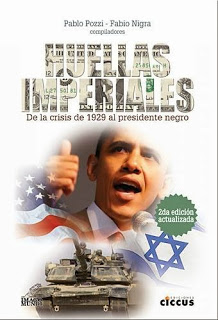
huellasLa editorial Imago Mundi anuncia la publicación de la segunda edición del libro Huellas imperiales de la crisis de 1929 al presidente negro. Compilado por los doctores Pablo Pozzi y Fabio Nigra, esta nueva edición de Huellas imperiales repite muchos de los ensayos de la primera edición, pero acompañados de nuevos trabajos. Éstos no sólo ponen al día al libro al examinar la presidencia de Obama, sino que también examinan temas como la cultura consumista, los campos de internamiento durante la segunda guerra mundial, la teocracia y nacionalismo, el Partido Comunista norteamericano, el racismo y raza y el lobby israelí en Estados Unidos. Sin lugar, este libro está destinado a convertirse en una herramienta muy útil para la enseñanza de la historia estadounidense en el mundo hispano parlante.

Norberto Barreto Velázquez, PhD

Lima, 10 de diciembre de 2013

Read Full Post »

HNN  December 2, 2013
Image via Wiki Commons.

“The Majesty of the People had disappeared,” Washington, D.C., gossip Margaret Bayard Smith wrote disapprovingly, replaced by “a rabble, a mob, of boys, negros, women, children, scrambling, fighting, romping.” Smith was not describing a riot in the nation’s capital but the inaugural festivities of President Andrew Jackson in March 1829. What else would one expect of the common man’s president, an uneducated western frontiersman who only escaped his supporters’ enthusiasm on Inaugural Day by crawling out of a window?

That image of Jackson, which continues to resonate in American culture, needs refining. By the time he became president, Jackson was hardly the country bumpkin that his critics believed him to be. Instead, he was a wealthy southern planter who owned nearly 100 slaves who lived on a large estate called the Hermitage just outside of Nashville, Tennessee, where Jackson also housed a stable of racehorses. In today’s terms, he would have been a multimillionaire candidate entering the White House.

The traditional narrative of Jackson’s life — a commoner who worked hard to lift himself into the presidency — is hardly a new one. Ever since his victory in 1828, presidential campaigns have employed this trope as a signal that their candidate understands the average American. One need only look at a few examples to see that this tactic has been used by the presidents whom Americans consider their greatest (the rail-splitting, self-taught lawyer Abraham Lincoln), as well as those in recent decades (the simple Georgia peanut farmer Jimmy Carter and Texas everyman George W. Bush). Even Barack Obama can rightly claim to have overcome the challenges faced as the child in a single-parent household. Americans want to believe that their presidents comprehend the struggles that they face, that their backgrounds assure their understanding of a democratic society in which every voice matters.

The reality, of course, is that each of the above-named men possessed advantages that enabled them to win the presidency. Lincoln was a successful lawyer working railroad contracts when he ran in 1860. According to his biographer, David H. Donald, Lincoln hated physical labor. Carter’s background as peanut farmer called up images of him walking onto the campaign trail having just finished working in a straw hat in the hot Georgia sun; in actuality, Carter had turned his father’s farm into a profitable corporation. Both Bush and Obama were products of Ivy League institutions, with Bush having the added advantage of a grandfather who served in the U.S. Senate and a father who served as U.S. president. All of these men also had business, political, and social networks that allowed them the opportunity to vie for the presidency. In other words, none of them were self-made men.

The same was true of Andrew Jackson, whose ascension to elite status began long before he reached the presidency. During the years prior to his move to Tennessee, he was exposed to various examples of southern gentlemen. Jackson grew up in an area along the North Carolina-South Carolina border called the Waxhaws. While his immediate family was not well-off, members of Jackson’s extended family living in the area owned significant land acreage and several slaves. Both gave them social status in the community. When Jackson moved to Charleston as a teenager, he witnessed the lives of southern gentlemen in an urban setting. As a port city, Charleston served as a center of news, commerce, and trade; during his time there, Jackson could not help but see the importance of social networking and slavery in creating a gentry lifestyle. His decision to read law indicated his realization that the legal profession carried with it a mark of success. During his time as a law student in North Carolina, Jackson also became more aware of the centrality of kinship networks to social advancement. His peers were young men connected, by blood or friendship, to some of the wealthiest and most important state leaders. Indeed, it was a member of Jackson’s own network who gave him the appointment that brought him to Middle Tennessee.

Jackson was already regarded as an elite gentleman before he stepped foot in the Nashville settlement, however. His elevated status is clear for two reasons. First, he purchased his first slave, a woman by the name of Nancy, during a months-long stay in the East Tennessee town of Jonesboro. Jackson’s lack of a permanent residence suggests that Nancy’s purchase was not for utilitarian purposes but to indicate a lifestyle of prosperity. Second, Jackson engaged in a duel with an older, prominent attorney, Waightstill Avery. Their dispute centered on a court case, which led Jackson to challenge his courtroom opponent to a deadlier contest. The duel did not result in injury for either party, but it still proved important for the messages that it sent about Jackson. In southern culture, only elite white men could participate in duels. That Jackson felt secure enough in his social position to issue the challenge, and that Avery answered his challenge, indicated Jackson’s own sense of standing and the community’s recognition of his rank.

Jackson’s entrée into elite southern society is often traced to his marriage into the Donelson family, whose patriarch had been one of Nashville’s co-founders. In reality, Jackson was already part of the gentry class, but his decision to marry Rachel Donelson Robards furthered his advancement. The Donelson kinship network gave Jackson access to businessmen and politicians who helped him become a land speculator, a U.S. congressman, judge, and militia general. He used the financial advantages that accrued to him to begin establishing the agricultural enterprise that culminated in his Hermitage plantation.

Jackson’s military career only solidified and enhanced his social status. His generalship helped push Native American tribes off of millions of acres of land in the South and defeat the mighty British army at New Orleans. But as important as those exploits were to his political career, the war brought other benefits. His kinship network expanded to include members of the military who served with him, soldiers such as John Eaton and William B. Lewis. These men were well-connected in their own right and provided their military superior with access to money and influence that would have escaped him otherwise. The land that Jackson and his men seized from Indians, both during and after the war, also proved a source of profitability. Jackson speculated in Alabama and Florida lands, buying cheap and, in the case of Alabama, establishing farms to supplement the revenue generate at his main landholdings in Middle Tennessee.

The Jackson that Margaret Bayard Smith and other Washingtonians decried in 1829 existed merely as a symbol. Old Hickory was not as refined as the Adamses who served as chief executive, nor as aristocratic as the Virginia presidents. But neither was he the vulgar leader of “raving Democracy” that inaugurated the “reign of KING MOB,” as contemporaries observed. Andrew Jackson was a man who had taken advantage of hard work, networking, and a little bit of luck to become a successful member of elite southern society. While he embraced his symbolism as the champion of the common man, Jackson also lived the life of a southern gentleman until his death in June 1845. Ignoring that southern identity misses the complexity of the president with whom the flourishing of American democracy has been most closely associated.

Mark R. Cheathem is Associate Professor of History at Cumberland University. He is the author of Andrew Jackson, Southerner and blogs at http://jacksonianamerica.com/blog/.

– See more at: http://hnn.us/article/154093#sthash.cX9c4Vsf.dpuf

Read Full Post »

 
El pais  29 de noviembre de 2013
1385571900_190267_1385657190_noticia_normal

Raquel Marín

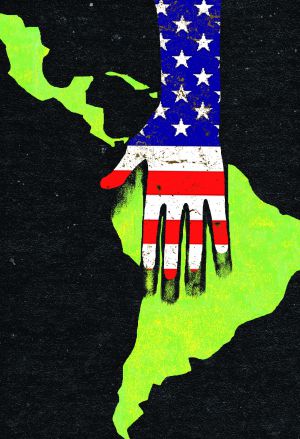
Recientemente, el secretario de Estado de Estados Unidos, John Kerry, proclamó lo que en los hechos ya resultaba evidente a mediados de la década pasada: el ocaso de la doctrina Monroe.Un conjunto de factores estructurales de diversa índole, de tendencias globales y regionales y de transformaciones de envergadura en muchos países del continente —incluido, por supuesto, EE UU— fueron confirmando los límites y los costes de la diplomacia coercitiva, de la capacidad de Washington de intervenir unilateralmente en los asuntos internos de América Latina y de lograr, sin consultar a nadie, la satisfacción de sus principales objetivos en el área.

Quizás de modo un tanto ingenuo, algunos observadores en la región detectaron en las palabras de Kerry una nueva vocación de aislacionismo de Estados Unidos respecto a Latinoamérica. Con escasa base empírica, hubo otros que percibieron que el gesto de Kerry era la constatación de que Estados Unidos ya se había “ido” de América Latina. La consecuencia natural de esas dos lecturas fue enseguida una sola: bye bye Monroe, adiós Estados Unidos.

Probablemente resulte más preciso reconocer que el fin de la doctrina Monroe no implica el “retiro” o el “olvido” de Estados Unidos con relación a América Latina. Es posible que resulte útil comenzar a hablar de la doctrina Troilo como una suerte de sustituto simbólico a propósito de las relaciones interamericanas. Aníbal Troilo no fue un político latinoamericano, sino uno de los más grandes bandoneonistas argentinos. Nocturno a mi barrio fue una composición suya especial: no solo la escribió en 1968, sino que fue la única que interpretó en 1972. Su letra viene al caso. En aquel soberbio tango, Troilo decía: “Alguien dijo una vez que yo me fui de mi barrio. ¿Cuándo? ¿Pero cuándo? Si siempre estoy llegando”. La letra tanguera se puede usar para discernir cómo, a pesar de las apariencias y de algunos diagnósticos altisonantes que han ido surgiendo en la propia América Latina, los datos concretos más recientes muestran que Estados Unidos nunca se “fue” de la región: hello Troilo.

Según un estudio, en 2012 la inversión fue cinco veces mayor que en los cinco años anteriores

Por ejemplo, es cierto que el Área de Libre Comercio de las Américas (ALCA) se desvaneció en 2005 en la Cumbre de las Américas de Mar del Plata. Pero Estados Unidos ya suscribió y ratificó el Tratado de Libre Comercio de América del Norte con México y Canadá, el Tratado de Libre Comercio con Centroamérica y República Dominicana y los tratados de comercio bilaterales con Chile, Colombia, Perú y Panamá. Mientras Mercosur no ha definido una mirada medianamente consistente hacia el Atlántico ni tiene una perspectiva consensuada con relación al otro océano que baña las costas de América Latina, la Alianza del Pacífico (Chile, Colombia, Perú y México) se suma, por interés propio, a la denominada pivot strategy mediante la cual Estados Unidos busca afirmar su proyección de poder en Asia, acompañada por aliados regionales, y rodear a Beijing para limitar la influencia china en la cuenca del Pacífico. Paralelamente, Estados Unidos continúa siendo, a pesar del avance de China en América Latina, el principal inversor en México y la cuenca del Caribe según el último informe de la Comisión Económica para América Latina (CEPAL) en la materia. Además de acuerdo a la misma fuente, y a pesar de la persistente crisis económica interna, “en 2012 las empresas transnacionales de Estados Unidos fueron responsables del 24%” de la inversión extranjera directa en América Latina; “un porcentaje mayor que el de los cinco años anteriores”.

En cuanto a políticas contra el narcotráfico, y al margen de que se cuestione en la región la llamada “guerra contra las drogas”, Washington ha llevado a cabo el Plan Colombia, la Iniciativa Andina, el Plan Mérida, la Iniciativa de Seguridad de la Cuenca del Caribe y la Iniciativa de Seguridad Regional para Centroamérica. La creación en 2009 del Consejo Sudamericano de Defensa fue trascendental, pero se produjo después de que Estados Unidos volviera a restablecer en 2008 la IV Flota que había sido disuelta en 1950 y que ahora tiene como misión principal combatir el crimen organizado transnacional. Es cierto que en diciembre de 2000 se cerró la infausta Escuela de las Américas, donde se adiestraron tantos dictadores de la región, pero el total de latinoamericanos entrenados en Estados Unidos entre 1999 y 2011 fue, según el sitio web Just the Facts (www.justf.org) de 195.807 —superior a algunas de las décadas de mayor contacto intramilitar en el continente—. A ello hay que sumar la consolidación de bases en Centroamérica y el Caribe y la ampliación de facilidades militares, como el despliegue de radares y el aumento de operaciones contra las drogas, en esa zona próxima que Washington considera su “tercera frontera”.

Por más diversificación de la asistencia que han buscado los Estados latinoamericanos, la ayuda total a la región de Estados Unidos sigue destacándose sobre el resto de países: 17.317 millones de dólares para el periodo 2009-2014. La asistencia militar y policial de Estados Unidos a América Latina, 6.821 millones de dólares entre 2009-2014, supera la cantidad brindada por cualquier otra nación extrarregional. Si bien la región apuntó a tener fuentes distintas en cuanto a la provisión de armamentos, el total de ventas de armas de EE UU a Latinoamérica fue de 11.191 millones de dólares entre 2006 y 2011. Aunque Estados Unidos se replegó de Ecuador al finiquitarse su uso de la base de Manta y no logró que fuese constitucional el acuerdo con Colombia para usar siete bases militares de ese país, Washington logró sellar dos compromisos con Brasilia —el acuerdo de cooperación en defensa de abril de 2010 y el acuerdo de seguridad en información militar de noviembre de ese mismo año— e iniciar la readecuación de un acuerdo de cooperación en defensa con Perú de 1952. Corresponde aclarar asimismo que según el Stockholm International Peace Research Institute, EE UU es el segundo proveedor de armamentos de Brasil después de Francia y antes de Alemania y Suecia.

En todo momento del año hay hasta 4.000 efectivos militares desplegados a lo largo y ancho de la región

En buena parte de la opinión pública y política persiste la idea de que la cuestión de los drones (vehículos aéreos no tripulados) y de las fuerzas de operaciones especiales se manifiesta fuera de la región; en especial, en Asia Central, Próximo Oriente y el norte de África. Sin embargo, los drones operan en los límites entre Estados Unidos y México y ya hay ensayos con dichos vehículos para interceptar cargamentos de drogas en el Caribe, al mismo tiempo que, según una nota del The Washington Post de julio de este año, los militares estadounidenses han empleado drones, los llamados ScanEagles, en Colombia. Por su parte, las Special Operations Command South, en el marco del Comando Sur con sede en Miami, vienen desarrollando ejercicios con varias fuerzas armadas de la región y el Air Force Special Operations Command ha estado activo en América Central desde 2009. Cabe destacar que en el último año ha surgido un interés de las firmas constructoras de drones en Estados Unidos para desplazar a Israel como principal proveedor de los mismos, mientras que el almirante William McRaven, al frente del Special Operations Command, indicó en 2012 la voluntad del Pentágono de expandir el rol de las fuerzas de operaciones especiales en América Latina, a pesar de no ser esta un área desde donde se ponga en jaque la seguridad nacional de Estados Unidos. Las afirmaciones de McRaven coinciden con lo expresado a principios de este año por el general Sean Mulholland del US Special Command South. Hay que añadir que, según una nota de comienzo de 2013 de Associated Press, en todo momento del año hay hasta 4.000 efectivos militares de Estados Unidos desplegados a lo largo y ancho de América Latina.

En síntesis, Estados Unidos no ha sido pasivo ni irrelevante en materia de relaciones interamericanas, ya sea en lo económico, en lo político, en lo asistencial y en lo militar. Nunca se “fue” de la región: está ahí. La doctrina Monroe perdió vigencia, pero eso no significa que Estados Unidos se haya retirado de América Latina. En realidad, Washington siempre está “llegando” a la región: bye bye Monroe, hello Troilo.

El gran desafío para la región es saber cómo manejar esas relaciones y cómo avanzar en la autonomía internacional de América Latina, salvaguardando los intereses nacionales de cada país. La región se equivoca si confunde el reconocimiento de parte de Estados Unidos de nuevas realidades mundiales y continentales con inactividad por parte de Washington respecto a la región. El error podría ser mayúsculo si no se entiende que es imperativo para Latinoamérica desagregar temas y discernir coyunturas en sus relaciones con Estados Unidos: al final del día ese país es, simultáneamente, proveedor de orden y desorden en el continente.

Juan Gabriel Tokatlian es director del Departamento de Ciencia Política y Estudios Internacionales de UTDT.

Read Full Post »

David Brooks
La Jornada   ❘  25 de noviembre de 2013

imagesLa soledad en Nueva York es tal vez más intensa que en cualquier otro lugar. En medio de un mar de olas incesantes de gente y vehículos, la ciudad que nunca duerme puede ser el peor lugar para el insomnio, el cual, combinado con la soledad, es síntoma de una ruptura de la siempre frágil solidaridad en tiempos como estos.

Pero a veces, tal vez dependiendo del día, o de la luz de la luna en combate con la iluminación de los rascacielos, si uno mantiene silencio, si uno se fija bien, de repente aparecen multitud de ángeles de la guarda que están en cada esquina y que vienen de los todos los tiempos de esta metrópolis.

Caminando por la zona de la oficina de La Jornada, por el Greenwich Village, el East Village, Soho, y más, uno se topa con ellos en cada cuadra.

Pasando por Greenwich Avenue, ahí va corriendo John Reed a una reunión con los editores de The Masses (donde publica los reportajes de sus aventuras con Pancho Villa que se convertirían en México Insurgente); en el metro hacia Coney Island ahí está Woody Guthrie con su guitarra que dice esta máquina mata fascistas.

En Washington Square se puede escuchar otra guitarra tocada por Jimi Hendrix, y del otro lado la de Bob Dylan. ¡Ah! en su departamento por Washington Square está Eleanor Roosevelt (y su amante lesbiana) sirviendo té a un grupo de mujeres que le plantean un tipo de brigada de acción rápida para organizar a trabajadores en las tiendas departamentamentales.

Por el East Village están unos poetas locos, entre ellos Allen Ginsberg. A unas cuadras está el Nuyorican Poets Café, cuna de la poesía hablada (spoken word) para que un par de décadas más tarde nutra hasta hoy día lo mejor del hip hop, nacido en el punto más pobre de este país, el South Bronx.

images

En la esquina de Washington Place y Greene está un edificio y, si uno pone atención, hay una placa que conmemora un acto que transformó al país. De los pisos 8, 9 y 10, unas 146 trabajadoras inmigrantes, en su mayoría judías, se tiraron a la muerte para escapar de las llamas que consumían el Triangle Shirtwaist Factory (los dueños habían cerrado con llave las salidas de emergencia), lo que era la maquiladora más grande de confección en 1911. De esa tragedia surgió un movimiento para cambiar las condiciones infrahumanas de las maquiladoras, en un nuevo esfuerzo por sindicalizar el sector.

En la calle McDougal había un restaurante, Polly’s, donde en los 1910 se congregaban anarquistas (la dueña era una de ellos), poetas, escritores y más. Arriba estaba el Club Liberal, donde mujeres hacían cosas prohibidas, como fumar, hablar de cómo conquistar el derecho al voto y platicar del amor libre. A poca distancia sobre la misma calle estaba el Provincetown Playhouse, donde se estrenó la primera obra de Eugene O’Neill, pero donde también participaban John Reed, Edna St. Vincent Millay y Max Eastman (editor de The Masses).

Por estas calles se escuchan aún las voces de dirigentes del gran movimiento anarcosindicalista IWW, como Elizabeth Gurley Flynn y Big Bill Haywood.

En la Calle 13 vivía Emma Goldman entre 1903 y 1913, una de las rebeldes más extraordinarias y valientes, arrestada por atreverse hablar de control de natalidad, de oposición a la Primera Guerra Mundial, y finalmente deportada a la Unión Soviética por ser una anarquista demasiado peligrosa para Estados Unidos.

Una cárcel para mujeres ocupaba un espacio en la esquina de Greenwich Avenue y la Sexta Avenida, famosa durante décadas debido a sus internas: desde la esposa del puertorriqueño nacionalista Torresola, después de que su marido murió en un intento de asesinato del presidente Truman, hasta Ethel Rosenberg, arrestada un par de veces, quien cantaba maravillosamente para animar a las prisioneras; Dorothy Day, la líder del movimiento católico radical Catholic Worker, así como manifestantes contra la guerra en Vietnam en los 60, y Angela Davis en 1970.

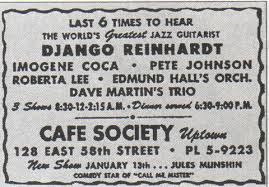
En Sheridan Square estaba el famoso Café Society, que en los 1920 era el lugar para encontrarse con todos los rebeldes, desde anarquistas, comunistas y socialistas, hasta poetas, artistas visuales y más, todo al ritmo de jazz.

Union Square, donde culminaban las grandes marchas radicales del Primero de Mayo, fue sede de la primera marcha laboral oficial del país en 1882. Fue ahí donde se concentró una multitud para denunciar la ejecución de Sacco y Vanzetti –donde habló el gran Carlo Tresca–, a pesar de las ametralladoras colocadas en las azoteas de los edificios alrededor de la plaza por las autoridades en 1927. Union Square ha sido punto de encuentro de nuevos movimientos y expresiones del siglo XXI, como el de los inmigrantes que resucitaron el Primero de Mayo en este país, o los de Ocupa Wall Street, entre otros.

En el East Village, donde se expresó el punk en Nueva York con su eje en el antro CBGB, con voces como la de Patti Smith a los Talking Heads y más, hay una historia mucho más profunda. Una de las iglesias, St. Marks in the Bowery, donde continúan obras de teatro de vanguardia y otros actos, también era sede de reuniones de las Panteras Negras y los Young Lords en los 60. Ahí también bailó Isadora Duncan.

Iglesia de St. Marks

Iglesia de St. Marks

En la calle de St Marks había un periódico ruso disidente donde trabajó un tiempo León Trotsky, en 1917. Unas cuadras más al este, y medio siglo después, Abbie Hoffman vivió al lado de Thompkins Square Park, y fue ahí donde se bautizó el nuevo movimiento que encabezó: los Yippies.

Éstos son sólo algunos de los ángeles de la guarda que se aparecen por esta parte de la ciudad; miles más esperan en casi todos los demás barrios de esta metrópolis. Lo que comparten no son sus posturas ideológicas, sino su repudio a lo convencional y al veneno del así es que suele infectar hasta los proyectos y movimientos que se dicen progresistas. Por ello, jamás se subordinaban a lo mediocre ni a las órdenes de los que ejercen de manera arbitraria el poder. Y sobre todo se unen para ofrecer y luchar por lo mejor para todos, porque todos merecen lo mejor.

Así, al caminar en estas calles angeladas, uno ya no se siente tan solo.

Read Full Post »

« Newer Posts - Older Posts »