Feeds:
Entradas
Comentarios

Archive for the ‘Imperialismo norteamericano’ Category

Brazil Marks 50th Anniversary of Military Coup

National Security Archive Electronic Briefing Book No. 465

April 2, 2014

Edited by James G. Hershberg and Peter Kornbluh
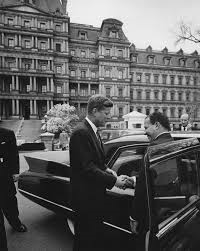
JFK and Goulart 2

President Kennedy and President Joao Goulart on a state visit to Washington April 2, 1962.

Washington, DC, April 2, 2014 – Almost two years before the April 1, 1964, military takeover in Brazil, President Kennedy and his top aides began seriously discussing the option of overthrowing Joao Goulart’s government, according to Presidential tape transcripts posted by the National Security Archive on the 50th anniversary of the coup d’tat. «What kind of liaison do we have with the military?» Kennedy asked top aides in July 1962. In March 1963, he instructed them: «We’ve got to do something about Brazil.»

The tape transcripts advance the historical record on the U.S. role in deposing Goulart — a record which remains incomplete half a century after he fled into exile in Uruguay on April 1, 1964. «The CIA’s clandestine political destabilization operations against Goulart between 1961 and 1964 are the black hole of this history,» according to the Archive’s Brazil Documentation Project director, Peter Kornbluh, who called on the Obama administration to declassify the still secret intelligence files on Brazil from both the Johnson and Kennedy administrations.

Revelations on the secret U.S. role in Brazil emerged in the mid 1970s, when the Lyndon Johnson Presidential library began declassifying Joint Chiefs of Staff records on «Operation Brother Sam» — President Johnson’s authorization for the U.S. military to covertly and overtly supply arms, ammunition, gasoline and, if needed, combat troops if the military’s effort to overthrow Goulart met with strong resistance. On the 40th anniversary of the coup, the National Security Archive posted audio files of Johnson giving the green light for military operations to secure the success of the coup once it started.

«I think we ought to take every step that we can, be prepared to do everything that we need to do,» President Johnson instructed his aides regarding U.S. support for a coup as the Brazilian military moved against Goulart on March 31, 1964.

But Johnson inherited his anti-Goulart, pro-coup policy from his predecessor, John F. Kennedy. Over the last decade, declassified NSC records and recently transcribed White House tapes have revealed the evolution of Kennedy’s decision to create a coup climate and, when conditions permitted, overthrow Goulart if he did not yield to Washington’s demand that he stop «playing» with what Kennedy called «ultra-radical anti-Americans» in Brazil’s government. During White House meetings on July 30, 1962, and on March 8 and 0ctober 7, 1963, Kennedy’s secret Oval Office taping system recorded the attitude and arguments of the highest U.S. officials as they strategized how to force Goulart to either purge leftists in his government and alter his nationalist economic and foreign policies or be forced out by a U.S.-backed putsch.

Indeed, the very first Oval Office meeting that Kennedy secretly taped, on July 30, 1962, addressed the situation in Brazil. «I think one of our important jobs is to strengthen the spine of the military,» U.S. Ambassador Lincoln Gordon told the President and his advisor, Richard Goodwin. «To make clear, discreetly, that we are not necessarily hostile to any kind of military action whatsoever if it’s clear that the reason for the military action is…[Goulart’s] giving the country away to the…,» «Communists,» as the president finished his sentence. During this pivotal meeting, the President and his men decided to upgrade contacts with the Brazilian military by bringing in a new US military attaché-Lt. Col. Vernon Walters who eventually became the key covert actor in the preparations for the coup. «We may very well want them [the Brazilian military] to take over at the end of the year,» Goodwin suggested, «if they can.» (Document 1)

By the end of 1962, the Kennedy administration had indeed determined that a coup would advance U.S. interests if the Brazilian military could be mobilized to move. The Kennedy White House was particularly upset about Goulart’s independent foreign policy positions during the Cuban Missile Crisis. Although Goulart had assisted Washington’s efforts to avoid nuclear Armageddon by acting as a back channel intermediary between Kennedy and Castro — a top secret initiative uncovered by George Washington University historian James G. Hershberg — Goulart was deemed insufficiently supportive of U.S. efforts to ostracize Cuba at the Organization of American States. On December 13, Kennedy told former Brazilian President Juscelino Kubitschek that the situation in Brazil «worried him more than that in Cuba.»

On December 11, 1962, the Executive Committee (EXCOMM) of the National Security Council met to evaluate three policy alternatives on Brazil: A. «do nothing and allow the present drift to continue; B. collaborate with Brazilian elements hostile to Goulart with a view to bringing about his overthrow; C. seek to change the political and economic orientation of Goulart and his government.» [link to document 2] Option C was deemed «the only feasible present approach» because opponents of Goulart lacked the «capacity and will to overthrow» him and Washington did not have «a near future U.S. capability to stimulate [a coup] operation successfully.» Fomenting a coup, however «must be kept under active and continuous consideration,» the NSC options paper recommended.

Acting on these recommendations, President Kennedy dispatched a special envoy — his brother Robert — to issue a face-to-face de facto ultimatum to Goulart. Robert Kennedy met with Goulart at the Palacio do Alvarada in Brazilia on December 17, 1962. During the three-hour meeting, RFK advised Goulart that the U.S. had «the gravest doubts» about positive future relations with Brazil, given the «signs of Communist or extreme left-wing nationalists infiltration into civilian government positions,» and the opposition to «American policies and interests as a regular rule.» As Goulart issued a lengthy defense of his policies, Kennedy passed a note to Ambassador Gordon stating: «We seem to be getting no place.» The attorney general would later say that he came away from the meeting convinced that Goulart was «a Brazilian Jimmy Hoffa.»

Kennedy and his top aides met once again on March 7, 1963, to decide how to handle the pending visit of the Brazilian finance minister, Santiago Dantas. In preparation for the meeting, Ambassador Gordon submitted a long memo to the president recommending that if it proved impossible to convince Goulart to modify his leftist positions, the U.S. work «to prepare the most promising possible environment for his replacement by a more desirable regime.» (Document 5) The tape of this meeting (partially transcribed here for the first time by James Hershberg) focused on Goulart’s continuing leftward drift. Robert Kennedy urged the President to be more forceful toward Goulart: He wanted his brother to make it plain «that this is something that’s very serious with us, we’re not fooling around about it, we’re giving him some time to make these changes but we can’t continue this forever.» The Brazilian leader, he continued, «struck me as the kind of wily politician who’s not the smartest man in the world … he figures that he’s got us by the—and that he can play it both ways, that he can make the little changes, he can make the arrangements with IT&T and then we give him some money and he doesn’t have to really go too far.» He exhorted the president to «personally» clarify to Goulart that he «can’t have the communists and put them in important positions and make speeches criticizing the United States and at the same time get 225-[2]50 million dollars from the United States. He can’t have it both ways.»

As the CIA continued to report on various plots against Goulart in Brazil, the economic and political situation deteriorated. When Kennedy convened his aides again on October 7, he wondered aloud if the U.S. would need to overtly depose Goulart: «Do you see a situation where we might be—find it desirable to intervene militarily ourselves?» The tape of the October 7 meeting — a small part of which was recently publicized by Brazilian journalist Elio Gaspari, but now transcribed at far greater length here by Hershberg — contains a detailed discussion of various scenarios in which Goulart would be forced to leave. Ambassador Gordon urged the president to prepare contingency plans for providing ammunition or fuel to pro-U.S. factions of the military if fighting broke out. «I would not want us to close our minds to the possibility of some kind of discreet intervention,» Gordon told President Kennedy, «which would help see the right side win.»

Under Gordon’s supervision, over the next few weeks the U.S. embassy in Brazil prepared a set of contingency plans with what a transmission memorandum, dated November 22, 1963, described as «a heavy emphasis on armed intervention.» Assassinated in Dallas on that very day, President Kennedy would never have the opportunity to evaluate, let alone implement, these options.

But in mid-March 1964, when Goulart’s efforts to bolster his political powers in Brazil alienated his top generals, the Johnson administration moved quickly to support and exploit their discontent-and be in the position to assure their success. «The shape of the problem,» National Security Advisor McGeorge Bundy told a meeting of high-level officials three days before the coup, «is such that we should not be worrying that the [Brazilian] military will react; we should be worrying that the military will not react.»

«We don’t want to watch Brazil dribble down the drain,» the CIA, White House and State Department officials determined, according to the Top Secret meeting summary, «while we stand around waiting for the [next] election.»


THE DOCUMENTS

Document 1: White House, Transcript of Meeting between President Kennedy, Ambassador Lincoln Gordon and Richard Goodwin, July 30, 1962. (Published in The Presidential Recordings of John F. Kennedy, The Great Crises, Volume One (W.W. Norton), edited by Timothy Naftali, October 2001.)

The very first Oval Office meeting ever secretly taped by President Kennedy took place on July 30, 1962 and addressed the situation in Brazil and what to do about its populist president, Joao Goulart. The recording — it was transcribed and published in book The Presidential Recordings of John F. Kennedy, The Great Crises, Volume One — captures a discussion between the President, top Latin America aide Richard Goodwin and U.S. Ambassador to Brazil Lincoln Gordon about beginning to set the stage for a future military coup in Brazil. The President and his men make a pivotal decision to appoint a new U.S. military attaché to become a liaison with the Brazilian military, and Lt. Col. Vernon Walters is identified. Walters later becomes the key covert player in the U.S. support for the coup. «We may very well want them [the Brazilian military] to take over at the end of the year,» Goodwin suggests, «if they can.»


Document 2: NSC, Memorandum, «U.S. Short-Term policy Toward Brazil,» Secret, December 11, 1962

In preparation for a meeting of the Executive Committee (EXCOMM) of the National Security Council, the NSC drafted an options paper with three policy alternatives on Brazil: A. «do nothing and allow the present drift to continue; B. collaborate with Brazilian elements hostile to Goulart with a view to bringing about his overthrow; C. seek to change the political and economic orientation of Goulart and his government.» Option C was deemed «the only feasible present approach» because opponents of Goulart lacked the «capacity and will to overthrow» him and Washington did not have «a near future U.S. capability to stimulate [a coup] operation successfully.» Fomenting a coup, however «must be kept under active and continuous consideration,» the NSC options paper recommended. If Goulart continued to move leftward, «the United States should be ready to shift rapidly and effectively to…collaboration with friendly democratic elements, including the great majority of military officer corps, to unseat President Goulart.»


Document 3: NSC, «Minutes of the National Security Council Executive Committee Meeting, Meeting No. 35,» Secret, December 11, 1962

The minutes of the EXCOMM meeting record that President Kennedy accepted the recommendation that U.S. policy «seek to change the political and economic orientation of Goulart and his government.»


Document 4: U.S. Embassy, Rio de Janeiro, Airgram A-710, «Minutes of Conversation between Brazilian President Joao Goulart and Attorney General Robert F. Kennedy, Brasilia, 17 December 1962,» December 19, 1962

In line with JFK’s decision at the Excom meeting on December 11 to have «representative sent specially» to talk to Goulart, the president’s brother made a hastily-prepared journey to «confront» the Brazilian leader over the issues that had increasingly concerned and irritated Washington-from his chaotic management of Brazil’s economy and expropriation of U.S. corporations such as IT&T, to his lukewarm support during the Cuban missile crisis and flirtation with the Soviet bloc to, most alarming, his allegedly excessive toleration of far left and even communist elements in the government, military, society, and even his inner circle. Accompanied by US ambassador Lincoln Gordon, RFK met for more than three hours with Goulart in the new inland capital of Brasília at the modernistic lakeside presidential residence, the Palácio do Alvorada. A 17-page memorandum of conversation, drafted by Amb. Gordon, recorded the Attorney General presenting his list of complaints: the «many signs of Communist or extreme left-wing nationalists infiltration» into civilian government, military, trade union, and student group leaderships, and Goulart’s personal failure to take a public stand against the «violently anti-American» statements emanating from «influential Brazilians» both in and out of his government, or to embrace Kennedy’s Alliance for Progress. Turning to economic issues, he said his brother was «very deeply worried at the deterioration» in recent months, from rampant inflation to the disappearance of reserves, and called on Goulart to get his «economic and financial house in order.» Surmounting these obstacles to progress, RFK stressed, could mark a «turning point in relations between Brazil and the U.S. and in the whole future of Latin America and of the free world.» When Goulart defended his policies, Kennedy scribbled a note to Ambassador Gordon: «We seem to be getting no place.» JFK’s emissary voiced his fear «that President Goulart had not fully understood the nature of President Kennedy’s concern about the present situation and prospects.»


Document 5: Department of State, Memorandum to Mr. McGeorge Bundy, «Political Considerations Affecting U.S. Assistance to Brazil,» Secret, March 7, 1963

In preparation for another key Oval office meeting on Brazil, the Department of State transmitted two briefing papers, including a memo to the president from Amb. Gordon titled «Brazilian Political Developments and U.S. Assistance.» The latter briefing paper (attached to the first document) was intended to assist the President in deciding how to handle the visit of Brazilian Finance Minister San Tiago Dantas to Washington. Gordon cited continuing problems with Goulart’s «equivocal, with neutralist overtones» foreign policy, and the «communist and other extreme nationalist, far left wing, and anti-American infiltration in important civilian and military posts with the government.»


Document 6: Excerpts from John F. Kennedy’s conversation regarding Brazil with U.S. Ambassador to Brazil Lincoln Gordon on Friday March 8, 1963 (Meeting 77.1, President’s Office Files, John F. Kennedy Presidential Library, Boston)

On March 8, 1963, a few days before Dantas’ arrived, JFK reviewed the state of US-Brazilian relations with his top advisors, including Secretary of State Dean Rusk, his ambassador to Brazil, Lincoln Gordon, and his brother Robert. Unofficially transcribed here by James G. Hershberg (with assistance from Marc Selverstone and David Coleman) this is apparently the first time that it has been published since the tape recording was released more than a decade ago by the John F. Kennedy Presidential Library in Boston. As the comments by Rusk, Gordon, and RFK make clear, deep dissatisfaction with Goulart persisted. «Brazil is a country that we can’t possibly turn away from,» Secretary of State Rusk told the president. «Whatever happens there is going to be of decisive importance to the hemisphere.» Rusk frankly acknowledged that the situation wasn’t yet so bad as to justify Goulart’s overthrow to «all the non-communists or non-totalitarian Brazilians,» nor to justify a «clear break» between Washington and Rio that would be understood throughout the hemisphere. Instead, the strategy for the time being was to continue cooperation with Goulart’s government while raising pressure on him to improve his behavior, particularly his tolerance of far-leftist, anti-United States, and even communist associates-to, in JFK’s words, «string out» aid in order to «put the screws» on him. The president’s brother, in particular, clearly did not feel that Goulart had followed through since their meeting a few months earlier on his vows to put a lid on anti-U.S. expressions or make personnel changes to remove some of the most egregiously leftist figures in his administration. Goulart, stated RFK, «struck me as the kind of wily politician who’s not the smartest man in the world but very sensitive to this [domestic political] area, that he figures that he’s got us by the—and that he can play it both ways, that he can make the little changes…and then we give him some money and he doesn’t have to really go too far.»


Document 7: CIA, Current Intelligence Memorandum, «Plotting Against Goulart,» Secret, March 8, 1963

For more than two years before the April 1, 1964 coup, the CIA transmitted intelligence reports on various coup plots. The plot, described in this memo as «the best-developed plan,» is being considered by former minister of war, Marshal Odylio Denys. In a clear articulation of U.S. concerns about the need for a successful coup, the CIA warned that «a premature coup effort by the Brazilian military would be likely to bring a strong reaction from Goulart and the cashiering of those officers who are most friendly to the United States.»


Document 8: State Department, Latin American Policy Committee, «Approved Short-Term Policy in Brazil,» Secret, October 3, 1963

In early October, the State Department’s Latin America Policy Committee approved a «short term» draft policy statement on Brazil for consideration by President Kennedy and the National Security Council. Compared to the review in March, the situation has deteriorated drastically, according to Washington’s point of view, in large measure due to Goulart’s «agitation,» unstable leadership, and increasing reliance on leftist forces. In its reading of the current and prospective situation, defining American aims, and recommending possible lines of action for the United States, the statement explicitly considered, albeit somewhat ambiguously, the U.S. attitude toward a possible coup to topple Goulart. «Barring clear indications of serious likelihood of a political takeover by elements subservient to and supported by a foreign government, it would be against U.S. policy to intervene directly or indirectly in support of any move to overthrow the Goulart regime. In the event of a threatened foreign-government-affiliated political takeover, consideration of courses of action would be directed more broadly but directly to the threatened takeover, rather than against Goulart (though some action against the latter might result).» Kennedy and his top aides met four days later to consider policy options and strategies–among them U.S. military intervention in Brazil.


Document 9: Excerpts from John F. Kennedy’s conversation regarding Brazil with U.S. Ambassador to Brazil Lincoln Gordon on Monday, October 7, 1963 (tape 114/A50, President’s Office Files, John F. Kennedy Presidential Library, Boston)

«Do you see a situation where we might be-find it desirable to intervene militarily ourselves?» John F. Kennedy’s question to his ambassador to Brazil, Lincoln Gordon, reflected the growing concerns that a coup attempt against Goulart might need U.S. support to succeed, especially if it triggered an outbreak of fighting or even civil war. This tape, parts of which were recently publicized by Brazilian journalist Elio Gaspari, has been significantly transcribed by James G. Hershberg (with assistance from Marc Selverstone) and published here for the first time. It captured JFK, Gordon, Defense Secretary Robert S. McNamara and other top officials concluding that the prospect of an impending move to terminate Goulart’s stay in office (long before his term was supposed to come to an end more than two years later) required an acceleration of serious U.S. military contingency planning as well as intense efforts to ascertain the balance between military forces hostile and friendly to the current government. In his lengthy analysis of the situation, Gordon — who put the odds at 50-50 that Goulart would be gone, one way or another, by early 1964 — outlined alternative scenarios for future developments, ranging from Goulart’s peaceful early departure («a very good thing for both Brazil and Brazilian-American relations»), perhaps eased out by military pressure, to a possible sharp Goulart move to the left, which could trigger a violent struggle to determine who would rule the country. Should a military coup seize power, Gordon clearly did not want U.S. squeamishness about constitutional or democratic niceties to preclude supporting Goulart’s successors: «Do we suspend diplomatic relations, economic relations, aid, do we withdraw aid missions, and all this kind of thing — or do we somehow find a way of doing what we ought to do, which is to welcome this?» And should the outcome of the attempt to oust Goulart lead to a battle between military factions, Gordon urged study of military measures (such as providing fuel or ammunition, if requested) that Washington could take to assure a favorable outcome: «I would not want us to close our minds to the possibility of some kind of discreet intervention in such a case, which would help see the right side win.» On the tape, McNamara suggests, and JFK approves, accelerated work on contingency planning («can we get it really pushed ahead?»). Even as U.S. officials in Brazil intensified their encouragement of anti-communist military figures, Kennedy cautioned that they should not burn their bridges with Goulart, which might give him an excuse to rally nationalist support behind an anti-Washington swerve to the left: Washington needed to continue «applying the screws on the [economic] aid» to Brazil, but «with some sensitivity.»


Document 10: State Department, Memorandum, «Embassy Contingency Plan,» Top Secret, November 22, 1963

Dated on the day of President Kennedy’s assassination in Dallas, this cover memo describes a new contingency plan from the U.S. Embassy in Brazil that places «heavy emphasis on U.S. armed intervention.» The actual plan has not been declassified.


Document 11: NSC, Memcon, «Brazil,» Top Secret, March 28, 1964

As the military prepared to move against Goulart, top CIA, NSC and State Department officials met to discuss how to support them. They evaluated a proposal, transmitted by Ambassador Gordon the previous day, calling for covert delivery of armaments and gasoline, as well as the positioning of a naval task force off the coast of Brazil. At this point, U.S. officials were not sure if or when the coup would take place, but made clear their interest in its success. «The shape of the problem,» according to National Security Advisor McGeorge Bundy, «is such that we should not be worrying that the military will react; we should be worrying that the military will not react.»


Document 12: U.S. Embassy, Brazil, Memo from Ambassador Gordon, Top Secret, March 29, 1964

Gordon transmitted a message for top national security officials justifying his requests for pre-positioning armaments that could be used by «para-military units» and calling for a «contingency commitment to overt military intervention» in Brazil. If the U.S. failed to act, Gordon warned, there was a «real danger of the defeat of democratic resistance and communization of Brazil.»


Document 13: Joint Chiefs of Staff, Cable, [Military attaché Vernon Walters Report on Coup Preparations], Secret, March 30, 1964

U.S. Army attaché Vernon Walters meets with the leading coup plotters and reports on their plans. «It had been decided to take action this week on a signal to be issued later.» Walters reported that he «expects to be aware beforehand of go signal and will report in consequence.»


Document 14 (mp3): White House Audio Tape, President Lyndon B. Johnson discussing the impending coup in Brazil with Undersecretary of State George Ball, March 31, 1964.


Document 15: White House, Memorandum, «Brazil,» Secret, April 1, 1964

As of 3:30 on April 1st, Ambassador Gordon reports that the coup is «95% over.» U.S. contingency planning for overt and covert supplies to the military were not necessary. General Castello Branco «has told us he doesn’t need our help. There was however no information about where Goulart had fled to after the army moved in on the palace.


Document 16: Central Intelligence Agency, Intelligence Cable, «Departure of Goulart from Porto Alegre for Montevideo,» Secret, April 2, 1964

CIA intelligence sources report that deposed president Joao Goulart has fled to Montevideo.


Read Full Post »

U.S. National Archives Web Site Uploads Hundreds of Thousands of Diplomatic Cables from 1977

National Security Archive Electronic Briefing Book No. 463

March 27, 2014

Edited by William Burr


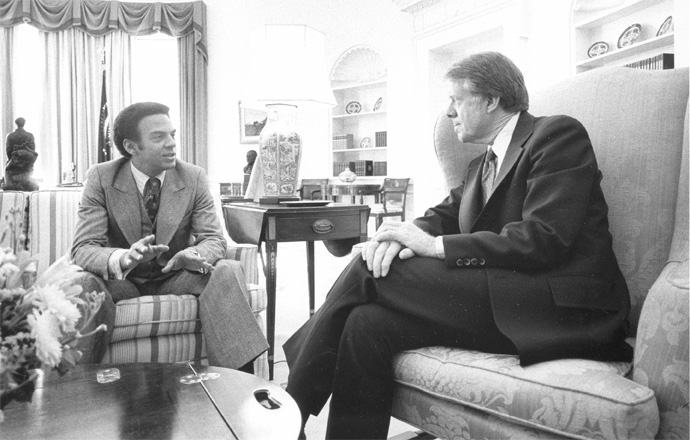
Ambassador to the United Nations Andrew Young meeting with President Jimmy Carter. Young served as ambassador during 1977-1979, but was forced to resign because of an unauthorized meeting with Palestinian diplomats. (Photograph from Still Pictures Unit, National Archives and Records Administration, RG 59-SO, box 39)

Ambassador to the United Nations Andrew Young meeting with President Jimmy Carter. Young served as ambassador during 1977-1979, but was forced to resign because of an unauthorized meeting with Palestinian diplomats. (Photograph from Still Pictures Unit, National Archives and Records Administration, RG 59-SO, box 39)

Washington, DC, March 27, 2014 – In February 2014, the National Archives and Records Administration (NARA) posted 300,000 State Department telegrams from 1977 — the first year of the Jimmy Carter administration — on its Access to Archival Databases system. This posting is another step in carrying out the commitment that NARA and the State Department have made to putting on-line major State Department document databases and indexes as they are declassified. The 1977 telegrams cover the gamut of issues of the day: human rights on both sides of the Cold War line, U.S.-Soviet relations, China, NATO issues, nuclear proliferation, the Middle East Crisis, African affairs, a variety of diplomatic and security relationships around the world from Latin American to Southeast Asia, and issues of growing concern, such as women in development. The last release of on-line State Department material — telegrams and other records for 1976 — was in January 2010. Meeting the requirements of the Privacy Act, budgetary problems, and a complex declassification process prolonged the review and release of the 1977 material.

NARA’s mass posting of State Department telegrams began in 2006 when it uploaded nearly 320,000 declassified telegrams from 1973 and 1974. During the following years, NARA posted hundreds of thousands of telegrams from 1975 and 1976, bringing the total to nearly a million. The Access to Archival Databases (AAD) search engine permits searches for documents on a year-to-year basis, but in 2012 Wikileaks usefully repackaged the telegram databases by aggregating them, making it possible to search through all of telegrams at once.

The National Archives has not publicized this or previous diplomatic telegram releases so the National Security Archive is stepping in to the breach to alert researchers and to offer some interesting examples of the new material. Some key documents are already available in the State Department’s Foreign Relations of the United States historical series, but there is more material than the FRUSeditors can use on many topics. A stroll through the AAD search engine produces absorbing results. Among the highlights from the search conducted by the editor:

  • During Jimmy Carter’s first year, U.S. officials in Moscow and Washington wondered about Soviet General Secretary Leonid Brezhnev’s state of health and its implications for Moscow-Washington relations, which were already complicated by disagreements over strategic arms control and human rights policy. In an exchange of telegrams State Department intelligence and the U.S. Embassy in Moscow argued over the former’s view that Brezhnev’s health problems meant that he was «no longer in command of all aspects of Soviet policy.» For the Bureau of Intelligence and Research (INR), even if Brezhnev was losing control, he could still be a channel of communication, not unlike Mao Zedong’s declining years where «we had more success with Mao’s slobbering and shambling through critical meetings with U.S. representatives …than we have had since Mao’s passing.» Disagreeing with that assessment, U.S. Ambassador Malcolm Toon acknowledged that Brezhnev «suffers from a variety of physical ailments» but he «is still in control.»
  • When two senior U.S. officials met with South Korean dictator General Park Chung Hee in 1977 to discuss the withdrawal of U.S. forces, they brought up human rights problems. The detention of dissidents arrested at Myeongdong Cathedral in 1976 was one issue that concerned the White House but Park was reluctant to take a lenient approach because it would «encourage defendants to violate Korean law again.»
  • According to a report from the U.S. Embassy in Thailand on the situation in Cambodia and the status of organized resistance against the Khmer Rouge, two informants declared that «the fruit of Khmer Rouge rule might well be the extinction of the Cambodian race.» While the Khmer Rouge had continued «to eliminate anyone associated with the former regime,» the «greatest threat to life in Cambodia» was disease and famine. The recent rice harvest had been good but the regime was stockpiling and exporting the grain.
  • A telegram on a conversation between U.S. Ambassador to the United Nations Andrew Young and an influential figure in the South African National Party, Cornelius («Connie») Petrus Mulder, who was «more liberal» but did not want to get «out in front of agreed policy on apartheid.» Young conveyed the message that the administration sought «progressive transformation of South Africa toward majority rule» and the discussion covered the range of regional issues as well as the Young’s argument about the possibility of reconciliation based on the «sharing of economic benefits.»
  • In mid-1977, the Temple University biologist Niu Man-Chiang was visiting Beijing and met with Deng Xiaoping (Teng Hsiao-Ping in the Wade-Giles transliteration), who, after very difficult years during the Cultural Revolution, was again holding top-level positions. Deng claimed that he «was in charge of two things: science and the military,» but kept bringing the discussion back to economic policy, especially solving the problem of «feeding a growing population,» for which he proposed restricting births and growing more food.

The release includes telegrams at many levels of classification, from «Unclassified» and «Official Use Only» to «Confidential» and «Secret.» Moreover, telegrams with a variety of handling restrictions are available, including «Limdis» [limited distribution], «Exdis» [exclusive distribution], and «Nodis» [no distribution except with permission], as well as «Noforn» [no foreign nationals] and «STADIS» [State Department distribution]. Unlike the previous telegram releases, the one for 1977 includes the «nodis» items and also the closely-held cables with the «Cherokee» distribution control, usually reserved for messages involving the secretary of state and senior White House officials. The Cherokee control originated during the 1960s, when Dean Rusk was Secretary of State.  It was named after Cherokee County, Georgia, where he was born.  Information confirmed in e-mail from David Langbart, National Archives, 28 March 2014.

The downside of the 1977 release is that nearly 60,000 telegrams have been exempted altogether, about 19.5 percent of the total for the year. This means that thousands of documents will remain classified for years; even if persistent researchers deluge NARA with requests they will take years to process under present budgetary limitations. Yet, 19.5 percent is close to the same exemption rate for the previous two years: 23 percent for 1976 and 19 percent for 1975. The specific reasons for the withdrawal of a given document are not given; according to information on the Web site, they are withdrawn variously for national security reasons, statutory exemptions, or privacy. No doubt specific statutory exemptions such as the CIA Act and the Atomic Energy Act play a role, which makes one wonder how many exempted documents concern such things as obsolete nuclear stockpile locations that are among the U.S. government’s dubious secrets. Moreover, given the endemic problem of over-classification at the Pentagon, it is possible that the Defense Department erroneously classified some information, for example, telegrams relating to NATO’s Nuclear Planning Group.

The collection of telegrams is only a segment of the State Department record for that year; still to be declassified and processed for 1977 is the index to the P-reels, the microfilmed record of the non-telegram paper documentation. Moreover, top secret telegrams are not yet available for any year since 1973 and collections of «Nodis» telegrams from the mid-1970s remain unavailable. No doubt, NARA’s inadequate funding is an important cause of delay. OMB and Congress have kept NARA on an austerity budget for years; this is a serious problem, which directly damages the cause of greater openness for government records. In real terms (adjusted for inflation), the NARA budget has been declining since FY 2009, despite the agency’s ever-growing responsibility for billions of pages of paper and electronic records. Consistent with the policy of forced austerity, OMB has cut NARA’s budget for the next fiscal year by $10 million.

At the current rate it will be years before all the telegrams before all telegrams and other material for the 1970s, much less the 1980s, are on-line at AAD. While the State Department has moved forward in reviewing telegrams from the 1980s, its reviewers need to catch up with the «Nodis» and top secret central files from the mid-1970s and 1977 before they get too far ahead of themselves. As for the telegrams for 1978 and 1979, according to recent reports, they have been fully reviewed for declassification and physically transferred to NARA. When they will become available is not clear. They may have to go through a review for privacy information by NARA, for example, of material concerning visa applications. That was a major element contributing to the delay in the release of the 1977 telegrams. Such a review is justifiable, such as when social security numbers are at issue; certainly protecting private information deserves special care. Nevertheless, there is concern, even among NARA staffers, that the privacy review process may be becoming too extensive (e.g., excluding old mailing addresses). More needs to be learned about criteria used for the privacy review.

Note: As in the previous openings, some telegrams are missing for technological reasons. Over the years, when IT specialists migrated the telegram collections from one electronic medium to another some records were lost. Such missing records, of which there are over 3,800 for 1977 are indicated by this wording: «telegram text for this mrn [message reference number] is unavailable.» That does not mean that all are gone for good; some copies will show up in embassy files or presidential libraries. Moreover, copies can often be found in P-reel microfilm collections at the State Department and the National Archives, depending on the years. The «message attribution» information appended to such documents [an example] includes the microfilm numbers that can be used for requesting copies.


Read Full Post »

Want to See How Afghanistan Will Turn Out After the U.S. Withdrawal? Look to Latin America 

HNN   March 31, 2014 

Image via Wiki Commons.

Many who reacted to President Obama’s recent suggestion that he might pull out all U.S. troops from Afghanistan by December have used the U.S. occupations of Germany and Japan after World War II to argue that troops can bring the security and stability needed for long-term nation building.

Although the occupations in Europe and Asia were logical responses to wars against the United States just as the U.S. invasion of Afghanistan followed upon 9/11, the analogy should end there. Successful nation building does not depend mostly on the occupying force but rather on the capacity — more important, the willingness — of the occupied society to carry it out. The Germans and Japanese under occupation had the capacity to rebuild their nations simply because they had already been industrial, centralized nations before the war. They also had the willingness because anti-Nazis in Germany and anti-militarists in Japan, who hated the ideologies behind the aggression of their nation, were now in charge.

A far better analogy for the situation in Afghanistan takes us back a generation further, to the U.S. occupations in Central America and the Caribbean around World War I. Then as now, the United States perceived a security threat — German gunboats, schemes to build another canal in Central America — that compelled them to occupy small, poor, agricultural nations.

Like Afghanistan, those places strained the definition of “nation.” Nicaragua (occupied 1912-1933), Haiti (1915-1934), and the Dominican Republic (1916-1924) were all afflicted by caudillos, strongmen whose power rested on their control of small private armies and especially their ability to resist centralized power. “Leaders” in Managua, Port-au-Prince, and Santo Domingo were beholden to these regional power brokers. Presidents were weak, corrupt, and isolated. They expressed nationalism but didn’t really care about the future of their country. Such characters should sound familiar to anyone who has dealt with Hamid Karzai.

Seeing decentralization as debilitating to security or development, occupying Americans tried to build nations. They had locals build roads and string telegraph wires alongside them. They funded hospitals and reorganized schools. They surveyed lands, to make them easier to buy and sell. Most important, they trained national constabularies that were, for the first time, able to use those roads to put down any caudillo’s regional challenge.

None of it magically created the “national feeling” that occupiers wanted. It didn’t help that Americans also used forced labor, torture, racism, and strong-arm diplomacy to speed up nation building. But even without such brutality, centralization was a pipe dream that barely advanced, even after decades of occupation.

The unwillingness of Latin Americans to centralize and adopt other behaviors of industrialized democracies was made most evident, as it is now in Afghanistan, when talk of withdrawal came up. After World War I, when the Germans no longer threatened the Caribbean basin, the strategic rationale for troops evaporated. Even violent insurrectionary movements had been wiped out or had laid down their weapons.

So it was time for U.S. troops to go, but they soon learned that withdrawal would be a long, drawn-out process that entailed coming to terms with the painful reality that nation building had failed. Marines oversaw elections in each of these three occupations, but in each, candidates made wild promises and vicious accusations while they betrayed political allies. They remained wedded to personalism, following leaders who presented absolutely no program for the betterment of their nations. They continued draining the treasury and using governments not to implement policy but to hand out jobs to friends and family.

American occupiers were without good options, as the Obama administration is today. If they insisted on keeping a high level of troops, they faced calls for “self-government” from Latin Americans and cries from back home that the money would be better spent in the United States, especially as the Great Depression stifled budgets. If they kept a small amount of troops in country, as they did in Nicaragua for thirteen years and as Obama is now considering, those troops merely propped up a puppet government that fell as soon as they left. And the more Americans negotiated withdrawal agreements, the more they gave in to Latin American demands to control their own politics. Delay, then as now, was a losing strategy.

When the Marines did leave the Caribbean, the result they witnessed in each occupation was the worst of all worlds: dictators used the coercive power of national constabularies to destroy, rather than build up, what incipient democracy there was. Anastazio Somoza in Nicaragua, Rafael Trujillo in the Dominican Republic, and eventually François Duvalier in Haiti crushed caudillos and “nationalized” power without the required nationalism.

The lessons for Afghanistan today are dispiriting and opaque. There will be no happy ending, no riding into the sunset. Leaving earlier rather than later, as most Americans seem to want, makes sense, but isn’t a panacea. Afghans will sooner or later have to face their own demons and progress at their own pace. Peoples cannot be forced into nationalism; they must build it through their own initiative, trauma, and tears.

Alan McPherson is professor of international and area studies at the University of Oklahoma and the author of The Invaded: How Latin Americans and Their Allies Fought and Ended U.S. Occupations.


Read Full Post »

The Civil Rights Heroes the Court Ignored in The New York v. Sullivan

Garrett Epps

The Atlantic March 20, 2014

National Archives

I’m late to the 50th birthday party for New York Times v. Sullivandeliberately so. It’s no fun to be the sourpuss. Sullivan has been celebrated by top legal and media figures from the moment it was decided until its half-centenary this month. Alexander Meiklejohn, the philosopher, called it at the time “an occasion for dancing in the streets.” In his meticulous 1992 book, Make No Law: The Sullivan Case and the First Amendment, famed Supreme Court reporter Anthony Lewis wrote that the case “gave [the First Amendment’s] bold words their full meaning.” And a few weeks ago, University of Chicago Professor Geoffrey Stone wrote that, whatever its flaws, Sullivan “remains one of the great Supreme Court decisions in American history.” The New York Times itself, the winner of the case, congratulated the nation and the Court on “the clearest and most forceful defense of press freedom in American history.” I used to be a newspaper editor. I was dealing with libel threats at my college paper before I was old enough to vote. So I’m grateful for Sullivan’s broad protection of free speech and press. The Court’s decision defused an existential threat to press freedom—a systematic campaign (detailed well by Lewis in Make No Law) to drive the major networks and papers out of the South by using local libel laws to bleed or bankrupt them.  The Court was wise to stop that cold. And yet … and yet. There are some ghosts at the Sullivan feast.  Here are their names: Ralph David Abernathy, S.S. Seay Sr., Fred L. Shuttlesworth, and J.E. Lowery. These four black ministers fought against Southern apartheid—and though the fight in the end was won, these four men lost a great deal in the struggle. Their story is the underside of New York Times v. Sullivan, the part that the “post-racial” America of 2014 is not eager to remember. On March 29, 1960, The New York Times published an advertisement funded by Northern supporters of Martin Luther King and the Southern Christian Leadership Council, who were locked in a struggle to desegregate Montgomery, Alabama. Entitled “Heed Their Rising Voices,” it described a number of actions the city government had taken to thwart Civil Rights Movement protests and punish those who engaged in them. A few of the facts, however, were wrong—not surprising, given that it was written by Bayard Rustin, another Civil Rights hero who was not on the ground in Alabama. Rustin also signed the four ministers’ names to the advertisement—without notifying or consulting them. Days later, L.B. Sullivan, police commissioner of Montgomery, filed suit in a state court against both the Times and the ministers for supposedly defaming him. Even though he hadn’t even been named in the advertisement, the all-white jury awarded Sullivan the full half-million dollars he asked for. A few similar verdicts would have bankrupted even the Times; it pulled its reporters out of Alabama. Other cases were filed against other news organizations; Southern officials boasted publicly that they had found a tool to silence the hated Northern press. The four ministers were also adjudged liable for the full amount. The trial judge wouldn’t even allow them to move for a new trial. Alabama authorities seized their cars and land without waiting for their appeal. Even though both cases ended up in the Supreme Court, they were presented very differently. As Lewis notes dryly, “The Times petition did not emphasize the racial issue.” The issue, for the Times, was press freedom. The ministers’ lawyers, however, cited the shocking racial climate in the court—the jury was all white, the courtroom was forcibly segregated by the trial judge, the judge permitted Sullivan’s lawyers to use derogatory racial terms and refer to cannibalism in the Congo, and the judge refused to call the ministers’ black lawyers “Mister,” as he did Sullivan’s (and the Times’s) white ones. “[T]he jury had before it an eloquent assertion of the inequality of the Negro in the segregation of the one room, of all rooms, where men should find equality before the law,”  the ministers’ brief said. One of the lawyers, Samuel Pierce (later a member of Ronald Reagan’s Cabinet), told the Court, “it is difficult to see how there can be equal protection under the laws and due process in a court where there’s not even equality of courtesy or recognition of human dignity.” Judgment day for the ministers and the Times came on March 9, 1964. In a single opinion for the Court, Justice William Brennan wrote first, that “an otherwise impersonal attack on governmental operations” can never be defamatory of a government official who is not named in the attack, and, second, that even false statements of fact about public officials are protected by the First Amendment unless they are made with “actual malice.” That term means that the person making the statement must either know it is false or at least think it may be false; “pure heart, empty head” protects against libel of officials. Sullivan was and remains a triumph for the Times and the pressBut here is the opinion’s entire discussion of the ministers’ claims: “The individual petitioners contend that the judgment against them offends the Due Process Clause because there was no evidence to show that they had published or authorized the publication of the alleged libel, and that the Due Process and Equal Protection Clauses were violated by racial segregation and racial bias in the courtroom.” Because it had decided the First Amendment issue, Brennan wrote, “we do not decide the questions presented by the other claims of violation of the Fourteenth Amendment.” Am I the only one who wonders why a Court that was bold in defense of the press could not even mention segregation? Or to wince when the opinion relies on the words of a slaveholder, Thomas Jefferson? Am I the only one who remembers that Brennan, the liberal icon, told four brave men their issues were not worthy of address? L.B. Sullivan lives on in the case’s name. The ministers have disappeared. As a Southern-born white, I do not owe my freedom to The New York Times but to men like those four ministersAbernathy, Seay, and Shuttlesworth are dead, but Joseph Lowery, who is 90, gave the invocation at Barack Obama’s first inauguration.  The Times recorded his attendance at the commemoration of King’s “I have a dream speech” last August. But as far as I can tell, it did not give him any credit for its landmark free press victory. My point is not to skewer the Times, which I admireit is to remind us all that American history has a tendency to grow whiter over time. Know these names: Abernathy, Lowery, Seay, Shuttlesworth. Know the names of the other African Americans who risked (and sometimes lost) everything they had to free Americans of every race.  And by all means celebrate New York Times v. Sullivan. In some ways it really is an occasion for dancing in the streets. But perhaps we should not expect Joseph Lowery to dance. Garrett Epps, a former reporter for The Washington Post, is a novelist and legal scholar. He teaches courses in constitutional law and creative writing for law students at the University of Baltimore and lives in Washington, D.C. His new book is American Epic: Reading the U.S. Constitution.

Read Full Post »

51+epS1rw0L._SL160_Americans talk a lot about the flow of Mexican immigrants across their southern border. To some that flow is seen as patently illegal and dangerous. To others it’s seen as unstoppable and essential for the functioning of the U.S. economy. Everyone agrees that something must be done about it though, in fact, little is ever done. It’s an American problem that seems to have no American solution.

But, as José Angel Hernández points out in his pathbreaking book Mexican American Colonization during the Nineteenth Century: A History of the U.S.-Mexico Borderlands (Cambridge University Press, 2012) , it’s not just an American problem: it’s also a Mexican one and always has been. In the wake of the Mexican American War (1846-48), the United States appropriated a huge chunk of what was Northern Mexico. This act of–what else can you call it?–naked imperialism left a lot of Mexican citizens stranded across the new border. The Mexican authorities might not have been able to get their territory back, but they were quite interested in getting their countrymen back. In pursuit of this objective, they mounted repatriation campaigns designed to do just this. They were largely unsuccessful. The reason had less to do with the attractiveness of returning to Mexico–the Americans were not doing a terribly good job of protecting the Mexicans against the Native Americans who basically controlled the region–than it did with the corruption of the Mexican officials who ran the campaign. It’s a fascinating and largely forgotten story. Listen in.

Read Full Post »

Spanish-American Filipino War Footage

The Spanish-American-Filipino War is the first US war that was filmed.  Here are a collection of short clips from the Library of Congress.

We may watch one or more in class.  Feel free to watch as many as you’d like.  For audience in 1898, footage of war was a major attraction.  However, not all the scenes are “actuality” footage, but reenactments by film companies–created, no doubt–to satisfy audience demands

Read Full Post »

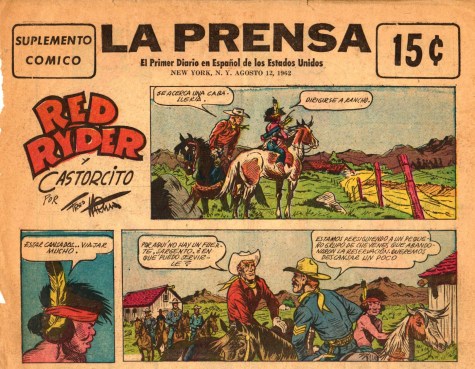
logoLa revista Cruce es un interesante  proyecto de la Escuela de Ciencias Sociales, Humanidades y Comunicaciones de la Universidad Metropolitana de Puerto Rico. Dedicada al análisis crítico de la contemporaneidad, Cruce  se ha convertido en un valioso medio cultural y académico. Comparto con mis lectores un artículo de Nancy Bird-Soto publicado en  el número más reciente de esta revista, donde se echa un vistazo al papel que ha jugado la prensa hispana en la ciudad de Nueva York.
__________________
NANCY BIRD-SOTO
  17 de febrero de 2014

La prensa ha sido una fuente crucial de información, diseminación cultural, como también elemento aglutinador en la vida de los hispanos en los Estados Unidos. Aunque los términos «hispano» y «latino» no son necesariamente intercambiables y que, de hecho, generan bastante polémica por sus aplicaciones o manipulaciones políticas -como ha ilustrado Suzanne Oboler, entre varias figuras de la crítica- se usa «hispano/a» en este caso, pues nos enfocamos en publicaciones periodísticas en español, las cuales incluyen temas y personalidades de habla hispana a ambos lados del Atlántico.

La prensa hispana en los Estados Unidos cuenta con una historia extensa, ya con más de 200 años, gracias a la publicación de El Misisipi en Nueva Orleáns, en 1808. Sobre el contexto general de este tipo de publicación en el siglo XIX, Nicolás Kanellos destaca que estos periódicos proporcionaban educación, cultura, entretenimiento, diseminación literaria, además de ser una alternativa a las organizaciones de noticias en inglés (239). Echemos, pues, un breve vistazo a tres publicaciones en español de la década del 1930 en Nueva York.

Se encuentra en formato digital una copia de COSAS en su volumen de ocho páginas del 3 de diciembre de 1931 [1]. El formato es sobrio, un tanto rústico, pero los recordatorios para adquirir una copia del mismo abundan de principio a fin. Lo recalcan en la última página en un encasillado en una columna a la izquierda: «Si COSAS es de su agrado, suscríbase inmediatamente». La urgencia intenta cautivar al público, aun cuando apenas dos páginas atrás aparece una ristra de piropos cursi dirigidos a prototipos si no cursis o folclorizados, también racionalizados: la madrileña, la andaluza, la mujer negra.

Resalta en esa misma página 6, el anuncio de la Zapatería Spencer. Haciéndose pasar por cuento o leyenda, el escrito titulado: «Logró que su mujer lo quiera» nos presenta a Juan, quien al comprar zapatos en la mencionada tienda luego de una racha de supuesto desaliño, consigue que su esposa lo quiera de nuevo. De este modo, una publicación sin demasiada inclinación política/ideológica, para un público estereotipado (a juzgar por los piropos), incluye lo que es una historia de vanidad -y de lo que supuestamente las mujeres equiparan con inspiración para amar de nuevo- como un anuncio.

Por su parte, en el número del 21 de abril de 1934, el periódico Ateneo, publica un escrito contra la vanidad. Bajo la autoría de «Delfín» (quien sería Delfín Fernández, descrito como «talentoso actor dramático»), la vanidad aparece como una «víbora» a la cual no se debe sucumbir, Con una impronta pro-trabajadores, Ateneo ofrece una gama de comentarios sociales que no pierden relevancia en 2014, ochenta años después. En el artículo: «La sombra del cristianismo», Francisco Robles Méndez hace un recorrido histórico y menciona en relación a los trabajadores que «la nueva religión les ofrece la libertad […] pero con la condición que se conviertan en esclavos de la iglesia».

Quizás tan (o más) punzante resulta ser la columna del Dr. Javier Serrano, «La esclavitud sexual», pues en ésta se contrasta la actitud hebreo-cristiana ante el cuerpo y la sexualidad con otras culturas que se sienten más cómodas con lo concerniente al sexo. El Dr. Serrano celebra el «placer de amar», acepta el control de la natalidad como algo lógico y saludable, y concluye con el siguiente planteamiento: «La mujer tiene perfecto derecho a satisfacer sus deseos sexuales con tal de que sus relaciones no ocasionen perjuicio al hombre que sea su compañero con aumento de familia, contagio de enfermedades o traicionando su confianza». A pesar del encuadre heteronormativo, estas palabras no solamente reconocen y celebran la sexualidad de las mujeres sino que, publicadas en 1934, parecería que en 2014 todavía no se han superado los clichés y las tergiversaciones sobre el tema de la sexualidad y de los derechos reproductivos.

Ya para 1938, encontramos el volumen 1 para los primeros diez días de agosto de Colonia Latina, con publicación en Brooklyn. Aparte de su corta extensión de seis páginas, el periódico cubre una serie de eventos que van desde lo internacional en primera plana («Rusia derrota al Japón en la frontera») hasta lo local («Baile de aniversario de la independencia del Perú») y lo pertinente a noticias latinoamericanas. Sobre asuntos de la comunidad hispana, o «nuestra colonia», Felipe Vargas incluye una columna titulada «Higiene». En ésta, con tono exageradamente laudatorio Vargas ensalza las «leyes tan sabias» del departamento de sanidad de Puerto Rico, pasando entonces a alertar a la colonia sobre productos alimenticios. La variedad de anuncios también se hace mayor y más evidente en Colonia Latina.
Como se puede inferir de este muestrario, las preocupaciones de la comunidad hispanohablante en Nueva York han sido atendidas por varias publicaciones y diversos intentos de establecer periódicos viables como plataformas para discurrir sobre lo internacional y lo local de manera dirigida al ser hispano en la metrópolis neoyorquina. Otras publicaciones como Frente Hispano (26 de junio de 1937), publican poesía de Rafael Alberti dedicada a Madrid y el contexto de la guerra civil española. Entre diversas publicaciones e intentos, hay otros periódicos que llegan a publicarse por varios años y hasta décadas, como lo es el caso de Gráfico. En cualquier caso, mediante lo señalado en COSAS, Ateneo y Colonia Latina, vemos aspectos del desarrollo del foro crítico-comunitario de la prensa hispana en Nueva York en la década de 1930.

Notas:

[1] Los periódicos señalados y el volumen o número en particular aparecen en el texto con la fecha de publicación.

Lista de referencias:

Kanellos, Nicolás et al. Ed. Handbook of Hispanic Cultures in the United States: Sociology. Houston: Arte Público Press, 1994. Impreso.

Oboler, Suzanne. Ethnic Labels, Latino Lives. Minneapolis: University of Minnesota Press, 1995. Impreso.

Nancy Bird-Soto es profesora de Literatura Latinoamericana y US Latin@ en la Universidad de Wisconsin-Milwaukee. Además, es autora de varias publicaciones académicas y su primer libro de cuentos, Sobre la tela de una araña, ha sido publicado en formato e-book con la Editorial Quinto Elemento (San Juan).

Columnas en Cruce:

«Bajo el cielo de Nuevo México» (3 de diciembre de 2012), «El desvivirse pronto y mal» (17 de diciembre de 2012), «Agar y ‘La charca’ Make A U-Turn» (28 de enero de 2013), «¿Habrá gato encerrado?» (4 de marzo de 2013), «Calibaneando» (8 de abril de 2013), «El filme Elysium como alegoría» (2 de septiembre de 2013), «Un exquisito Olé: del útero a Blancanieves» (4 de noviembre de 2013), «Cuestión migrante» (25 de noviembre de 2013)

Read Full Post »

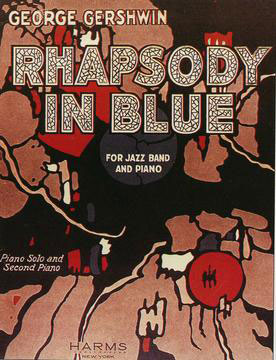
Score for “Rhapsody in Blue.”

Score for “Rhapsody in Blue.”

The Birth of «Rapsody in Blue’

By Jeff Nilsson

The Saturday Evening Post

George Gershwin’s Rhapsody in Blue turns 90 years old this week, and is barely showing its age. It remains as appealing and as fresh as it did at its 1924 premier, when it helped earn jazz a new degree of respect from America’s music critics.

Jazz was still quite young that year. It had only just emerged in the previous decade as African American composers began blending blues, folk music, popular ballads, and ragtime into a new musical form. For several years, jazz incubated in the juke joints, saloons, and nightclubs of New Orleans, building a following among the working classes and black community. Finally, in 1917, the Victor Talking Machine Company issued a recording of “Livery Stable Blues.” It was, many will argue, the first recording of jazz. It was also one of the first records to sell one million copies.

Despite the popularity of this, and the hundreds of jazz records that followed, jazz drew nothing but scorn from the voices of America’s cultural establishment: music critics, composers, conductors, and self-appointed moral guardians. But jazz became increasingly hard to ignore as young Americans were captivated by its bright, energetic sound. An entire generation, it seemed, was learning to play the saxophone, and the omniscient strains of the “Charleston” and “Black Bottom” were heard from urban night clubs to college campuses as the country entered its “Jazz Age.”

When the critics finally deigned to review jazz, they tended to favor adjectives like “barbaric” and “degenerate.” Jazz was, they said, “the product of incompetents,” and “a species of music invented by demons for the torture of imbeciles.” And some critics reminded readers that jazz was the creation of black musicians, which—for them—implied all manner of vices.

Yet jazz continued growing in popularity and sophistication. Musicians were taking the form into new areas, developing unique sounds and experimenting with new styles and instrumentation.

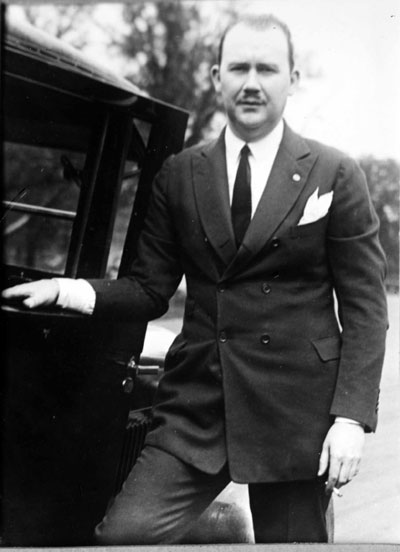
“Some of the musicians I most admired, who had until then regarded me with a slightly amused but tolerant air, now talked themselves red in the face about the insolence of “jazz boys” who wanted to force their ridiculous efforts upon the world.” Paul Whiteman, 1921. Source: Library of Congress.

One of the people helping to develop jazz was Paul Whiteman. In 1922, this popular bandleader was earning over $1 million a year conducting several jazz bands on the East Coast. He became so closely associated with the new musical form that he was called “The King of Jazz” (a term, by the way, he knew he didn’t deserve.)

And he became the target of criticism from the reviewers and music ‘experts’ who despised jazz.

Hoping to appease his critics, Whiteman proposed an all-jazz concert to be held at a classical-music venue, New York’s Aeolian Hall. The idea was not greeted with general enthusiasm. Whiteman later told the Post, “Some of the musicians I most admired, who had until then regarded me with a slightly amused but tolerant air, now talked themselves red in the face about the insolence of “jazz boys” who wanted to force their ridiculous efforts upon the world.”

Whiteman thought these critics might drop their objections to jazz if they heard how much it had evolved in recent years. “I believed that most of them had grown so accustomed to condemning the ‘Livery Stable Blues’ type of thing that they went on flaying modern jazz without realizing that it was different from the crude early attempts.”

Yet he couldn’t shake the fear that his concert would antagonize the critics even further. The musical establishment was slow to change. After all, he told the Post, “We were trying to get a favorable hearing from the most hidebound creatures in the world–educated musicians. It was educated musicians who scorned Wagner, resisted Debussy, and roasted Chopin.”

So when the afternoon of the concert arrived, Whiteman was pacing nervously backstage. He already knew he would lose almost half the money he had sunk into the concert, and there was no telling how his reputation would suffer if the critics panned the performance.

“Fifteen minutes before the concert was to begin I yielded to a nervous longing to see for myself what was happening out front…I slipped round to the entrance of Aeolian Hall. There I gazed upon a picture that should have imparted new vigor to my wilting confidence. It was snowing, but men and women were fighting to get into the door, pulling and mauling each other as they do sometimes at a baseball game, or a prizefight, or in the subway. Such was my humility by this time that I wondered if I had come to the right entrance.”

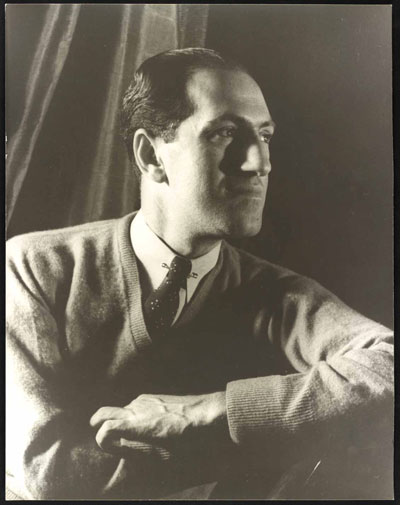
George Gershwin as photographed by Carl Van Vechten in 1937. Source: Library of Congress.

By 5:30p.m., he knew he had been in the right place with the right idea. Several critics came up to him when the concert was over to congratulate him. Some critics still remained unmoved, but others praised the entire performance, particularly its “first rhapsody written for a solo instrument and a jazz orchestra”—”The Rhapsody In Blue.”

It’s hard to believe that this masterpiece was created so haphazardly. Gershwin composed it in one month in-between writing music for Broadway musicals. He handed it to Whiteman’s arranger, Ferde Grofe, on February 4, which left only one week for the parts to be orchestrated and rehearsed. Moreover, the score Gershwin handed over wasn’t even complete.

The Rhapsody included several virtuoso passages for the piano that, at the time of performance, only existed in Gershwin’s head. At one point, when he played solo, he simply left a blank space in the score, indicating the orchestra was to remain silent. The only cue Whiteman had to prompt the orchestra to start playing again was a note in the score telling him to wait until he saw Gershwin nod his head.

Grofe thought the Rhapsody’s middle passage was weak, and told Gershwin it needed some additional music as a bridge between themes. Gershwin hunted around, and then found the score for a song he had been saving for a musical and hurriedly worked it in.

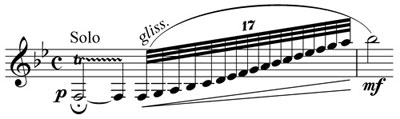
The opening measures for “Rhapsody in Blue,” featuring the famous clarinet glissando.

Even during rehearsal, Gershwin was still adding touches that contributed to the Rhapsody’s success. One of its most memorable passages is a long sliding rise of the clarinet in the opening measures.

During rehearsal, when the clarinettist in Whiteman’s band practiced this passage, he jokingly gave it a slurred, bluesy glide, making the clarinet rise into a wail. He had intended it as a joke, but Gershwin latched onto the sound and asked the clarinet player to repeat, and even exaggerate, that wail at the performance.

Whiteman had wanted his concert to prove that jazz no longer relied on improvisation. But Gershwin’s successful creation of the Rhapsody showed that a successful jazz artist must always be ready to respond instantly to new ideas, to discard the work of months to capture the genius of a moment.

Click here to listen to an audio recording of “Rhapsody in Blue” provided by the Library of Congress.


Read Full Post »

Read Full Post »

Imagen

Herman Melville contó las dos caras del Imperio Americano, por Greg Grandin
27 enero, 2014

Un capitán listo a conducir a la ruina a todos a su alrededor en pos de cazar una ballena blanca. Es una historia bien conocida y, a lo largo del tiempo, el loco Ahab de la más famosa novela de Herman Melville, Moby-Dick, ha sido utilizado como ejemplo del poder norteamericano desatado –más recientemente, la desastrosa invasión de Irak por George W. Bush.

Pero lo realmente aterrador no son nuestros Ahabs, los halcones que periódicamente quieren bombardear algún país pobre, sea Vietnam o Afganistán, hasta regresarlos a la Edad de Piedra. Es el arquetipo respetable el verdadero “terror de nuestra era”, como Noam Chomsky bautizó colectivamente a esa categoría social hace casi medio siglo. Los personajes realmente temibles son nuestros más sobrios políticos, académicos, periodistas, profesionales y gerentes, hombres y mujeres (aunque en su mayoría hombres) que se ven como moralmente serios y luego permiten las guerras, devastan el planeta y racionalizan las atrocidades. Son un tipo social que ha estado con nosotros durante largo tiempo. Más de un siglo y medio atrás, Melville, que tenía un capitán para cada rostro del imperio, encontró su perfecta expresión –para su momento y el nuestro.

Durante los últimos seis años, he estado investigando la vida de un matador de focas norteamericano, un capitán de navío llamado Amasa Delano que, en la década de 1790, estuvo entre los primeros habitantes de Nueva Inglaterra en navegar al Pacífico Sur. El dinero corría, había muchas focas, y Delano y sus colegas establecieron las primeras colonias no oficiales en las islas que se hallan fuera de la costa chilena. Operaban bajo el comando de un consejo informal de capitanes, dividieron el territorio, aseguraron el pago de deudas, celebraron el cuatro de julio y montaron tribunales ad hoc.  Cuando no había Biblia a mano, las obras completas de William Shakespeare, que se hallaban en las bibliotecas de la mayoría de los barcos, eran utilizadas para tomar juramento.

De su primera expedición, Delano llevó cientos de miles de pieles de foca a China, donde las cambió por especias, cerámicas y té para llevar de regreso a Boston. Durante un segundo y fallido viaje, sin embargo, ocurrió un hecho que haría famoso a Amasa –al menos entre los lectores de la ficción de Herman Melville.

He aquí lo que ocurrió. Un día de febrero de 1805 en el Pacífico Sur, Amasa Delano pasó casi todo el día abordo de un maltratado barco español de esclavos conversando con su capitán, ayudando con las reparaciones y distribuyendo comida y agua a sus pasajeros hambrientos y sedientos, un puñado de españoles y unos setenta hombres y mujeres de África occidental que pensó eran esclavos. No lo eran.

Se habían rebelado semanas antes, matando a la mayoría de la tripulación española junto con el esclavista que los llevaba a Perú para venderlos, y exigían ser regresados a Senegal. Cuando divisaron el barco de Delano, trazaron un plan: permitirle abordar y actuar como si todavía fueran esclavos, ganando tiempo para capturar nave y provisiones. Extraordinariamente, Delano, un experimentado marinero y pariente lejano del futuro presidente Franklin Delano Roosevelt, estuvo convencido durante nueve horas de que estaba en un barco de esclavos, averiado, sí, pero donde todo funcionaba según lo esperable.

Tras haber sobrevivido apenas al encuentro, escribió sobre la experiencia en sus memorias, que Melville leyó y convirtió en lo que muchos consideran su “otra” obra maestra. Publicada en 1855, en vísperas de la Guerra Civil, Benito Cereno es una de las historias más oscuras de la literatura norteamericana. Está contada desde la perspectiva de Amasa Delano, mientras vaga perdido por el sombrío mundo de sus prejuicios raciales.

Una de las cosas que atrajo a Melvile del Amasa histórico fue, sin dudas, la yuxtaposición entre su alegre auto-imagen –se consideraba un hombre moderno, un progresista que se oponía a la esclavitud- y su completa inconciencia respecto del mundo social que lo rodeaba. El Amasa real era bien intencionado, juicioso, moderado y modesto.

En otras palabras, no era Ahab, cuya persecución vengativa de una ballena metafísica ha sido utilizada como alegoría de todo exceso norteamericano, guerra catastrófica o política ambiental desastrosa, de Vietnam a Irak o a la explosión de la plataforma petrolera de British Petroleum en el Golfo de México en 2010.

Ahab, cuyos pasos sobre su pata de hueso por el puente de mando de su condenado navío entra en los sueños de sus hombres, que duermen debajo, como “los crujientes dientes de los tiburones”. Ahab, cuya monomanía es una extensión del individualismo nacido de la expansión norteamericana y cuya rabia es la de un ego que se rehúsa a ser limitado por la frontera de la Naturaleza. “Nuestro Ahab”, como llama un soldado del film Platoon de Oliver Stone a un despiadado sargento que asesina sin sentido a inocentes vietnamitas.

Ahab es ciertamente una cara del poder norteamericano. Mientras escribía un libro sobre la historia que inspiró Benito Cereno, he llegado a pensar en ella no como la más aterradora –o incluso la más destructiva. Piensen en Amasa.

***
Desde el fin de la Guerra Fría, el capitalismo extractivo se ha extendido sobre nuestro mundo pos-industrializado con una fuerza predatoria que conmovería incluso a Karl Marx. Desde el Congo rico en minerales a las minas de oro a cielo abierto de Guatemala, desde la hasta hace poco prístina Patagonia chilena a los terrenos de fracking de Pennsylvania y el norte ártico que se derrite, no hay grieta donde pueda esconderse roca, líquido o gas útil, ninguna jungla suficientemente inextricable como para mantener fuera a las instalaciones petroleras o a los cazadores de elefantes, ningún glaciar que sea un bastión, ningún esquisto duramente cocido que no pueda ser abierto a golpes, ningún océano que no pueda ser envenenado.

Y Amasa estaba allí desde el principio. La piel de foca puede no haber sido el primer recurso natural en el mundo, pero venderla representaba una de las primeras experiencias de la joven Norteamérica en los ciclos de “boom” y agotamiento en la extracción de recursos más allá de sus fronteras.

Con creciente frecuencia, comenzado en los principios de la década de 1790, y luego en una loca carrera que se inició en 1798,  los barcos partían de New Haven, Norwich, Stonington, New London y Boston en dirección a la media luna del gran archipiélago de islas remotas de que iban de la Argentina en el Atlántico a Chile en el Pacífico. Iban a la caza de piel de foca, que viste una capa aterciopelada, como ropa interior, justo debajo de un abrigo exterior de duro pelo gris-negro.

En Moby-Dick, Melville retrata la caza de ballenas como la industria norteamericana. Brutal y sangrienta, pero también experiencia que humaniza, trabajar en un barco ballenero requería una intensa coordinación y camaradería. De lo espantoso de la cacería, el despellejar la piel de la ballena de su carcasa y el infernal hervir de su grasa emergía algo sublime: la solidaridad humana entre los trabajadores. Y como el aceite de ballena que encendía las lámparas del mundo, la divinidad misma brillaba en esos esfuerzos: “La veréis resplandecer en el brazo que blande una pica o que clava un clavo; es esa dignidad democrática que, en todas las manos, irradia sin fin desde Dios”.

La caza de la foca era algo completamente distinto. Recuerda no a la democracia industrial sino al aislamiento y la violencia de la conquista, el colonialismo y la guerra. La caza de ballenas tenía lugar en las aguas abiertas a todos. La de la foca ocurría en tierra. Sus cazadores tomaban territorios, luchaban unos contra otros para mantenerlos y extraían toda riqueza que podían tan rápido como podían antes de abandonar sus reclamos sobre unas islas vacías y baldías. El proceso enfrentaba a marineros desesperados contra oficiales igualmente desesperados en un sistema de relaciones laborales de todo o nada tal y como se puede imaginar.

En otras palabras, la caza de ballenas puede haber representado el poder prometeico del proto-industrialismo, con todo lo bueno (solidaridad, interconexión y democracia) y lo malo (la explotación de los hombres y la naturaleza) que van con ello, pero la caza de focas predecía mejor el mundo pos-industrial actual, que sufre extracción, caza, perforación, frackeo y recalentamiento.

Las focas eran muertas de a millones y con una naturalidad que deja estupefacto. Un grupo de cazadores se ubicaba entre el agua y las colonias de pájaros y simplemente empezaba a dar palazos. Una sola foca hace un ruido similar al de una vaca o un perro, pero decenas de miles juntas, según testigos, suenan como un ciclón del Pacífico. Una vez que “comenzábamos el trabajo de la muerte”, recordaba un cazador, “la batalla me causaba un considerable terror”.

Las playas del Pacífico Sur llegaron a lucir como el Inferno del Dante. A medida que proseguía el apaleo, montañas de carcasas peladas y apestosas se amontonaban y las arenas se enrojecían con torrentes de sangre. La matanza era incesante y continuaba a lo largo de la noche a la luz de fogatas alimentadas con los cadáveres de focas y pingüinos.

Y tengan en mente que esta masacre masiva tenía lugar no por algo como el aceite de ballena, utilizado por todos para la luz y el fuego. La piel de foca era cosechada para abrigar a los ricos y satisfacía una demanda creada por una nueva fase del capitalismo: el consumo para la ostentación. Las pieles eran utilizadas para capas de damas, abrigos, manguitos y mitones, y para chalecos de caballeros. La piel de los cachorros no tenía mucho valor, así que algunas playas se convertían en orfanatos, con miles de recién nacidos abandonados a la muerte por hambre.

En el apuro, con todo, su piel interior también se podia utilizar –para hacer billeteras.

Ocasionalmente, los elefantes marinos eran apresados por su aceite de una manera aún más horrorosa: cuando abrían sus bocas para bramar, los cazadores les arrojaban piedras adentro y luego comenzaban a apuñalarlos con largas lanzas. Atravesados en múltiples lugares, como San Sebastián, el sistema circulatorio de alta presión de los animales manaba “fuentes de sangre, que saltaba a chorros a considerable distancia”.

Al principio, el ritmo frenético de la matanza no importaba: había tantas focas. En una sola isla, estimó Amasa Delano, había “dos o tres millones de ellas”, cuando los hombres de Nueva Inglaterra llegaron por primera vez a convertir “la matanza de focas en un negocio”.

“Si muchas eran muertas en una noche”, escribió un observador, “no se las extrañaría en la mañana”. Parecía en verdad como si uno pudiera matar a todas las que estaban a la vista un día y comenzar como si nada hubiera ocurrido al siguiente. En unos pocos años, sin embargo, Amasa y sus colegas habían llevado tantas pieles de foca a China que los depósitos de Cantón ya no tenían más lugar. Comenzaron a apilarlas en los muelles, pudriéndose bajo la lluvia, y su precio en el mercado se desplomó.

Para cubrir la pérdida, los cazadores aceleraron más el ritmo de la matanza –hasta que ya no quedaba qué matar. De ese modo, la sobreoferta y la extinción iban de la mano. En el proceso, la cooperación entre cazadores dio lugar a batallas sangrientas por colonias menguantes. Antes, llenar de pieles la bodega de un barco sólo requería unas pocas semanas y un puñado de hombres. A medida que las colonias comenzaron a desaparecer, se necesitaban más y más hombres para encontrar y matar el número exigido de focas, y a menudo eran dejados en islas desoladas durante períodos de dos o tres años, en los que vivían solos en chozas miserables bajo un clima pavoroso, preguntándose si acaso sus barcos regresarían por ellos.

“De isla a isla, de costa a costa”, escribió un historiador, “las focas han sido destruidas hasta el último cachorro disponible, en la suposición de que si el cazador Tom no mataba a toda foca a la visa, el cazador Dick o el cazador Harry no sería tan remilgado”. Para 1804, en la misma isla en que Amasa había estimado que había millones de focas, quedaban más marineros que presas. Dos años más tarde, no había foca alguna.

***
Existe una casi perfecta simetría en la inversa contraposición entre el Amasa de la realidad y el Ahab de la ficción, cada uno representante de una cara del Imperio Norteamericano. Amasa es virtuoso, Ahab vengativo. Amasa parece atrapado por la superficialidad de su percepción del mundo. Ahab es profundo; ve en las profundidades. Amasa es incapaz de advertir el mal (especialmente el propio). Ahab ve sólo “la intangible malignidad” de la naturaleza.

Ambos son representantes de las industrias más predatorias de su tiempo, con barcos que llevaban al Pacífico lo que Delano llamó alguna vez la “maquinaria de la civilización”, utilizando acero, hierro y fuego para matar animales y transformar allí mismo sus cadáveres en valor.

Pero Ahab es la excepción, un rebelde que caza su ballena blanca contra toda lógica económica racional. Ha secuestrado la “maquinaria” que representa su barco y se ha alzado contra “la civilización”. Va en pos de su quijotesco objetivo en violación del contrato que tiene con sus empleados. Cuando su primer oficial, Starbuck, insiste en que su obsesión perjudicará las ganancias de los propietarios del navío, Ahab desestima el asunto: “Que los propietarios se pongan en la playa de Nantucket a gritar más que los tifones. ¿Qué le importa a Ahab? ¿Propietarios, propietarios? Siempre me estás fastidiando, Starbuck, con esos tacaños de propietarios, como si los propietarios fueran mi conciencia”.

Insurgentes como Ahab, sin improtar cuán peligrosos para la gente que los rodea, no son los impulsores primarios de la destrucción. No son los que cazarán animales hasta su casi extinción –o que todavía están empujando al mundo al borde. Esos son los hombres que nunca disienten, que tanto en las primeras líneas de la extracción o en los cuartos traseros corporativos administran la destrucción del planeta, día sí, día no, inexorablemente, sin sensacionalismo ni advertencia, y sus acciones son controladas por una aún más grande serie de abstracciones y cálculos financieros realizados en los mercados bursátiles de Nueva York, Londres y Shanghai.

Si Ahab todavía es la excepción, Delano aún es la regla. En sus largas memorias, se muestra siempre leal a las costumbres y las instituciones de la ley marítima, incapaz de emprender una acción que pudiera dañar los intereses de sus inversores y aseguradores. “Toda mala consecuencia”, escribió, refiriéndose a la importancia de proteger los derechos de propiedad, “puede ser evitada por aquel que tiene el conocimiento de su deber y está dispuesto a obedecer fielmente sus dictados”.

Es en la reacción de Delano ante los rebeldes africanos, cuando al fin comprende que ha sido blanco de un elaborado engaño, que la distinción que separa al cazador de focas del de ballenas se vuelve clara. El  hipnótico Ahab –el “viejo roble más herido por el rayo”- ha sido tomado como prototipo del totalitario del siglo XX, un Hitler o Stalin de una sola pierna que utiliza su magnetismo emocional para convencer a sus hombre de seguirlo voluntariamente a su fatal cacería de Moby Dick.

Delano no es un demagogo. Su autoridad tiene raíces en una mucho más común forma de poder: el control del trabajo y la conversión de recursos naturales en disminución en ítems vendibles. A medida que desaparecieron las focas, también su autoridad. Sus hombres comenzaron primero a quejarse y luego a conspirar. A su vez, Delano tenía que apelar cada vez más al castigo físico, a latigazos incluso por la menor de las infracciones, para mantener el control de su barco –hasta, claro, que se cruza con el barco español de esclavos.

Puede que Delano, personalmente, haya estado en contra de la esclavitud, pero una vez que se dio cuenta de que había sido engañado organizó a sus hombres para que recuperaran el barco de esclavos y reprimieran violentamente a los rebeldes. Al hacerlo, destriparon a algunos y los dejaron retorciéndose en sus víceras con sus lanzas para cazar focas, que Delano describió como “extremadamente afiladas y tan brillantes como la espada de un caballero”. Atrapado por las tenazas de la oferta y la demanza, en el vórtice del agotamiento ecológico, sin más focas para matar, sin dinero por hacer, y con su propia tripulación al borde del motín, Delano puso a sus hombres a la caza –no de una ballena blanca sino de rebeldes negros. Al hacero, restableció su debilitada autoridad. En cuanto a los rebeldes sobrevivientes, Delano los volvió a esclavizar. La buena conciencia, por supuesto, indicaba devolverlos, a ellos y al barco, a sus dueños.

***
Con Ahab, Melville miró hacia el pasado, modelando a su obsesionado capitán en Lucifer, el ángel caído en rebelión contra los cielos, y asociándolo con el “destino manifiesto” de los Estados Unidos, con el avance imparable de la nación más allá de sus fronteras. Con Amasa, Melville vislumbró el futuro. Basándose en las memorias de un capitán real, creó un nuevo arquetipo literario, un hombre moral convencido de su rectitud pero incapaz de unir causa y efecto, inconciente de las consecuencias de sus actos aún cuando corre hacia la catástrofe.

Todavía están con nosotros, nuestros Amasas. Tienen conocimiento de su deber y se disponen fielmente a seguir sus dictados hasta los confines de la Tierra.

Aquí, publicación original de este artículo, en inglés.

Greg Grandin, columnista habitual de TomDispatch, acaba de publicar su nuevo libro, The Empire of Necessity:  Slavery, Freedom, and Deception in the New World.

Read Full Post »

« Newer Posts - Older Posts »