Feeds:
Entradas
Comentarios

Archive for junio 2014

I Freed Myself: African American Self-Emancipation in the Civil War Era

Marshall Poe 

New Books in History  June 5, 2014

David Williams

David Williams

Lincoln was very clear–at least in public–that the Civil War was not fought over slavery: it was, he 61eT-apOtrL._SL160_said, for the preservation of the Union first and foremost. So it’s not surprising that when the conflict started he had no firm plan to emancipate the slaves in the borderland or Southern states. He also knew that such a move might prove very unpopular in the North.

So why did he issue the Emancipation Proclamation on January 1, 1863? There are many reasons. According to David Williams‘ fascinating new book I Freed Myself: African American Self-Emancipation in the Civil War Era (Cambridge University Press, 2014), an important and neglected one has to do with African American self-emancipation. After the war began, masses of slaves began to leave the South and head for the Northern lines. The Union forces received them as “contraband” seized from the enemy during wartime. As such, their status was uncertain. Many wanted to fight or at least serve as auxiliaries in the Union armies like freemen, but they were still seen as property. As Williams points out, the North certainly needed their manpower–as Lincoln knew better than anyone. Bearing this in mind, the President felt the time was propitious to do what he thought was right all along–free the slaves. Listen in.

Read Full Post »

The Political War

Allen C. Guelzo

The New York Times  June 5, 2014

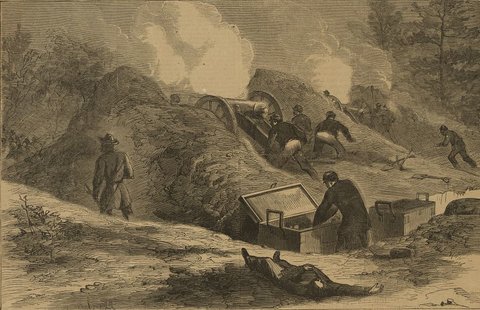
A Union artillery battery at Cold Harbor. Library of <Congress

A Union artillery battery at Cold Harbor. Library of <Congress

Pity Abraham Lincoln. Everything that should have gone right for the Union cause in the spring of 1864 had, in just a few weeks, gone defiantly and disastrously wrong.

For two years, the 16th president had toiled uphill against the secession of the Confederate states, against the incompetence of his luckless generals and against his howling critics from both sides of the congressional aisle. Finally, in the summer and fall of 1863, the course of the war had begun to turn his way. Two great victories at Gettysburg and Vicksburg staggered the Confederates, and those were followed by a knockdown blow delivered at Chattanooga by the man who was fast becoming Lincoln’s favorite general, Ulysses S. Grant. “The signs look better,” Lincoln rejoiced, “Peace does not appear so distant as it did.”

Peace was not the only thing that would be brought closer by victory. The presidential election of 1864 was looming, and if Lincoln had any desire for a second term, a victorious end to the war was the surest way to secure it. He had never seriously considered taking what appeared to some people as an obvious shortcut to remaining in office – declaring the war to be a national emergency and suspending elections for the duration, though two Union governors, in Indiana and Illinois, had done what amounted to that on the state level. That only made the need for military victory all the more urgent, and so Lincoln installed Grant as general in chief of all the Union armies in March 1864, and Grant obliged him with a comprehensive strategic plan that united Union assaults in Georgia, Alabama and, under his own direct command, in Virginia.

None of it worked, and the place where it seemed to work the least was under Grant’s own nose. Crossing the Rapidan River on May 4, 1864, Grant’s army entered at once into a series of head-to-head contests with Robert E. Lee’s fabled Army of Northern Virginia. Fighting three pitched battles – at the Wilderness, Spotsylvania Court House and the North Anna River – and enduring numerous smaller collisions, Grant worked his way down toward the Confederate capital at Richmond, which he got within 10 miles of by the end of the month. But the fighting had cost a colossal total of 40,000 dead, wounded and missing, and Lincoln gloomily understood that the Northern public “hold me responsible.”

They weren’t the only ones. Radicals within Lincoln’s own Republican Party in Congress had long been convinced that Lincoln’s preference for a soft postwar Reconstruction was dis-heartening the Republican base. They were further angered when the Republican national committee, headed by Lincoln’s ally Edwin D. Morgan, met in late February 1864 and announced that the party would hold its presidential nominating convention in Baltimore in June, not as “Republicans,” but as the “National Union Convention.” As Grant’s campaign in Virginia ground agonizingly forward, the most vehement of the Radicals – led by Frederick Douglass, Wendell Phillips and Horace Greeley – staged a protest convention in Cleveland’s Cosmopolitan Hall, and on June 4 nominated the Radical darling, John Charles Fremont.

If ever there was a moment when Lincoln needed good news from the battlefield, it was now, and Grant wanted to deliver it. The staggering blows he had dealt the rebels convinced him a little too easily that the Confederates were “really whipped,” that “our men feel they have gained morale over the enemy and attack with confidence,” and that with one more blow, “success over Lee’s army is already assured.” On June 1, Grant launched a hasty strike at Cold Harbor, before the bulk of his army could get into action. Even so, the attack cracked the Confederate defenses on the Cold Harbor road and forced them to fall back. With another good push, Grant might just be able “crush Lee’s army on the north side of the James, with the prospect in case of success of driving him into Richmond, capturing the city perhaps without a siege, and putting the Confederate government to flight” – not to mention providing a rousing military endorsement for Lincoln’s renomination.

But Grant, in his eagerness, had badly misread the Confederates, and when he launched a full-dress attack at Cold Harbor on June 3, it resembled (as one Confederate general put it) “not war but murder.” Well-prepared Confederate infantrymen mowed down federal at-tackers. Grant’s army sustained 3,500 casualties in the main attack and another 2,500 in related actions that day, and the armies settled into a miserable standoff.

Yet Grant carefully limited his report of the Cold Harbor debacle to four terse sentences, including the claim that “our loss was not severe.” And in the official report of the campaign he filed after the war, Cold Harbor consumed just three sentences in 51 pages. For years afterward, Grant’s doubters wondered whether he had deliberately soft-pedaled the failure at Cold Harbor in order to limit political damage to Lincoln on the eve of the Baltimore convention. There is no direct evidence of such collusion; still, Grant’s dismissal of his losses as “not severe” is peculiar.

Even more peculiar, newspaper reporting from the field was shut down by the War Department because of “a violent storm.” The New York Times (whose editor, Henry Raymond, was the new chairman of the National Union Party’s national Committee) did not publish an ac-count of the June 3 attack for three more days, and even then, merely observed that “losses were inconsiderable.”

Strangest of all, however, was Grant’s refusal to propose a truce to recover the wounded from the battlefield until June 7. Military tradition dictated that only the loser of an engagement asked for such a truce. Even though there could not have been much debate about who had won and who had lost at Cold Harbor, Grant delayed the truce agreement (and any public admission of defeat) for four days, while men suffered and died from thirst, blood loss and exposure.

By June 7, however, any anxiety that bad news from Cold Harbor would endanger Lincoln’s nomination was past. That same day, the Union National Convention opened at the Front Street Theater in Baltimore, with Robert J. Breckinridge asking triumphantly, “Does any one doubt that this convention intends to say that Abraham Lincoln shall be the nominee?” They did not, and the next day, undisturbed by any news of Cold Harbor, Lincoln – described by one state delegation as “the second savior of the world” – was unanimously renominated by the convention.

Given how diligently the National Union Party’s staff had worked to ensure Lincoln’s renomination in the months before the Baltimore assembly, even the freshest news from Cold Harbor might not have made much difference. But keeping the ill wind at bay certainly did not hurt. Nor was it uncommon in this war for the impact of bad military news to be blunted by creative hesitation. One of Grant’s corps commanders was overheard telling a staffer not to report actual casualty figures: “It will never do, Locke, to make a showing of such heavy losses.” After that, wrote the officer who overheard him, “I always doubted reports of casualties.” It irked one Philadelphia newspaper on June 9 to admit that “we can scarcely find out that there was fought one of the bloodiest battles of the war, yet, until yesterday, no one knew its result.” This was, in the end, a highly political war, in which military decisions frequently turned before the winds of politics. And in the coming months, Lincoln would find far greater political challenges in the path of re-election than the ones presented by Cold Harbor.

Follow Disunion at twitter.com/NYTcivilwar or join us on Facebook.


Sources: R.P. Basler, ed., “Collected Works of Abraham Lincoln”; Larry T. Balsamo, “’We Cannot Have Free Government without Elections’: Abraham Lincoln and the Election of 1864,” Journal of the Illinois State Historical Society 94 (Summer 2001); Gordon C. Rhea, “Cold Harbor: Grant and Lee, May 26-June 3, 1864”; Ralph Morris Goldman, “The National Party Chairmen and Committees: Factionalism at the Top”; Andrew F. Rolle, “John Charles Fremont: Character As Destiny”; The War of the Rebellion: A Compilation of the Official Records of the Union and Confederate Armies, Series One, 37 (pt 1); Gordon C. Rhea, “The Overland Campaign,” Hallowed Ground 15 (Spring 2014); The New York Times, June 6 and 8, 1864; Ernest B. Furgurson, “Not War But Murder: Cold Harbor, 1864”; D.F. Murphy, “Proceedings of the National Union Convention Held in Baltimore, Md., June 7th and 8th, 1864”; Morris Schaff, “The Battle of the Wilderness”; David E. Long, “Cover-up at Cold Harbor,” Civil War Times Illustrated 36 (June 1997).


Allen C. Guelzo, professor of the Civil War era at Gettysburg College, is the author, most recently, of “Gettysburg: The Last Invasion.”

Read Full Post »

Who Was Jim Crow?

HNN Staff   October 31, 2011

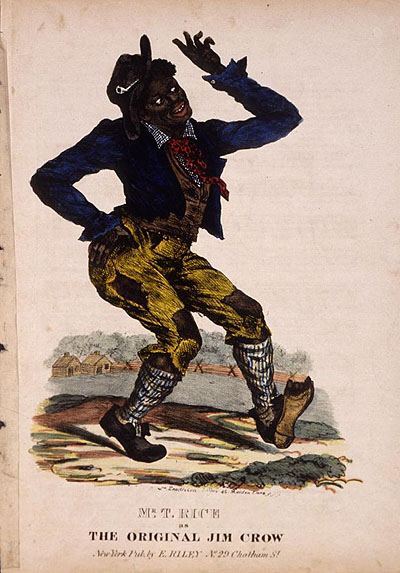
Cover to an early edition of "Jump Jim Crow" sheet music (c 1832) -- Wikipedia -

Cover to an early edition of «Jump Jim Crow» sheet music (c 1832) — Wikipedia


Jim Crow laws, as most Americans should (hopefully) know, were the racist segregation laws which cemented white supremacy over African Americans throughout the United States from the end of Reconstruction in 1877 to the civil rights movement’s victories in the mid-1960s.

But who the heck was Jim Crow, and why did his name grace some of the most odious laws in American history?

Jim Crow was not actually a person—the name comes from an 1828 show by Thomas Dartmouth “Daddy” Rice.  Rice, in a proto-minstrel act, would put on blackface and sing “Jump Jim Crow,” with the refrain:

Wheel about, an’ turn about, an’ do jis so;
Eb’ry time I wheel about, I jump Jim Crow.

The song was quite popular in the early half of the 1800s, and “Jim Crow” quickly became a disparaging term for blacks, but it wasn’t until toward the end of the century that the name was applied to the various post-Reconstruction “black codes” in the South (the New York Times referred to Louisiana’s “‘Jim Crow’ Law” as early as 1892).


The song was quite popular in the early half of the 1800s, and “Jim Crow” quickly became a disparaging term for blacks, but it wasn’t until toward the end of the century that the name was applied to the various post-Reconstruction “black codes” in the South (the New York Times referred to Louisiana’s “‘Jim Crow’ Law” as early as 1892). – See more at: http://hnn.us/article/142719#sthash.iswHNd5D.dpuf

Jim Crow laws, as most Americans should (hopefully) know, were the racist segregation laws which cemented white supremacy over African Americans throughout the United States from the end of Reconstruction in 1877 to the civil rights movement’s victories in the mid-1960s.

But who the heck was Jim Crow, and why did his name grace some of the most odious laws in American history?

Jim Crow was not actually a person—the name comes from an 1828 show by Thomas Dartmouth “Daddy” Rice.  Rice, in a proto-minstrel act, would put on blackface and sing “Jump Jim Crow,” with the refrain:

Wheel about, an’ turn about, an’ do jis so;
Eb’ry time I wheel about, I jump Jim Crow.

The song was quite popular in the early half of the 1800s, and “Jim Crow” quickly became a disparaging term for blacks, but it wasn’t until toward the end of the century that the name was applied to the various post-Reconstruction “black codes” in the South (the New York Times referred to Louisiana’s “‘Jim Crow’ Law” as early as 1892).

– See more at: http://hnn.us/article/142719#sthash.iswHNd5D.dpuf

Cover to an early edition of «Jump Jim Crow» sheet music (c 1832) — Wikipedia

Jim Crow laws, as most Americans should (hopefully) know, were the racist segregation laws which cemented white supremacy over African Americans throughout the United States from the end of Reconstruction in 1877 to the civil rights movement’s victories in the mid-1960s.

But who the heck was Jim Crow, and why did his name grace some of the most odious laws in American history?

Jim Crow was not actually a person—the name comes from an 1828 show by Thomas Dartmouth “Daddy” Rice.  Rice, in a proto-minstrel act, would put on blackface and sing “Jump Jim Crow,” with the refrain:

Wheel about, an’ turn about, an’ do jis so;
Eb’ry time I wheel about, I jump Jim Crow.

The song was quite popular in the early half of the 1800s, and “Jim Crow” quickly became a disparaging term for blacks, but it wasn’t until toward the end of the century that the name was applied to the various post-Reconstruction “black codes” in the South (the New York Times referred to Louisiana’s “‘Jim Crow’ Law” as early as 1892).

– See more at: http://hnn.us/article/142719#sthash.iswHNd5D.dpuf

Read Full Post »

Black Women Entertainers in a Revolutionary Time: An Interview with Historian Ruth Feldstein – See more at: http://hnn.us/article/155821#sthash.pv6BHGCY.dpuf

Black Women Entertainers in a Revolutionary Time: An Interview with Historian Ruth Feldstein

Robin Lindley

HNN June 9, 2014


“Culture was a key battleground of the civil rights movement,” writes historian Dr. Ruth Feldstein who explores race and gender as well as the connection of art and activism in her compelling new study, How It Feels to Be Free: Black Women Entertainers and the Civil Rights Movement (Oxford University Press).

Dr. Feldstein’s book focuses on the activism and influence of six prominent black performing artists: Lena Horne, Nina Simone, Abbey Lincoln, Miriam Makeba, Cicely Tyson and Diahann Carroll. As these women entertained America they also spoke out in various ways for equality and justice in support of the civil rights struggle.

The trailblazer, brilliant vocalist and star of stage and screen Lena Horne, led the way with her performances in the 1930s and 1940s that introduced wide audiences to a fresh and novel talent, and her activism that grew, crossed many divides, and matured in the 1960s. In the shadow of Horne, the five younger artists each broke new ground in her own way to transform American culture and to reshape outdated views of race and gender, forging black power and evolving feminism.

In her sweeping account, Dr. Feldstein details the work and struggle of each of these women who achieved fame in male-dominated cultural industries while resisting racist and sexist stereotypes. She discusses the how South African singer Miriam Makeba connected the American civil rights movement with the anti-apartheid campaign in her native land; how jazz icon Nina Simone confronted audiences with the brutality of racial discrimination in her fiery, moving songs; how the outspoken vocalist and actress Abbey Lincoln broke new ground in music and film; how actress Diahann Carroll made history as television’s Julia in 1968 and then struggled with the ways she was typecast; and how award-winning actress Cicely Tyson advocated for human rights and for dignified portrayals of African Americans on screen and television as she starred in renowned films such as Sounder and The Autobiography of Miss Jane Pittman.

How It Feels to Be Free has been praised for its originality, insight, and its blending of political and cultural history. Dr. Daphne Brooks of Princeton University wrote: “By placing black female musicians and actors at the center of Civil Rights history, Ruth Feldstein has written a tremendously important study that challenges readers to consider the imaginative activism of artists who performed progressive representations of black womanhood. How It Feels to Be Free takes readers on a critical journey across the mid-twentieth century freedom struggle by way of women performers who rehearsed, remixed, and renegotiated civil rights and black power politics, as well as emergent feminisms.» And Peniel E. Joseph, author of Stokely: A Life commented: «How It Feels to Be Free stands out as an enormous act of historical recovery. Ruth Feldstein masterfully illuminates the way in which black women entertainers actively participated in the civil rights struggle and helped to transform American and international race relations. A powerful and thought provoking book that will change the way we look at gender, civil rights, and the black freedom movement.»

Dr. Ruth Feldstein is an associate professor of history at Rutgers University, Newark.  Her teaching and research focus on the intersections of gender and race and the relationships between culture and politics. Her first book was Motherhood in Black and White: Race and Sex in American Liberalism, 1930-1965, an intellectual and cultural history of liberalism and race from the New Deal to the Great Society.

Dr. Feldstein graciously responded by email to a daunting series of questions on her new book.

Robin Lindley: How did you come to write about the civil rights movement through the stories of this group of black female entertainers?

Dr. Ruth Feldstein: For one, I wanted to tell the stories of women whose voices have not been heard. While it is a bit ironic to say that about amazing vocalists like Lena Horne, Nina Simone, or Abbey Lincoln, these and other women have been marginal to our political histories of these decades. Theirs are not the melodies that we tend to hear at Martin Luther King Day celebrations each January. Yet there was far more to civil rights than “I have a dream,” and there was far more to culture and civil rights than “We Shall Overcome.”

I also wanted to consider how politics and social movements were relevant to the thousands upon thousands of Americans and non-Americans who did not (or today, do not) consider themselves particularly political. After all, plenty of people never marched or boycotted or worked on behalf of any particular candidate in the late 50s into the 70s. Nevertheless, they encountered black activism when they bought certain albums or listened to certain songs or watched particular films or television shows. In other words, we need to expand the parameters in which we see people acting politically. When we do so, we can see that these six trailblazing women were critical to what were arguably the two most transformative social movements of the twentieth century: civil rights and women’s liberation.

Abbey Lincoln

Robin Lindley: How did you choose the six women you focus on in the book? What connections did you find in terms of the civil rights movement?

Dr. Ruth Feldstein: That’s a great question, and plenty of readers offer me lists of their favorites who could have been included. I chose to focus on these six women because of their diversity and because of what they had in common.

In terms of their diversity, the book traverses television and film, jazz and pop music, the NAACP and the Black Panthers, Selma and South Africa. That is, I incorporated women entertainers who worked across different cultures and industries—and not just women in jazz or women on television; I also wanted to tell a story that cuts across national boundaries and typical political divides of liberalism and radicalism.

On the other hand, even with these differences, the six women I write about did have a lot in common: they all had relationships to organized political movements for racial equality; they all were popular within, and beyond, the United States; and they were all were political subjects and intellectuals and not “merely” entertainers. Perhaps of greatest significance, though, they shared a loosely connected community. The women in How It Feels To Be Free were essential to a larger interracial group of activists/entertainers that came of age culturally and politically in New York—primarily in the Village and in Harlem–in the late 1950s. Their communities included HarryBelafonte, James Baldwin, Lorraine Hansberry, Maya Angelou, and Ossie Davis,to name just a few. The book is a history of that urban subculture and its gendered dimensions at the same time that it offers snapshots of particular figures.

This is not to say that there were not many other black women entertainers from this period whose careers mattered to the civil rights movement. I feel lucky to have been researching and writing this book when other writers and scholars have told wonderful stories about other women, and I look forward to reading more of this exciting work.

Robin Lindley: What was your research process? Did you have an opportunity to interview any of your subjects?

Dr. Ruth Feldstein: My process was to research and write, research and write, chapter by chapter; initially, each chapter felt relatively independent. As the process continued over time, I started to see more and more links between and among the women. In fact, they were connected to each other in all sorts of ways. But this wasn’t necessarily obvious at the outset because critics from the late 1950s—when Nina Simone, Miriam Makeba, Abbey Lincoln, Diahann Carroll, and Cicely Tyson all came of age professionally—wrote about each one in isolation. It took time for me to see that they were an emergent collectivity of ambitious black women performers who together were building their careers, innovating, and making political commitments.

I made a conscious decision not to interview the women I was writing about. I made that choice because I really wanted to listen in on the conversations that were happening in that period of time. My main questions were about how people at the time made these women and their careers meaningful—how the women worked to represent themselves and how other people reacted to them and made them celebrity-activists. I felt that talking to them decades later would certainly be incredibly interesting, but would not necessarily help me to answer those questions and, in fact, could possibly distract me from those questions.

Robin Lindley: I think many Americans think first of male leaders such as Dr. King and Malcolm X or Stokely Carmichael or male entertainers such as Harry Belafonte and Sidney Poitier when they think of the sixties and the civil rights movement. What are a few things you would like others to know about the role of women in the movement?

Dr. Ruth Feldstein: I absolutely agree with you, Robin. The story of the civil rights movement—at least the one that I learned in grade school, high school and even into college, and the one that my students tell me they are still getting in high school—tends to revolve around male leaders and songs like “We Shall Overcome” as the ubiquitous background soundtrack. Occasionally a woman—usually Rosa Parks—shows up in that story; but even then she tends to appear as the “tired, old seamstress,” who “suddenly” decided not to give up her seat on a bus in Montgomery (this despite her decades of activism). But when we bring black women entertainers center-stage, the history of civil rights looks different.

For example, in 1963, just a month after the March on Washington and Martin Luther King’s iconic “I Have a Dream” speech, Nina Simone wrote the song “Mississippi Goddam.” The song had an upbeat tempo, but offered incredibly incendiary lyrics filled with anger. Simone rejected the notion that race relations could change gradually and shattered the assumption that African Americans would patiently use the legislative process to seek political rights. She even declared, “But this whole country is full of lies, You’re all gonna die and die like flies.”

In a moment that many people today remember as the high water mark of liberal, interracial, nonviolent, church-based activism that culminated in passage of landmark civil rights legislation, Simone dramatically departed from conventional wisdom and imagined another kind of black freedom. A few years later, the vision that she offered in “Mississippi Goddam” would become known widely as black power.

Nina Simone

Contrary to the neat historical trajectories which assume that black power only arose in the late 1960s, Simone’s album makes clear that black power perspectives were already taking shape and circulating widely years earlier—in organizations, but also on vinyl albums that music fans played around the world. So by listening to this woman’s voice, we can reperiodize civil rights, and mess up what is sometimes an overly schematic story of civil rights versus black power.

But there’s more to it than that. When Simone denounced racism and those who called on black Americans to wait patiently for progress, she did so in ways that emphasized female power. In one verse, Simone sang:

Yes, you lied to me all these years

You told me to wash and clean my ears

And talk real fine, just like a lady

And you’d stop calling me Sister Sadie.

But this whole country is full of lies

You’re all gonna die and die like flies

I don’t trust you any more

You keep on saying “Go Slow.

When Simone rejected the impulse to “talk like a lady” she was saying that black women did not have to focus on appearance, diction, and manners—to “wash and clean my ears,” to “talk like a lady” as she put it—to claim their rights; she argued that doing so did not stop whites from calling black women “Sister Sadie” instead of their real names. She was saying that women should not have to behave a certain way to be recognized as deserving. Here and in other songs, Simone staged an assault—simultaneously—on racism and on expectations of female propriety. For her, black power was about black female power.

This is just one example of how listening to women allows us to reconceptualize as well as reperiodize histories of the movement.

Robin Lindley: Lena Horne is a pivotal and overarching figure in your book. How did she influence the civil rights movement and the younger women you profile?

Dr. Ruth Feldstein: Lena Horne was older than the other five women in How It Feels to Be Free. In the 1930s and 40s, when Makeba, Simone, Carroll, Lincoln were kids, really, Horne challenged long entrenched assumptions about black women. For example, in 1941, she became the first African American woman to sign a contract with a major Hollywood studio, one in which MGM executives acceded to her demand that she not play any maids on film. She rejected definitions of black women as either sexualized Jezebels or as caretaking and subordinate Mammies. These were powerful and deeply ingrained images that had boxed in all black women for centuries. Instead, Lena Horne made it possible for fans across lines of race to imagine a black woman as glamorous, and as an unavailable object of desire. In many respects, then, Horne created the template for the modern and glamorous politicized female black celebrity.

In the late 1950s, younger black women encountered, played with, and bent sometimes beyond recognition that template. Diahann Carroll was a singer and actress who invited numerous comparisons to Horne. Starting in the 50s, Carroll worked to update and maintain Horne’s insistence that that a black woman could simultaneously be respectable, sexual, and glamorous. Other black women performers also grappled with Horne’s image. But they did more to redefine celebrity culture and they transformed meanings of glamour for black women.

Lena Horne

 Robin Lindley: Miriam Makeba was South African but performed extensively in the US. Wasn’t she important in terms of educating many about international liberation movements and conditions in the US?

Dr. Ruth Feldstein: Miriam Makeba was a South African singer who came to the U.S in 1959. Within days of arriving, she made her American debut and was a big sensation. But in contrast to her good friend, Nina Simone, Makeba insisted that she was “just” an entertainer, and she avoided confrontations and overtly political lyrics. Nevertheless, she was able to make connections for her audiences in the United States between domestic black activism and anticolonial struggles. Americans who knew little about Africa beyond Tarzan paid attention to anti-apartheid activism when they saw the exiled Makeba on the popular Steve Allen television show and in the commercial mainstream in the early 1960s. In all sorts of ways—with her music, her lyrics, her appearance, her wardrobe, with what she did and said on-stage and off—she was able to get white and black Americans to see and understand black South Africans who lived under apartheid rule. Without ever using the phrase “black power” in this period, Makeba affirmed the power of blackness and affirmed the power of Africa; she offered a vision of black power for women and men across borders.

Robin Lindley: Actress Cicely Tyson may be best remembered now for her groundbreaking roles in Sounder and The Autobiography of Miss Jane Pittman, but she was also deeply committed to the civil rights movement. How do you see Tyson’s role?

Dr. Ruth Feldstein: Tyson’s commitment to the civil rights movement was not separate from her acting career; in fact, her commitment to civil rights expressed itself directly in relation to the groundbreaking roles she worked so hard to get. For example, she avoided musicals because she felt that so many white consumers assumed that black performers were “naturally” drawn to those roles, and she refused to adhere to those assumptions. Starting in 1959, when she played the part of a young African woman on the television drama Camera Three, Tyson wore her hair in a short, cropped Afro. She maintained her short Afro in her role as a secretary to a liberal white social worker on the critically acclaimed (but short-lived) television drama on CBS, East Side, West Side (1963). It was “my way of picketing” she later said about her hair.

Tyson also did not work for long stretches—in part because she was so selective about what parts she would accept and because she felt so strongly that it was important to represent black women in certain ways. And when her career did take off in the 1970s, many of her most significant roles engaged with the political debates going on around her—from welfare to police brutality, to name just two—even in stories like Sounder that were set in the past.

Robin Lindley: How did these artists affect the feminist movement?

Dr. Ruth Feldstein: The women I write about did not necessarily call themselves feminists. But gender was critical to their vision of black freedom. They offered critiques and made demands that became central tenets of feminism generally and of black feminism specifically. I’ll offer just a few examples, but there are many to choose from.

Abbey Lincoln’s career started as in nightclubs; she wore tight fitting low cut gowns and was known as the “sepia Marilyn Monroe.” But by the late 1950s, she had rejected that music and that sexualized image. She had realized “how wonderful it is to be a black woman,” she said, and with that, opted for more experimental jazz vocals and a very different personal style.

A few years later, in 1968, Lincoln, known for her connections to black nationalist politics and her experimental jazz vocals, co-starred alongside Sidney Poitier in the film, For Love of Ivy. Ivy, a young woman domestic (Lincoln in a straight-haired wig), wants to leave her job, is financially independent, hard-working, sexually active, and, as she explains to the Poitier character on their first date, uninterested in marriage. The sex scene between the two stars was one of the first times a commercial Hollywood film featured unmarried black characters in an elegant and romantic setting. “Nobody asks what I want,” declares Ivy, toward the end the film, as she protests the ways that both the white family and Poitier’s character try to control her.

Off-screen, Lincoln talked about the film in ways that highlighted the strength and dignity of working class black women. She discussed the limited options they had for work, and spoke out about her own experiences as a domestic. In other words, Lincoln put the character’s quest for independence and autonomy—economic andsexual—at the center of the story. She anticipated a black feminist perspective that took into account the aspirations and experiences of working-class black women.

In another example, in South Africa, Miriam Makeba was nicknamed the “nut brown baby.” She disapproved of the U.S.-made skin-lighteners that were so popular among her peers in the early 1950s and refused to appear in advertisements for these products that sexualized and celebrated light skinned black women.

Coming back to Nina Simone, many of what we think of as Simone’s civil rights songs emphasized female power. In addition to “Mississippi Goddam,” “Pirate Jenny,” for example, was a song about a poor working class black woman’s fantasies of violence; she feels empowered as she imagines enacting revenge against the white townspeople who watch her “gawking” as she scrubs floors. In the song “Four Women” (1966), Nina Simone sang about four different types of black women from different periods in U.S. history, each of whom wrestled with the combination of racism, sexism, and color consciousness. The final woman in the song, “Peaches” would “kill the first mother I see” because her “life has been rough.” “Four Women” became one of Simone’s most popular songs.

So too, Cicely Tyson’s choice to take on distinctly unglamorous roles had everything to do with both race and gender. Sounder’s emphasis on a loving black family directly countered images of black families as “dysfunctional,” and as caught in a “tangle of pathology” as Daniel Patrick Moynihan had put it in 1965. Tyson talked about this when she promoted the film: If it were not for unified, loving black families, she said “we would not be where we are today as a race of people.”

Tyson was also countering images of black women—and black mothers specifically–that were popular in the late 60s early 70s: as promiscuous “bad mothers” who were only concerned about getting the next welfare check. After seeing Sounder, one white woman wrote to Tyson that “I never knew that kind of love went on between a black man and woman. I thought you were sexual animals.” This comment is just one indication that Tyson’s performances were never just about race and civil rights, or just about gender and women’s liberation, but were always about both. Tyson’s portrayal of Rebecca spoke to how intertwined issues of race and gender were in the performance and consumption of black womanhood.

Cicely Tyson

Robin Lindley: Didn’t each of these women artists suffer career setbacks because of their political expressions and promotion of black activism?

Dr. Ruth Feldstein: The women I write about were enormously popular, in the United States and around the world. Miriam Makeba sang at John F. Kennedy’s birthday party celebration at Madison Square Garden in 1962 (where Marilyn Monroe made an even more famous appearance!), and was the first South African singer to receive a Grammy award; Diahann Carroll won a Tony award for No Strings in (1962); and Cicely Tyson and Diahann Carroll each received Oscar nominations for best actress in a lead role for their performances in Sounder (1972) and Claudine (1974).

At the same time, it is worth emphasizing the risks that black women took when they straddled the worlds of culture and politics. After one influential critic accused Abbey Lincoln of being a “professional Negro” for singing songs that had political content on the album Straight Ahead in 1961, she did not record an independent album for over a decade. Miriam Makeba was exiled from her home country of South Africa for decades because of her associations with anti-apartheid activism. She was initially very successful in the United States but, when she married Stokely Carmichael in 1968—an activist known for his connections to black power—she was effectively blacklisted in the American entertainment industry. Nina Simone faced criticism and threats of censorship when she wrote and performed songs like “Mississippi Goddam” that challenged white Americans and denounced interracialism. Cicely Tyson waited years between parts, and almost gave up acting altogether, because she refused to accept roles that she felt sexualized or otherwise demeaned black women. When Diahann Carroll—long associated with glamour and high fashion—took on the part of a working class, single black mother (in the film Claudine, in 1974), she earned an Academy Award nomination, but she also faced a tremendous amount of criticism—for “slumming,” for being incapable of playing the part of a poor black woman in an “authentic” manner, and more. She felt her career floundered after that.

It was never easy, and the women I write about negotiated their ambition and talent and their political commitments in all sorts of ways.

It’s also worth adding that this pattern of silencing them persists today. Nina Simone has become an increasingly iconic figure, especially since her death. A few years ago, my daughter’s public school teacher asked me to come in and talk to the class about music and civil rights. I prepared a program for them about her and about “Mississippi Goddam.” The morning I was scheduled to go in, I got a call from the assistant principal saying that they would not let me play that song to middle schoolers. “Mississippi Goddam” remains deeply controversial in some places.

Robin Lindley: One interesting theme was how several of these black women challenged mainstream white standards of beauty—and that seems an important part of this story. How did some change their appearance and how did white audiences respond?

Dr. Ruth Feldstein: That’s a great point, Robin. All of the women I write about were involved in a process of politicized self-fashioning. This was a process in which race and femininity played intersecting parts.

In the 1940s, for example, Lena Horne became known as the first “black pin up girl.” It’s easy for us to forget that in the 1940s the very idea of “beauty” was racially specific. A black woman couldn’t be a “sex symbol,” according to this twisted racial logic, because for centuries, so many whites believed that black women were inherently available to white men. But Horne said no; through her appearance, she claimed—and was granted access—to the category of beauty. Lena Horne made it possible for fans across lines of race to imagine a black woman as glamorous, as someone who white and black men could look at but not have.

Twenty years later, Makeba, Simone, Lincoln, and Tyson also insisted that how they looked mattered to their racial politics. But in contrast to Horne who claimed that black women had access to definitions of beauty and glamour that historically were associated with whiteness, they did more to transform or reject these definitions of beauty altogether. Hair was one of the crucial props that that they drew on to do so.

Diahann Carroll

In the late 1950s, for example, when singer Abbey Lincoln left the world of nightclubs and declared that “I demand that I be respected as a dignified Negro woman,” she simultaneously embraced modern jazz vocals and started to wear her hair natural. Similarly, starting in 1959, Tyson also wore her hair in a short, cropped Afro. Nina Simone wore her hair in dramatically different styles from one performance to the next, including straight-haired wigs, but as early as 1961 these styles included a natural Afro style. In South Africa in the fifties, Miriam Makeba had refused to appear in enormously popular ads for skin lighteners; from her opening night at the Village Vanguard in 1959 and during all of her years of celebrity in the United States, she refused to straighten her hair—opting instead for what she called her “short and woolly” style.

These women—and others, it’s worth adding, including Odetta, Melba Liston, and Maya Angelou, to name just a few—were not glamorous in the ways that Lena Horne had carved out and claimed that category. But they redefined glamour in the context of their politics. They insisted that how they looked made them desirable and desiring—and political—black women.

Robin Lindley: These stories resonate today—a half century later— as Americans continue to grapple with issues of race, the role of women, voting and other civil rights, and more. How do you see that resonance now?

Dr. Ruth Feldstein: I think that the question of who gets to tell black women’s stories, how those stories should be told, and what these stories mean are very much with us. We see this in so many places—from debates about Beyonce, to fierce disagreements about Lupita Nynong’o’s wardrobe and body and hair, to questions about Michelle Obama’s arms. I also think that black feminist criticism has flourished. There are many brilliant black women writing and thinking and speaking about these questions of race and women and sexuality and popular culture. They’re doing so in and out of the academy and making tremendous contributions to conversations about these critical issues.

Robin Lindley: Is there anything else you hope students of history and other readers take from your book?

Dr. Ruth Feldstein: I hope that readers see that history is messy and complicated, and that not everyone or everything “fits” into the categories we’ve established as “important.” I also hope that readers see that Americans and non-Americans have expressed political demands imaginatively as well as with marches and boycotts, and that politics did, and still can, happen in what might seem to be unlikely ways and unlikely places.

Robin Lindley: Thank you so much Dr. Feldstein for sharing your insights on these accomplished artists and the civil rights movement.


Robin Lindley is a Seattle writer and attorney, and the features editor for the History News Network. His writing also has appeared in Writer’s Chronicle, Crosscut, Real Change, Re-Markings, Documentary, NW Lawyer, and more.  He can be reached at robinlindley@gmail.com. For a full list of Mr. Lindley’s interviews for HNN, click here.

Read Full Post »


Sacajawea guiding the expedition from Mandan through the Rocky Mountains. Painting by Alfred Russell. (© Bettmann/CORBIS)

Sacajawea guiding the expedition from Mandan through the Rocky Mountains. Painting by Alfred Russell. (© Bettmann/CORBIS)

Lewis and Clark Only Became Popular 50 Years Ago

Smithsonian.com   June 5, 2014

The legend of Lewis and Clark is today so deeply ingrained in our national memory, as the predecessors to the age of Davy Crockett and his wild frontier and to dying of dysentery on the Oregon Trail, that it’s difficult to imagine a student of history not knowing about their historic journey. But our modern image of Lewis and Clark—exalted heroes of American exploration—is a fairly recent phenomenon. For nearly 150 years after their expedition, the nation almost forgot about Meriwether Lewis and William Clark completely.

«It really is an interesting rollercoaster, from the invisible to the iconic,» explains James Ronda, the H. G. Barnard Chair in Western American History, emeritus at the University of Tulsa. «If you look all through the 19th century, they might be mentioned in a single line, even in to the 1920s and 30s, they end up getting wrapped up with the Louisiana Purchase, which is not what they were initially involved with.»

Lewis and Clark were sent on their journey by President Thomas Jefferson, a man whose reputation spanned more than being the author of the Declaration of Independence: he was also a scholar of philosophy, language, science and innovation—interests that fueled his desire to learn more about the country in his charge. Jefferson had long dreamed of sending an expedition to the West—an idea that began, for him, around the end of the Revolutionary War. He attempted to send explorers West, across the Mississippi and Missouri Rivers, but none of these expeditions (one of which included George Roger Clark, William Clark’s brother) came to fruition. Nonetheless, by the time he became president, Jefferson had amassed one of the largest libraries concerning the American West at his Monticello estate. Many of these books focused on North American geography, from The American Atlas: or, A Geographical Description of the Whole Continent of America by Thomas Jefferys to The Great or American Voyages by Theodor de Bry. All told, Jefferson had over 180 titles in his library on the subject of North American geography.

From his studies, one word came to define the West for Jefferson: symmetry. Jefferson viewed the West not as a wildly different place, but as an area dictated by the same geographical rules that reigned over the eastern United States—a kind of continental symmetry. His belief in such a symmetry contributed to the expedition’s central assumption—the discovery of the Northwest Passage, a route that would connect the Missouri River with the Pacific Ocean. Because on the East Coast, the Appalachian Mountains are relatively close to the Atlantic, and the Mississippi connects with rivers like the Ohio, whose headwaters in turn mingle closely with the headwaters of the Potomac, providing a path to the Atlantic Ocean. Discovering such a passage to the Pacific was Lewis and Clark’s primary objective; even as the two prepared for the journey by studying flora and fauna, Jefferson instructed Lewis to focus on finding «the most direct & practicable water communication across this continent for the purposes of commerce.»

But the geography of the West turned out to be nothing like the geography of the East, and Lewis and Clark returned in September of 1806 without finding Jefferson’s prized route. The mission—for these intents and purposes—was a failure. But Jefferson moved quickly to make sure that it wasn’t viewed as such by the general public.

«What Jefferson did, very creatively, was to shift the meaning of the expedition away from the passage to the questions about science, about knowledge,» Ronda explains. This was to be accomplished through Lewis’ writings about the expedition, which were to be published in three volumes. But Lewis, for some reason, couldn’t bring himself to write. At the time of Lewis’ death, he hadn’t managed to compose a single word of the volumes—and public interest in the expedition was quickly fading. Clark took the information gathered on the expedition and gave it to Nicholas Biddle, who eventually penned a report of the expedition in 1814. A mere 1,417 sets were published—essentially nothing, Ronda notes.

By the time Biddle’s report was published, the country’s attention had shifted to the War of 1812. In that war, they found a new hero: Andrew Jackson. Lewis and Clark sank further into obscurity, eventually replaced by John Charles Fremont, who explored much of the West (including what is now California and Oregon) throughout the 1840s and ’50s, and ran for president in 1856. Materials that spoke to Lewis and Clark’s accomplishments simply didn’t exist, and the most useful resource of all—the expedition’s original journals—were tucked away at the American Philosophical Society in Philadelphia. It’s possible that, at that time, nobody even knew the journals existed. In American history books written for the country’s centennial in 1876, Lewis and Clark have all but disappeared from the narrative.

Scholarly interest in the expedition begins to increase near the end of the 1890s, when Elliot Coues, a naturalist and army officer who knew about Lewis and Clark, used the expedition’s only journals to create an annotated version of Biddle’s 1814 report. At the beginning of the 20th century, with the expedition’s centennial celebration in Portland, Oregon, public interest in Lewis and Clark begins to grow. «Now Lewis and Clark are beginning to reappear, but they’re beginning to reappear as heroes,» Ronda says.

In 1904 and 1905, Reuben G. Thwaites, one of the most distinguished historical writers of his time, decided to publish a full edition of the Lewis and Clark journals on the occasion of the centennial celebration of their trip. He thought that if more information was available about the expedition, public interest in the figures would increase. He was wrong. «It’s like dropping a stone in a pond and there are no ripples. Nothing happens,» Ronda explains. Americans—historians and the public—weren’t very interested in Lewis and Clark because they were still focused on understanding the Civil War. In the 1940s, Bernard DeVoto, another distinguished literary figure and historian, tried to do what Thwaites couldn’t, by publishing the Pulitzer Prize-winning book Course of Empire. Again, no one read it—the public was overwhelmed by World War II instead.

It wasn’t until the 1960s that the public and scholarly spheres connected to make Lewis and Clark the American icons they are today. In the academic world, the work of Donald Jackson changed the way the Lewis and Clark narrative was told. In the 1962 edition of the Lewis and Clark letters, Jackson wrote in his introduction that the Lewis and Clark expedition was more than the story of two men—it was the story of many people and cultures.

«What Donald did is to give us the bigger story,» Ronda explains. «And now, there’s an audience.»

Two events helped pique public interest in the Lewis and Clark story: the marking of the Western Trails by the federal government, which brought new attention to the country’s history of Western exploration, and the founding of the Lewis and Clark Trail Heritage Foundation in 1969, whose stated mission is to honor and preserve the legacy of Lewis and Clark through education, research and preservation. «The 1960s were a tumultuous time. It was also a time of intense introspection about who we are as a people. One of those moments of introspection is wondering what is our history like?» Ronda explains.

In 1996, American historian Stephen Ambrose released Undaunted Courage, a nearly 600-page-long history of the expedition. The book was a New York Times #1 best-seller, and won both the Spur Award for Best Nonfiction Historical and the Ambassador Book Award for American Studies. Taking advantage of the wealth of new research uncovered by Lewis and Clark historians (especially Donald Jackson) since the 1960s, Ambrose’s book was called a «a swiftly moving, full-dress treatment of the expedition» in its New York Times review (ironically, the same review touts Lewis and Clark as explorers who «for almost 200 years…have stood among the first ranks in the pantheon of American heroes»). The following year, Lewis and Clark’s expedition was brought to life by the famed film maker Ken Burns in his four-hour PBS documentary Lewis & Clark: The Journey of the Corps of Discovery

In terms of public interest in the Lewis and Clark expedition, Ronda feels that the 2006 bicentennial was the high-water mark—Americans celebrated all over the country with a three-year, 15-state pageant announced by President Bush. The Smithsonian’s National Museum of Natural History ran a massive exhibit in 2003, featuring more than 400 artifacts from the expedition, the first time many had been in the same place since 1806. «Still, a lot of people still think about Lewis and Clark going out there all alone and there’s nobody else there. They don’t go into an empty place, they go into a place filled with native people, and the real story here is the encounter of peoples and cultures,» he says. «You can understand the complexity of American life by using Lewis and Clark as a way to understand us as a complex people.»


Read Full Post »

Woodrow Wilson’s Four Mistakes in the Early Years of World War I 

HNN  June 1, 2014

This is part one of a three-part series distilling the thesis of Richard Striner’s new book, Woodrow Wilson and World War One: A Burden Too Great to Bear, published by Rowman & Littlefield in April 2014.  Mr. Striner is a professor of history at Washington College. His other books include Father Abraham: Lincoln’s Relentless Struggle to End Slavery and Lincoln’s Way: How Six Great Presidents Created American Power 


Wilson addressing the U.S. Congress, April 8, 1913

Wilson addressing the U.S. Congress, April 8, 1913

The case can be made that Woodrow Wilson made some profound mistakes when World War I broke out in the summer of 1914. He made four particularly bad mistakes, and he admitted to one of them later: he refused to listen to people like Theodore Roosevelt who argued at the time that the United States should build up its military power to be ready for future contingencies.

The second mistake was understandable and pardonable in its early phases: he envisioned himself as a peace-maker who could end the war through mediation. He offered his services to the belligerents during the first month of the war. This was of course a noble gesture, but the casualties in the first few months of the war —— hundreds of thousands dead by the end of 1914 —— would make the prospect for peace in the years that followed an empty hope. As the fortunes of war veered back and forth, the leaders of the side that was losing would naturally be receptive to the idea of a cease-fire through which they could contain their losses. But the leaders of the side that was winning would of course be motivated to press their advantage, redeeming all the sacrifice and death through total victory. More than one observer in the war years regarded the leaders of the allied and central powers as akin to so many Macbeths, “in blood stept in so far that should I wade no more, returning were as tedious as go o’er.” Even the most gifted of political strategists would probably have found it impossible during these years to bring the leaders of both sides to the peace table.

But Wilson clung stubbornly to the illusion that he could end the war through a single magnificent gesture. And that illusion was abetted by the man who during most of the war years served as Wilson’s closest confidante —— and, appallingly, who served at times his sole adviser on issues of war and foreign policy —— Col. Edward M. House. House was a flatterer who reveled in the thrill of making history behind the scenes. At times he was capable of giving shrewd advice, but he also worsened some of Wilson’s worst delusions. On September 18, 1914, he told Wilson that “the world expects you to play the big part in this tragedy, and so indeed you will, for God has given you the power to see things as they are.”

155786-WWilsonJacketThe third mistake that Wilson made in the first year of the war was his failure to engage in bipartisan consultations on issues of war and peace. Wilson’s own party was profoundly anti-interventionist during these years. As a consequence, contingency planning for the possible use of force would have been enhanced by quiet behind-the-scenes consultations with Republicans like Theodore Roosevelt and Henry Cabot Lodge. But instead of cultivating such men, Wilson antagonized them.

All through 1915 —— the year of the Lusitania sinking when the Germans commenced their submarine campaign against allied shipping —— Wilson was motivated first and last by his hope of acting as a mediator. In a speech in Indianapolis, Wilson asked the following rhetorical question: “Do you not think it likely that the world will some time turn to America and say: ‘You were right, and we were wrong. You kept your heads when we lost ours; you tried to keep the scale from tipping, but we threw the whole weight of arms in one side of the scale. Now, in your self-possession, in your coolness, in your strength, may we not turn to you for counsel and assistance?’”

But even as Wilson strove to maintain impeccable neutrality, he was complicit in American policies that “tipped the scale” of the wartime power balance. For American firms began selling weapons and munitions, and only one of the two sides could purchase the arms. The German high seas fleet was bottled up in the North Sea, unable to escort German freighters across the Atlantic. But the British Royal Navy was supreme in the Atlantic sea lanes —— except for the fact that the Germans were able to send their submarines hunting for British freighters. To reduce the risk of interruptions to the wartime shipping, the British started to ship arms and weapons in the holds of passenger liners like the Lusitania. And the Germans knew it. American civilians were travelling on these liners.

Wilson had a number of options for confronting this oceanic peril. One was the option of banning the sale of arms and munitions to nations at war —— the sort of thing that the isolationist Neutrality Act of 1935 was crafted to achieve a generation later. A bill introduced by Rep. Richard Bartholdt proposed to ban the sale of arms and munitions, but Wilson opposed it. Another option was proposed by Wilson’s first secretary of state, William Jennings Bryan: warning Americans not to travel on British passenger vessels or advising them that they did so at their own risk. Wilson opposed this policy as well. And this, it could be argued, was his fourth major mistake.

He was committed to upholding every single neutral right that the United States and its citizens possessed. If international law permitted the sale of arms, then Americans had to make vigorous use of that right. If international law permitted American civilians to travel the seas unmolested, that right must be exercised as well to the fullest extent possible. Wilson’s attitude was so rigid that Bryan resigned as secretary of state. Wilson replaced him with Robert Lansing, a state department official whom Wilson promoted. But Wilson had no respect for Lansing, and he continued to use House as his paramount adviser.

Why was Wilson’s attitude in these matters so legalistic? Because —— far-fetched though the proposition might appear —— he had convinced himself that to have any hope of ending the war through mediation, the United States had to prove itself impeccably neutral, and the only way to prove this was to insist upon every single jot and tittle of neutral rights under international law. He wrote to Walter Hines Page, the American ambassador to Great Britain, as follows: “If we are to remain neutral and to afford Europe the legitimate assistance possible in such circumstances, the course we have been pursuing is the absolutely necessary course.” And the course he had been pursuing, he explained, was to do “everything that it is possible to do to define and defend neutral rights.”

And so instead of pulling the United States out of harm’s way —— instead of preventing American policy from being held hostage by heedless citizens who chose to put themselves in peril —— Wilson warned the Germans he would hold them to “strict accountability.” But how did he mean to enforce this threat? Realizing by summer 1915 that his previous opposition to preparedness had stripped him of leverage, he instructed his secretary of the navy and his secretary of war to draft preparedness legislation.

This was a wise thing to do under the circumstances, and Wilson —— in one of his better moments —— admitted in a speaking tour that he made on behalf of his preparedness program in January 1916 that his previous opposition to preparedness had been a mistake. But the task of pushing this legislation through Congress proved arduous because of opposition from Wilson’s own party. The politics of election year 1916, when Democratic speakers touted the claim that their party and its leader had “kept us out of war” made the task even harder. By the time the legislation went into effect in the autumn of 1916, only half a year of peace remained for the United States. Wilson’s delay in preparedness planning would rob him of critical leverage with the allies on the issue of war aims in 1917 and 1918. The lead time necessary for mobilization was considerable. And he would not be able to deliver the troops when the British and French needed them.

In the meantime, Wilson continued to promote himself as a mediator. In the winter of 1915-1916, he and House had pursued a strategy of demanding that both sides declare themselves ready for peace talks at the risk that America would help the enemies of whichever side refused first. House enthused in a message to Wilson that “a great opportunity is yours, my friend, the greatest perhaps that has ever come to any man.”

This initiative led to an early but meaningless agreement with the British foreign minister —— meaningless because events overtook it right away and the process led nowhere. Various details of these negotiations were botched to an extent that prompted Wilson scholar Arthur S. Link to describe the results as demonstrating “the immaturity and inherent confusion of the President’s policies.”

Repeatedly in 1916 he spoke about the providential role that he and the American people were destined to play in world history. “What Europe is beginning to realize,” he claimed in one speech, “is that we are saving ourselves for something greater that is to come. We are saving ourselves in order that we may unite in that final league of nations . . . which must, in the providence of God, come into the world.”

Wilson’s intense Christian piety —— he was the son of a Presbyterian minister —— was not unusual in his own time or (for that matter) in our own. But Wilson’s piety was perhaps quite unusual in its millennial expectations. More and more, as America was drawn into the maelstrom of war, Wilson expressed his belief that the providence of God was about to usher in the great peace foretold in Isaiah, and with divine providence guiding events in this way, there was little need for presidential strategy. God would make it all happen in the end.

And so it was that Wilson proceeded to ignore —— or throw away —— a long series of opportunities when strategic thinking and contingency planning might have given him a real opportunity to shape the flow of events, and especially so when it came to the war aims of the allies. It was beautiful ideals expressed in beautiful words that would turn the tide of war, Wilson thought.

He was pre-positioning the American people for a colossal and catastrophic let-down.

Richard Striner is a writer and historian whose books and articles have covered political and presidential history, literature, economics, film, architecture, and historic preservation.

Read Full Post »

A Civil War Myth That Hurts Us All

Ira Chernus

HNN  May 25, 2014

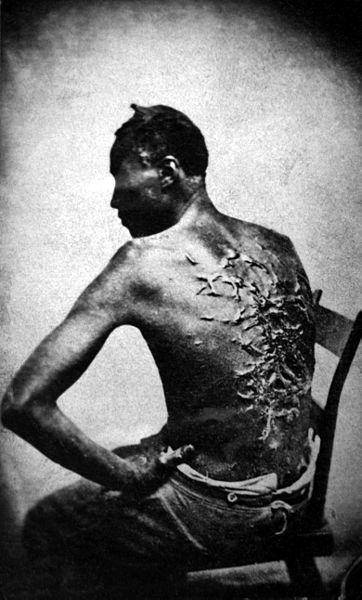
153357-362px-Cicatrices_de_flagellation_sur_un_esclaveWhy are so many Americans woefully ignorant of their nation’s history? That perennial question is raised yet again by Timothy Egan in his latest column on the New York Times website.

To prove that the problem is real, Egan cites two pieces of evidence. The first one surely is cause for concern: «a 2010 report that only 12 percent of students in their last year of high school had a firm grasp of our nation’s history» (though historians will surely wish that Egan had added a link to the report, so we could track down the source).

Egan’s second piece of evidence suggests that he may be a participant in as well as observer of the problem. «Add to that,» he writes, «a 2011 Pew study showing that nearly half of Americans think the main cause of the Civil War was a dispute over federal authority — not slavery — and you’ve got a serious national memory hole.»

I’m no expert on the Civil War, but I’ve read a number of recent books by historians who are. They all agree that in 1861, when thousands of Northerners eagerly enlisted, few were  signing up to fight for the abolition of slavery. They were signing up to do the one and only thing Abraham Lincoln called them to do: to save the Union, which is to say to affirm federal authority over all the states.

True, the dispute over federal authority was sparked by the problem of slavery. Most Northerners were determined to stop slavery — but only in the territories of the West, where they feared slaves would block work opportunities for free whites. Hence the popular slogan: «Free Soil, Free Labor, Free [White] Men.»

When it came to the existing slave states, most Northerners agreed with Lincoln that there was no legal ground to abolish slavery. Most expert historians suggest that there was still not enough political will in the North to try to abolish slavery.

So from the North’s point of view, at least, federal authority was indeed the fundamental issue.

Only gradually, as the war progressed, did many Northerners come to see it as a war against slavery. Many others never reached that point, as Steven Spielberg’s recent film Lincoln reminded us. Even among those who did get there, most probably embraced abolition largely as both a symbol of and strategic means to victory in the war, not as a good in and of itself.

In the South issues of slavery and federal authority certainly were inextricably entwined. «Slavery was enshrined into the very first article of the Confederate Constitution; it was the casus belli, and the founding construct of the rebel republic,» as Egan writes. That’s a good snapshot of the issue from the Southerners’ perspective.

But it’s the winners who are supposed to write the history of any war. For a Northerner to cite the Confederate Constitution as the full explanation for the war is questionable, at best.

So let’s thank Timothy Egan for adding a bit more proof that even «opinion leaders,» as he writes (as well as «corporate titans, politicians, media personalities and educators») are sunk, more or less, in that national memory hole. At least their knowledge of history usually has some serious holes in it.

And I should personally thank Egan for reinforcing a point that’s dear to me: When we recall our history, and especially when we bring that memory into the political arena, we are more often in the realm of myth than empirical fact — though most of our political and historical myths aren’t simply falsehoods; they include facts, but those facts are always wrapped in imaginative, symbolic narratives that dictate how we interpret the facts.

The story of the Civil War as essentially a war against slavery — with all other issues secondary — is a fine example. It’s a story so deeply rooted in American public memory, at least outside the white South, that it will probably never be dislodged, no matter how many historians write how many books. Such is the power of myth.

When Egan wanted to understand why Americans have such a weak grasp of their history, though, he didn’t look into the power of myth. Instead he «asked a couple of the nation’s premier time travelers, the filmmaker Ken Burns and his frequent writing partner Dayton Duncan.»

Burns said: «It’s because many schools no longer stress ‘civics,’ or some variation of it,» so students don’t learn «how government is constructed» — a curiously irrelevant response from someone who has enriched our understanding of so many aspects of our history.

Duncan did offer a direct and provocative, if speculative, answer: «Americans tend to be ‘ahistorical’ — that is, we choose to forget the context of our past, perhaps as a way for a fractious nation of immigrants to get along.»

That’s where Egan adds his comment on the South’s Constitution and slavery as the casus belli, as if to prove the point by example. «That history may hurt,» he explains, implying that North and South can get along easier if we ignore the hurts of their fractious past. «But without proper understanding of it, you can’t understand contemporary American life and politics.»

No arguing with that conclusion. Coming on the heels of Egan’s (mis)reading of the causes of the Civil War, though, it points to a more complex view of the American memory hole.

Why do most Americans outside the white South embrace the mythic view of the Civil War as a battle essentially over slavery, from beginning to end? Isn’t it because «history may hurt» — because it would, and should, pain us to recall how deeply racist most Northern whites were in 1861, and how many were willing to let slavery continue in the existing slave states?

If we believe the story of the North in 1861 as a monolithic block dedicated to eradicating slavery, it eases the hurt. It lets us believe that white America, outside the South, has a proud history of sacrificing blood and treasure for the cause of racial equality. It makes the rapid end of Reconstruction, the white Northerner apathy toward Jim Crow laws in the South until the 1960s, and white racism in the North until the present day all look like aberrations in a fundamentally moral history.

So we can more easily forget that, as Ta-Nehisi Coates reminds us, «America was built on the preferential treatment of white people — 395 years of it.» He rightly laments «our inability to face up to the particular history of white-imposed black disadvantage,» an unbroken history that continues to the present day in wealth, jobs, housing, education, incarceration, voting, and so many other areas of life.

If our ultimate goal is, as Egan suggests, to understand contemporary life and politics, the prevailing myth of the Civil War as a crusade for freedom and equality is counterproductive.

That doesn’t mean we should aim to replace myth with pure objective fact — a noble but impossible dream. It does mean we need a myth of the Civil War that comes closer to the facts and helps to close the still-yawning gap between black and white America. We need a myth that makes sense out of all kinds of racism and racial disparities in the present, not one that obscures them.

Such a myth would probably open up more white hurt, at least for a while. But it’s the only way we might possibly, some day, heed Lincoln’s call to bind up the nation’s wounds.


Read Full Post »

Reminding People of a Lynching Was What Bothered Them? 

HNN  May 30, 2014


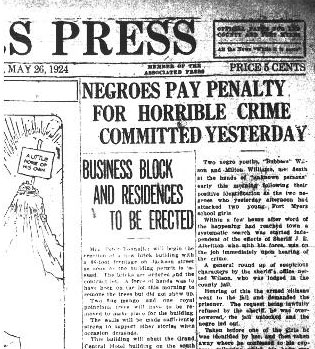
155743-LynchingArticleI recently contributed to items in the local press (see here) and on radio (see here) concerning the ninetieth anniversary of a particularly gruesome lynching that took place in Fort Myers, Florida, over the weekend of May 25-26, 1924. Predictably, some local respondents were not happy that this anniversary was being publicized. One disgruntled reader complained, «Just can’t allow racism to fade away can you News Press? Instead of a piece relating how people of different races help each other because of their selfless goodwill (past or present), you all instead choose to keep alive a 90 year old evil doing by long since dead racist murderers.» In this article I will demonstrate why such reactions are mistaken and why these events should continue to be analyzed and explored in public media.

The first reason to keep highlighting this history is that lynching arose from racist stereotyping, a menace that continues in the present day. In Fort Myers in 1924, two black teenagers, aged just 16 and 14 were seen skinny-dipping with two white female friends. The two boys were assumed to be guilty of rape. In an article published by Steve Dougherty in the Fort Myers News-Press in 1976, an eyewitness stated that one of the girls protested that the two boys were innocent of any wrong-doing, yet the boys were still lynched. The racist beliefs of the whites overwhelmed their willingness to view the evidence impartially. This has clear parallels with criminal justice today, where juries can be influenced by the fact that young black males continue to be depicted in some media as criminal and sexually aggressive, instead of being treated as individuals.

The second reason is that the historical record on lynching is incomplete and in need of correction. Although the NAACP did awesome work to keep records of lynchings, it often had to rely on newspaper reports that presented the events from the point of view of the lynchers. In Fort Myers, for example, the motive of the lynchers was recorded as being to punish sexual assault (rape), yet this assault existed only in the eyes of the beholders. No evidence was presented to establish that the lynching victims had committed the alleged crime. The name of one of the victims was repeatedly given as Bubbers Wilson, when infact the death records clearly show that his name was RJ Johnson, a fact that the black community knew very well.

Failure to verify such facts at the time shows the local contempt of authorities for justice and accurate reporting. These violations of the historical record should be corrected; it is surely our duty as scholars to attend to this.

A third reason to focus on such lynchings is to ask our students and readers to walk a mile in the shoes of African-Americans of both historical periods. A white student of today who places himself or herself in the mind of a black male from 1924 can better understand how a young black male must continue to have two «looking glass selves»: a self that is reflected back to him by his fellow blacks, and one that is reflected back to him by a white viewpoint of suspicion and prejudice. Trayvon Martin spent his short life looking into these mirrors, which played a role in his death. Perhaps the student of today will be the juror of tomorrow, and the justice system is more likely to be seen to be doing its job correctly: treating all persons equally before the law, regardless of gender or skin color?

Jonathan Harrison is an adjunct Professor in Sociology at Florida Gulf Coast University and Hodges University whose PhD was in the field of racism and antisemitism.

Read Full Post »

“How Immigration Became Illegal”: Aviva Chomsky on U.S. Exploitation of Migrant Workers

Democracy Now  May 30, 2014

We are joined by Aviva Chomsky, whose new book, «Undocumented: How Immigration Became Illegal” details how systemic prejudice against Mexicans and many other migrant workers has been woven into U.S. immigration policies that deny them the same path to citizenship that have long been granted to European immigrants. She also draws parallels between the immigration laws now in place that criminalize migrants, and the caste system that has oppressed African Americans, as described by Prof. Michelle Alexander in her book, «The New Jim Crow.» Chomsky’s previous book on this topic is «They Take Our Jobs! and 20 Other Myths about Immigration.» She is a professor of history and coordinator of Latin American studies at Salem State University in Massachusetts.

Transcript

This is a rush transcript. Copy may not be in its final form.

JUAN GONZÁLEZ: We turn now to a new book that documents how systemic prejudice against Mexicans and many other migrant workers has been woven into U.S. immigration policies that deny them the same path to citizenship that has long been granted to European immigrants. The book is by Aviva Chomsky, and it’s called, «Undocumented: How Immigration Became Illegal.»

AMY GOODMAN: Chomsky’s previous book on this topic is, «‘They Take Our Jobs!’ and 20 Other Myths About Immigration.» She is Professor of History and Coordinator of Latin American Studies at Salem State University in Massachusetts. In case you’re wondering, yes, she’s the eldest daughter of Professor Noam Chomsky. She is joining us from Boston. Professor Chomsky, welcome to Democracy Now! Talk about this history that is not very well understood, I think, in this country.

AVIVA CHOMSKY: Right, I agree that it is not very well understood. We often hear people saying this is a country of immigrants, as if that explains something. But, I think when we say this is a country of immigrants, we are actually hiding as much as we are explaining. OK, let me try to explain that. So this is a country of immigrants. People have in mind Ellis Island, they have in mind the European immigrants, they have in mind the people who, under U.S. law have been considered immigrants since really the founding of the country. We need to think about how immigration and citizenship work together. That is those who the law has considered immigrants are those who were considered to be potential citizens.

Now, citizenship law in the U.S. restricted citizenship to white people until the Civil War. After the Civil War, citizenship was restricted to white people and people of African descent. So those who were immigrants, so prior to the Civil War, many people who were not white were brought into the country, were physically present in the country, came into the country on their own, were conquered and incorporated into the country, but they could not be citizens. And they were not considered immigrants when they entered the country. The only ones who were were considered immigrants were the Europeans. After the Civil War, not only is citizenship extended to people of African descent, none of whom are immigrating to the United States of coming to the United States in the aftermath of centuries of slavery and, finally, the war and abolition of slavery, but other people, for example, the Chinese, who are coming into the country, are still not eligible for citizenship. In fact, they’re legally defined as racially ineligible to citizenship.

And what really makes things complicated for immigration law is when citizenship by birth is created with the 14th amendment in 1868, also in the aftermath of the Civil War, because it creates this sort of logical impossibility that people who have been declared racially ineligible for citizenship, people who were not considered immigrants even when they come to the country, they’re considered workers but not immigrants, that they can then obtain access to citizenship by birth. It is this logical impossibility of people who are legally defined as racially ineligible to citizenship and then because of being physically present, able to obtain immigrant citizenship by birth, that leads Congress to start setting up restrictions on immigration. And restrictions against people who are considered to be racially ineligible to citizenship, that is the Chinese and eventually all Asians, and Asia is very broadly defined under this law.

JUAN GONZÁLEZ: Aviva Chomsky, I wanted to ask you, in your introduction, you refer to a phrase that I’ve heard often from readers and callers, usually angry readers and callers to me at the Daily News, when they say, Mr. Gonzalez, what part of illegal don’t you understand? You raise the point that the concept of the illegality in terms of immigration is actually a relatively new term in American history, and it’s also been changed over time. And it’s use has become — has always been racialized. Could you talk about that?

AVIVA CHOMSKY: Yes, absolutely. I think it is part of the same system I was describing before that restricted immigration to white people and citizenship to white people and then started to cut off immigration. But as immigration started to be restricted for groups, including Asians and eventually even for Europeans who were considered to be inferior Europeans, like southern and eastern Europeans in the 1920s, Mexican border crossing was never restricted. Mexican border crossing was never restricted because Mexican labor was so utterly necessary in the southwest of the United States and because Mexicans were not considered immigrants, so therefore, their immigration did not have to be restricted. They were considered to be workers, legally discriminated against for what were considered racial grounds, that is they were so-called «Mexican.» That was perfectly legal. To deprive them of citizenship was perfectly legal. And, the system worked from the perspective of maintaining United States is a white country because unlike the Asians, Mexican migration was generally circular migration. That is, Mexicans came, worked for a season or year or a couple of years, and returned to Mexico. So the history of border migrations for 150 years was one of circular migrations that were basically either completely unregulated or, for example during 1942 and 1964, extended through 1967, government-sponsored through the Bracero program, but migrations that denied citizenship and denied rights to the Mexicans who were in the country.

So the creation of illegality and starting to call this migration illegal happens in 1965, really, when Mexican migration is, for the first time, considered to be immigration and is legally restricted, that is, a quota is put on Mexican migration as it is on every country of the world. And in a situation where tens of thousands of Mexicans have been crossing the border legally and recruited and sometimes even coerced, every year, all of a sudden, this is made illegal. It is not stopped, but it is given a different name. Instead of calling it the Bracero program, it is called illegal migration. It is still just as necessary to the economy of the Southwest, it’s still encouraged by all different sectors, but the discrimination against these workers is now justified by this introduction of this new terminology and status of the illegality. I hope I explained that, it’s a little complicated.

JUAN GONZÁLEZ: And your point is that once this new illegality for Mexican immigration begins post-1965, that then begins the criminalization of Mexicans as migrants. And you draw the parallel in your book with Michelle Alexander’s book on mass incarceration and how the racialization that occurs — and describes in her book, «The New Jim Crow: Mass Incarceration In the Age of Colorblindness.» This is Alexander speaking on Democracy Now!

MICHELLE ALEXANDER: I think we have become blind in this country to the ways in which we have managed to reinvent a caste-like system here in the United States, one that functions in a manner that is as oppressive in many respects as the one that existed in South Africa under apartheid and that existed under Jim Crow here in the United States. Although our rules and laws are now officially colorblind, they operate to discriminate in a grossly disproportionate fashion through the War On Drugs and the get tough movement, millions of poor people — overwhelmingly poor people of color, have been swept into our nation’s prisons and jails, branded criminals and felons, primarily for nonviolent and drug-related crimes. The very source of crimes that occur with roughly equal frequency in middle-class white neighborhoods and on college campuses, but go largely ignored. Branded criminal felons and the are ushered into a permanent second class status where they’re stripped of their many rights supposedly won in the civil rights movement like the right to vote, the right to serve on juries and the right to be free, of legal discrimination in employment, housing, access to education and public benefits.

JUAN GONZÁLEZ: So, Aviva Chomsky, you draw similar parallels in terms of the criminalization of Mexicans. Could you elaborate?

AVIVA CHOMSKY: Yeah, when you listen to Michelle Alexander list the legal disabilities that come with a criminal record, they look exactly like the legal disabilities that come to Mexicans because of their illegal status. That is, they can’t vote, they can’t serve on juries, they aren’t eligible for public benefits, they’re legally prohibited from working. When I read Michelle Alexander’s book and heard her speak about this I thought, there is a real parallel here. One part of the parallel is that the dismantling of the Jim Crow regime as a result of popular mobilization and the civil rights movement goes along with a dismantling of the regime of legalized discrimination against Mexicans embodied in the Bracero program. That is the idea that we can actually step up and say outright that this is what we are doing, we are going to bring in Mexican workers and discriminate against them just because they’re Mexicans. You can’t do that anymore in the climate of the 1960’s. And yet another idea of hers that I find so compelling is this idea of status as a caste, and the creation of a new status for these Mexican workers that justifies mistreatment by criminalization, rather than overtly by race like it is OK to discriminate against them just because they are Mexican. Now we won’t call it that, now we’re going to turn them into criminals and then we can justify discrimination on the basis of the fact that we’re calling them criminals.

AMY GOODMAN: Aviva Chomsky, as we wrap up, you have written several books now on immigration. You wrote, «‘They Take Our Jobs!’ and 20 Other Myths About Immigration,» and of course your new book, «Undocumented: How Immigration Became Illegal.» What surprised you most in your research for this book?

AVIVA CHOMSKY: I think what surprised me most happened before I knew I was writing the book, but it’s one of the things that led me to write the book. I had been working with immigrants, including many undocumented immigrants in the U.S. really since the early 1980’s. But I had never been to the border. And some of my friends who worked with border organizations down in Arizona kept saying, you can’t keep talking about immigration without coming to the border. And finally in 2010, I took a group of students on a trip with No More Deaths, where we worked on the Mexican side of the border taking testimonies from people who had been deported, people who had mostly been picked up in the desert and were dumped in Nogales Sonora on the Mexican side of the border, taking their testimonies and hearing stories. Just realizing the drastic and devastating nature of our immigration policies and their impact on people and really turning the border into what felt like a war zone, but there was no war. These people were displaced and uprooted and homeless because of deliberate U.S. policies.

AMY GOODMAN: Aviva Chomsky, we want to thank you for being with us. A new book, «Undocumented: How Immigration Became Illegal.» She is a professor at Salem State College — Salem State University in Massachusetts. This is Democracy Now!, democracynow.org, The War and Peace Report. When we come back, we continue our discussion about reparations in America. Stay with us

Read Full Post »

The Case for Reparations: Ta-Nehisi Coates on Reckoning With U.S. Slavery & Institutional Racism

Democracy Now    May 29, 2014

An explosive new cover story in the June issue of The Atlantic magazine by the famed essayist Ta-Nehisi Coates has rekindled a national discussion on reparations for American slavery and institutional racism. Coates explores how slavery, Jim Crow segregation, and federally backed housing policy systematically robbed African Americans of their possessions and prevented them from accruing inter-generational wealth. Much of the essay focuses on predatory lending schemes that bilked potential African-American homeowners, concluding: «Until we reckon with our compounding moral debts, America will never be whole.» Click here to watch Part 2 of this interview.»:http://www.democracynow.org/2014/5/30/part_2_ta_nehisi_coateson

Transcript

This is a rush transcript. Copy may not be in its final form.

AMY GOODMAN: «The case for reparations. 250 years of slavery. Nine years of Jim Crow. 60 years of separate but equal. 35 years of racist housing policy. Until we reckon with our compounding moral debts, America will never be whole.» So begins an explosive new cover story in the June issue of the Atlantic magazine by the famed essayist Ta-Nehisi Coates. The article is being credited for rekindling a national discussion on reparations for American slavery and institutional racism.

JUAN GONZÁLEZ: In the essay, Ta-Nehisi Coates exposes how slavery, Jim Crow, segregation, and federally backed housing policy systematically robbed African Americans of their possessions and prevented them from accruing intergenerational wealth. Much of the piece focuses on predatory lending schemes that built potential African-American homeowners. This is a video that The Atlantic released a preview its new cover story, «The Case for Reparations.»

*BILLY LAMAR BROOKS SR.: This area here represents the poorest of the poor in the city of Chicago.

MATTIE LEWIS: I’ve always wanted to own my own house, because I work for white people when I was in the South, and they had beautiful homes and I always said, one day I was going to have me one.

JACK MACNAMARA: White folks created the ghetto. It drives me crazy today even that we don’t admit that. This is the best example I can think of the institutional racism.

JUAN GONZÁLEZ: To talk about «The Case for Reparations,» we’re joined now by Ta-Nehisi Coates here in New York City. Welcome to Democracy Now! You start your article with one particular figure, Clyde Ross. Tell us his story and why you decided to begin with him.

TA-NEHISI COATES: Mr. Ross is really just emblematic of much of what has happened to African-Americans across the 20th century, and I emphasize 20th century. Mr. Ross was born in the Delta region of Mississippi. His family was not particularly poor, they actually quite prominent farmers. They had their land and virtually all of their possessions taken from them through a scheme around allegedly back taxes and were reduced to sharecropping. In the sharecropping system, there was no sort of assurances over what they might get versus what they actually picked. When I first met Mr. Ross, the first thing he said to me was he left Mississippi for Chicago because he was seeking the protection of the law. I didn’t quite understand what he meant by that. But, as he explained it to me, he said, listen, there were no black judges, no black prosecutors, no black police — basically, we had no law. We were outlaws and people could take from us whatever they wanted. That was very much his early life. He went to Chicago thinking things would be a little different. On the surface, they were. He managed to get a job, got married, had a decent life. He was basically looking for that one more emblem of the American middle class in the Eisenhower years, and that was the possession of a home. Unfortunately, due to government policy, Mr. Ross at that time, like most African-Americans, was unable to secure a loan due to policies or red-lining and deciding who deserved the loans and who doesn’t. There was a broad, broad consensus that African-Americans, for no other reason besides blatant racism, could not be responsible homeowners. Mr. Ross, as happens when people are pushed out of the legitimate loan market ended up in the illegitimate loan market and got caught up in the system of contract buying, which is essentially just a particularly onerous rent to own scheme for people looking to buy houses. Ended up purchasing a house, I believe at $27,000 he paid for it. The person who sold it to him had bought the house only six months before for $12,000. Mr. Ross later became an activist, helped formed the Contract Buyers League, and just fought on behalf of African American home owner on the west side of Chicago. I should add that it is estimated during this period that 85% of African-Americans looking to buy homes in Chicago bought through contract lending.

JUAN GONZÁLEZ: Let’s hear Clyde Ross and his onward speaking a in 1969 on behalf of the Contract Buyers League a coalition of black homeowners on Chicago’s South and West Sides from all of whom had been locked into the the same system of predatory lending.

CLYDE ROSS: They have cheated us out of more than money. We have been cheated out of the right to be human beings in a society. We have been cheated out of buying homes at a decent price. Now it’s time now, we got a chance. The Contract Buyers League has presented a chance for these people in this area to move out of this crippled society, to move up. Stand on your own two feet. Be human beings, fight for what you know is right. Fight.

AMY GOODMAN: Ta-Nehisi Coates, can you talk about this example and others in this remarkable piece and how you then talk about the bill for reparations that has been introduced by John Conyers year after year in the house, and what reparations would actually look like?

TA-NEHISI COATES: What I try to establish in this piece is that there is a conventional way of talking about the relationship in America between the African-American community and the white community, and it is one that we are very comfortable with. I call it basically the lunch table view of the problem with racism in America is that black people want to sit at one table and white people want to sit at another lunch table. If we could just get black and white people to like each other, love each other, everything would be solved. In fact, even these terms that we’re using are inventions, and they’re inventions of racism. If you trace back the history back to 1619, a better way of describing the relationship between black and white people is one of plunder, the constant stealing, the taking from black people that extends from slavery up through Jim Crow policy. Slavery is obviously the stealing of people’s labor. In some cases the outright theft of people’s children, and the vending of people’s children, the taking of the black body for whatever profit you can wring from it, up through the Jim Crow South where you have a system of debt peonage, sharecropping — which really isn’t much different minus the actual selling of children you steal, exploiting labor and taking as much as you can from it. Into a system when you think about something like separate but equal. In the Civil Rights Movement, we traditionally picture colored only water fountains, white only restrooms. The thing people have to remember, if you take a state like Mississippi or anywhere in the deep South where you have a public university system, black people are paying into that. Black people are pledging their fealty to the state and yet, they aren’t getting the same return. This is theft. This is systemized. When we try to talk about the practicality of it, I spent 16,000 words almost just trying to actually make the case. At the end, what I come to is that the actionable thing right now is to support Representative John Conyers’ Bill H.R.40 for a study of what slavery has actually done, what the legacy of slavery has actually done to black people and what are remedies we might come up with. I did that not so much to dodge the question, but because I think to actually even sketch out what this might be would take another 16,000 words. We have to calculate what slavery was. We have to calculate what Jim Crow was. We have to calculate what we lost in terms of redlining and come to some sort of ostensible number and figure out whether we can actually pay it back. And if we can’t, what we might do in lieu of that.

JUAN GONZÁLEZ: When you mentioned that the systemic plunder that occurred, I mean, this is not ancient history.

TA-NEHISI COATES: No, no.

JUAN GONZÁLEZ: In the most recent economic crisis in the country, there was this enormous reduction in the wealth of African-Americans in the country as a result of the housing crisis, yet the narrative portrays it as the housing crisis was caused — the conservative narrative is — by affirmative action policies of Fannie Mae and Freddie Mac to make it easier for African-Americans with low credit to get loans. Talk about that and this enormous wealth loss that occurred recently.

TA-NEHISI COATES: Well, the great sociologist Douglas Massey has a very interesting paper out specifically about the foreclosure crisis as it should be rightly called that happened very, very recently. One of the things he demonstrates in the paper is the thing that made this possible, segregation was a driver of this. If you think about it, it makes perfect sense. The African-American community is the most segregated community in the country, and what you have in that community is a population of people who have been traditionally cut off from wealth building opportunities. So, anxious to get wealth-building opportunities. If you are a banker and you are looking sell a scheme to somebody and rip somebody off, well there your marks are, right there, right in the same place. That’s essentially what happened.

AMY GOODMAN: Ta-Nehisi Coates, I wanted to go to this issue of reparations and the examples you have seen, for example, after the Holocaust, Germany and the Jews. Can you talk about how those reparations took place?

TA-NEHISI COATES: It is very, very interesting. One of the reasons why I included that history, because as we know, reparations for African-Americans has all sorts of practical problems that we would have to deal with and fight about. I wanted to just demonstrate that even in the case of reparations to Israel, the one that’s most cited, this was not a sure thing. One thing that people often say about African-American reparations is, well, oh you’re just talking about savory, that was so long ago, as though if we were talking about a more proximate or more present case it would be much easier. But, in fact, the fact it was so close made it really, really hard for people, made it hard for some Israelis who did not want to feel like they were taking a buck off of folks’ mothers or brothers or sisters or grandmas who had just been killed. In Germany in fact, if we look at the public opinion surveys at the time, they were no more — Germans in the popular sense — were no more apt to take responsibility today than Americans are for slavery. So, it was a very, very difficult piece. What’s interesting and I think one of the lessons that can be learned from it, however, is the way it was structured. In fact, Germany did not just cut a check to Israel. What they actually did was they gave them vouchers. Those vouchers that were worth a certain amount of money, those vouchers had to be used with German companies. So, essentially, what they structured was a stimulus for West Germany while giving reparations to Israel at the same time. It gives us some clue that some sort of creative solutions we might have in the African-American community.

JUAN GONZÁLEZ: One of the issues you also raise is that this reparations demand is not new in American history. You talk about Belinda Royall who in 1783 had been a slave for 50 years, became a freed woman. She petitioned the Commonwealth of Massachusetts for reparations.

TA-NEHISI COATES: Right, right, right, and I think people think of this as something that just sort of came up, you know 150 years — Black people — reparations is basically as old as this country is, and it’s not just, as you mention, Belinda Royall, people like that, but, it is also white people who understood at the time some great injury had been done. Many of the quaker meetings for instance — basically, they would excommunicate people who didn’t just free their slaves, but actually gave them something, you know, paid them reparations in return. We have the great quote from Timothy Dwight who was the president of Yale who said, to liberate these folks, to free these folks and to give them nothing would be to entail a curse upon them. Effectively, that is actually what happened upon African American and really, I would argue, upon the country at large. Many, many people of the Revolutionary generation, the generation that fought in the Revolutionary War, understood that slavery was somehow in contradiction to what America was saying it was. Many of those folks also at the very least gave land to African-Americans when they were liberated. Some of them educated them. But they understood to just cut somebody out into the wild, which is basically what happened to black people, would not be a good thing.

AMY GOODMAN: Ta-Nehisi Coates, we want to thank you very much for being with us. We’re going to do part two right after the show and we will post it online at democracynow.org. Ta-Nehisi Coates is a national correspondent of The Atlantic where he writes about culture, politics and social issues. He has just written a cover story called «The Case for Reparations.» Ta-Nehisi Coates is also the author of the memoir «The Beautiful Struggle

Read Full Post »

« Newer Posts - Older Posts »