Feeds:
Entradas
Comentarios

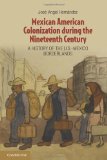
51+epS1rw0L._SL160_Americans talk a lot about the flow of Mexican immigrants across their southern border. To some that flow is seen as patently illegal and dangerous. To others it’s seen as unstoppable and essential for the functioning of the U.S. economy. Everyone agrees that something must be done about it though, in fact, little is ever done. It’s an American problem that seems to have no American solution.

But, as José Angel Hernández points out in his pathbreaking book Mexican American Colonization during the Nineteenth Century: A History of the U.S.-Mexico Borderlands (Cambridge University Press, 2012) , it’s not just an American problem: it’s also a Mexican one and always has been. In the wake of the Mexican American War (1846-48), the United States appropriated a huge chunk of what was Northern Mexico. This act of–what else can you call it?–naked imperialism left a lot of Mexican citizens stranded across the new border. The Mexican authorities might not have been able to get their territory back, but they were quite interested in getting their countrymen back. In pursuit of this objective, they mounted repatriation campaigns designed to do just this. They were largely unsuccessful. The reason had less to do with the attractiveness of returning to Mexico–the Americans were not doing a terribly good job of protecting the Mexicans against the Native Americans who basically controlled the region–than it did with the corruption of the Mexican officials who ran the campaign. It’s a fascinating and largely forgotten story. Listen in.

Nina Simone: The Antidote to the «We Shall Overcome» Myth of the Civil Rights Movement 

by Ruth Feldstein

HNN   March 3, 2014


When it comes to civil rights, it is the season of fiftieth anniversaries: this past June was the fiftieth anniversary of the murder of activist Medgar Evers. In August, Americans marked fifty years since the March on Washington, and in September, the horrific deaths of Addie Mae Collins, Denise McNair, Carole Robertson and Cynthia Wesley, four young girls killed when Ku Klux Klan members planted a bomb at the 16th Street Baptist Church in Birmingham, Alabama. The months ahead will bring the fiftieth anniversary of Mississippi Freedom Summer; the brutal murder by members of the Ku Klux Klan in Mississippi of civil rights workers James Chaney, Andrew Goodman, and Michael Schwerner; and in July, passage of the Civil Rights Act.

For many Americans, these anniversaries — of both heady times and painful moments — are ultimately reassuring. Yes, the country was wracked by violence, as African Americans were subjected to bombings, beatings, dogs, hoses, and murder. But the now-iconic image of King at the March on Washington, and a story of civil rights that culminates in passage of landmark legislation, affirm success. As President Obama put it in September when he commemorated the murder of four young girls in Birmingham, the bombing had “galvanized Americans all across the country to stand up for equality and broadened support for a movement that would eventually lead to the passage of the Civil Rights Act of 1964.”

But there are other anniversaries worth remembering that offer another narrative of the civil rights movement, one easy to overlook. Perhaps not surprisingly, this narrative is a less comfortable one, illuminating the difficult feelings about racism, the dashed dreams, and the demands for autonomy that were evident in black communities — in the north as well as the south — during black freedom struggles. In March and April of 1964, singer/songwriter Nina Simone gave several performances at Carnegie Hall. In Concert, the seven-song album that came from these recorded concerts, marked a crucial transition in Simone’s career: the Southern-born and classically-trained musician, known for her “supper club” music and as a “songstress for the elite,” engaged directly with the politics of black liberation, and became one of the entertainers most closely associated with black activism. In “Pirate Jenny” Simone took Kurt Weill and Bertholt Brecht’s song about class relations in London and transformed it into a poor black woman’s fantasy of vengeance against white townspeople in a “crummy southern town.”

In “Go Limp,” she spoofed the sexual antics among nonviolent civil rights protesters, and thus spoofed nonviolence itself; in “Old Jim Crow,” she declared that Jim Crow had “been around too long” and “was all over now.”

The album reached its musical, lyrical and political peak with track 7, “Mississippi Goddam.” Simone had written the song several months earlier, in September, just after hearing about the church bombing in Alabama. (She later said that it came to her in a “rush of fury, hatred and determination” as she “suddenly realized what it was to be black in America.”) “Mississippi Goddam” was a political anthem. With an upbeat tempo, the “show tune,” as Simone described it, offered incendiary lyrics filled with anger, despair, and insistence. “Me and my people are just about due,” sang Simone, with urgency. She rejected the notion that race relations could change gradually; she discarded the myth that discrimination only existed in the South; and she shattered the assumption that African Americans would patiently use the legislative process to seek political rights. As she declared toward the end of “Mississippi Goddam”:

But this whole country is full of lies
You’re all gonna die and die like flies
I don’t trust you anymore
You keep on saying “Go Slow.”

Coming less than a month after the March on Washington for Jobs and Freedom in Washington, D.C. and Martin Luther King’s now-iconic “I have a dream” speech, Nina Simone provocatively departed from conventional wisdom about civil rights. The anniversary of this album matters because in a moment that many people today remember as the high water mark of liberal, interracial, church-based activism that culminated in passage of landmark civil rights legislation, Simone imagined another kind of black freedom, one that a few years later, would widely be known as black power. Contrary to the neat historical trajectories which suggest that black power came late in the decade and only after the “successes” of earlier efforts, Simone’s album makes clear that black power perspectives were already taking shape and circulating widely — in organizations, but also on vinyl albums that music fans played around the world. Tied inexorably to the March on Washington and the church bombing in Birmingham, In Concert is an album that expressed, and helped to transform black activism in the 1960s.

Nina Simone was not a solitary figure, and the album that she recorded fifty years ago did not come out of nowhere. In Concert is a window into a world beyond prominent, now-celebrated leaders (mostly male), and public protests. Hers are not the melodies that crowds have recuperated at recent fiftieth anniversary celebrations. But to remember In Concert is to remember that “civil rights” never meant just one kind of activism and that “We Shall Overcome” was not the only soundtrack to the movement. To mark this anniversary is to mark the swirling and contradictory ways Americans from all walks of life envisioned freedom in the early 1960s, and the ways that they expressed these political demands imaginatively as well as with marches and boycotts.

Ruth Feldstein is Associate Professor of History at Rutgers University, Newark and the author of How it Feels to Be Free: Black Women Entertainers and the Civil Rights Movement.

Lincoln and the Cannibals

By Jeffrey Allen Smith

The New York Times  February 25, 2014

While America was embroiled in a bloody civil war for its very survival, a little over 5,000 miles away from Washington, in the middle of the South Pacific, the people of the Marquesas Islands were in a struggle of their own over slavery.

The American war, unsurprisingly, more detailed documentation. In the Marquesas conflict, differing witness testimony, secondhand accounts, various newspaper articles, translations and time all conspired to obscure details. Nevertheless, in sifting through the historical minutiae, a relatively clear picture emerged of an incredible series of events that ultimately came to the attention of President Abraham Lincoln in April 1864.

In 1856, slavery technically ended in Peru, but the need for workers to toil in slavelike conditions in the country’s tin and guano mines did not. As a result, “blackbirding” ships roamed the Pacific ensnaring unfortunate souls “by hook or by crook” to labor in Peru. The victims were often the peoples of the South Pacific.

In 1863 a Peruvian blackbirding ship sailed into Puamau Bay on the northeastern shore of Hiva Oa Island in the Marquesas. After opening fire on people gathered onshore, the slavers made off with all the Puamau men and women they could grab, including the chief’s son. Understandably distraught and angered by this atrocity, those who lived through the assault pledged to exact a frightful vengeance if foreign sailors dared show again.

Unfortunately, the crew members of the American whaling ship Congress from New Bedford, Mass., were the next foreign sailors to show. Capt. Francis E. Stranburg and his men were blissfully ignorant of the islanders’ oath of revenge and the raid on Puamau Bay when they casually dropped anchor there Jan. 13, 1864. For to the captain and crew, this was routine, just another stop to make repairs and obtain provisions. The sailors lowered two longboats loaded with trade goods, and a small detachment of men led by the first officer, Jonathan Whalon, rowed toward the beach in Puamau Bay.

Probably intoxicated by tales of Polynesian hospitality and the “custom” of offering attractive young females to traders, Whalon interpreted the hand gestures, broken English and disposition of the islanders who paddled out to greet them as signs of a people eager to trade. Foolishly, Whalon went ashore alone with the Marquesans, ordering the crew of the two longboats to stay back and wait for his return.

However, once well inside the tree line, the Paumau men seized Whalon, stripped him of his clothes and bound him. They took him to their village, where tribal members reportedly pinched him, tweaked his nose, bent his fingers back over his hands, menacingly swung hatchets at him and eventually began building a fire with which to cook him.

Back in Paumau Bay, more islanders were actively trying to entice the waiting sailors in the two longboats to come ashore. The whalers almost complied, and would have but for the efforts of a Marqusesan girl who ran out frantically shouting and waving her hands. The chaotic scene proved unnerving and unsettling to the sailors, so they returned to the Congress without Whalon.

By this time word had begun to spread on the island about the kidnapped American sailor. A Hawaiian missionary improbably named Alexander Kaukau (Kaukau is Hawaiian pidgin for “food” or “to eat”) and Bartholomen Negal, a local German carpenter, tried and failed to dissuade Mato, the Paumau chief, from killing Whalon. According to some reports, Kaukau pleaded with Mato for Whalon’s life but Mato replied, “The white men are wrong in kidnapping my son and carrying him to their land. I dearly love my son.” Again Kaukau implored Mato claiming that Americans were “good people.” Unpersuaded, Mato simply shot back, “They are all one kind, white men.”

However, fate interceded with the arrival of another Hawaiian missionary, James Kekela, the first Hawaiian ordained as a Christian missionary and Kaukau’s senior. He had fortuitously just returned from a neighboring island to reports of a “white man is about to be roasted.” After gaining what information he could, Kekela donned his black preacher’s jacket and, with only his bible in hand, set off for Mato’s village. The negotiations were tense, and at one point Kekela declared he would trade “anything and everything he possessed” for the sailor’s release.

But ultimately Kekela purchased Whalon’s freedom with much less: his black preacher’s jacket and prized whaleboat. In fact, some contend that the entire event was a ruse by Mato to get Kekela’s boat, given its high value in the islands. Nevertheless, Kekela returned Whalon to the waiting Congress, which sailed to Honolulu, where tales of “cannibals” capturing an American sailor and Kekela’s heroics prompted the American minister to Hawaii, James McBride, to write a note to Secretary of State William H. Seward.

McBride’s letter, dated Feb. 26, 1864, detailed the harrowing events in the Marquesas and requested that Seward “show to the world … we have tender regard for each one of our number, and that we highly, very highly, appreciate such favors.”

Taking almost a month to make its way across the Pacific, the letter arrived on Seward’s desk by April 18, 1864. Three days later Seward replied that he had submitted McBride’s account of the rescue to Lincoln and that the president had “instructions” for the diplomat. McBride was directed to “draw on this department for five hundred dollars in gold” to purchase presents for Whalon’s rescuers, and to engrave the gifts with the words: “From the President of the United States to – for his [or her] noble conduct in rescuing an American citizen from death-Island of Hivaoa-1863.” (McBride took it upon himself to correct the year to 1864.)

Roughly a year later, on Feb. 14, 1865, McBride sent word to Seward detailing the presents he distributed. He had sent gifts to the Hawaiian missionary Kaukau, the German carpenter Negal and even the young Marquesan girl who warned the sailors in the two long boats. He gave Kekela two new suits and a gold Cartier pocket watch with the inscription, “From the President of the United States to Rev. J. Kekela For His Noble Conduct in Rescuing An American Citizen from Death on the Island of Hiva Oa January 14, 1864.”

To express his gratitude, Kekela wrote a seven-page letter of thanks in Hawaiian to “A. Linekona” on March 27, 1865. Accompanied by an English translation, the letter opened with a short autobiographical sketch of Kekela before transitioning into a retelling of how he saved “a citizen of your great nation, ill-treated, and about to be baked and eaten, as a pig is eaten.” Kekela also commended Lincoln stating, “I greatly honor your interest in this countryman of yours. It is, indeed, in keeping with all I have known of your acts as president of the United States.” Unfortunately, Lincoln never read Kekela’s words. The letter did not reach Washington until almost two months after Lincoln’s assassination.

However, the impact of Kekela’s saving Whalon from “cannibals” and the gold watch Lincoln gave Kekela grew with time. In subsequent decades, newspapers reprinted and recounted Kekela’s actions, the gold watch from Lincoln, and Kekela’s letter to the president. The heartfelt prose in Kekela’s letter to Lincoln moved many, including Robert Louis Stevenson, who wrote in his book “In the South Seas,” “I do not envy the man who can read it without emotion.”

Follow Disunion at twitter.com/NYTcivilwar or join us on Facebook.

Jeffrey Allen Smith is an assistant professor of history at the University of Hawaii, Hilo. Research assistance for this article was provided by Samantha Aolani Kailihou and Noah Gomes.

Milton Bradley’s Myriopticon, a parlor game containing images from the history of the “Rebellion” or the American Civil War, came with directions, lecture, a poster and tickets. View Game »

The Toys of War

By Sarah Burns and Daniel Greene

New York Times  February 27, 2014

Just in time for Christmas 1866, a 30-year-old game creator named Milton Bradley ran an advertisement in Colman’s Rural World, a St. Louis-based publication for farmers. Bradley, a lithographer living in Springfield, Mass., was already well known for inventing “The Checkered Game of Life” in 1860. His 1866 ad promoted his games and amusements as “moral, entertaining, wonderful, and instructive.” Among these wonders was the Myriopticon, a toy panorama containing 22 scenes from the history of the “Rebellion” so recently concluded. The toy evidently caught on, at least for a time. The next year, another Bradley puff described the Myriopticon as “immensely popular with boys,” especially those ages 7 to 12.

Given the subject – the bloody conflict that ended three-quarters of a million lives – the Myriopticon might seem an unusual choice for Christmas cheer. But Milton Bradley’s picture story wrapped the grisly conflict in bright theatrical trappings fit for even the most refined middle-class parlor. In that colorful box were the tools and the script for a splendid game. It made the war dramatic, entertaining, and – above all – fun.

Made of cardboard, the elaborately decorated box – roughly a foot square – mimicked a proscenium stage, with heavy, draped curtains and patriotic bunting as well as a medieval king and queen, a harpist and a tambourine player on the sidelines. On stage, the hand-colored pictures glided past on a long scroll affixed to wooden dowels on either end that could be wound up with a crank or handle.

The complete kit included a broadside announcing the “Grand Artistic and Historical Exhibition,” of the “Great Rebellion,” a sheet of pretend tickets, and a script for the lucky little showman to follow as the pictures rolled by.

The instructions recommended that the “exhibition” take place in a darkened room, with parlor curtains drawn around the box and a candle light behind it to mimic the ambience of a real theater. The broadside played up the performance, too, “respectfully” requesting the audience to remain seated till the first scene rolled by.

The opening scene in the miniature epic represents Maj. Robert Anderson and his men entering Fort Sumter on Dec. 26, 1860, preparing to defend it against Confederate assault. The pictures move from combat to comic camp scenes, signal towers and mortars, and rebel prisoners under guard. (Bradley supposedly copied the lot from Harper’s Weekly, though no one has yet done a systematic analysis.)

Among the crude but lively renditions, Winslow Homer’s “Sharpshooter” (which ran in Harper’s as “The Army of the Potomac” on Nov. 15, 1862) stands out, the original black and white enhanced by hand coloring in red and blue. Next is the Battle of Fredericksburg, which in turn shifts to a quieter scene (verifiably from a Harper’s issue of Jan. 31, 1863) of contrabands just arriving at a Union camp.

The script is as lively as the drawings, mixing a sprightly tone, fast pace and broad humor appropriate for a target audience of prepubescent boys. A depiction of Union foragers attempting to capture some rambunctious hogs is labeled a “very pig-chew-resque scene,” and the script styles Homer’s dead-serious sharpshooter as the putative relative of a celebrated poet, because he is evidently a “very long fellow.” In other sections, the “you are there” address lends immediacy, as when viewers are warned to “proceed very carefully” in approaching a party of soldiers around a campfire.

The Myriopticon was a juvenile variant on other educational amusements made for the middle-class Northern parlor. Adults and children alike peered into stereoscopes for stunningly illusionistic three-dimensional views of Civil War camps, weapons and even dead bodies strewn on battlefields. They also could play and sing war songs around the piano. Soon after the end of hostilities, they could (if affluent) page through Alexander Gardner’s hefty two-volume “Photographic Sketchbook of the War,” which, like the Myriopticon, presented a tightly scripted history scattered with surprising elisions, notably the assassination of Abraham Lincoln. (Gardener’s “Photographic Sketchbook,” like Bradley’s Myriopticon, dates from 1866.) The last scene in the “Photographic Sketchbook” shows the dedication of the monument at Bull Run; the last in the Myriopticon is the burning and evacuation of Richmond on the night of April 2, 1865.

Of course, no one would ever accuse Gardner or Bradley of engineering a cover-up by failing to include the assassination or glossing over the achievements of black soldiers in the Union Army. But such omissions clue us in to their shared agenda. Both Gardner and Bradley structured and shaped not just the story but also the memory of the war, all scaled down to manageable size, packaged and marketed for home entertainment and instruction. Book and toy alike stand witness to the ways in which the far-off conflict infiltrated and changed daily life, even after the war had ended. A miniature theater of war designed to play and replay the war over and over again, the Myriopticon enshrined and preserved its remembrance. As the instructions put it: “It is much better to have the lecture committed to memory than to read it, as then the facts are impressed upon the memory, and any other remarks can be mixed in, or the description varied to any extent, as long as the facts and dates are retained.”

But they were very particular facts. The Myriopticon told a thrilling saga of bravery, heroic sacrifice, Yankee ingenuity and inevitable triumph, with a few chuckles along the way. It recounted the war as an almost exclusively masculine field of action. And it was very modern in the way it mediated, commercialized and mass-produced the history and memory of the war for fun and profit.

Perhaps the Myriopticon’s most modern quality is its proto-cinematic flow. Close-ups give way to distant views in seamless montage. There are lots of guns and explosions, and, just before the grand finale, the uplifting moment when “colored troops” enter Charleston, S.C., where it all began four years earlier. The final apocalyptic scene is a wide-angle view that shows the silhouettes of defeated troops fleeing Richmond as the city burns behind them. Put it in motion, and this scene could be the burning of Atlanta in the 1939 film “Gone With the Wind.”

The Myriopticon still fascinates us today because it is almost a movie. In 1866, Bradley also advertised his model of the Zoetrope, a hollow drum which, when rapidly spun, gives the illusion of motion to pictures on the inner surface. It would be decades before storytelling technology finally caught up to create the motion picture as we know it. But the engagingly interactive Myriopticon deserves a place in the genealogy of the modern war movie, which, like its distant ancestor, brings the war home with gripping narrative, vivid imagery, and rousing action.

Follow Disunion at twitter.com/NYTcivilwar or join us on Facebook.


Sarah Burns is a professor emeritus of art history at Indiana University. Daniel Greene is an adjunct professor of history at Northwestern University. They are co-contributors to “Home Front: Daily Life in the Civil War North,” a book that accompanies an exhibition in collaboration with the Terra Foundation for American Art, on view at the Newberry Library through March 24, 2014.

12 años de esclavitud

José Ragas

NoticiasSER.pe

26 de febrero de 2014

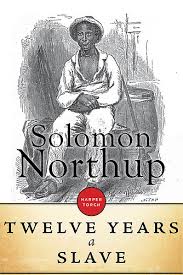
imagesEn algún momento de 1853, Salomon Northup decidió contar su historia para el que sería su primer y único libro: “12 Years a Slave”. En él, Salomon dejó por escrito lo que le había ocurrido durante más de una década de vivir como un esclavo en el Estados Unidos anterior a la Guerra Civil. Como se estilaba en aquella época, la portada fue acompañada de un largo subtítulo que no dejaba dudas sobre el contenido de la obra: “Narración de Salomon Northup, ciudadano de New York, secuestrado en la ciudad de Washington en 1841 y rescatado de una plantación algodonera cercana al río rojo en Louisiana en 1853”. El libro es, en buena cuenta, su narración personal sobre cómo descendió a los infiernos y el testimonio de quien pudo sobrevivir a dicha experiencia para transmitirlo a las generaciones futuras.

La película que se ha estrenado en estas semanas se basa precisamente en la trayectoria de Salomon. Nacido libre, pues su padre había sido liberado por el amo cuyo apellido tomaría para sí y sus hijos, Salomon fue llevado con engaños a Washington y vendido como esclavo. Demás está decir que de nada sirvieron sus explicaciones y ruegos. Su entrada al circuito de la esclavitud nos ofrece un camino distinto al de las narraciones a las que estamos acostumbrados: bien de esclavos que no pudieron escapar de tal condición o de quienes finalmente lo hicieron, ya sea fugándose, siendo liberados o comprando ellos mismos su manumisión. Pero el cambio brusco de estatus de libre a esclavo nos sumerge en un universo de explotación y brutalidad sin límites, apenas matizado por actos de misericordia y cierta protección legal que hizo posible que Salomon fuese ubicado y devuelto a su familia.

El largo periodo de tiempo incluido en la narración, así como la diversidad de escenarios, permiten apenas comprender la complejidad de una institución como la esclavitud. Institución porque tenía un marco legal sustentado en un discurso religioso y una estructura social y racial, el mismo que amparaba la propiedad de otro ser humano, su explotación y disciplinamiento (en algunos casos hasta la muerte misma). Se trató de un sistema que hoy reconocemos como bárbaro que se extendió por tres continentes por más de cuatrocientos años y que apenas fue abolido hace no más de ciento cincuenta. Si bien la más extendida fue la de la población africana, existió también la esclavitud indígena con población americana y más adelante traída de la Polinesia. Sin mencionar, por supuesto, las condiciones en las que los coolies chinos reemplazaron a los esclavos de origen africano.

El momento en que la película es exhibida es privilegiado. “12 Years a Slave” ha sido acompañada de otras películas que han narrado la experiencia de la comunidad afro-americana desde las plantaciones hasta la Casa Blanca. “The Butler” (“El Mayordomo”) aborda la historia real de un mayordomo afroamericano que sirvió a varios presidentes en la segunda mitad del siglo XX. Desde la ficción, Tarantino hizo de “D’Jango” un esclavo en busca de venganza añadiéndole una calculada violencia fotográfica al tema, además de llevar la trama no al campo de algodón sino al interior de la casa hacienda. “The Help”, por otra parte, se aproxima a las vidas íntimas de un grupo de sirvientas y su interacción con las familias blancas en el Mississippi de los años 60.

Estas películas llegan en medio de la conmemoración del sesquicentenario de la Guerra Civil norteamericana, que terminó con la esclavitud casi una década después que esta era abolida en Perú. Por supuesto, la llegada del primer presidente afroamericano a la Casa Blanca, Barack Obama, ha incentivado esta mirada retrospectiva hacia esta difícil historia, que tiene en febrero un mes dedicado a celebrarla. Por estos meses también se ha recordado medio siglo de la lucha por los derechos civiles que llevó, un siglo después del fin de la esclavitud, a un impresionante movimiento popular a buscar terminar con esta división, ya sea por medio de las marchas pacíficas promovidas por el Dr. King, el discurso militante de las Panteras Negras o la espiritualidad política del Islam como lo sugería Malcolm X. Fue necesario que el gobierno norteamericano ejerciera su autoridad para poner fin a la segregación que hacía de ciertas partes de Estados Unidos una prolongación de Sudáfrica, y obligaba a las personas ‘blancas’ a viajar, comer o bailar en espacios distintos que las ‘de color’.

En su momento, el libro de Salomon Northup fue acogido muy favorablemente. Un primer tiraje vendió alrededor de ocho mil ejemplares, y el haber sido publicado casi coincidentemente con “La cabaña del Tío Tom”, de Harriet Betcher Stowe, le dio un impulso inusitado. El libro siguió vendiéndose bien hasta 1856, la última edición que Salomon vería en vida. Posteriormente, fue casi imposible conseguir un ejemplar, ya sea en colecciones particulares o en bibliotecas, menos aún copias a la venta. Un aviso en la prensa de New Orleans en 1922 expresaba este malestar porque “los expertos” no podían conseguir ningún ejemplar. Solo en 1968 se pudo nuevamente acceder a una versión anotada, gracias a que una entusiasta de nombre Sue Ekin descubriera el libro de casualidad a los doce años en la biblioteca de una casa hacienda y decidiera hacer su tesis sobre la vida de Upnorth. Una edición posterior, de 2007, incluyó materiales provenientes de su investigación y es la que sirvió de base para la película.

newzfotoJosé Ragas es un historiador peruano, candidato doctoral en la Universidad de California en Davis, padre de una de las mejores bitácoras de historia que conozco (http://historiaglobalonline.com/) y un buen amigo.

Spanish-American Filipino War Footage

The Spanish-American-Filipino War is the first US war that was filmed.  Here are a collection of short clips from the Library of Congress.

We may watch one or more in class.  Feel free to watch as many as you’d like.  For audience in 1898, footage of war was a major attraction.  However, not all the scenes are “actuality” footage, but reenactments by film companies–created, no doubt–to satisfy audience demands

index
Pedro Salmerón Sanguinés
La Jornada     25 de febrero de 2014

Utilizar la historia o el mito para justificar las peores barbaridades, inventar esencias o necesidades y construir ideas de raza o nación, ha sido práctica común desde que existe la organización social basada en la opresión. Los imperios que se consolidaron en la época moderna, cuyas élites siguen dominando la economía mundial, no hicieron otra cosa para legitimar sus conquistas y genocidios. Un ejemplo muy claro de la manipulación de la historia lo presenta la construcción ideológica de Estados Unidos y su excepcionalidad.

Según esa idea, Estados Unidos tiene el derecho, sea por sanción divina o por obligación moral, de brindar civilización, democracia o libertad al resto del mundo, mediante la violencia si es necesario. Complementa esa idea otra, según la cual Estados Unidos tiene el destino manifiesto de expandirse por todo el continente y, posteriormente, llevar al mundo nuestro gran cometido de libertad y autogobierno (Howard Zinn, La Jornada, 27 y 28/7/05).

Esas ideas, que en sí no son muy distintas de las justificaciones divinas, raciales o ideológicas que otros imperios o estados totalitarios han usado para legitimarse, están en la base de un gigantesco proceso de falsificación de la historia.

La derecha estadunidense combate a quien cuestione esos mitos convertidos en dogmas: En los años treinta, los libros de texto que no fuesen de un patrioterismo conservador eran denunciados, prohibidos o quemados. Durante la guerra fría la persecución ideológica arreció. En las universidades se combinó la represión selectiva con la corrupción generalizada, es decir, la investigación a sueldo para justificar las políticas de guerra, agresión y contrainsurgencia:

Así se construyó una visión del pasado de los Estados Unidos como una historia de consenso, basada en las doctrinas del excepcionalismo norteamericano y del Destino Manifiesto, y en el mito de la conquista triunfante del oeste, que omitía cualquier mención sobre la raza, esclavitud, conquista de los pueblos nativos y restricciones opresoras sobre muchos grupos marginalizados incluyendo las mujeres (Josep Fontana, Historia: análisis del pasado y proyecto social [edición de 1999], pp. 264-266).

Al mismo tiempo, la teoría de la modernización sostenía que el milagro estadunidense, donde los planteamientos del marxismo no es que fueran equivocados, sino totalmente irrelevantes, podía repetirse en los países subdesarrollados, si seguían las mismas reglas que habían observado los norteamericanos.

Dichas reglas, impuestas por la combinación del poder económico y militar, se resumen en dos: libre mercado y sujeción a la economía estadunidense. Hannah Arendt lo explica con claridad prístina:

“Cuando se nos decía que la libertad era para nosotros la libre empresa, fue muy poco lo que hicimos para destruir tan enorme falsedad […] Hemos afirmado que en los Estados Unidos la riqueza y el bienestar económico son los frutos de la libertad, pese a que debiéramos haber sido los primeros en saber que ese tipo de felicidad constituía la bendición de América con anterioridad a la Revolución y que su razón de ser era la abundancia natural bajo un gobierno moderado y no la libertad política ni la iniciativa privada, libre y sin freno, del capitalismo, el cual ha conducido en todos los países donde no existían riquezas naturales a la infelicidad y a la pobreza de las masas. En otras palabras, la libre empresa sólo ha sido una bendición para Estados Unidos” (Arendt, Sobre la revolución, p. 357).

La historia oficial en Estados Unidos tiene ese sentido. Dice Howard Zinn: Se puede mentir como un bellaco sobre el pasado. O se pueden omitir datos que pudieran llevar a conclusiones inaceptables.

Los manuales escolares omiten las diferencias de clases, la esclavitud, las guerras de conquista; omiten también las razones económicas, geográficas y demográficas que permitieron que Estados Unidos se convirtiera en imperio. Es una historia que, reduce el pasado a los encuentros y desencuentros, heroísmos e infamias de un grupo de elegidos, que por regla general son blancos, machos, militares y ricos, dice Eduardo Galeano sobre el libro de Zinn ( La otra historia de los Estados Unidos, p. 17. La cita de Galeano en cuarta de forros).

Frente a esto, las historias oficiales de los totalitarismos parecen burdas e ineficaces. El nazismo se apoyó en una de las mayores mentiras ideológicas de la modernidad: la diferencia de raza; y apoyado en ella, perpetró uno de los más atroces crímenes colectivos de la historia. Pero su mentira duró 12 años como política de Estado. El estalinismo falseó la historia de manera sistemática. Pero su dictadura historiográfica se derrumbó al cabo de un cuarto de siglo.

La mentira sistemática con la que Estados Unidos justifica sus guerras de agresión y la imposición de sus modelos económicos al mundo, lleva más de dos siglos vigente.

Pedro Samerón Sanguinés es Doctor en Historia por la Universidad Nacional Autónoma de México. 

Twitter: @salme_villista

psalme@yahoo.com

arbannsm

Dubious Secrets of the Cuban Missile Crisis

Defense Department Deletes Khrushchev’s Public Statements about Jupiter Missiles in Turkey

50-Year-Old Document on the Crisis Released in Glaringly Different Versions

The Contradictions of Defense Department Declassification Policy

National Security Archive Electronic Briefing Book No. 457

Posted – February 21, 2014

For more information contact:
William Burr – 
202/994-7000 or nsarchiv@gwu.edu

Washington, D.C., February 21, 2014 – Inane and contradictory declassification actions on military records of the Cuban Missile Crisis indicate serious flaws in the Defense Department’s declassification procedures for historical records, according to documents posted today by the National Security Archive. One of the biggest secrets of the crisis was that a deal involving the trade of Soviet missiles in Cuba for U.S. Jupiter missiles then deployed in Turkey, as well as Italy, was central to the diplomatic settlement.[1] While this was disclosed years ago, the Defense Department refuses to acknowledge that the United States had missiles at Turkish or Italian bases.

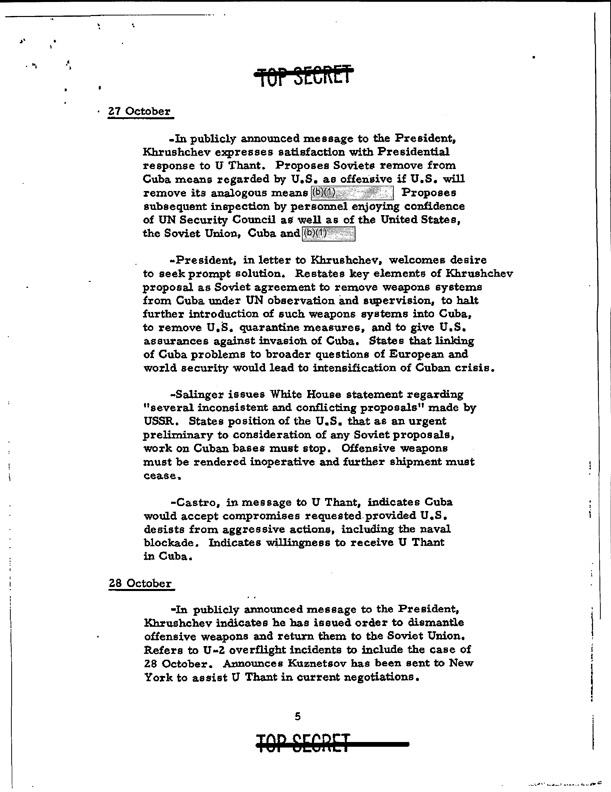
When the Defense Department released document 2 in September 2013 it withheld the references to Turkey from the section concerning Nikita Khrushchev’s public message to President Kennedy on 27 October 1962 suggesting a trade of U.S. missiles in Turkey for the Soviet missiles in Cuba. In its 2009 appeal letter to the Defense Department the Archive pointed out that Khrushchev message’s was in the public record, but the Pentagon maintained the deletions.

A Pentagon report recently released through a FOIA appeal and published today by the National Security Archive includes several astonishing excisions, including one from Nikita Khrushchev’s «publicly announced message» on 27 October 1962, where he proposed removing Soviet missiles from Cuba if the United States «will remove its analogous means from [excised].» [See document 2, PDF page 30] What Khrushchev said was «Turkey,» but on national security grounds the Pentagon would not declassify that word in a statement that was made to the world.

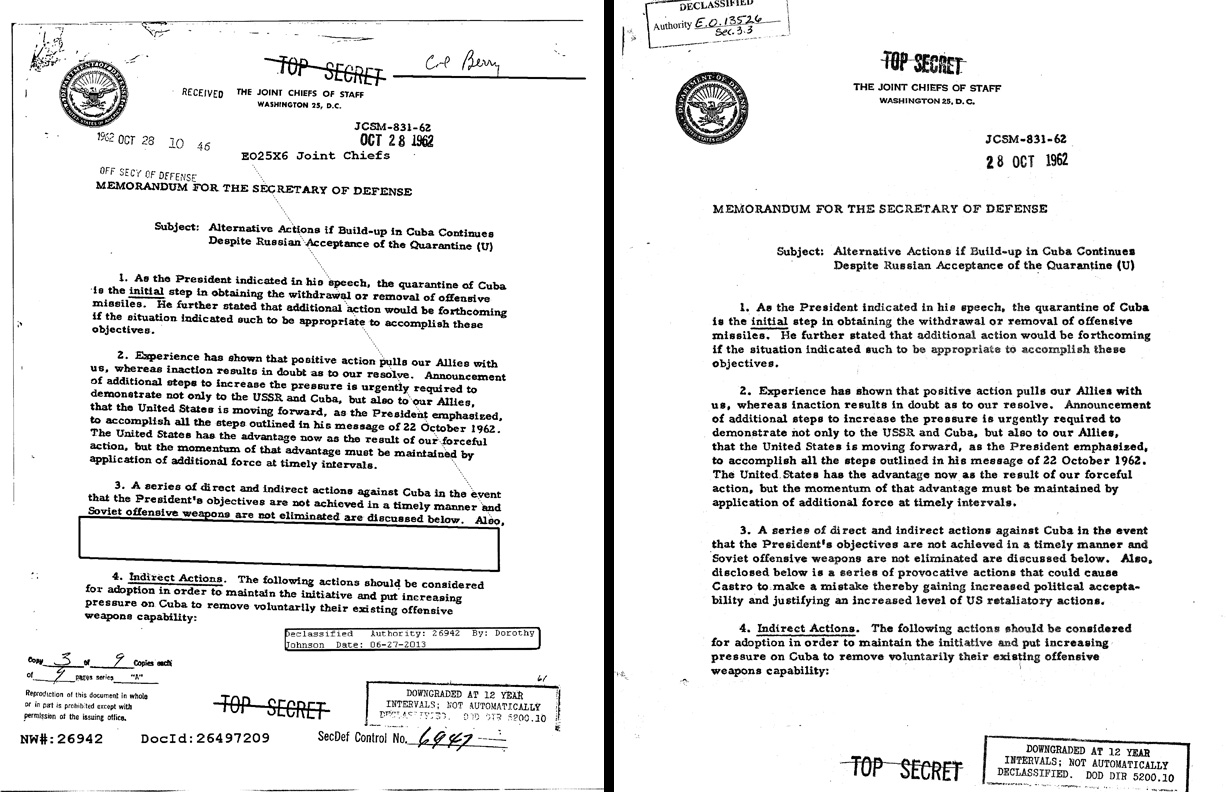
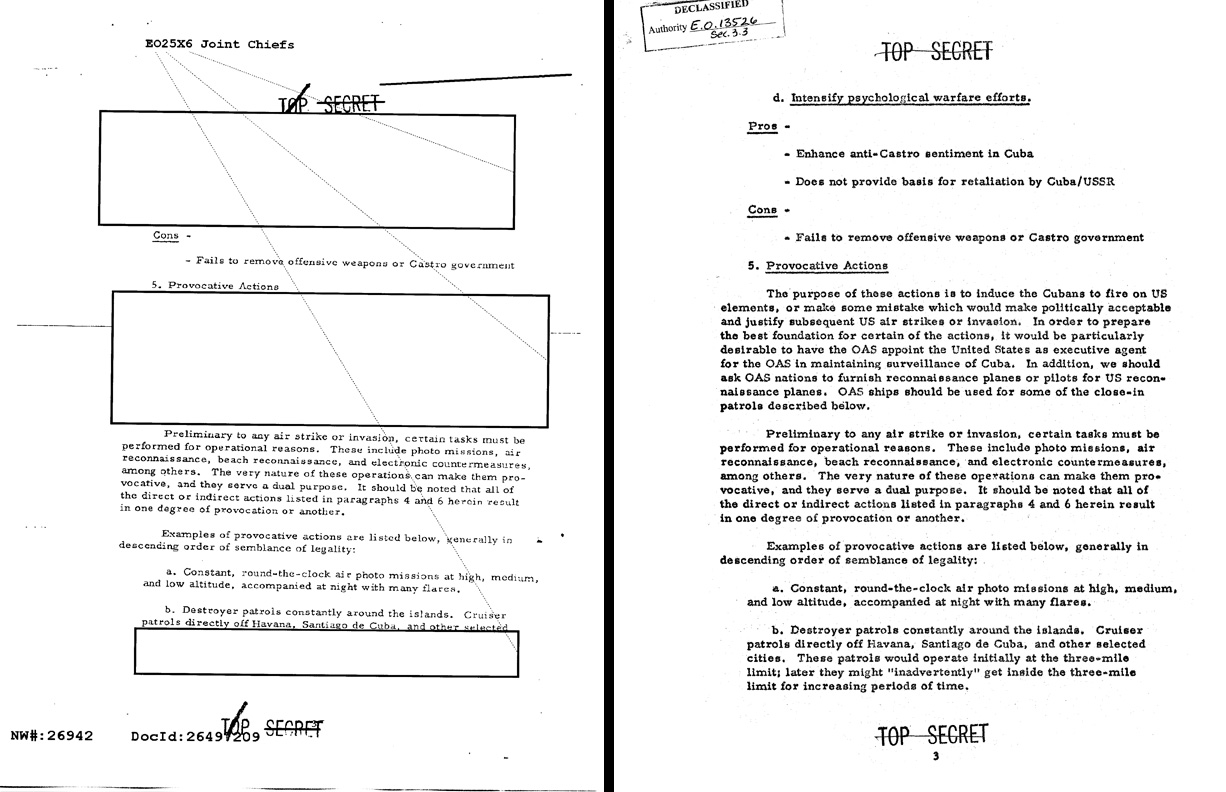
Right side: excerpts from document 1A, JCS Chairman Taylor memorandum to Secretary of Defense on «Alternative Actions,» 28 October 1962, as released from Air Force files at NARA, April 2013.
Left side: excerpts from document 1B, JCS Chairman Taylor memorandum to Secretary of Defense on «Alternative Actions,» 28 October 1962, as released from Secretary of Defense Records at NARA through mandatory declassification review appeal.

Another unusual recent declassification decision involves a late October 1962 Joint Chiefs of Staff report on possible military and political operations against Cuba in the event that the negotiations with Moscow broke down. The Defense Department released that report last year in two different versions at the National Archives and Records Administration (NARA), one fully and correctly declassified and the other with significant excisions concerning proposals for covert operations and «provocative actions» against Cuba and Soviet forces in Cuba. Very similar proposals have been declassified before and the fact that a version in Air Force records was declassified in full raises questions about the standards used by the Pentagon to excise the other version.

The «Turkey» deletion and the excised JCS report also raise questions about the extent to which Pentagon guidance influences declassification review practices at the National Archives’ National Declassification Center. According to a recent NDC report, nearly forty percent of the millions of pages of documents reviewed, most of which are over forty years old, have been withheld on national security grounds. That astoundingly high percentage of exempted pages may include items that the Pentagon regards as «national security information» but which are no more sensitive than the Cuba «secrets» of 1962.

Dubious Secrets of the Cuban Missile Crisis

Earlier this year, a mandatory declassification review request to the National Archives for Air Force records on the Cuban missile crisis produced a Joint Chiefs of Staff report, dated 28 October 1962, to Secretary of Defense Robert McNamara on «Alternative Actions if Build-up in Cuba Continues Despite Russian Acceptance of the Quarantine.» Prepared just as the crisis was ending, but before the Kennedy-Khrushchev agreement had been announced, the Chiefs wanted the White House to be ready for action in the event that negotiations failed and «Soviet offensive weapons are not eliminated.»

Chairman Maxwell Taylor suggested to Secretary of Defense McNamara a series of «direct and indirect» and «provocative» actions against Cuba (with their pros and cons). The Chiefs had been itching for an air attack and an invasion and may have believed a diplomatic failure would give the Pentagon a chance to take action. Therefore, they proposed indirect measures, such as pressures from the Organization of American States, and direct actions, ranging from an air blockade to covert operations to an all-out invasion. The proposed covert operations included the assassination of «leading Russians and Cuban communists.» Moreover, the Chiefs suggested a series of «provocative» actions to induce Fidel Castro «to make a mistake» and give the United States an excuse to launch an attack. Among the provocations were harassments such as destroyer patrols around Cuba and inciting riots on the «Cuban side of the Guantanamo fence» by using base workers as «agents» and providing military aid to them.

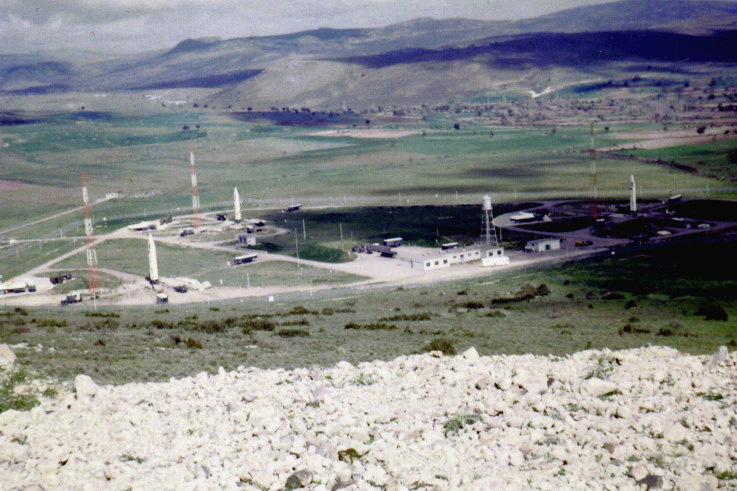
View of one of the five «flights» (3 missiles each) of Jupiter intermediate range-ballistic missiles deployed at Cigli Air Base, Turkey during 1962 and early 1963. (Photo taken by Wendell Vining, courtesy of Robert L. Young)
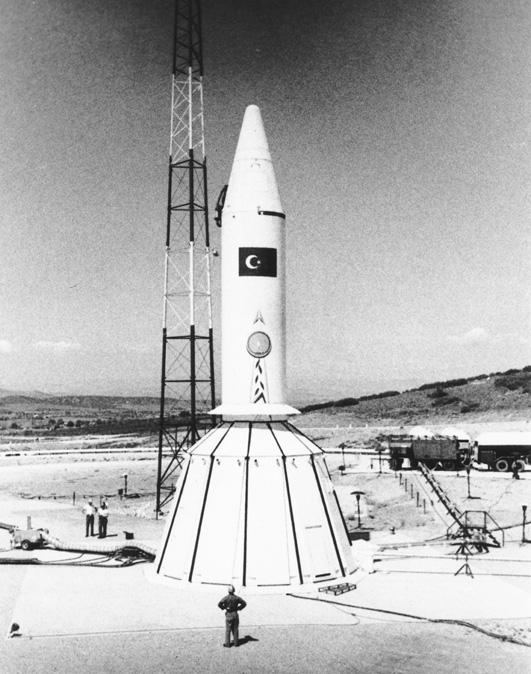
Close-up of one of the Jupiters deployed at Cigli Air Base. The «skirt» or «flower petal shelter» that enclosed the bottom of the missile enabled the crew to work on the missile during bad weather. The «skirt» would unfold prior to launch. Inside the circular insignia is a mushroom cloud, not visible in this picture. (Photo from Still Pictures Division, National Archives, College Park, copy courtesy of Philip Nash, Pennsylvania State University)
Another close-up of the Jupiters deployed at Cigli, 1963. (Photo taken by Wendell Vining, courtesy of Robert L. Young)

Such proposals may not be too surprising to readers familiar with the history of the period. An infamous JCS proposal from earlier in 1962, «Operation Northwoods,» suggested a variety of wild pretexts, disregarded by civilian policymakers, for a U.S. invasion of Cuba. Declassified by the Kennedy Assassination Review Board, Northwoods included proposals for phony «Cuban» terrorist attacks in U.S. cities and a «Remember the Maine» attack on a U.S. ship. Moreover, actual covert operations against Cuba, including Operation Mongoose and assassination plots against Fidel Castro and other foreign leaders during the early 1960s, were exposed years ago so comparable proposals from the JCS are less than revelatory. In this context, it made sense for declassification reviewers to release the 28 October report [See document 1A] in its entirety earlier this year, in a release of Air Force records on the crisis.

The story is more complicated, however, because a different copy of the same JCS report has gone through parallel declassification reviews. The second copy is in a special collection of Secretary/Deputy Secretary of Defense «sensitive records» on Cuba during 1961-1964. It was first released earlier in 2013 in a massively excised form, before the unredacted version in Air Force records had become available. Challenging the excisions, the National Security Archive filed an appeal with the National Archives. As a result of the appeal, reviewers at NARA gave some ground but nevertheless kept significant sections «secret» [See document 1B]. Many of the proposed «provocative» actions were excised along with the covert operations proposals, such as assassinations.

The full release of the report is good news; something is working right in the declassification system. Significant deletions in the other copy, however, should be a red flag that something is very wrong. But why the separate reviews produced such greatly divergent results is unclear. Plainly, different Defense Department reviewers assigned to NARA’s National Declassification Center reached totally opposite conclusions. One reviewer regarded the information as old hat and properly declassified the report. The other overreacted seeing the report as full of supposedly sensitive secrets and concluded inappropriately that complete declassification would harm U.S. defense and foreign policy interests. NARA staffers may well have objected but under existing rules Defense Department reviewers do not have to listen. Yet it is a waste of resources and a sign of a seriously defective declassification system when reviewers redact 50-year-old documents when nothing about them is sensitive.

This is an exceptional case only because it is possible to make direct comparisons. The excisions about the Jupiter missiles in Turkey provide further evidence of a serious problem. In 2009, the Archive filed an appeal on Department of Defense excisions in several documents held in a special collection on the missile crisis among records of the Secretary of Defense. One of the documents was a compilation prepared by Deputy Secretary of Defense Roswell Gilpatric’s military assistant, Col. Francis Roberts, on key developments during the missile crisis: political developments, military actions taken, and «national decision-making,» with a summary of reconnaissance flights. A number of «secrets» were excised from this document, for example, the «publicly announced» Khrushchev statement on Turkey [See document 2, PDF page 30].

Other references to Turkey were excised, but so was a statement made by Secretary of State Dean Rusk [Document 2, page 17 of PDF] that is nevertheless published in full in the State Department’sForeign Relations of the United States compilation on the missile crisis. Despite the Archive’s appeal letter which pointed out the contradictions, the Defense Department’s decision, made in September 2013, reaffirmed many of the excisions made in 2009. According to the Defense Department’s decision letter, declassifying the information «would cause serious harm to relations between the United States and a foreign government, or to ongoing diplomatic activities of the United States government.» It would be interesting to know whether the Pentagon consulted the State Department when it made that ex cathedra judgment.

The Defense Department followed the same procedure with other documents released in the same appeal decision. For example, a reference to Turkey (and probably Italy) was plainly excised from hand-written notes on a White House meeting taken during the Missile Crisis by Deputy Secretary of Defense Roswell Gilpatric [See document 3].

These are undeniable examples of over-classification which suggests that the Defense Department’s security reviewers follow guidelines that are obsolete and overly stringent. Recently the Defense Department’s Inspector General conducted a review of over-classification but rather than tackling substantive issues such as classification guidelines the report focused on small-bore issues such as the use and misuse of classification markings. In light of the pattern of Defense Department practices discussed in this and previous Dubious Secrets postings over-classification remains a problem. Unless it is fixed, neither the Pentagon’s civilian leadership nor historians and researchers can be sure that the Department’s historical records receive appropriate handling.

This problem also raises questions about the procedures used for reviewing Defense Department documents at the National Archives’ National Declassification Center. According to the NDC’s first report for 2013, of the backlog of nearly 400 million pages that it reviewed, pursuant to President Obama’s instruction to declassify these records by December 31, 2013, the release rate is 61 percent. A very high 39 percent has been withheld for purported security reasons. Some of the pages probably include Restricted Data and Formerly Restricted Data withheld under the Atomic Energy Act and intelligence sources and methods authorized by the 1949 CIA Act. Those are legal, if not always legitimate, secrets; for example, many FRD withdrawals probably relate to historical nuclear weapons deployments long overtaken by events. And the CIA’s parameters for what constitute classified sources and methods are always shifting. Moreover, some of the 39 percent may eventually be declassified once interagency coordination has occurred and provisions for declassification of fifty-year old documents have been applied. Nevertheless, one wonders whether the 39 percent includes records which only the Pentagon sees as «national security information» and which are no more sensitive than the Cuba «secrets» of 1962.

As for Defense Department documents held in NARA collections, it is time to consider new procedures to ensure that declassification decisions meet the rule of reason. A step forward would be to create a special NDC committee that makes joint decisions on appeals. For example, when the Defense Department claims that declassifying the Jupiter missiles/Turkey nexus would harm U.S. foreign relations, State Department officials could offer a reality check. Unless the Defense Department develops more credible declassification standards, officials at NARA should push for a better process for reviewing appeals involving archival records.


THE DOCUMENTS

Documents 1A-B: Different Versions of JCS Report on «Alternative Actions»

A: Joint Chiefs of Staff Chairman Maxwell Taylor to the Secretary of Defense, «Alternative Actions if Build-up in Cuba Continues Despite Russian Acceptance of the Quarantine,» 29 October 1962, JCSM-831-62, Top Secret, with JCS Cover Sheet and Top Secret Access Record

Source: National Archives (College Park), Record Group 341, Department of the Air Force, Headquarters, Department of the Air Force, Top Secret Central Files, 1955-1965, box 700, RL (62) 38-9 Policy Cuba

B: Joint Chiefs of Staff Chairman Maxwell Taylor to the Secretary of Defense, «Alternative Actions if Build-up in Cuba Continues Despite Russian Acceptance of the Quarantine,» 28 October 1962, JCSM-831-62, Top Secret, excised copy (as released under appeal)

Source: National Archives (College Park), Record Group 330, Office of Secretary of Defense, «Sensitive Records on Cuba, The Cuban Missile Crisis,» box 1, Black Book 4th Drawer

Document 2Memo for Mr. Gilpatric from Col. Francis J. Roberts, «Cuban Crisis – Record of Events,» 6 November 1962,» Top Secret, excised copy

Source: Defense Department FOIA appeal release

Document 3: Roswell Gilpatric Notes on White House meeting, 22 October 1962, Top Secret, excised copy

Source: Defense Department FOIA appeal release


Notes

[1] The Jupiter missiles in Turkey were most infuriating to Soviet Premier Nikita Khrushchev because of their relative proximity to Soviet territory. For a major study of the Jupiter deployments and their role in the crisis, see Philip Nash, The Other Missiles of October: Eisenhower, Kennedy, and the Jupiters, 1957-1963 (Chapel Hill, NC, 1997). For more on the Jupiters during the crisis, see Michael Dobbs, One Minute to Midnight: Kennedy, Khrushchev, and Castro On the Brink of Nuclear War (New York, 2008), especially 199-201, 231-238, and 307-309

CommunityNewsletter_0

In Defense of History According to Hollywood

by Yohuru Williams

HNN  February 17, 2014

Yohuru Williams is chair and professor of history at Fairfield University. Follow him on Twitter @yohuruwilliams

Image via Wiki Commons.

After weeks of badgering from a friend, I saw Frost/ Nixon a few years back and left the theatre pleasantly surprised. When I called her to discuss the film, she seemed disappointed in my reaction. As a scholar of Twentieth Century United States History, she was anxious to compare notes on the historical inaccuracies she documented in the film.  I had gone in with the same game plan, but somewhere in between the endless parade of advertising, forthcoming features, and the opening credits, I lapsed into casual moviegoer mode. I truly wanted to see how director Ron Howard would tell the story and so I was able to muster the advice of Samuel Taylor Coleridge and “suspend disbelief” in deference to “poetic faith.”

It helps that I had no professional stake in the movie.  My friend reminded me of my incessant petulance after seeing the movie Panther in 1995. As a young graduate student eager to reclaim my topic, I marched into the theatre with a pen and pad and emerged two hours later, with my hands literally bathed in ink from my furious attempt to detail and highlight every factual error.

In this sense, a historian in a history film is very much like the proverbial bull in a China shop. At every moment, we threaten to shatter the delicate handiwork of the shop owner without regard to the intricate and difficult nature of her task. Films that delve into history have the toughest audience. They must satisfy the movie going public’s desire to see a good story, complete with a satisfactory ending — with the reality that the study of the past offers us very few examples of neat, self-contained, happy endings.

That is a big part of the problem for historians. As the Bradley Commission notably observed in 1988, history is unfinished business.  Any medium that purports to neatly package the past and reconcile its meaning in a few hours is immediately suspect. Yet, this is what the “people” demand, underscoring William Dean Howells famous observation, “What the American public always wants is a tragedy with a happy ending.” Historical narratives, of course, are rarely this uncomplicated. What may worry the professional historian most, in her effort to reconstruct the past from incomplete and not always trustworthy sources, may be of little concern to the historical filmmaker seeking to satisfy a larger agenda. As David Blight observed in Race, Reunion and the Civil War with regard to D.W. Griffith’s deeply flawed cinematic vision of the Civil War and Reconstruction, Birth of Nation was as much a movie as it was a political statement.

Audiences today, one might argue-problematically of course, are more sophisticated. The recent news that film maker Oliver Stone dropped out of a project to bring the life of Martin Luther King to the big screen, did little to quiet rumblings from those concerned that the film would fail to capture the “historical” King. Some questioned, for instance, if such a film would detail Dr. King’s marital infidelities, perhaps understandable given our current preoccupation with the private lives of public figures. This was presumably not an issue in 1978 when Director Daniel Mann brought Dr. King’s life to the small screen in the three-part miniseries, King, starring Paul Winfield in the title role. The film, which still occasionally makes appearances on Dr. King’s birthday and during Black History Month, remains controversial for other reasons. Although the director devoted six hours to telling King’s story, the miniseries is perhaps best remembered for the liberties, and in some cases total falsehoods it concocted in documenting the movement including a scene where Dr. King and Malcolm X engage in a frank chat about nonviolence in Chicago in 1966 — nearly a year after Malcolm’s assassination in February of 1965. Although the invented conversation has the desired effect of contrasting the two men’s views, it is entirely a fabrication.

Directorial license theoretically knows no bounds — except in crafting a story that will appeal to a target audience, even if that includes the manufacture of characters or storylines. In 1988, Coretta Scott King famously weighed in on Mississippi Burning, challenging the film for its skewed view of the Civil Rights Movement — told not from the perspective of the embattled Civil Rights workers who risked their lives but the white FBI agents who, for the most part, watched from the sidelines.

So, if Hollywood is so terrible at getting it right, why do historians and history teachers continue to go to and in some cases, show such movies in class? In his celebrated essay “Why We Crave Horror Films?” author Stephen King laid bare the art of his craft. Although geared toward a different genre, his view may have some relevance for us. “The mythic horror movie,” he explained “like the sick joke has a dirty job to do….It deliberately appeals to all that is worst in us. It is morbidity unchained, our most base instincts let free, our nastiest fantasies realized . . . and it all happens, fittingly enough, in the dark.”

If this is true, what might we say about the mythic History film? For it surely also has a job to do, within much tighter confines — and in the blinding light of hindsight. While the horror film can take liberties with our imagination in making the unthinkable real, the historical film faces its own burdens of voice and authenticity. The history filmmakers lens must serve simultaneously as a time machine and a mirror to society.  When viewing our image in that mirror we need to recognize ourselves in its reflection and whether it is a positive view (Band of Brothers) or a negative one (Mississippi Burning) it needs to be familiar — even if (12 Years a Slave) uncomfortably so. As John Hope Franklin and Abraham Eisenstaedt have observed “every generation writes its own history for it tends to see the past in the foreshortened perspective of its own experience.”

Historical films thus have an inherent degree of tension. In addition to their mission to entertain, they often speak problematically to two audiences, one looking to safeguard its legacy and the other to understand its values. For those old enough to remember, historical movies can be a pleasant or disturbing trek down memory lane. For those with no memory or connective tissue, they very much represent a roadmap of sorts, which is probably why we remain so deeply invested in getting it right and debating the finer points of historical movies. History matters. From the military history buffs ready to pounce on the slightest variation in a unit’s insignia, to the participants ready to challenge those who question their motivations, to the now adult who never quite understood why her parents wept so bitterly the day Kennedy died, we are constantly negotiating and renegotiating the meaning of the past. History films are like our own fickle and often, subjective memories committed to celluloid. What they reflect or who we see reflected in them can tell us a lot about where we are at any given moment. In a society rapidly transitioning away from oral and written to visual sources, soon they may become even more significant – as a means to not only imagine the past, but also shape its meaning.

George Will famously referred to Oliver Stone’s 1991 docudrama JFK as a “three hour lie from an intellectual sociopath.” It nevertheless grossed 205 million worldwide and sparked intense debate and discussion. A Newsweek magazine cover featuring a photo of actor Djimon Hounsou manacled and with the subtitle «Should America apologize for slavery or just get over it?» attempted to use the film to promote a national discussion over slavery. As a High school teacher, I took my class to the film and despite my blistering critique my students literally spent the next month and half referencing it. That is the rub. Even when they get it wrong, as they often do, there is still tremendous value in the exercise.  It creates for those with no memory and or no engagement with scholarship a frame of reference, no matter how flawed.

There is another important consideration beyond this as well. As the movie Forest Gump reminded us, it not just the facades and the fashions that transport us back, not merely the music or the language, although clearly they help. It is the culmination of our collective hopes and fears transferred to the big screen starring back at us to affirm not only who we are but what we aspire to be.

Critics challenge history movies for a host of reasons, including historical inaccuracies, manufactured dialogue, and/or conflated characters. A film can never reproduce a life, nor for that matter can a historian. Even with the most complete sources, we cannot know with absolute certainty that what we write is 100% accurate. It is why we discuss history in terms of changing interpretations rather than ironclad narratives.  It is also why we crave history films as a means of judging not only our values but also the narratives that prevail currently. In stark contrast to Stephen King’s horror film, the mythic history film represents morbidity, in the form of the unknown, checked, our most base instincts subdued, and our best qualities, in the form of manufactured heroes and happy endings idealized. To their detractors, of course, these qualities can make history movies a horror of a different stripe for they deliberately appeal, usually in the creation of heroes, to the best in all of us — at times at the expense of frank discussions about our not so glorious past. Nevertheless, even in all their flaws, they invaluable as teaching tools especially in terms of getting people thinking and talking about past.

Yohuru Williams is chair and professor of history at Fairfield University. Follow him on Twitter @yohuruwilliams


Untold History: More Than a Quarter of U.S. Presidents Were Involved in Slavery, Human Trafficking

Democracy Now     February 17, 2014

As the country marks Presidents’ Day, we turn to an aspect of U.S. history that is often missed: the complicity of American presidents with slavery. «More than one-in-four U.S. presidents were involved in human trafficking and slavery. These presidents bought, sold and bred enslaved people for profit. Of the 12 presidents who were enslavers, more than half kept people in bondage at the White House,» writes historian Clarence Lusane in his most recent article, «Missing from Presidents’ Day: The People They Enslaved.»

Transcript

This is a rush transcript. Copy may not be in its final form.

AMY GOODMAN: As the country marks Presidents’ Day today, we turn to an aspect of U.S. history often missed: the complicity of American presidents with slavery. The first person of African descent to enter the White House was most likely a slave. The nation’s capital, Washington, D.C., once hosted markets where human beings were sold for profit. Slaves built some of the country’s most famous landmarks, including Philadelphia’s Independence Hall, Boston’s Faneuil Hall, James Madison’s Montpelier. Last week, President Obama mentioned the role of slaves in building one specific landmark: Thomas Jefferson’s plantation estate in Charlottesville, Virginia. Obama was touring the home of America’s third president with French leader François Hollande. This is what Obama had to say about Monticello.

PRESIDENT BARACK OBAMA: This house also represents a complicated history of the United States. We just visited downstairs, where we know that slaves helped to build this magnificent structure, and the complex relations that Jefferson, the drafter of the Declaration of Independence, had to slavery. And it’s a reminder for both of us that we are going to continue this fight on behalf of the rights of all peoples, something that I know France has always been committed to and we are committed to, as well.

AMY GOODMAN: President Obama speaking last week during French President François Hollande’s visit to the U.S.

We’re joined now by Clarence Lusane, who has documented the racial history of Washington, D.C., and the presidency. His most recent article is «Missing from Presidents’ Day: The People They Enslaved.» Clarence Lusane writes, quote, «more than one in four U.S. presidents were involved in human trafficking and slavery. These presidents bought, sold, and bred enslaved people for profit. Of the 12 presidents who were enslavers, more than half kept people in bondage at the White House,» he writes. Clarence Lusane is author of The Black History of the White House, a member of the D.C. Commission on African American Affairs, also professor at American University in Washington, D.C.

Professor Lusane, welcome to Democracy Now! So, talk about this history of slavery and U.S. presidents.

CLARENCE LUSANE: Well, I’m glad that you pointed out that President Obama, when he went to Jefferson’s home, pointed out the slave history there. But it’s also important to note that the most iconic building in the U.S., the one that represents the country to the world, the White House, also was a place where slavery existed. Not only that, it was built by slaves. And none of that has been publicly acknowledged. There is over a million people who visit the White House every year, who go on tours, who come for meetings, and you can go through that building and never have a sense of that important history.

And that’s critical because I think Presidents’ Day should be a period of critical reflection, not some kind of blind celebration, but it should be one where we really try to get a better sense of the country’s history. And part of that history, part of what I think resonates even to this day, is that, significantly, before the Civil War, nearly every U.S. president was a slave owner, which meant that they were compromised on the issue of slavery, and that had repercussions that, you know, redounded through history. So it’s really critical, I think, that we have that acknowledgment, because we grow up, we go to school, we have history classes, and none of that history is told to us.

AMY GOODMAN: So, give us a black history of U.S. presidents, as you call it.

CLARENCE LUSANE: Well, in looking at the White House—and I use that as the prism to try to look at this longer history that basically led up to President Obama—one of the things that we find that’s missing in that history is the voices of people, particularly African Americans, who were enslaved during that long, long, long history. And that was critical because when you think about George Washington, Madison, Monroe, all of the early presidents, who wrote the Declaration of Independence, they wrote the Constitution, they wrote the Articles of Confederation, all of these documents, these founding documents that extol the principles of democracy, liberty, equality, they were living a contradiction. And that contradiction is that every single day of their life, every moment in their life, they were surrounded by people who were enslaved.

Now, fortunately, because of some of the historic records that have been kept, we now know who some of those people were. George Washington, for example, when he was president and his presidency was in Philadelphia, had at least nine individuals with him who were enslaved—Oney Maria Judge, for example, who was a young woman of about 22 who escaped from George Washington. She escaped—this was in 1796, when she found out that Martha Washington was planning to give her away as a wedding gift. And she made contact with the free black population in Philadelphia, was able to escape. Now, this is remarkable because we’re talking about a young woman who basically traveled nowhere by herself, who escapes from the most powerful person on the planet, pretty much, certainly most powerful person in the United States. Her story is important because she lived—she outlived Washington. She lived to be, I believe, in her eighties and lived a life where she learned to read, became active in her community. You also had Hercules, who was Washington’s cook, who also escaped from Washington.

So there are people who we were in and around the White House who had stories to tell that are part of that history that we literally were never taught about for all of the years that, you know, we took schooling and we took classes in history. And so, I thought it was important, and there are others who have written to re-enter into the historic narrative the stories of these individuals, because they really are critical if you really want to understand the politics of George Washington or the politics of Thomas Jefferson or any of the other presidents who held slaves.

AMY GOODMAN: Tell us about Paul Jennings.

CLARENCE LUSANE: Paul Jennings, again, is another fascinating character. He was enslaved to the Madisons, to James and Dolly Madison. He was, in fact, the first individual to actually write about working in the White House. He published a memoir—this was in the late 1860s—that talked about the time when he was in the White House. And he was there in 1814. He was there when the British literally were burning down the city, and was part of the contingent of folks who were attempting to get materials out of the White House and preserve them before the British came. So he really had a fascinating history.

He was supposed to be free when James Madison died, but Dolly Madison basically reneged on the deal. So he—it took him a few years to buy his freedom, which he eventually did. And then he actually came to help Dolly Madison. She fell on hard times. She wasn’t wealthy. She wasn’t a wealthy person, and she wasn’t part of the social elite of Washington. And so, when she fell on hard times and her family and friends abandoned her, Jennings would often bring her food and bring her money and basically would look after her. But what was also important about James Jennings is that he also was—

AMY GOODMAN: Paul Jennings.

CLARENCE LUSANE: Paul Jennings, I’m sorry, is that he was also central to the largest attempt at escaping from slavery that happened in Washington, D.C. This happened in 1848. For a number of reasons, the escape attempt failed, but Jennings was never brought in. He was never seen as being part of it. And it was only literally after his death that it was revealed that he had played a very critical role in that. So, my point is that you had these individuals who were enslaved to presidents, who really had fascinating kinds of stories and fascinating kinds of lives that we should know about, because they really are also a part of the history of the White House and the history of the presidency.

AMY GOODMAN: I want to play a clip from the trailer of the film Lincoln, directed by Steven Spielberg, released last year, about President Abraham Lincoln and the fight to end slavery in the United States. In this clip, you first hear Abraham Lincoln, played by Daniel Day-Lewis, followed by the voices of Thaddeus Stevens, the congressmember from Pennsylvania, and Mary Todd Lincoln, the first lady. Let’s go to that clip.

PRESIDENT ABRAHAM LINCOLN: [played by Daniel Day-Lewis] We’re stepped out upon the world stage now, the fate of human dignity in our hands! Blood’s been spilt to afford us this moment! Now! Now! Now!

THADDEUS STEVENS: [played by Tommy Lee Jones] Abraham Lincoln has asked us to work with him to accomplish the death of slavery.

MARY TODD LINCOLN: [played by Sally Field] No one’s ever been loved so much by the people. Don’t waste that power.

AMY GOODMAN: That was an excerpt of Lincoln. Clarence Lusane, talk about Abraham Lincoln and slavery.

CLARENCE LUSANE: Lincoln was—the Lincoln administration was a turning point in terms of the history of the relationship between African Americans and the White House. It was during Lincoln’s tenure that the first meeting took place between a U.S. president and leaders of the black community. This happened in 1862, I believe. Now, this was critical because up until that point, although African Americans, particularly free African Americans in the North, had been organized and had been raising issues, policy issues, issues around slavery, they simply had no access to the White House or to policymakers. Lincoln, however, opened up some of that space.

And part of what I think moved Lincoln from being not just simply anti-slavery, but ultimately to recognizing that you had to eliminate slavery, that abolition was the only path forward, in part, came because of his discussions with black leaders, not only church leaders, but people like Frederick Douglass, but also—and this is in the film—discussions with Elizabeth Keckley. In the film, she’s the woman who’s often seen with Mary Lincoln. She’s played by Reuben, Gloria Reuben, in the film. And the film is a little bit disingenuous in that you could think that maybe she was a servant, but in fact she was an independent businesswoman who had become basically best friends with Mary Lincoln, but also she spent a great deal of time at the White House having discussions with Abraham Lincoln about race, about slavery, about the future of the country. And again, her story is important to be told because she, again, was part of a contingent of African Americans who thought to influence the presidency and to address issues that needed to be dealt with. And so, the movie Lincoln doesn’t quite take you there to show you that side of the people who influenced Lincoln, but it’s an important part of understanding what happened in the Civil War and how Lincoln actually got to the point where he said the only way out of this situation is that slavery has to end.

AMY GOODMAN: Then that moment, that meeting, August 14th, 1862, Abraham Lincoln does something unprecedented: He meets with a small delegation of black leaders, clergy.

CLARENCE LUSANE: Right. And at that point, Lincoln had already decided to issue the Emancipation Proclamation. There was some debate about which date to issue it on, but he was already moving in a position where he saw the country’s future as a future without slavery. And these leaders that he met with were people who mostly were tied to the black church community, but people who also had ties to abolitionists, to people who were active in the other kinds of issues around the country. So that really was kind of a turning point. And since that point, there has been a considerable amount of effort on the part of African Americans to negotiate and to meet with and to lobby not only in Congress, but the president themself.

AMY GOODMAN: Talk about the buildings, these iconic structures that kids, adults go to in Washington, D.C., to honor this country—the White House, the Capitol. Who built it?

CLARENCE LUSANE: This is really important, because I think there may be some sense, more generally, that Washington owned slaves and Jefferson owned slaves, but I think there’s a general ignorance about the role of people who were enslaved in actually building the nation’s capital. In 1790, after the country was founded, the Congress passed legislation to build a capital. Washington, D.C., did not exist. And so, there was a decision that land that was ceded from Maryland and from Virginia would become the nation’s capital, and it had to be built, and it would take 10 years. This is why Washington spent all of his presidency either in New York or in Pennsylvania. But to build Washington, D.C., you needed labor. And George Washington, who was more or less in charge of the project, initially wanted labor to come from Europe, but it was very, very difficult to get people to come all the way over on these really harsh trips to work in basically a jungle. So they basically relied on enslaved labor, which meant cutting down trees, moving rocks, digging holes—you know, all of the harsh, harsh labor that had to be done literally to clear the area. But it also included skilled labor, people who were carpenters and plasterers. We know for a fact that both at the White House and—the building that became the White House and the U.S. Capitol, there were at least five highly skilled carpenters who worked for years to build those two buildings.

And again, this needs to be acknowledged, because it reflects that ongoing contradiction, what President Obama talked about with President Hollande, of this conflict between the principles of equality and democracy, and the reality of slavery. Now, in the Capitol a few years ago, there were two plaques that were put up to honor or to acknowledge the people who were enslaved that built the Capitol. One is on the House side, and one is on the Senate side in the Rotunda. And in Philadelphia, at the pavilion where the Liberty Bell exists, the new Liberty Bell Pavilion was actually built over the old house where—or the land where George Washington lived when he was president. There is also a plaque there that acknowledges the people who were enslaved to Washington during the time of his presidency. What we do not have yet, and it actually may happen, is something in the White House that will have that kind of acknowledgment.

AMY GOODMAN: Final comment, Clarence Lusane, about what you think we should understand on this Presidents’ Day? And take it all the way—you write about Teddy Roosevelt.

CLARENCE LUSANE: Yeah, I think that the most important thing is to understand that there is a long and rich history of African Americans in the White House long before President Obama. And all of that history tells us a great deal, I think, about the current situation we face, where we continue to see racial disparities and racial discrimination pretty much across the board. The story you did earlier about the shootings in Florida, for example, I think, in part, reflect an unawareness of this history and the degree to which the country still has not acknowledged and reconciled this past. A year ago, I went with students to Rwanda, and we visited a great—a large number of memorials. And it became so clear to me that the degree to which the country acknowledges its past in an honest and straightforward way goes a long way towards healing and reconciliation. It doesn’t necessarily end up with all the justice that needs to be happening, but it certainly is a first step, that acknowledgment and recognition of your history becomes really important.

AMY GOODMAN: Thanks so much for being with us, author of The Black History of the White House . We’ll link to your piece, «Missing from Presidents’ Day: The People They Enslaved» at democracynow.org. Clarence Lusane is also a professor at American University. This is Democracy Now!, democracynow.org, The War and Peace Report. Back in a minute.