Feeds:
Entradas
Comentarios

Archive for julio 2014

How Coffee Fueled the Civil War

Jon Grispan

The New York Times  July 9, 2014

index2It was the greatest coffee run in American history. The Ohio boys had been fighting since morning, trapped in the raging battle of Antietam, in September 1862. Suddenly, a 19-year-old William McKinley appeared, under heavy fire, hauling vats of hot coffee. The men held out tin cups, gulped the brew and started firing again. “It was like putting a new regiment in the fight,” their officer recalled. Three decades later, McKinley ran for president in part on this singular act of caffeinated heroism.

At the time, no one found McKinley’s act all that strange. For Union soldiers, and the lucky Confederates who could scrounge some, coffee fueled the war. Soldiers drank it before marches, after marches, on patrol, during combat. In their diaries, “coffee” appears more frequently than the words “rifle,” “cannon” or “bullet.” Ragged veterans and tired nurses agreed with one diarist: “Nobody can ‘soldier’ without coffee.”

Union troops made their coffee everywhere, and with everything: with water from canteens and puddles, brackish bays and Mississippi mud, liquid their horses would not drink. They cooked it over fires of plundered fence rails, or heated mugs in scalding steam-vents on naval gunboats. When times were good, coffee accompanied beefsteaks and oysters; when they were bad it washed down raw salt-pork and maggoty hardtack. Coffee was often the last comfort troops enjoyed before entering battle, and the first sign of safety for those who survived.

Photo

A sketch of exchanged Union prisoners receiving rations aboard the ship New York. Library of Congress

The Union Army encouraged this love, issuing soldiers roughly 36 pounds of coffee each year. Men ground the beans themselves (some carbines even had built-in grinders) and brewed it in little pots called muckets. They spent much of their downtime discussing the quality of that morning’s brew. Reading their diaries, one can sense the delight (and addiction) as troops gushed about a “delicious cup of black,” or fumed about “wishy-washy coffee.” Escaped slaves who joined Union Army camps could always find work as cooks if they were good at “settling” the coffee – getting the grounds to sink to the bottom of the unfiltered muckets.

For much of the war, the massive Union Army of the Potomac made up the second-largest population center in the Confederacy, and each morning this sprawling city became a coffee factory. First, as another diarist noted, “little campfires, rapidly increasing to hundreds in number, would shoot up along the hills and plains.” Then the encampment buzzed with the sound of thousands of grinders simultaneously crushing beans. Soon tens of thousands of muckets gurgled with fresh brew.

Confederates were not so lucky. The Union blockade kept most coffee out of seceded territory. One British observer noted that the loss of coffee “afflicts the Confederates even more than the loss of spirits,” while an Alabama nurse joked that the fierce craving for caffeine would, somehow, be the Union’s “means of subjugating us.” When coffee was available, captured or smuggled or traded with Union troops during casual cease-fires, Confederates wrote rhapsodically about their first sip.

The problem spilled over to the Union invaders. When Gen. William T. Sherman’s Union troops decided to live off plunder and forage as they cut their way through Georgia and South Carolina, soldiers complained that while food was plentiful, there were no beans to be found. “Coffee is only got from Uncle Sam,” an Ohio officer grumbled, and his men “could scarce get along without it.”

Confederate soldiers and civilians would not go without. Many cooked up coffee substitutes, roasting corn or rye or chopped beets, grinding them finely and brewing up something warm and brown. It contained no caffeine, but desperate soldiers claimed to love it. Gen. George Pickett, famous for that failed charge at Gettysburg, thanked his wife for the delicious “coffee” she had sent, gushing: “No Mocha or Java ever tasted half so good as this rye-sweet-potato blend!”

Did the fact that Union troops were near jittery from coffee, while rebels survived on impotent brown water, have an impact on the outcome of the conflict? Union soldiers certainly thought so. Though they rarely used the word “caffeine,” in their letters and diaries they raved about that “wonderful stimulant in a cup of coffee,” considering it a “nerve tonic.” One depressed soldier wrote home that he was surprised that he was still living, and reasoned: “what keeps me alive must be the coffee.”

Others went further, considering coffee a weapon of war. Gen. Benjamin Butler ordered his men to carry coffee in their canteens, and planned attacks based on when his men would be most caffeinated. He assured another general, before a fight in October 1864, that “if your men get their coffee early in the morning you can hold.”

Coffee did not win the war – Union material resources and manpower played a much, much bigger role than the quality of its Java – but it might say something about the victors. From one perspective, coffee was emblematic of the new Northern order of fast-paced wage labor, a hurried, business-minded, industrializing nation of strivers. For years, Northern bosses had urged their workers to switch from liquor to coffee, dreaming of sober, caffeinated, untiring employees. Southerners drank coffee too – in New Orleans especially – but the way Union soldiers gulped the stuff at every meal pointed ahead toward the world the war made, a civilization that lives on today in every office breakroom.

But more than that, coffee was simply delicious, soothing – “the soldier’s chiefest bodily consolation” – for men and women pushed beyond their limits. Caffeine was secondary. Soldiers often brewed coffee at the end of long marches, deep in the night while other men assembled tents. These grunts were too tired for caffeine to make a difference; they just wanted to share a warm cup – of Brazilian beans or scorched rye – before passing out.

This explains their fierce love. When one captured Union soldier was finally freed from a prison camp, he meditated on his experiences. Over his first cup of coffee in more than a year, he wondered if he could ever forgive “those Confederate thieves for robbing me of so many precious doses.” Getting worked up, he fumed, “Just think of it, in three hundred days there was lost to me, forever, so many hundred pots of good old Government Java.”

So when William McKinley braved enemy fire to bring his comrades a warm cup – an act memorialized in a stone monument at Antietam today – he knew what it meant to them.

Follow Disunion at twitter.com/NYTcivilwar or join us on Facebook.

Jon Grinspan

Jon Grinspan is a National Endowment for the Humanities fellow at the Massachusetts Historical Society.

Read Full Post »

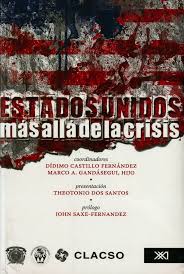
Reseña de «Estados Unidos más allá de la crisis»

Castillo Fernández, Dídimo y Gandásegui (Hijo), Marco A. (coordinadores): Estados Unidos más allá de la crisis, México, Siglo XXI y CLACSO, 2012. 537 páginas.*

Por Leandro Morgenfeld

Vecinos en conflicto 8 de julio de 2014

UnknownPara comprender América Latina hay que estudiar a Estados Unidos. Acostumbrados a interpretar nuestro pasado y presente a través del prisma de la academia anglosajona, a primera vista puede parecer extraño o antojadizo que se analice el devenir de la crisis estadounidense desde el punto de vista latinoamericano. Y eso es justamente lo que se propone este libro: desentrañar diversas aristas vinculadas con la actual crisis de la potencia hegemónica mundial, desde el punto de vista latinoamericano. Luego de seis años de labor colectiva, un conjunto de intelectuales de la región, en el marco de un Grupo de Trabajo del Consejo Latinoamericano de Ciencias Sociales (CLACSO), presenta este libro, el tercero luego de Crisis de hegemonía de Estados Unidos y Estados Unidos: la crisis sistémica y las nuevas condiciones de legitimación. Coordinado por los sociólogos Dídimo Castillo Fernández y Marco A. Gandásegui, hijo, esta obra de nutre de 20 capítulos -sus autores son reconocidos investigadores de Argentina, Brasil, Colombia, Chile, Cuba, México, Panamá, Puerto Rico y Estados Unidos-, divididos en los tres grandes ejes que la articulan: Crisis mundial o crisis del capitalismo; Crisis de hegemonía y decadencia interna en Estados Unidos; Nueva geopolítica de Estados Unidos, escenarios para América Latina.
La primera parte trata sobre la crisis desatada en 2008 y las consecuencias para Estados Unidos y el resto del mundo a mediano y largo plazo. Theotonio Dos Santos analiza el carácter estructural de la misma; Carlos Eduardo Martins la compara con la de 1929 y avanza en planteos teóricos, abrevando en Marx, Braudel, Dos Santos y Marini; Orlando Caputo Leiva rebate los argumentos de quienes sostienen que es una crisis financiera; Jaime Ornelas Delgado se centra en el agotamiento del modelo económico neoliberal; y Gandásegui se ocupa de la crisis de hegemonía del sistema mundo, vinculándola con el cambio de época en el desarrollo capitalista.
La segunda parte plantea el debate sobre la declinación de Estados Unidos a nivel mundial. Adrián Sotelo Valencia sostiene el carácter estructural y global de la crisis, y discute con la idea de su posible encapsulamiento a partir de medidas correctivas; Katia Cobarrubias Hernández explica cómo la hegemonía financiera y monetaria de Estados Unidos, desde 1971, fue una de las causas de los desequilibrios actuales y terminó debilitando el propio dominio económico estadounidense; Daniel Munevar se centra en el déficit fiscal de Estados Unidos, su vínculo con la deuda pública y las opciones para evitar la depresión económica; Fabio Grobart Sunshine analiza el agotamiento relativo y la pérdida de liderazgo de Estados Unidos en materia de ciencia y tecnología, y las promesas incumplidas de Obama en relación a ese sector de punta; Castillo Fernández analiza los cambios en el proceso de producción y trabajo que acompañaron el neoliberalismo y el crecimiento de la informalidad, el desempleo y la precarización laboral, vinculados al aumento de la explotación; Alejandro I. Canales estudia la inmigración latinoamericana y la relaciona con el proceso de creciente precarización del trabajo; James Martín Cypher analiza las consecuencias regresivas de la crisis actual para los trabajadores y la clase media; y Jorge Hernández Martínez examina las redefiniciones ideológicas y los cambios en la geopolítica mundial a partir de la asunción de Obama, esencialmente continuador de la política exterior de Bush.
La tercera parte se centra en la nueva geopolítica de Estados Unidos, la política exterior de Obama hacia América Latina -en su primer año y medio como presidente- y también en los potenciales escenarios para la región. Darío Salinas Firgueredo analiza las supuestas amenazas actuales a la seguridad estadounidense, la ubicación de la región en la agenda de ese país y las respuestas latinoamericanas; Luis Suárez Salazar critica las estrategias del «gobierno permanente» de Estados Unidos hacia el resto del continente americano, enfatizando las continuidades Bush-Clinton-Bush(h)-Obama, por sobre las rupturas; Silvina M. Romano desarrolla una perspectiva crítica del vínculo entre democracia y desarrollo, y su relación con la seguridad, desde los años sesenta hasta la actualidad; Jaime Zuluaga Nieto se centra en los cambios en las políticas de seguridad y en su incidencia en América Latina, desde los atentados de septiembre de 2001; María José Rodríguez Rejas explica cómo las transformaciones en la política de seguridad hemisférica inciden en el proceso de militarización de América Latina, enfocándose en los proyectos del Plan México y el Plan Colombia; Catalina Toro Pérez indaga en las continuidades en la política de Washington hacia la región y se pregunta si hay posibilidad de alternativas; y Gian Carlo Delgado Ramos estudia el papel de los recursos naturales -en particular los minerales estratégicos- en las relaciones interamericanas, contraponiendo las nociones de seguridad que plantea el gobierno estadounidense con el concepto de «seguridad ecológica».
Además, completan el libro una Presentación, escrita por Theotonio dos Santos, un Prólogo, de John Saxe-Fernández, y una Introducción, a cargo de los dos coordinadores de la obra. El reconocido teórico brasilero de la teoría de la dependencia reafirma justamente la necesidad imperiosa de estudiar a Estados Unidos y el sistema imperial desde el punto de vista de América Latina y recuerda los obstáculos enfrentados desde los años setenta: «Fue difícil establecer una tradición de investigación sobre Estados Unidos en la región. La idea es de que bastaban los estudios hechos en Estados Unidos para informarnos sobre lo que era y lo que pasaba en ese país» (p. 7). Reivindica este libro, entonces, como parte de la lucha contra los retrasos de la academia latinoamericana en institucionalizar el estudio sistemático de los intereses y estrategias de los poderes del centro del sistema imperialista, producto de la mentalidad subordinada y dependiente que promueven las oligarquías locales y sus aliados externos.
Este análisis del centro imperial, desde una de las regiones históricamente más subordinadas al poder de Washington, se inscribe en la creciente preocupación por la reversión de esa dependencia. En palabras de Saxe-Fernández, «Los lazos oligárquico-imperiales de sujeción económica, empresarial y policial militar, se basan en la propensión histórica de las oligarquías criollas a estar satisfechas y hasta propiciar arreglos de coparticipación en la apropiación del excedente y en el manejo fiscal, presupuestal y de seguridad de las naciones que depredan: ya hay condiciones y contradicciones para superar esa trabazón de intereses» (p. 21). El desafío de este colectivo de investigación, que se proyecta a futuro en el marco de un nuevo Grupo de Trabajo CLACSO para el período 2013-2016, es entender el carácter de la crisis estadounidense, el devenir de la declinación imperial y las alternativas que este proceso presenta para Nuestra América en el siglo XXI, en la marco de su histórica lucha emancipadora.

*Revista de la Red Intercátedras de Historia de América Latina Contemporánea (Segunda Época), Año 1, N° 1, Córdoba, Junio de 2014. ISSN 2250.7264

Read Full Post »

Invisible Empire: An ‘Imperial’ History of the KKK

Dr. Kristofer Allerfeldt
History Department, University of Exeter

Imperial & Global Fórum  July 7, 2014

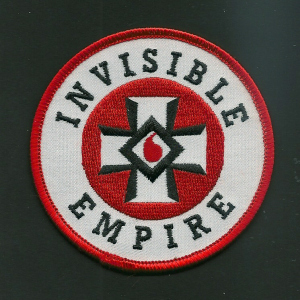
invisible-empireInvisible EmpireHistorians are used to the concept of formal and informal empires. They are used to empires expanding and empires declining. Most are perhaps less familiar with a concept bandied about in the United States from the late 1860s to the mid-1930s – that of an “invisible” empire.

In reality this empire was anything but invisible. Born in the turmoil of the post-Civil War South, by the mid-1920s it had spread to all mainland states of the Union, claiming some ten million members.

It was also known as the Ku Klux Klan.

As with much of the history of the KKK, the origins of the term “Invisible Empire” are disputed. Some claim that it emerged from Confederate General Robert E Lee’s polite request to keep his support for the nascent Klan “invisible”. Others see it as a part of the secrecy surrounding the original hooded fraternity. Whichever origin is chosen, there’s no doubting it was a useful phrase.

Arguing that Lee’s Klan connection was kept “invisible” at his own request was a trump card for those dedicated to the order’s mission of “Redeeming” the South’s pre-bellum traditions. However invisible, connection to the most illustrious figure of the Confederate war effort gave the Klan prestige and legitimacy, not only during the struggles of post war reconstruction, but also when the Klan re-emerged in 1915. Claiming he had wanted his ties kept secret also made it more difficult for either the general sceptics or the KKK’s enemies to disprove his connection with the vigilante organization of Reconstruction – which they all attempted to do.

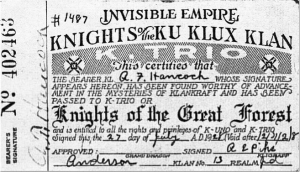
 Membership card of A.F. Handcock in the Invisible Empire Knights of the Ku Klux Klan (1928)


Membership card of A.F. Handcock in the Invisible Empire Knights of the Ku Klux Klan (1928)

The controversy surrounding Lee’s allegedly “invisible” connection also, of course, makes it more difficult for historians now to accurately assess his connection. Early accounts of the Klan repeat the rumour, largely because the order was seen in a generally positive light. In some measure this was the result of a negative view of the Reconstruction efforts carried out in the post-war South. These Radical Republican-led attempts at racial integration and universal education were almost universally seen as the misguided efforts of unrealistic idealists, or viewed as the actions of corrupt politicians. Further, many of the historians writing histories of the Klan from Reconstruction through until at least the 1920s were, or claimed they were related to, members of the order.

The result was that accounts like that of Susan Lawrence Davis (1924) reiterated the myth offering no hint of its origins and making no attempt to show its authenticity.[1] Merely stating the case seems frequently to be considered enough proof by the standards of the time, but Davis’ background tells us much about her real sympathies. She was the daughter of a Confederate colonel and Klansman, Lawrence Ripley Davis. What is more she draws on equally unreliable sources, like the memoirs of one of the founders, John C Lester.

However, unlike previous accounts, Davis even quotes Lee’s words. She has the general tell the deputation asking him to head the order in May 1867 that, “I would like to assist you in any plan that offers relief. I cannot be with you in person but I will follow you, but it must be invisible.” She goes on to explain, “When this message was delivered to the [Klan] convention it led to the christening of the United Ku Klux Klan, the “Invisible Empire””.

By the end of the 1920s the Klan’s position in American society was less secure. A series of sexual and financial scandals combined with revelations of its violent methods reduced both the numbers and reputation of the order. The result was that even apologists tended to veer away from associating the symbol of Southern chivalry and gentility – Lee – with a tainted order of what even its leader had referred to as violent, ill-educated “second hand Ford owners”. Consequently, most historians since the 1930s have tended to see the Invisible Empire as being an example of the order’s fascination with mysticism.

This securely ties the order back to the craze for secret brotherhoods which swept across the United States in the wake of the Civil War. The period from 1865 to 1930 saw a huge explosion in fraternities of all types, so much so it is referred to as the “Golden Age of Fraternity”. College Greek letter fraternities; fraternities associated with particular trades, ethnicities and interests; fraternities formed to achieve certain aims, as well as the more traditional varieties like the Freemasons, Oddfellows and Shriners all prospered and expanded. One estimate claimed that around 1900, one in five American adult males was a member of at least one fraternity, many belonged to several.

The Klan itself had started as a simple fraternity. Around Christmas 1865, six bored ex-Confederate veterans, recently de-mobbed, formed their own fraternity – simply for entertainment. Like many other contemporary orders secrecy was central to the new fraternity. It had elaborate oaths of secrecy threatening dire punishment for those who spread details of the order. It had weird names to disguise the identity of members, and elaborate costumes to hide their faces. When, by 1868, the order had spread across the Southern states and was terrorizing those attempting to empower and integrate the region’s four million ex-slaves, that invisibility proved vital to avoiding prosecution and counter-attack.

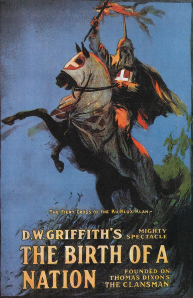
birth-of-nation-movie-poster-900Similarly when the Klan was reformed in 1915, secrecy remained essential, not so much for the protection of its members, but more for the frisson of excitement and exclusivity it gave its members as part of a society made even more famous with the blockbuster release of Birth of a Nation (1915) on the silver screen.

As the Klan organisation expanded in the 1920s its “invisible” nature continued to help it. It enabled recruiters to gull fee-paying members into joining an order that never had anywhere near the ten million members it claimed at its peak in 1924. It allowed the organisation to exaggerate its power, by claiming it had members – sworn to secrecy, of course – at all levels of government from the White House down. It allowed the leadership to disavow actions of members they felt were acting to damage the image of the fraternity and disguise the order’s rapid decline from the mid-1920s onwards. Its leadership apparently found the concept of an “Invisible Empire” had much more to commend it than a visible one..

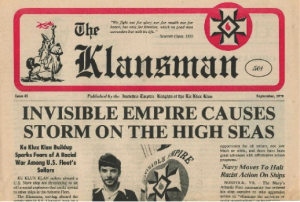
Klan newspaper of the 1970s.

Klan newspaper of the 1970s.

Having said that the concept of the Invisible Empire has proved a constant headache for historians. Secrecy and exaggeration, added to the lack of records and a reluctance of many to admit their own, or relatives, association with the Klan mean that our histories of the fraternity are necessarily to some extent speculative – especially when it comes to numbers. Nevertheless, this very secrecy makes new theories, new explanations and, of course, new histories of the Klan possible.

Kristofer Allerfeldt will be working on a new history of the Klan in conjunction with his PhD student, Miguel Hernandez, in 2015.

—-

[1] Susan Lawrence Davis, The Authentic History of the Ku Klux Klan (New York, 1924).

Read Full Post »

 A Woman at War

Erin Lindsay

New York Times

June 30, 2014


index2On June 19, 1864, Pvt. Lyons Wakeman died of dysentery in the Marine U.S.A. General Hospital in New Orleans, after having marched 200 miles and seen combat at the Battle of Pleasant Hill, part of the Union’s Red River campaign in Louisiana. But it would be years before Wakeman’s real identity was revealed: Lyons Wakeman was born a woman, Sarah Rosetta Wakeman.

The only people who knew for certain the soldier’s true identity were the parents and eight siblings Lyons left behind. But even they decided to keep the soldier’s secret, and afterward spoke only of Lyons as their beloved brother.

How Rosetta – she went by her middle name – managed to conceal her identity during her final month in the hospital is still a mystery. Perhaps those caring for her knew, but simply decided to let Rosetta carry the secret she’d kept for the entire two years she’d served in the 153rd New York State Volunteers to her grave in the Chalmette National Cemetery near New Orleans, where she is buried under her alias.

When Rosetta first left home in rural upstate New York, in the summer of 1862, she found employment as a canal man, agreeing “to run 4 trips from Binghamton to Utica for 20$ in money,” according to her letters home. It was on her first trip ferrying coal that Rosetta “saw some soldiers” near Utica who encouraged her to enlist for three years, gaining her “100 and 52$ in money” plus $13 a month thereafter – a substantial raise from the wages she had been earning.

Much of the money that Rosetta earned she sent home to her parents, telling them, “All the money I send you I want you should spend it for the family in clothing or something to eat.” Since her father was in debt, at least some of Rosetta’s motivation for enlisting was probably to help support her family. But she also alludes to more personal reasons, saying, “I want to drop all old affray and I want you to do the same and when i come home we will be good friends as ever,” and later remarking, “I had got tired of stay[ing] in that neighborhood. I knew that I could help you more to leave home than to stay.”

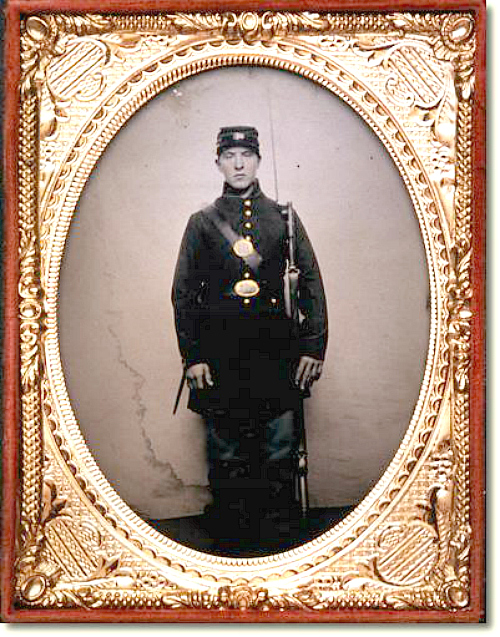
Private Lyons Wakeman. (Reflection of an Uncommom Man, http://gregsegroves.blogspot.com/2013/07/private-lyons-wakeman.html)

Private Lyons Wakeman. (Source: Reflection of an Uncommom Man, http://gregsegroves.blogspot.com/2013/07/private-lyons-wakeman.html)

What conflict she had with her family is unclear, but perhaps the answer lies in the independent spirit that shines through Rosetta’s letters, particularly when she writes, “I will dress as I have a mind to for all anyone else [cares], and if they don’t let me Alone they will be sorry for it.” She also reveals her hopes of having her own farm, “in Wisconsin. On the Prairie,” and her utter lack of fear of “rebel bullets.”

She does not seem the kind of young woman who would be happy in a traditionally feminine role, and indeed, over a year into her military service, she wrote, “I have enjoyed myself the best since I have been gone away from home than I ever did before in my life. I have had plenty of money to spend and a good time aSoldier[ing]. I find just as good friends among Strangers as I do at home.” She goes on to suggest that she might re-enlist for five years and $800. “I can do that if I am a mind to. What do you think about that?”

How Rosetta managed to serve without discovery is one of the great questions surrounding not just her, but all 250 known female Civil War soldiers. There are clues, however. She must have talked a good game when it came to engaging in typical male enterprises; she peppers many of her letters with questions about the family farm – even, in her last letter home, asking her father to “write all the particulars about that farm and let me know how much stock you have got to keep this summer and how many Calves you raise and how many hogs you have got.” Perhaps, too, as the eldest child, Rosetta had worked as her father’s farmhand and was no stranger to physical labor.

Rosetta must have been good at playing the part, too. She boasted how she could “drill as well as any man” and took up certain masculine mannerisms, telling her mother, “I use all the tobacco I want” and also admitting, “There is a good many temptations in the army. I got led away into this world So bad that I sinned a good deal.”

What exactly her sins were, she never mentions, though in a letter written on Jan. 20, 1864, a few day after her 21st birthday, she detailed a fistfight with another private in her company: “Mr. Stephen Wiley pitched on me and I give him three or four pretty good cracks and he put downstairs with him Self.” What caused the fight, Rosetta doesn’t say, but Wiley was court-martialed twice for drunkenness and once for theft during the fall of 1863, whereas Rosetta “never got to fighting but once.” Still, standing at only 5 feet tall, Rosetta, according to her own account, easily defended herself from Wiley, even though his records describe him as seven inches taller. She was an able soldier, performed her duties as required, and participated in combat bravely. Perhaps that was all the convincing she needed to do.

Interestingly, aside from her family, there were some soldiers who were aware of what Rosetta was doing. A year into her service, after having seen no one from home, she recounted how she “could hardly Stand it” when she learned that the 109th New York State Volunteers were stationed nearby. She obtained a pass to visit and “found Henry Austin and Perry Wilder. They knew me just as Soon as they see me. You better believe I had a good visit with them.” The two young men clearly recognized Rosetta, despite her disguise, and yet, when it was time for her to leave, they let her go and never told anyone of her true identity.

Many of the known female soldiers had help in keeping their secret: husbands, fiancés, family members. Even so, it seems certain that Rosetta and the other women performed their duties well and earned their fellow soldiers’ respect, enough so those same soldiers were willing to continue serving alongside them, and sometimes even testified in order to help the women earn veterans’ benefits.

Rosetta herself did not seem overly troubled by her deception. As part of her duties, she was a guard at Carroll Prison, where there were three female prisoners: “One of them was a Major in the union army and she went into battle with her men. When the Rebels bullets was acoming like a hail storm she rode her horse and gave orders to the men. Now She is in Prison for not doing aCcordingly to the regulation of war.” After this brief description, plus noting the two Confederate spies were “smart looking women and [have] good education,” Rosetta makes no further remarks.

Did she guard these women directly? If so, did she and the female soldier acknowledge each other? What did Rosetta think about the possibility that she, too, might be imprisoned? We’ll never know. Surely it must have been comforting to find another woman in the ranks, even if it was also distressing to know that imprisonment could be her own fate.

Likewise, Rosetta was not much concerned with the reasons for the war. Though she guarded “contraband,” slaves who had been captured or had escaped north and were considered spoils of war, she never mentions slavery directly. Even when she notes that the army had drafted “black men as well as White men,” she makes no judgment. She never even once mentions the idea of preserving the Union, though when she learns of the New York draft riots, she writes, “I would like to see some of them Copperheads come down here and get killed.” And she then blames officers for the war’s dragging on, stating “if they would knock down the officers’ pay to 13$ a month, this war would soon be settle.” But it seems Rosetta’s biggest concerns were getting her pay, helping her family, participating in battle and deciding what she would do after the war.

Regardless of what Rosetta might have done had she lived, it is safe to say that her parents, Harvey and Emily, both native New Yorkers and at least fifth-generation Americans, never anticipated that their eldest daughter would be living as a man and writing letters home from the front lines of the Union Army’s Red River campaign, where she “was under fire about 4 hours and laid on the field of battle all night.” What is obvious is that even if her choices had caused concern, her family loved and respected her enough to preserve her letters and keep her photograph safe and her memory alive for generations. Hopefully, they found a way to be proud of her, too.

Follow Disunion at twitter.com/NYTcivilwar or join us on Facebook.


Sources: Lauren Cook Burgess, ed., “An Uncommon Soldier: The Civil War Letters of Sarah Rosetta Wakeman, Alias Pvt. Lyons Wakeman, 153rd Regiment, New York State Volunteers, 1862-1864”; DeAnne Blanton and Lauren M. Cook, “They Fought Like Demons: Women Soldiers in the Civil War.”

Erin Lindsay McCabe

Erin Lindsay McCabe is the author of the novel “I Shall Be Near to You,” about the life of Sarah Rosetta Wakeman


Read Full Post »

10 Myths for the Fourth of July

Ray Raphael

Journal of American Revolution   July 1, 2014


fourth

Surrender of Burgoyne by John Trumbull. Source: U.S. Architect of the Capitol

1. On July 4, 1776, the United States declared itself an independent nation.

This is almost true, but the timing is a tad off. According to the historical record, we should be celebrating Independence Day on July 2, the day Congress finally approved the motion made by Richard Henry Lee on June 7: “That these United Colonies are, and of right ought to be, free and independent States, that they are absolved from all allegiance to the British Crown, and that all political connection between them and the State of Great Britain is, and ought to be, totally dissolved.”[i]

The following day, July 3, John Adams wrote to his wife Abigail:

The second day of July, 1776, will be the most memorable epocha in the history of America. I am apt to believe that it will be celebrated by succeeding generations as the great anniversary festival. It ought to be commemorated as the day of deliverance, by solemn acts of devotion to God Almighty. It ought to be solemnized with pomp and parade, with shows, games, sports, guns, bells, bonfires, and illumination, from one end of this continent to the other, from this time forward forevermore.[ii]Adams certainly got the spirit right, even if the date he proffered turned out to be wrong. How was he to know that even the most patriotic Americans would fail to recognize the true anniversary of independence? On July 4, the second day after it declared the United States to be an independent nation, Congress approved a document that explained its reasons. As so often happens in history, representation of the event would have more staying power than the event itself.

2. Congress initiated the move toward independence.

Historian Pauline Maier has uncovered 90 sets of instructions by state and local bodies, each telling its representatives in higher bodies (ultimately, the Continental Congress) to declare independence. Several of these documents, written in the three months preceding Congress’s vote for independence, listed the same complaints and expressed the same principles that the Congressional Declaration of Independence eventually did.[iii]

Earlier yet, on October 4, 1774, the town of Worcester instructed its delegate to the Massachusetts Provincial Congress “to exert yourself in devising ways and means to raise from the dissolution of the old constitution, as from the ashes of the Phenix, a new form, wherein all officers shall be dependent on the suffrages of the people, whatever unfavorable constructions our enemies may put upon such procedure.”[iv] This was indeed a declaration for independence. The new government would be formed without seeking the consent of existing British authorities, and since it would be based exclusively on the “suffrages of the people,” there could be no place for monarchical prerogatives, as there had been under British rule.

In 1774 the Continental Congress was not yet ready for such rash actions. Feverishly, the Massachusetts delegates in Philadelphia cautioned their constituents back home. “Absolute Independency … Startle[s] People here,” John Adams wrote to a friend. His colleagues in the Continental Congress, he said, were horrified by “the Proposal of Setting up a new Form of Government of our own.”[v] Samuel Adams, also a delegate to the Continental Congress, likewise warned the people of Massachusetts not to “set up another form of government” for fear of jeopardizing support from other colonies.[vi] Those congressional leaders, who allegedly drove the agenda, said that “Independency” should not come too soon. In fact, it would be 21 months before Congress caught up with the people of Worcester.

3. The Signing.

Those fifty-six valiant patriots whom future generations would celebrate as “The Signers” did not step forth, with great solemnity, and affix their signatures to the Declaration of Independence on July 4, 1776. In fact, fourteen of these celebrated heroes were not even present that day, including eight who were not yet members of Congress.[vii]

The alleged signing of the Declaration of Independence is a conscious fabrication of the Continental Congress. On July 4, twelve states (not thirteen) approved a declaration that explained Congress’s vote for independence two days earlier. That document was signed by only two men, President John Hancock and Secretary Charles Thomson, as was the custom for congressional resolutions. Two weeks later, on July 19, New York cast the thirteenth vote for independence and Congress ordered that a fancy, “engrossed” copy be “signed by every member.”[viii] On August 2, Timothy Matlack presented this engrossed copy to Congress. Members who happened to be present that day signed it, even if they had not been party to the original act. Other delegates added their signatures as they arrived for work on succeeding days, and one, Thomas McKean of Delaware, did not do so until the following year.[ix]

In the spring of 1777, the committee that printed the official Congressional Journal inserted the later copy under its entry for July 4. The deceit is easy to detect. The engrossed copy – the nicely penned version we see and celebrate so often – is titled, “Unanimous Declaration of the Thirteen United States,” even though the Congressional Journal reveals that only twelve states voted for independence on July 2 and approved the Declaration of July 4. Our nation, as one of its first official acts, pulled off a photo op, 18th Century style. To this day, even most textbooks mistake the embellished Declaration, signatures and all, for the real deal.[x]

4. “Our Lives, Our Fortunes, and Our Sacred Honor.”

This celebrated pledge of personal responsibility made for a stirring conclusion to the congressional Declaration of Independence, but it was not entirely original. In at least twenty of the ninety earlier declarations, delegates signed off by vowing to support independence with their “lives and fortunes.” Some of these added creative touches to the standard oath. Bostonians pledged “their lives and the remnants of their fortunes,” while patriots from Malden, Massachusetts, concluded: “Your constituents will support and defend the measure to the last drop of their blood, and the last farthing of their treasure.”[xi] True, delegates to the Continental Congress, gentlemen all, added some class with “our sacred honor,” but in the final analysis, loss of lives and fortunes would have been bad enough.

5. Thomas Jefferson found the inspiration for the Declaration of Independence “from deep inside himself.”[xii]

Not according to Jefferson. The “object of the Declaration of Independence,” he wrote, was “not to find out new principles, or new arguments, never before thought of, not merely to say things which had never been said before; but to place before mankind the common sense of the subject, in terms so plain and firm as to command their assent, and to justify ourselves in the independent stand we are compelled to take. Neither aiming at originality of principle or sentiment, nor yet copied from any particular and previous writing, it was intended to be an expression of the American mind.”[xiii]

Jefferson’s draft of the congressional Declaration of Independence was indeed a superb synthesis of this “American mind.” Had it been merely a reflection of one man’s unique genius, its historical import would have been far less. It expresses the mood and will of a nation, so yes, read it and celebrate it – but don’t forget to place it in its historical context.

6. John Locke’s Social Contract.

The preamble to the congressional Declaration of Independence, we learn in school, was Jefferson’s clever adaptation of the “social contract” theory of government, commonly associated with the British philosopher John Locke. That it was, but the social contract theory was commonplace in Revolutionary Era rhetoric, and Jefferson was swimming in the mainstream, not setting the pace. Several of the local declarations offered succinct expressions of the social contract theory.

Consider the June 17 declaration from Frederick County, Maryland: “Resolved, unanimously, That all just and legal Government was instituted for the ease and convenience of the People, and that the People have the indubitable right to reform or abolish a Government which may appear to them insufficient for the exigency of their affairs.”[xiv]

Or George Mason’s draft to the Virginia’s Declaration of Rights, which appeared in the Philadelphia papers at the very moment Jefferson started penning his draft: “That all power is vested in, and consequently derived from the people…. That government is, or ought to be, instituted for the common benefit, protection, and security of the people, nation, or community. … and that, whenever any government shall be found inadequate or contrary to these purposes, a majority of the community hath an indubitable, unalienable and indefeasible right to reform, alter or abolish it, in such manner as shall be judged most conducive to the public weal.”[xv] Mason’s version is clumsy, unlike Jefferson’s in the preamble to the congressional declaration, but the words and concepts are all there. The social contract was a central component of British-American political heritage, a theory that had legitimated the so-called Glorious Revolution of 1688 and was ushered forth again for this one. Social Contract 101 was core curriculum for American patriots.

7. Jefferson’s ideal of equality.

Writing the Declaration of Independence. Source: Library of Congress

What about that glorious opening to Jefferson’s preamble: “that all men are created equal”? Thomas Jefferson, we are told so often,inserted the concept “equality” with an eye to the future. While other Americans were talking about independence, Jefferson took things to the next level. He was ahead of his time. Even though one-sixth of the residents of the emerging United States were held in bondage, Jefferson gave the idea of equality prime billing as a promise, to be realized when the time was ripe.

But the ideal of “equality,” like the rest of the preamble, was not a Jefferson original.

“That all men are born equally free and independent, and have certain inherent natural Rights… among which are the Enjoyment of Life and Liberty, with the Means of acquiring and possessing Property, and pursueing and obtaining Happiness and Safety,” George Mason wrote and Thomas Jefferson read.[xvi] Days or weeks later, Jefferson offered his own rendition, simplifying the prose: “[T]hat all men are created equal, that they are endowed by their Creator with certain unalienable Rights, that among these are Life, Liberty and the pursuit of Happiness.”[xvii]

While Jefferson’s variant sounds straightforward, it actually created great confusion. What does “created equal” really mean? Years later, Stephen Douglas, when debating Abraham Lincoln, protested that Negroes were not the “equal” of whites, leading Lincoln to retreat by admitting they were “not my equal in many respects ­– certainly not in color, perhaps not in moral or intellectual endowment.”[xviii] Had Jefferson stayed with Mason’s phraseology, Lincoln could have cited the Declaration of Independence with greater authority and less apology. “Born equally free and independent” establishes clearly the nature of equality among men: it lies in their rights, not in their attributes, abilities, or achievements.

8. In the aftermath of July 4, states started writing new constitutions and forming new governments.

The sequence here is backward. On May 10, 1776, the Continental Congress unanimously passed a historic resolution: Assemblies or Conventions within each colony should create new governments “where no government sufficient to the exigencies of their affairs” currently existed. Since the colonial governments under British authority were essentially defunct by this time, Congress was giving colonies free reign to start anew.[xix]

Five days later, in Williamsburg, the Virginia Convention resolved to write a constitution for a new government, without even a nod to British authority. Thomas Jefferson, attending Congress in Philadelphia at the time, wished he were back home to help. “It is a work of the most interesting nature and such as every individual would wish to have his voice in,” he wrote. Virginia should recall its delegates to the Continental Congress, he suggested, so they could take part. This was self-serving, of course. He really did want to help write that constitution.[xx]

Virginians fully understood that this was a momentous occasion, and they celebrated in grand style. A crowd gathered outside the Capitol building in anticipation of the final vote, and when it came, some plucky fellows climbed the cupola to lower the British flag, then raised in its stead the Grand Union banner used by the Continental Army. Soldiers paraded and fired cannons, and festivities continued the following day: inebriation, raucous toasts, and fireworks – a regular Fourth of July in Virginia, seven weeks before the Fourth of July.[xxi]

9. The stirring words of the Declaration of Independence helped shape the fledgling nation.

In the first days of independence, Americans staged public readings of Congress’s Declaration to mark such a momentous occasion. But was it the explanation of independence or the mere fact of it they were celebrating? Not content with Congress’s verbal renderings, they freely offered their own. Toasts upon toasts were raised: “Perpetual itching without benefit of scratching, to the enemies of America” and “May the freedom and independency of America endure, till the sun grows dim with age, and this earth returns to chaos.”[xxii]

Through the rest of the war, even at Fourth of July celebrations, the Declaration itself was rarely quoted. On the first anniversary of independence in 1777, when William Gordon delivered the oration for the festivities in Boston, he used as his text the Old Testament. When David Ramsay delivered the oration in Charleston on the second anniversary, he used a phrase more common to the times: “life, liberty, and property,” not “life, liberty, and the pursuit of happiness,” as appeared in the Declaration of Independence.[xxiii]

In fact, during the Revolutionary Era, George Mason’s draft of the Virginia Declaration of Rights was copied or imitated far more often than the Declaration of Independence. None of the seven other states that drafted their own declarations of rights borrowed phrasing from the congressional Declaration, but Pennsylvania, Massachusetts, and New Hampshire (in addition to Vermont, which was not yet a state) lifted exact portions of Mason’s text, including “all men are born equally free and independent.”[xxiv]

Surprisingly, the Declaration of Independence was not often cited during the drafting of the United States Constitution in 1787 or in the subsequent debates over ratification. Notes from the Constitutional Convention make only two references to the Declaration, while the 85 essays in The Federalist contain but one.[xxv] Not until the early Nineteenth Century was the Declaration of Independence enshrined as scripture. Its ascendancy was triggered, initially, by political motivations. One of the two emerging political parties, the Republicans, seized the opportunity to promote its standard bearer, Thomas Jefferson, as the author of the nation’s founding document. That was the launch, and Congress’s Declaration of Independence has thrived ever since. Other documents were forgotten. Other patriots, authors of those documents, were forgotten. One document, and one man, would henceforth stand for the whole.

10. The Fourth of July has always brought Americans together.

Although this has often been true, there have been notable exceptions.

On July 4, 1788, while proponents of the new Constitution celebrated its recent ratification, opponents of the new rules staged separate demonstrations, toasting “the old Confederation” instead of the Constitution.[xxvi] Again in the late 1790s, the two emerging political parties, Federalists and Republicans, staged competing Fourth of July celebrations in the same cities.[xxvii] And in 1852, Frederick Douglass issued a direct challenge to the very meaning of independence. “This Fourth of July is yours, not mine,” he said. “You may rejoice, I must mourn.”[xxviii]

Tussling over the soul of the nation is not new, and the Fourth of July, while inspiring picnics and fireworks for the most part, still offers an occasion for political preaching.

Conclusion: Why does any of this matter?

Iconic events, like iconic heroes, can mask what should not be masked. The United States was born not in a moment but in an era. The process of independence took years, not minutes, and the actors were many, not few. It is this process and these patriots ­– all of them – that we should celebrate. I have no problem with celebrating independence on the Fourth of July or two days earlier or any other day, but let’s honor the folks who made it happen by telling their full story.


[i] Journals of the Continental Congress [JCC], Library of Congress, American Memory, 5:425, 507. Internet site: http://memory.loc.gov/ammem/amlaw/lwjclink.html

[ii] Charles Francis Adams, ed., Familiar Letters of John Adams and his Wife Abigail Adams, during the Revolution (New York: Hurd and Houghton, 1876), 193.

[iii] Pauline Maier, American Scripture: Making the Declaration of Independence (New York: Vintage, 1998), 47-96, 217-34.

[iv] Franklin P. Rice, ed., Worcester Town Records (1784-1800) (Collections of Worcester Society of Antiquity, volume 8), 244. A scan of the document, with context, can be viewed on the documents page of my website: http://www.rayraphael.com/documents/decloration_independence.htm

[v] John Adams to Joseph Palmer, September 17, 1774, and John Adams to William Tudor, October 7, 1774, Robert J. Taylor, ed., Papers of John Adams, (Cambridge: Belknap Press, 1977-), 2:173 and 2:187-88.

[vi] Samuel Adams to Joseph Warren, September 25, 1774, Harry Alonzo Cushing, ed., The Writings of Samuel Adams, (New York: G. P. Putnam’s Sons, 1904), 3:159.

[vii] Eight of these—Matthew Thornton of New Hampshire, William Williams of Connecticut, Charles Carroll of Maryland, and Benjamin Rush, George Ross, James Smith, George Clymer, and George Taylor of Pennsylvania—had not yet become delegates. Oliver Wolcott of Connecticut had taken leave of Congress to assume command of his state’s militia, while Lewis Morris and Philip Livingston went home when the British threatened to invade New York. William Hooper of North Carolina, Samuel Chase of Maryland, and George Wythe of Virginia were helping their states constitute new governments. (John A. Garraty and Mark C. Carnes, eds., American National Biography [New York: Oxford University Press, 1999], 4:468; 11:146; 13:772; 15:903–04; 18:911–12; 19:73; 21:609; 23:514, 721; 24:93; Dumas Malone, ed., Dictionary of American Biography [New York: Scribner’s, 1943], 4:235; 17:284; 18:325. Even today, all these names appear as signers of the Declaration of Independence in the July 4, 1776, entry of the Library of Congress’s Journals of the Continental Congress, 1774–1789, 5:515.

[viii] JCC 5:590-91.

[ix] JCC 5:626. At least seven signers, and possibly several others, were not present on August 2: Matthew Thornton, Thomas McKean, Elbridge Gerry, Oliver Wolcott, Lewis Morris, Richard Henry Lee, and George Wythe. (John H. Hazelton, The Declaration of Independence: Its History [New York: Dodd, Mead and Co., 1906], 210–219.)

[x] Charles Warren, “Fourth of July Myths,” William and Mary Quarterly, Third Series, 2 (1945): 246. Here are the original journal entries, not included in the first printed version: “July 19. 1776. Resolved That the Declaration passed on the fourth be fairly engrossed on parchment with the title and stile of ‘The Unanimous Declaration of the 13 United States of America’ and that the same when engrossed be signed by every member of Congress.—Aug. 2. 1776. The declaration of Independence being engrossed & compared at the table was signed by the Members.” (Hazelton, Declaration of Independence, 204.) The original manuscript of the minutes, in the journals of the Continental Congress, was first consulted by Mellen Chamberlain in 1884. (Warren, “Fourth of July Myths,” 245.) The printed version on the Journals of the Continental Congress that appears on the Library of Congress website, edited by Worthington Chauncey Ford in 1906, reflects the original manuscript for July 19 and August 2, but the July 4 entry is still doctored by inserting the engrossed, signed copy, the “official” one the nation has celebrated since 1777.

[xi] Peter Force. ed., American Archives, Fourth Series: A Documentary History of the English Colonies in North America from the King’s Message to Parliament of Marcy 7/74, to the Declaration of Independence by the United States (New York: Johnson Reprint Company, 1972; first published 1833-1846), 6:557, 603. Internet access:

http://lincoln.lib.niu.edu/cgi-bin/amarch/getdoc.pl?/var/lib/philologic/databases/amarch/.16398

and

http://lincoln.lib.niu.edu/cgi-bin/amarch/getdoc.pl?/var/lib/philologic/databases/amarch/.16493

[xii] Joseph Ellis, American Sphinx: The Character of Thomas Jefferson (New York: Alfred A. Knopf, 1997), 59.

[xiii] Jefferson to Henry Lee, May 8, 1825, Paul Leicester Ford, ed., Writings of Thomas Jefferson (New York: G. P. Putnam’s Sons, 1899), 10:343. See also Jefferson to James Madison, August 30, 1823, ibid., 10:268. Even while supporting the promotion of relics he had used to draft the Declaration, Jefferson again insisted that his words were to be seen as no more than “the genuine effusion of the soul of our country.” (Jefferson to Dr. James Mease, September 26, 1825, ibid.,10:346.)

[xiv] Force. ed., American Archives 6:933. Internet: http://lincoln.lib.niu.edu/cgi-bin/amarch/getdoc.pl?/var/lib/philologic/databases/amarch/.17205

[xv] Pennsylvania Gazette, June 12, 1776.

[xvi] Ibid.

[xvii] Jefferson’s draft is reprinted in Maier, American Scripture, 236–241.

[xviii] Lincoln-Douglas debate, Ottawa, IL, August 21, 1858, in Abraham Lincoln, Political Writings and Speeches, Terence Ball, ed. (Cambridge and New York: Cambridge University Press, 2013), xxvii.

[xix] JCC, May 10, 1776, 4:342.

[xx] Jefferson to Thomas Nelson, May 16, 1776, in Lyman H. Butterfield and Mina R. Bryan, eds., Papers of Thomas Jefferson (Princeton: Princeton University Press, 1950), 1:292.

[xxi] John E. Selby, The Revolution in Virginia, 1775-1783 (Williamsburg: Colonial Williamsburg Foundation, 1988), 97.

[xxii] Massachusetts Spy, July 14, 1776. Reprinted in William Lincoln, History of Worcester, Massachusetts, from its Earliest Settlement to September, 1836 (Worcester: Charles Hersey, 1862), 103.

[xxiii] Philip F. Detweiler, “The Changing Reputation of the Declaration of Independence: The First Fifty Years,” William and Mary Quarterly, Third Series, 19 (1962): 559-61.

[xxiv] Maier, American Scripture, 165–167; Detweiler, “Changing Reputation of the Declaration of Independence,” 561.

[xxv] Detweiler, “Changing Reputation,” 562.

[xxvi] David Waldstreicher, In the Midst of Perpetual Fetes: The Making of American Nationalism, 1776-1820 (Chapel Hill: University of North Carolina Press, 1997), 100-101.

[xxvii] Len Travers, Celebrating the Fourth: Independence Da and the Rites of Nationalism in the Early Republic (Amherst: University of Massachusetts Press, 1997), 11.

[xxviii] Frederick Douglass, Oration at Rochester, NY, July 5,1852, Frederick Douglas, My Bondage and My Freedom (New York: Arno Press, 1968), 236.
 

Read Full Post »

« Newer Posts