Feeds:
Entradas
Comentarios

Posts Tagged ‘Slavery’

The Historian Who Unearthed ´Twelve Years as Slave´

New Yorker, March 7, 2014

Sue Eakin

Sue Eakin

Accepting the Oscar for Best Picture on Sunday—technically, it might have been Monday at that point—Steve McQueen took a moment to thank “this amazing historian Sue Eakin,” who “gave her life’s work to preserving Solomon’s book.” It was an unusual shout-out: we’re used to seeing Harvey Weinstein or God get thanked, not historians from Louisiana. But it’s safe to say that without Eakin, who died in 2009, at the age of ninety, none of us would be talking about Solomon Northup, or Patsey, or the other once-forgotten souls portrayed in this year’s Best Picture.

Eakin, who taught at Louisiana State University at Alexandria for twenty-five years, spent her career rescuing Northup’s memoir from obscurity. “There were five of us, and Solomon was the sixth,” Eakin’s son Frank said the other day, from his home in Texas. “There was never a time when he was not part of the conversation.” Eakin grew up near Cheneyville, Louisiana, the eldest of nine children, and discovered Northup when she was twelve. One summer day in 1931, her father, a planter, drove her in a flatbed truck to the nearby town of Bunkie, not far from the property once owned by Edwin Epps (the Michael Fassbender character). They were visiting Oak Hall Plantation, where her father had business with the owner, Sam Haas. Haas brought young Sue to the library on the second floor (“My mom was a big-time bookworm,” Frank says), where he handed her a dusty copy of “Twelve Years a Slave,” first published in 1853.

“I began reading the old book as rapidly as I could, becoming more and more excited with every page,” Eakin wrote later. “I recognized local place names like Cheneyville, where our mail was delivered.” The family names were familiar, too: the Tanners, the Fords, the McCoys. Eakin was rapt, but her father picked her up before she could finish reading. Back then, the book was in scant supply. Eakin didn’t find another copy until 1936, when she arrived at Louisiana State University and spotted the book at Otto Claitor’s Bookstore. She asked Mr. Claitor how much it cost. “What do you want that for?” he said. “There ain’t nothin’ to that old book. Pure fiction.” He sold it to her for twenty-five cents.

Eakin devoted the rest of her life to proving him wrong. As a white woman growing up in Jim Crow-era Louisiana, she had been forward-thinking about race. In 1944, she invited a black choir to sing at the Haas Auditorium, in Bunkie, causing community uproar. A burning cross landed on her front yard. After church one Sunday, she discovered some kids trying to set her house on fire. “I never let it worry me,” she later recalled. But her weapon of choice was history, and Solomon became her obsession. (Her many other books include histories of Cheneyville and Rapides Parish.) She wrote her master’s thesis on “Twelve Years a Slave,” and, in 1968, published the first modern edition. But her research continued. She contacted descendants of Northup and Epps, and helped preserve a side house on Epps’s former property. (In the movie, Chiwetel Ejiofor and Brad Pitt are shown building it.)

With state funding, she developed the Northup Trail, a tour of key locations from the book. “I said, ‘Mom, I know how much this means to you.’ But I didn’t want her expectations to be unmet,” Frank said. “All you had was a bunch of rusty signs. Not many people showed up.” Nevertheless, Eakin believed that someday Northup’s story would get its due. Frank recalled going to courthouses and descendants’ houses as a child. “If she had any news of anybody that could contribute, we were off to the races in the car with the fifty-pound tape recorder and an old camera,” he said. In 1983, she even wrote a musical based on Northup’s life.

Eakin spent her last years working on an expanded edition of “Twelve Years a Slave,” including the decades of research she had accumulated since 1968. But her health began to decline, and her eyesight was poor. Frank’s sister helped her edit the new version, and, in 2007, at the age of eighty-eight, Eakin published the enhanced edition, with maps, pictures, and historical notes. She wrote in the acknowledgments, “Now Solomon and I can rest.” Two years later, she died.

Every couple years, Eakin would get a phone call from someone interested in turning “Twelve Years a Slave” into a movie. Nothing came of it. (Besides, the story was in the public domain.) The year she died, there was another call—Frank spoke to someone and shrugged it off. It wasn’t until 2011, two years after his mother’s death, that Frank heard that Brad Pitt’s production company, Plan B, was making the film. He offered to help however he could. Steve McQueen flew Frank to the Hollywood première, where they discussed his mother’s contribution: “Steve said, ‘There wouldn’t be a movie if it wasn’t for your mom’s discovery when she was twelve.’ ”

Frank spent Oscar night at a viewing party in Texas. “When Brad Pitt introduced Steve, everything was complete silence,” he said. Hearing his mother’s name, he was dumbstruck. “I couldn’t believe my ears. I looked around and said, ‘Did did he say that?’ ” As the publisher of his mother’s edition and the audiobook, Frank has been busy in the wake of the film’s success. But mostly he’s happy to see his mother posthumously validated: “She never sought personal publicity. Her passion was history, getting the history out.” Even the Northup Trail is getting refurbished—no more rusty signs. “Yesterday, I was on the phone with the tourism commission,” Frank said. “They see this as a large tourism opportunity.”

Photograph: Courtesy of Frank Eakin.

Read Full Post »

Lincoln and the Cannibals

By Jeffrey Allen Smith

The New York Times  February 25, 2014

While America was embroiled in a bloody civil war for its very survival, a little over 5,000 miles away from Washington, in the middle of the South Pacific, the people of the Marquesas Islands were in a struggle of their own over slavery.

The American war, unsurprisingly, more detailed documentation. In the Marquesas conflict, differing witness testimony, secondhand accounts, various newspaper articles, translations and time all conspired to obscure details. Nevertheless, in sifting through the historical minutiae, a relatively clear picture emerged of an incredible series of events that ultimately came to the attention of President Abraham Lincoln in April 1864.

In 1856, slavery technically ended in Peru, but the need for workers to toil in slavelike conditions in the country’s tin and guano mines did not. As a result, “blackbirding” ships roamed the Pacific ensnaring unfortunate souls “by hook or by crook” to labor in Peru. The victims were often the peoples of the South Pacific.

In 1863 a Peruvian blackbirding ship sailed into Puamau Bay on the northeastern shore of Hiva Oa Island in the Marquesas. After opening fire on people gathered onshore, the slavers made off with all the Puamau men and women they could grab, including the chief’s son. Understandably distraught and angered by this atrocity, those who lived through the assault pledged to exact a frightful vengeance if foreign sailors dared show again.

Unfortunately, the crew members of the American whaling ship Congress from New Bedford, Mass., were the next foreign sailors to show. Capt. Francis E. Stranburg and his men were blissfully ignorant of the islanders’ oath of revenge and the raid on Puamau Bay when they casually dropped anchor there Jan. 13, 1864. For to the captain and crew, this was routine, just another stop to make repairs and obtain provisions. The sailors lowered two longboats loaded with trade goods, and a small detachment of men led by the first officer, Jonathan Whalon, rowed toward the beach in Puamau Bay.

Probably intoxicated by tales of Polynesian hospitality and the “custom” of offering attractive young females to traders, Whalon interpreted the hand gestures, broken English and disposition of the islanders who paddled out to greet them as signs of a people eager to trade. Foolishly, Whalon went ashore alone with the Marquesans, ordering the crew of the two longboats to stay back and wait for his return.

However, once well inside the tree line, the Paumau men seized Whalon, stripped him of his clothes and bound him. They took him to their village, where tribal members reportedly pinched him, tweaked his nose, bent his fingers back over his hands, menacingly swung hatchets at him and eventually began building a fire with which to cook him.

Back in Paumau Bay, more islanders were actively trying to entice the waiting sailors in the two longboats to come ashore. The whalers almost complied, and would have but for the efforts of a Marqusesan girl who ran out frantically shouting and waving her hands. The chaotic scene proved unnerving and unsettling to the sailors, so they returned to the Congress without Whalon.

By this time word had begun to spread on the island about the kidnapped American sailor. A Hawaiian missionary improbably named Alexander Kaukau (Kaukau is Hawaiian pidgin for “food” or “to eat”) and Bartholomen Negal, a local German carpenter, tried and failed to dissuade Mato, the Paumau chief, from killing Whalon. According to some reports, Kaukau pleaded with Mato for Whalon’s life but Mato replied, “The white men are wrong in kidnapping my son and carrying him to their land. I dearly love my son.” Again Kaukau implored Mato claiming that Americans were “good people.” Unpersuaded, Mato simply shot back, “They are all one kind, white men.”

However, fate interceded with the arrival of another Hawaiian missionary, James Kekela, the first Hawaiian ordained as a Christian missionary and Kaukau’s senior. He had fortuitously just returned from a neighboring island to reports of a “white man is about to be roasted.” After gaining what information he could, Kekela donned his black preacher’s jacket and, with only his bible in hand, set off for Mato’s village. The negotiations were tense, and at one point Kekela declared he would trade “anything and everything he possessed” for the sailor’s release.

But ultimately Kekela purchased Whalon’s freedom with much less: his black preacher’s jacket and prized whaleboat. In fact, some contend that the entire event was a ruse by Mato to get Kekela’s boat, given its high value in the islands. Nevertheless, Kekela returned Whalon to the waiting Congress, which sailed to Honolulu, where tales of “cannibals” capturing an American sailor and Kekela’s heroics prompted the American minister to Hawaii, James McBride, to write a note to Secretary of State William H. Seward.

McBride’s letter, dated Feb. 26, 1864, detailed the harrowing events in the Marquesas and requested that Seward “show to the world … we have tender regard for each one of our number, and that we highly, very highly, appreciate such favors.”

Taking almost a month to make its way across the Pacific, the letter arrived on Seward’s desk by April 18, 1864. Three days later Seward replied that he had submitted McBride’s account of the rescue to Lincoln and that the president had “instructions” for the diplomat. McBride was directed to “draw on this department for five hundred dollars in gold” to purchase presents for Whalon’s rescuers, and to engrave the gifts with the words: “From the President of the United States to – for his [or her] noble conduct in rescuing an American citizen from death-Island of Hivaoa-1863.” (McBride took it upon himself to correct the year to 1864.)

Roughly a year later, on Feb. 14, 1865, McBride sent word to Seward detailing the presents he distributed. He had sent gifts to the Hawaiian missionary Kaukau, the German carpenter Negal and even the young Marquesan girl who warned the sailors in the two long boats. He gave Kekela two new suits and a gold Cartier pocket watch with the inscription, “From the President of the United States to Rev. J. Kekela For His Noble Conduct in Rescuing An American Citizen from Death on the Island of Hiva Oa January 14, 1864.”

To express his gratitude, Kekela wrote a seven-page letter of thanks in Hawaiian to “A. Linekona” on March 27, 1865. Accompanied by an English translation, the letter opened with a short autobiographical sketch of Kekela before transitioning into a retelling of how he saved “a citizen of your great nation, ill-treated, and about to be baked and eaten, as a pig is eaten.” Kekela also commended Lincoln stating, “I greatly honor your interest in this countryman of yours. It is, indeed, in keeping with all I have known of your acts as president of the United States.” Unfortunately, Lincoln never read Kekela’s words. The letter did not reach Washington until almost two months after Lincoln’s assassination.

However, the impact of Kekela’s saving Whalon from “cannibals” and the gold watch Lincoln gave Kekela grew with time. In subsequent decades, newspapers reprinted and recounted Kekela’s actions, the gold watch from Lincoln, and Kekela’s letter to the president. The heartfelt prose in Kekela’s letter to Lincoln moved many, including Robert Louis Stevenson, who wrote in his book “In the South Seas,” “I do not envy the man who can read it without emotion.”

Follow Disunion at twitter.com/NYTcivilwar or join us on Facebook.

Jeffrey Allen Smith is an assistant professor of history at the University of Hawaii, Hilo. Research assistance for this article was provided by Samantha Aolani Kailihou and Noah Gomes.

Read Full Post »

12 años de esclavitud

José Ragas

NoticiasSER.pe

26 de febrero de 2014

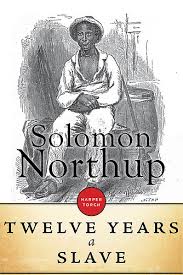
imagesEn algún momento de 1853, Salomon Northup decidió contar su historia para el que sería su primer y único libro: “12 Years a Slave”. En él, Salomon dejó por escrito lo que le había ocurrido durante más de una década de vivir como un esclavo en el Estados Unidos anterior a la Guerra Civil. Como se estilaba en aquella época, la portada fue acompañada de un largo subtítulo que no dejaba dudas sobre el contenido de la obra: “Narración de Salomon Northup, ciudadano de New York, secuestrado en la ciudad de Washington en 1841 y rescatado de una plantación algodonera cercana al río rojo en Louisiana en 1853”. El libro es, en buena cuenta, su narración personal sobre cómo descendió a los infiernos y el testimonio de quien pudo sobrevivir a dicha experiencia para transmitirlo a las generaciones futuras.

La película que se ha estrenado en estas semanas se basa precisamente en la trayectoria de Salomon. Nacido libre, pues su padre había sido liberado por el amo cuyo apellido tomaría para sí y sus hijos, Salomon fue llevado con engaños a Washington y vendido como esclavo. Demás está decir que de nada sirvieron sus explicaciones y ruegos. Su entrada al circuito de la esclavitud nos ofrece un camino distinto al de las narraciones a las que estamos acostumbrados: bien de esclavos que no pudieron escapar de tal condición o de quienes finalmente lo hicieron, ya sea fugándose, siendo liberados o comprando ellos mismos su manumisión. Pero el cambio brusco de estatus de libre a esclavo nos sumerge en un universo de explotación y brutalidad sin límites, apenas matizado por actos de misericordia y cierta protección legal que hizo posible que Salomon fuese ubicado y devuelto a su familia.

El largo periodo de tiempo incluido en la narración, así como la diversidad de escenarios, permiten apenas comprender la complejidad de una institución como la esclavitud. Institución porque tenía un marco legal sustentado en un discurso religioso y una estructura social y racial, el mismo que amparaba la propiedad de otro ser humano, su explotación y disciplinamiento (en algunos casos hasta la muerte misma). Se trató de un sistema que hoy reconocemos como bárbaro que se extendió por tres continentes por más de cuatrocientos años y que apenas fue abolido hace no más de ciento cincuenta. Si bien la más extendida fue la de la población africana, existió también la esclavitud indígena con población americana y más adelante traída de la Polinesia. Sin mencionar, por supuesto, las condiciones en las que los coolies chinos reemplazaron a los esclavos de origen africano.

El momento en que la película es exhibida es privilegiado. “12 Years a Slave” ha sido acompañada de otras películas que han narrado la experiencia de la comunidad afro-americana desde las plantaciones hasta la Casa Blanca. “The Butler” (“El Mayordomo”) aborda la historia real de un mayordomo afroamericano que sirvió a varios presidentes en la segunda mitad del siglo XX. Desde la ficción, Tarantino hizo de “D’Jango” un esclavo en busca de venganza añadiéndole una calculada violencia fotográfica al tema, además de llevar la trama no al campo de algodón sino al interior de la casa hacienda. “The Help”, por otra parte, se aproxima a las vidas íntimas de un grupo de sirvientas y su interacción con las familias blancas en el Mississippi de los años 60.

Estas películas llegan en medio de la conmemoración del sesquicentenario de la Guerra Civil norteamericana, que terminó con la esclavitud casi una década después que esta era abolida en Perú. Por supuesto, la llegada del primer presidente afroamericano a la Casa Blanca, Barack Obama, ha incentivado esta mirada retrospectiva hacia esta difícil historia, que tiene en febrero un mes dedicado a celebrarla. Por estos meses también se ha recordado medio siglo de la lucha por los derechos civiles que llevó, un siglo después del fin de la esclavitud, a un impresionante movimiento popular a buscar terminar con esta división, ya sea por medio de las marchas pacíficas promovidas por el Dr. King, el discurso militante de las Panteras Negras o la espiritualidad política del Islam como lo sugería Malcolm X. Fue necesario que el gobierno norteamericano ejerciera su autoridad para poner fin a la segregación que hacía de ciertas partes de Estados Unidos una prolongación de Sudáfrica, y obligaba a las personas ‘blancas’ a viajar, comer o bailar en espacios distintos que las ‘de color’.

En su momento, el libro de Salomon Northup fue acogido muy favorablemente. Un primer tiraje vendió alrededor de ocho mil ejemplares, y el haber sido publicado casi coincidentemente con “La cabaña del Tío Tom”, de Harriet Betcher Stowe, le dio un impulso inusitado. El libro siguió vendiéndose bien hasta 1856, la última edición que Salomon vería en vida. Posteriormente, fue casi imposible conseguir un ejemplar, ya sea en colecciones particulares o en bibliotecas, menos aún copias a la venta. Un aviso en la prensa de New Orleans en 1922 expresaba este malestar porque “los expertos” no podían conseguir ningún ejemplar. Solo en 1968 se pudo nuevamente acceder a una versión anotada, gracias a que una entusiasta de nombre Sue Ekin descubriera el libro de casualidad a los doce años en la biblioteca de una casa hacienda y decidiera hacer su tesis sobre la vida de Upnorth. Una edición posterior, de 2007, incluyó materiales provenientes de su investigación y es la que sirvió de base para la película.

newzfotoJosé Ragas es un historiador peruano, candidato doctoral en la Universidad de California en Davis, padre de una de las mejores bitácoras de historia que conozco (http://historiaglobalonline.com/) y un buen amigo.

Read Full Post »

Untold History: More Than a Quarter of U.S. Presidents Were Involved in Slavery, Human Trafficking

Democracy Now     February 17, 2014

As the country marks Presidents’ Day, we turn to an aspect of U.S. history that is often missed: the complicity of American presidents with slavery. «More than one-in-four U.S. presidents were involved in human trafficking and slavery. These presidents bought, sold and bred enslaved people for profit. Of the 12 presidents who were enslavers, more than half kept people in bondage at the White House,» writes historian Clarence Lusane in his most recent article, «Missing from Presidents’ Day: The People They Enslaved.»

Transcript

This is a rush transcript. Copy may not be in its final form.

AMY GOODMAN: As the country marks Presidents’ Day today, we turn to an aspect of U.S. history often missed: the complicity of American presidents with slavery. The first person of African descent to enter the White House was most likely a slave. The nation’s capital, Washington, D.C., once hosted markets where human beings were sold for profit. Slaves built some of the country’s most famous landmarks, including Philadelphia’s Independence Hall, Boston’s Faneuil Hall, James Madison’s Montpelier. Last week, President Obama mentioned the role of slaves in building one specific landmark: Thomas Jefferson’s plantation estate in Charlottesville, Virginia. Obama was touring the home of America’s third president with French leader François Hollande. This is what Obama had to say about Monticello.

PRESIDENT BARACK OBAMA: This house also represents a complicated history of the United States. We just visited downstairs, where we know that slaves helped to build this magnificent structure, and the complex relations that Jefferson, the drafter of the Declaration of Independence, had to slavery. And it’s a reminder for both of us that we are going to continue this fight on behalf of the rights of all peoples, something that I know France has always been committed to and we are committed to, as well.

AMY GOODMAN: President Obama speaking last week during French President François Hollande’s visit to the U.S.

We’re joined now by Clarence Lusane, who has documented the racial history of Washington, D.C., and the presidency. His most recent article is «Missing from Presidents’ Day: The People They Enslaved.» Clarence Lusane writes, quote, «more than one in four U.S. presidents were involved in human trafficking and slavery. These presidents bought, sold, and bred enslaved people for profit. Of the 12 presidents who were enslavers, more than half kept people in bondage at the White House,» he writes. Clarence Lusane is author of The Black History of the White House, a member of the D.C. Commission on African American Affairs, also professor at American University in Washington, D.C.

Professor Lusane, welcome to Democracy Now! So, talk about this history of slavery and U.S. presidents.

CLARENCE LUSANE: Well, I’m glad that you pointed out that President Obama, when he went to Jefferson’s home, pointed out the slave history there. But it’s also important to note that the most iconic building in the U.S., the one that represents the country to the world, the White House, also was a place where slavery existed. Not only that, it was built by slaves. And none of that has been publicly acknowledged. There is over a million people who visit the White House every year, who go on tours, who come for meetings, and you can go through that building and never have a sense of that important history.

And that’s critical because I think Presidents’ Day should be a period of critical reflection, not some kind of blind celebration, but it should be one where we really try to get a better sense of the country’s history. And part of that history, part of what I think resonates even to this day, is that, significantly, before the Civil War, nearly every U.S. president was a slave owner, which meant that they were compromised on the issue of slavery, and that had repercussions that, you know, redounded through history. So it’s really critical, I think, that we have that acknowledgment, because we grow up, we go to school, we have history classes, and none of that history is told to us.

AMY GOODMAN: So, give us a black history of U.S. presidents, as you call it.

CLARENCE LUSANE: Well, in looking at the White House—and I use that as the prism to try to look at this longer history that basically led up to President Obama—one of the things that we find that’s missing in that history is the voices of people, particularly African Americans, who were enslaved during that long, long, long history. And that was critical because when you think about George Washington, Madison, Monroe, all of the early presidents, who wrote the Declaration of Independence, they wrote the Constitution, they wrote the Articles of Confederation, all of these documents, these founding documents that extol the principles of democracy, liberty, equality, they were living a contradiction. And that contradiction is that every single day of their life, every moment in their life, they were surrounded by people who were enslaved.

Now, fortunately, because of some of the historic records that have been kept, we now know who some of those people were. George Washington, for example, when he was president and his presidency was in Philadelphia, had at least nine individuals with him who were enslaved—Oney Maria Judge, for example, who was a young woman of about 22 who escaped from George Washington. She escaped—this was in 1796, when she found out that Martha Washington was planning to give her away as a wedding gift. And she made contact with the free black population in Philadelphia, was able to escape. Now, this is remarkable because we’re talking about a young woman who basically traveled nowhere by herself, who escapes from the most powerful person on the planet, pretty much, certainly most powerful person in the United States. Her story is important because she lived—she outlived Washington. She lived to be, I believe, in her eighties and lived a life where she learned to read, became active in her community. You also had Hercules, who was Washington’s cook, who also escaped from Washington.

So there are people who we were in and around the White House who had stories to tell that are part of that history that we literally were never taught about for all of the years that, you know, we took schooling and we took classes in history. And so, I thought it was important, and there are others who have written to re-enter into the historic narrative the stories of these individuals, because they really are critical if you really want to understand the politics of George Washington or the politics of Thomas Jefferson or any of the other presidents who held slaves.

AMY GOODMAN: Tell us about Paul Jennings.

CLARENCE LUSANE: Paul Jennings, again, is another fascinating character. He was enslaved to the Madisons, to James and Dolly Madison. He was, in fact, the first individual to actually write about working in the White House. He published a memoir—this was in the late 1860s—that talked about the time when he was in the White House. And he was there in 1814. He was there when the British literally were burning down the city, and was part of the contingent of folks who were attempting to get materials out of the White House and preserve them before the British came. So he really had a fascinating history.

He was supposed to be free when James Madison died, but Dolly Madison basically reneged on the deal. So he—it took him a few years to buy his freedom, which he eventually did. And then he actually came to help Dolly Madison. She fell on hard times. She wasn’t wealthy. She wasn’t a wealthy person, and she wasn’t part of the social elite of Washington. And so, when she fell on hard times and her family and friends abandoned her, Jennings would often bring her food and bring her money and basically would look after her. But what was also important about James Jennings is that he also was—

AMY GOODMAN: Paul Jennings.

CLARENCE LUSANE: Paul Jennings, I’m sorry, is that he was also central to the largest attempt at escaping from slavery that happened in Washington, D.C. This happened in 1848. For a number of reasons, the escape attempt failed, but Jennings was never brought in. He was never seen as being part of it. And it was only literally after his death that it was revealed that he had played a very critical role in that. So, my point is that you had these individuals who were enslaved to presidents, who really had fascinating kinds of stories and fascinating kinds of lives that we should know about, because they really are also a part of the history of the White House and the history of the presidency.

AMY GOODMAN: I want to play a clip from the trailer of the film Lincoln, directed by Steven Spielberg, released last year, about President Abraham Lincoln and the fight to end slavery in the United States. In this clip, you first hear Abraham Lincoln, played by Daniel Day-Lewis, followed by the voices of Thaddeus Stevens, the congressmember from Pennsylvania, and Mary Todd Lincoln, the first lady. Let’s go to that clip.

PRESIDENT ABRAHAM LINCOLN: [played by Daniel Day-Lewis] We’re stepped out upon the world stage now, the fate of human dignity in our hands! Blood’s been spilt to afford us this moment! Now! Now! Now!

THADDEUS STEVENS: [played by Tommy Lee Jones] Abraham Lincoln has asked us to work with him to accomplish the death of slavery.

MARY TODD LINCOLN: [played by Sally Field] No one’s ever been loved so much by the people. Don’t waste that power.

AMY GOODMAN: That was an excerpt of Lincoln. Clarence Lusane, talk about Abraham Lincoln and slavery.

CLARENCE LUSANE: Lincoln was—the Lincoln administration was a turning point in terms of the history of the relationship between African Americans and the White House. It was during Lincoln’s tenure that the first meeting took place between a U.S. president and leaders of the black community. This happened in 1862, I believe. Now, this was critical because up until that point, although African Americans, particularly free African Americans in the North, had been organized and had been raising issues, policy issues, issues around slavery, they simply had no access to the White House or to policymakers. Lincoln, however, opened up some of that space.

And part of what I think moved Lincoln from being not just simply anti-slavery, but ultimately to recognizing that you had to eliminate slavery, that abolition was the only path forward, in part, came because of his discussions with black leaders, not only church leaders, but people like Frederick Douglass, but also—and this is in the film—discussions with Elizabeth Keckley. In the film, she’s the woman who’s often seen with Mary Lincoln. She’s played by Reuben, Gloria Reuben, in the film. And the film is a little bit disingenuous in that you could think that maybe she was a servant, but in fact she was an independent businesswoman who had become basically best friends with Mary Lincoln, but also she spent a great deal of time at the White House having discussions with Abraham Lincoln about race, about slavery, about the future of the country. And again, her story is important to be told because she, again, was part of a contingent of African Americans who thought to influence the presidency and to address issues that needed to be dealt with. And so, the movie Lincoln doesn’t quite take you there to show you that side of the people who influenced Lincoln, but it’s an important part of understanding what happened in the Civil War and how Lincoln actually got to the point where he said the only way out of this situation is that slavery has to end.

AMY GOODMAN: Then that moment, that meeting, August 14th, 1862, Abraham Lincoln does something unprecedented: He meets with a small delegation of black leaders, clergy.

CLARENCE LUSANE: Right. And at that point, Lincoln had already decided to issue the Emancipation Proclamation. There was some debate about which date to issue it on, but he was already moving in a position where he saw the country’s future as a future without slavery. And these leaders that he met with were people who mostly were tied to the black church community, but people who also had ties to abolitionists, to people who were active in the other kinds of issues around the country. So that really was kind of a turning point. And since that point, there has been a considerable amount of effort on the part of African Americans to negotiate and to meet with and to lobby not only in Congress, but the president themself.

AMY GOODMAN: Talk about the buildings, these iconic structures that kids, adults go to in Washington, D.C., to honor this country—the White House, the Capitol. Who built it?

CLARENCE LUSANE: This is really important, because I think there may be some sense, more generally, that Washington owned slaves and Jefferson owned slaves, but I think there’s a general ignorance about the role of people who were enslaved in actually building the nation’s capital. In 1790, after the country was founded, the Congress passed legislation to build a capital. Washington, D.C., did not exist. And so, there was a decision that land that was ceded from Maryland and from Virginia would become the nation’s capital, and it had to be built, and it would take 10 years. This is why Washington spent all of his presidency either in New York or in Pennsylvania. But to build Washington, D.C., you needed labor. And George Washington, who was more or less in charge of the project, initially wanted labor to come from Europe, but it was very, very difficult to get people to come all the way over on these really harsh trips to work in basically a jungle. So they basically relied on enslaved labor, which meant cutting down trees, moving rocks, digging holes—you know, all of the harsh, harsh labor that had to be done literally to clear the area. But it also included skilled labor, people who were carpenters and plasterers. We know for a fact that both at the White House and—the building that became the White House and the U.S. Capitol, there were at least five highly skilled carpenters who worked for years to build those two buildings.

And again, this needs to be acknowledged, because it reflects that ongoing contradiction, what President Obama talked about with President Hollande, of this conflict between the principles of equality and democracy, and the reality of slavery. Now, in the Capitol a few years ago, there were two plaques that were put up to honor or to acknowledge the people who were enslaved that built the Capitol. One is on the House side, and one is on the Senate side in the Rotunda. And in Philadelphia, at the pavilion where the Liberty Bell exists, the new Liberty Bell Pavilion was actually built over the old house where—or the land where George Washington lived when he was president. There is also a plaque there that acknowledges the people who were enslaved to Washington during the time of his presidency. What we do not have yet, and it actually may happen, is something in the White House that will have that kind of acknowledgment.

AMY GOODMAN: Final comment, Clarence Lusane, about what you think we should understand on this Presidents’ Day? And take it all the way—you write about Teddy Roosevelt.

CLARENCE LUSANE: Yeah, I think that the most important thing is to understand that there is a long and rich history of African Americans in the White House long before President Obama. And all of that history tells us a great deal, I think, about the current situation we face, where we continue to see racial disparities and racial discrimination pretty much across the board. The story you did earlier about the shootings in Florida, for example, I think, in part, reflect an unawareness of this history and the degree to which the country still has not acknowledged and reconciled this past. A year ago, I went with students to Rwanda, and we visited a great—a large number of memorials. And it became so clear to me that the degree to which the country acknowledges its past in an honest and straightforward way goes a long way towards healing and reconciliation. It doesn’t necessarily end up with all the justice that needs to be happening, but it certainly is a first step, that acknowledgment and recognition of your history becomes really important.

AMY GOODMAN: Thanks so much for being with us, author of The Black History of the White House . We’ll link to your piece, «Missing from Presidents’ Day: The People They Enslaved» at democracynow.org. Clarence Lusane is also a professor at American University. This is Democracy Now!, democracynow.org, The War and Peace Report. Back in a minute.

Read Full Post »

Read Full Post »

Read Full Post »

Una cineasta muestra el pasado esclavista de su familia y llama a investigar las propias raíces

Democracy Now

31 de octubre de 2013

Traces3.jpg

Para seguir hablando de la esclavitud, nos acompaña una mujer que dio a conocer que sus antepasados fueron la mayor familia vendedora de esclavos de la historia de EE.UU. Katrina Browne documentó sus raíces en la película «Traces of the Trade: A Story From the Deep North (Rastros del comercio: una historia del norte profundo). La película mostró cómo su familia, de Rhode Island, fue la familia esclavista más grande en la historia de EE.UU. Después de que la película se viera en el canal PBS en 2008, Browne fundó el Centro de búsqueda de datos históricos y legados de la esclavitud. Hablamos con Browne y Craig Steven Wilder, autor del nuevo libro “Ebony & Ivy: Race, Slavery and the Troubled History of America’s Universities” (Hiedras y ébano. Raza, esclavitud y la problemática historia de las universidad estadounidenses).

Escuche/Vea/Lea (en inglés)

Read Full Post »

America’s Top Colleges and Universities Have a Hidden Legacy of Slavery [INTERVIEW]

by David Austin Walsh

History News Network

October 23, 2013

Source: Wikipedia.

In 2006, Brown University issued an extraordinary report detailing the university’s relationship with the slave trade. The authors, drawn from Brown faculty, administration, and alumni, acknowledged the deep, intertwined history of the slave trade and the university — and the role slave labor played in the very construction of the school. The report made headlines across the country, not least because it was commissioned by Brown president Ruth Simmons, the first African American and the first woman to become president of an Ivy League university.

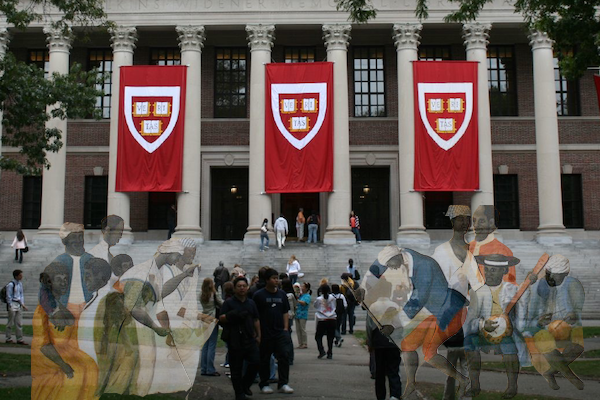
But Brown is hardly the only venerable university in the United States that is reckoning with its hidden legacy of slavery. Craig S. Wilder, professor of history at the Massachusetts Institute of Technology, demonstrates in his acclaimed new book Ebony & Ivy: Race, Slavery, and the Troubled History of America’s Universities, that practically every college and university founded during colonial-era America — Harvard, William & Mary, Yale, Princeton, the University of Pennsylvania, Columbia, Brown, Rutgers, and Darthmouth — has a history of slavery to confront.

Professor Wilder recently spoke with me over the phone from his office in Cambridge about his book, the research behind it, and what America’s oldest and most elite colleges can do to confront this painful history.

* * * * *

Ebony and Ivy explores the intertwined relationship between the first colleges and universities in America and slavery. It argues that most older institutions of higher education in America were built on the back of slave labor. Were there particular universities that were relatively more invested in the slave economy?

Yes, and I think part of the goal [of writing the book] for me was to explore, to find out, to discover, the role that slavery played in the founding and the rise of these institutions.

To see that at Harvard in its earliest years, one of the residents of the campus was an enslaved man, or that the first eight presidents of Princeton – then the College of New Jersey – were slave owners, and enslaved people lived in the presidents’ houses and served the presidents and students. To see the evolution of the Harvard/Yale/Princeton faculties, and the founding moment of Yale, when the founding trustees gathered to plan out the organization and wrote the bylaws of the new school – they were actually accompanied by their slaves to that meeting.

So one of the things I found really interesting while researching the book was how intimate the relationship was between the academy and slavery in the colonial world, and how much these colonial institutions depended upon enslaved people, but also on the broader economy of the slave trade.

You made the point in the book that many of the founders of these universities became quite wealthy as merchants profiting off of the slave trade.

Yes, that’s true. But you really have to look very closely at the denominational roots of the schools, and the denominational origins of the colonials.

From the perspective of the twenty-first century, when you think about Columbia or the University of Pennsylvania, or Dartmouth, you think of them as wealthy, historic institutions. But these were pretty lean institutions in the eighteenth century, when they were founded. They were local institutions. The ministers and local activists founded these schools turned to local sources of wealth, and in the mid-Atlantic and New England, that meant they often turned to families who made their fortunes in the Atlantic trade, and a significant proportion of that trade was in African slaves.

What were the missions of colonial governments and colleges and how did those missions intersect with slavery?

The mission of the earliest colleges — specifically Harvard, the College of William and Mary, and Yale – was actually to supply ministers, for two purposes: to supply religious leaders for the primarily British and to lesser extent European population in the colonies, but also to minister to the neighboring native nations.

And as I alluded to earlier, one of the ways the founders of these schools paid for the the supplying of the faculty – and these faculties are really actually quite tiny – was to turn to local sources of wealth. At William and Mary, that meant the planters of Virginia, and the planters actually become the governors and trustees of this school. Harvard turned to local merchants in the seventeenth century, many of whom were West India suppliers who sent fish, for instance, south o the West Indies. As one economic historian put it, the cheapest quality fish was what was sent down to feed the enslaved population of the West Indies.

Not only did Harvard’s New England backers have close ties to West Indian slavery, the school also followed these commercial networks south to seek out wealthy West Indian donors. And not only donors – also students. One of the ways in which these schools maintained themselves was by recruiting a supply of students who had money who could afford tuition who were in search of education, and so beginning really in the seventeenth century with Harvard, and continuing through the founding of the mid-eighteenth century colleges (which were all of the colleges from Princeton to Dartmouth), looking for students and recruiting students in the West Indies becomes a fairly ordinary business.

To get back to your question about the denominational origins, here this is where the colleges were actually doing the local work they were founded to do. Baptists in Rhode Island established the College of Rhode Island (now Brown University) in order to supply an orthodox and well-trained ministry for themselves.

That means that you have these very odd moments, one of which didn’t end up in the book but which I’m writing about separately. I found it oddly ironic that before the British even evacuated North America after the Revolution, before they even finished evacuating New York, the president of the College of Rhode Island James Manning sat down at his desk and began sending letters off to England to wealthy Baptist friends. One of the things he’s asking for is to put the small matter of the past conflict — which has just ended — behind them, and remember that they’re Baptists. The future of the communion rested upon their close ties. These are actually fundraising letters. Manning offered to rename the school after wealthy Baptist British donors, and asked for help in locating such a person. The school was ruined by the war – it’d been occupied by both armies for a time – and there was a lot of rebuilding to be done. But what I find striking about that moment is that even at the end of the American Revolution, after seven or eight years of conflict and bloodshed, the denominational ties between these schools and England remained intact enough that many college presidents thought they could continue to use them as a source of funds and students.

Now, going back to something we touched on a little bit earlier, the use of slave labor to actually build these universities and operate them. I realize it’s very difficult to actually find slave narratives and stories, but were you able to piece together any stories from any of these campuses about the slave laborers who lived there?

Well, you don’t evidence of it on every campus, but you do find evidence of it on enough campuses and in enough archives to realize it was fairly common to use slave labor. For instance at Brown, when the original trustees were raising donations for the school, local residents of Providence and Newport donated cash, lumber, and other goods, and they donated the labor of their slaves. You can actually see people donated the labor of their enslaved person for a certain period of time. At the College of William and Mary, teams of slaves were used for the upkeep of various buildings, and the College actually held a fairly sizable population of slaves for use as campus servants, dedicated at times to specific buildings. Some of the students at William and Mary brought slaves to campus with them.

Eleazar Wheelock, the founder of Dartmouth, arrived in New Hampshire in 1770. He brought with him eight enslaved black people, and he wrote in his narrative [memoir] about the early struggle to build the college (he later used the narrative as a fundraising tool). He wrote about the use of his slaves to help lay out the fields and raise some of the original structures of the college to get things going. He actually has several places in his narrative about the things he’d assigned his laborers to do to improve the campus and expand his ability to take in students.

How long have you been researching this topic?

Eleven years from the beginning to the publication of the book.

It started back in 2002, when I had just gotten tenure at Williams and I’d moved to Dartmouth that fall. I had just finished my second book project when I’d gotten there, and I decided to do something small, and I wanted to write a history of black abolitionists in New York – probably just an article. I wanted to explain how these free black people who opposed slavery in the decades before the Civil War managed to become professionals when they were in fact excluded from colleges and universities — how do you professionalize in a world where you lack access to higher education? Part of the reason I wanted to write that article is because in many ways it’s a very New England story, because a lot of them from the mid-Atlantic came up to New England to study privately.

But what ended up happening is that I became much more interested in the fact – in part because I was at Dartmouth and Dartmouth has an extraordinary Native American studies program — that Dartmouth had Native American students on its campus for two hundred years before the 1830s and 1840s. So the barrier wasn’t just race. There was clearly something much more interesting happening. And that needed an explanation. It suggested that colleges had a role in the colonial world that I really hadn’t thought about.

So I dropped that original project, and I just started looking earlier and earlier into the histories of these schools and the way that they functioned in the individual colonies. Why native students had been brought to campus and under what circumstances. The oddness of looking at campuses as a site where Native Americans, European Christians, and Africans co-existed but in very different capacities and in very different ways. I was intrigued with the college as a site for exploring and reinterpreting early American history and saying something new about early American history.

What about the 2006 report of the Brown University Steering Committee on Slavery and Justice, which investigated Brown’s relationship with the slave trade?

Where the Brown report became important for me is that four years later I realized this was a huge topic. I was nowhere near the point where I could outline the structure of a book, but I had done four years of research, and I felt like I had four years of very interesting — but not necessarily connected material — and I was ready to stop. I thought that maybe I should just publish a few articles on these various things that were interesting in different journals and forget about some larger project.

But when the Brown report came out I was just honestly sort of taken by both the boldness of the report, the courage of President Ruth Simmons who commissioned the report, and in taking up this task, particularly being the first person of color and the first woman to head an Ivy League school, I just thought the extraordinary courage it took to take that step, and to commission the report, and her articulation of the obligation to pursue those truths and pursue that history to the students, faculty, and alumni at Brown and the broader community, I just found it so compelling that I felt obliged to continue. I didn’t know it was going to be another seven years before I was done… that’s the story of how I got here. It was not a project I had set out to do. I just kind of wandered in this direction as I became more and more intrigued by this possibility of rethinking early American history by reexamining the role of the college in the colonial world.

Do you feel in the aftermath of the Brown report – and quite possibly in the aftermath of the publication of your own book — there will be a reassessment at these various colleges and universities of institutional memory?

Yes, I think so, but I think the Brown report did that. And I think what has happened since then has really been striking. If you think about what’s been happening at Emory, Alabama, North Carolina, and Harvard, faculty, students, librarians, alumni, and now even the presidents of these institutions – and even the trustees — are increasingly taking steps to recognize this history, to acknowledge it, and to address it in institutionally specific ways.

I think in many ways that’s a measure of just how powerful the Brown report was. The impact it’s had on the broader galaxy of elite academic institutions. Not all have done it, but a lot of them have. And I think that’s only going to move forward. One of the great lessons of the Brown report, and of Brown’s experiences in history, is that seven years later, Brown is stronger because of the decisions made between 2003 and 2006, when President Simmons commissioned the report and when the report was released. It’s a stronger community, and it’s taken a leadership position in a very difficult public engagement with history that’s painful, but that we have a need to address, and that we ultimately cannot escape.

David Austin Walsh is the editor of the History News Network. Follow him on Twitter @davidastinwalsh.
See more at: http://hnn.us/article/153693#sthash.RrKmrKQo.dpuf

Read Full Post »

Before Solomon Northup: Fighting Slave Catchers in New York

by Marjorie Waters

HNN, October 18, 2013

12 Years a Slave, the 1853 book and now a feature film starring Chiwetel Ejiofor, Michael Fassbender, Benedict Cumberbatch, and Brad Pitt, has made Solomon Northup the most well-known Northerner to be kidnapped into slavery, but he was not alone. Men, women, entire families, children — all African Americans were vulnerable, whether they were escaped slaves or, like Northup, legally free. When Northup was seized in 1841, a kidnapping epidemic in the North was well into its second decade. Among the many victims was William Dixon, taken near his home on the corner of Hester Street and the Bowery in lower Manhattan in 1837.

Most runaway slaves were young men, and many set their sights on New York City. They were drawn by the density, especially below 14th Street, and by the numbers of free blacks. In 1830, just three years after slavery ended in New York State, Manhattan was home to a quarter million people, including some 14,000 African Americans. It was the largest black population in the North. But the city did not welcome fugitive slaves. Despite a growing abolitionist movement, the dominant atmosphere of New York was pro-Southern and pro-slavery, a product of the city’s deep involvement in the cotton trade. If runaways made it to this complicated place, they called themselves free, took new names, and kept their heads down.

Slave catchers knew that New York was fertile ground, and they prowled the city streets with the law on their side. The U.S. Constitution protected the right of slave owners to reclaim runaways, and the 1793 Fugitive Slave Law established the procedure. It required little more than a hearing before a U.S. judge or a local magistrate, and some paperwork. Those who interfered were subject to a $500 fine.

If a captive admitted to being an escaped slave, his or her fate was sealed. If not, the judge or magistrate made a determination, often relying on a vague description: “He is about 5 feet 10 inches high, about 30 years of age, very dark complexion … large whiskers, and a sharp face.” Most hearings were over quickly, and captives could be on a southbound ship before family or friends knew they were missing.

William Dixon was a big, powerfully built man who earned his living as a whitewasher. On the morning of April 4, 1837, he picked up his brush and pail and said good bye to his wife. Minutes later he was seized by three men. One was a Baltimore policeman named Ridgely, and the other two were New Yorkers whom Dixon may well have recognized: Tobias Boudinot and Daniel Nash.

Most black New Yorkers knew these men, by reputation and probably on sight. Their names (and those of informers, black or white) were circulated by the New York Committee of Vigilance, a mostly black organization formed in 1836. It focused much of its effort on the men who made slave catching a thriving business in the city: Boudinot and Nash, both New York policemen, and City Recorder Richard Riker, the local magistrate who usually ruled in their favor. Local abolitionists called this threesome the Kidnapping Club.

In the growing face-off between North and South, several Northern states wrote personal liberty laws to protect their free citizens from unlawful seizure, which Southern interests vigorously challenged. New York’s 1828 law gave fugitives the right to petition for the writ de homine replegiando, entitling them to a jury trial. The Committee of Vigilance championed this right, and the New York Manumission Society, an organization of prominent white men, provided victims with a lawyer. Help was available for captives, assuming they were not whisked away to a waiting ship.

For unknown reasons, William Dixon was not whisked away. He spent a week in Bridewell Prison, located in City Hall Park. This lucky delay gave anti-kidnapping forces time to prepare. The Manumission Society assigned lawyer Horace Dresser, and the Vigilance Committee publicized this latest capture. When Dixon’s hearing finally began on April 11, it was so crowded with his supporters that Recorder Riker had to move the proceedings out of his chambers and into a larger space in City Hall. The spotlight was on this case.

On the first day, Dresser petitioned for de homine replegiando, Riker set bail at $500, and William Dixon made a statement to the court. He said he was innocent, a free man. A. G. Ridgely made a counter claim: that “William Dixon” was a slave named Jake, owned by Dr. Walter Allender of Baltimore, and that he had run away in 1832.

On the second day, witnesses testified in support of each side. Several said they’d known Dixon in the North before 1832. A free black man from Philadelphia stated that he had known the captive all his life, known his parents, and visited their home. All the witnesses on Dixon’s behalf, and Dixon himself, had been coached to lie. The truth would have returned Dixon to slavery.

A crowd of black New Yorkers, estimated at 1,000 or more, gathered outside City Hall and waited for word. Many of them had likely been on hand when Riker heard another kidnaping case, just days earlier. Then they had watched powerlessly as the captive, who admitted to being a fugitive, was led away. Now they were agitated and determined. At the end of the second day of the hearing, the sheriff appeared, leading Dixon back to Bridewell. Uncertain how to read what they saw, the crowd surged forward. A voice called, “To the rescue!” Someone tossed Dixon a dagger and a knife and told him to run. He hesitated, then raced down Duane Street and hid in a basement, where he was easily recaptured. Justice of the Peace John Bloodgood, who was not involved in Dixon’s case, saw the commotion from City Hall, called for police support, and rushed out to help the sheriff. Instead he was attacked himself. A woman came up from behind and grabbed him violently around the neck. Other protestors tackled the justice and assaulted him. When police arrived, most of the attackers escaped into the crowd, but the woman and one of the men were arrested.

Months of legal wrangling over Dixon followed, covered by the white abolitionist press and The Colored American, New York’s new black newspaper. By July, Dixon’s supporters had at last managed to raise the bail. He was released from prison and secretly taken to Canada, where he was safely beyond Allender’s reach. He was still there in September, when Justice Bloodgood dropped charges against his attackers, noting that the woman was too ill to appear in court, and the man had died in Bridewell. Surviving records do not indicate whether they had contracted a deadly disease in prison, where infectious outbreaks were common, or had been beaten for assaulting Justice Bloodgood. But the mob action, and all the attention paid to Dixon, apparently rattled City Hall. In October, when Boudinot and Nash appeared with another captive, four magistrates refused to hear the case, Riker and Bloodgood among them.

Dixon spent four months in Canada. In November 1837, a member of the Manumission Society traveled north and brought him back to New York, possibly for a court appearance. For his supporters, and perhaps for Dixon himself, more than his personal freedom was at stake. They were looking to win this case and strengthen the legal defense of future captives. Still, Dixon could have remained in Canada, free, and he chose not to.

His case unresolved, Dixon returned to his home and went back to work. Several months later, on a New York street, he ran into someone from his slavery days, a Baltimore runaway who had just made it to freedom and was feeling indescribable relief. Dixon nervously told the man he was no longer known as Jake, and that Allender was trying to reclaim him. He warned the newcomer to trust no one, and not to go to the wharves for work or to a boarding house for a room. He said there were informers who would betray him to slave catchers for a few dollars. Seemingly worried that this vulnerable man might sell what he knew, Dixon soon vanished into the crowded streets.

Solomon Northup was a freeman, tricked and sold into bondage. William Dixon was an actual fugitive who was not returned to slavery. Dr. Allender may have been unwilling to spend more on an aging runaway, or he may have been urged not to give abolitionists a dangerous legal victory. Whatever the reason, Dixon’s case never came before New York’s highest court. Like Northup’s, his story was remarkable and rare. Most victims of kidnapping never saw freedom again.

In the 1840 census, William Dixon was listed as a free colored person living with his wife in their old neighborhood. But life was not easy in a city that still leaned so heavily toward the south. Dixon had challenged the Kidnapping Club, and won. But Tobias Boudinot, the club’s most powerful member, remained on New York’s police force, rising to the rank of captain. In 1850, William A. Dixon, occupation whitewasher, age 50, was listed in the federal census among the inmates of city prison — the Tombs — charged with an unspecified felony. The same year, the new Fugitive Slave Law preempted Northern states’ personal liberty laws and significantly strengthened the rights of slave holders. By then, the recent fugitive who met Dixon on the street had moved to Rochester and taken the name Frederick Douglass.

– See more at: http://hnn.us/article/153653#sthash.jgaX3Pzw.dpuf

Marjorie Waters has been a consultant to the New-York Historical Society education department, writing and developing classroom materials for the Society’s major exhibitions. She developed a case study about William Dixon for the curriculum for New York Divided: Slavery and the Civil War, the historical society’s follow-up exhibition to Slavery in New York. This article is based on that case study.

Read Full Post »

By Brenda E. Stevenson

HNN, October 18, 2013

The ordeal of Solomon Northup, a free man of color from New York who was kidnapped in Washington, D.C. and sold as a slave in Louisiana, is the focus of the new film 12 Years a Slave, directed by British filmmaker Steve McQueen and based on Northup’s 1853 published autobiographical account. The film has received much early critical acclaim, and rightfully so. It is, without a doubt, one of the best depictions of antebellum slave life put to film and, along with, Haile Gerima’s 1993 masterwork Sankofa, Stan Lathan’s 1987 Uncle Tom’s Cabin, the indomitable classic Roots of 1977, and Gabriel Ranger’s 2010 I Am Slave, the story of the contemporary enslavement of Mende Nazer, 12 Years a Slave presents some of the most compelling, and soon to be iconic, images of slave women on celluloid. .

Indeed, one of the aspects of Northup’s autobiography that convinced director McQueen to adapt it to film was the Northrup’s depiction of slave women in his lengthy account. Published descriptions of the plight of enslaved women, of course, made for an important abolitionist device intended to gain sympathy for their cause. True stories of the inability of enslaved women to maintain the gendered conventions of the day — domesticity, sexual purity, and maternal sacrifice — because of their status as physical and sexual laborers who could not be legally married or have parental control over their children, abound in published accounts from the late antebellum era. Twelve Years a Slave: Narrative of Solomon Northup, a Citizen of New-York, Kidnapped in Washington City in 1841, and Rescued in 1853 (which Northup dedicated to Harriet Beecher Stowe, whose own character “Eliza” was the most famous iconic slave woman of the era) certainly made it possible for a Northern audience to accept the details of rampant sexual abuse and forced concubinage detailed, for example, in Louisa Picquet’s Octoroon: A Tale of Southern Slave Life and Harriet Jacobs’ Incidents in the Life of a Slave Girl, both published in 1861.

On morning in March 1841, in Saratoga Springs, New York, when Merrill Brown and Abram Hamilton approached Solomon Northup as part of an elaborate scheme to kidnap and sell him as a slave, their target was about thirty-three, a literate, urban, Christian husband and father of three, a skilled craftsman, inventor, and musician. He brought these lenses of free manhood, Christianity, middle class status and intelligence to the terrifying scenario of slavery he endured. His views of the women he encountered in the South perhaps were shaped more by the thirty-three years he had lived free in the North, than the twelve he labored as a slave in Louisiana. Nonetheless, Northup’s autobiography offers the historian of slavery and Southern women a rich palette of Southern slave and female life — some of it captured remarkably well in McQueen’s film version.

From the first day that Solomon is enslaved in a Washington, D.C. slave pen, he takes note of the women around him, providing his reader with detailed accounts of their personal histories — their marital status and their children, their physical attributes, particular skills, and personalities. He first meet Eliza, a concubine with two children, who epitomizes the loss so many enslaved women and their young endured as a result of sale and separation. Eliza had believed that her sexual relationship with her owner, which resulted in the birth of her youngest child, would protect her family from sale, since he had promised to free all of them.

Eliza mourns her losses bitterly throughout the early part of Northup’s saga and, as well, in McQueen’s film. Solomon befriends and tries to comfort Eliza, but there is no comfort for her. In the narrative, Solomon describes Eliza’s fall from domestic to field slave — because her new mistress, Mrs. Ford, cannot tolerate her overwhelming sadness. She eventually dies of a broken heart and body worn out from toil. In the movie, however, Eliza becomes the one example of enslavement that Solomon absolutely rejects — a defeated shell, unable to move on and survive long enough for the hopeful day of freedom.

Eliza is neither Northup’s nor McQueen’s only concubine. Unlike Solomon’s narrative, which is filled with women of varied status and occupation, all of the enslaved women who have substantial roles in McQueen’s film adaptation are concubines. Along with Eliza there are also Patsey, the brutalized sex slave of Edwin Epps, and Harriet Shaw, the slave “mistress” of a neighboring plantation who serves as “lady” of her master’s house. It is on Patsey on whom McQueen’s film version and, to some extent, Solomon Northup’s published account, hang the representation of slave women and their troubled relationships with their mistresses.

Edwin Epps, the master of Solomon and Patsey, was, according to census documents, born in about 1808 in North Carolina. By the time that Solomon came to be enslaved on his cotton plantation in Avoyelles, Louisiana in the mid-1840s, Epps owned approximately eight slaves, including “Platt,” the slave name given to Solomon. Records indicate that Epps’ other slaves were purchased together from Buford’s plantation in Williamsburg, South Carolina and had a long memory of their communal ties and experiences before meeting Solomon. This small community was comprised of a single man, a family of five, and a single female — Patsey. Edwin Epps was married with a growing number of children by his wife, Mistress Mary. Solomon spends the majority of his twelve years enslaved on the Epps’ plantation, offering in his autobiography specifics of the labor, culture, resistance and social lives of those who worked with and resided close to him.

When documenting the experiences of the enslaved women he knew, Northup is careful to emphasize their property value and, relatedly, their capacity as laborers. While he details some of the work of domestics performed in their owner’s house, kitchen, yard, laundry, and barn, Solomon clearly is amazed by enslaved women’s physical might as field workers. He expressly notes, as examples to his readers, the “stout” lumberwomen who could fell trees in the forest as efficiently as their male peers; Patsey’s ability to pick five hundred pounds of cotton in one day; and the women on Jim Burns’ neighboring sugar and cotton plantation who produced fine harvests without any male assistance. Of the prime females he met, Solomon exclaimed: “they perform their share of all the labor required on the plantation. They plough, drag, drive team, clear wild lands, work on the highway, and so forth.” Not only did these women work like men, Northup testifies, but endured the same punishments as men, typically administered by men. As overseer for Epps for eight years, Solomon himself was compelled to beat men and women regularly without distinction.

The women that Northup describes also resist their enslavement, an aspect of their lives not revealed in the film. Solomon recounts, for example, his encounters with Celeste, who lived near the Epps’ plantation, but hid in the swamp for almost three months in order to avoid the barbaric whippings of her overseer. Rachel, Northup noted, risked a beating herself in order to offer a cup of water to the author, after he was left hanging for several hours by an enraged master. Patsey endured the most brutal punishment Solomon describes. She left the Epps planation without permission to get soap from neighbor, and fellow concubine, Harriet Chase. She did so because her nemesis, Mrs. Epps, refused to allow Patsy the means to clean herself. Hers is a slight, but profoundly important, act of female resistance, one that speaks volumes about the importance enslaved women placed on their appearance and femininity. It was Mrs. Epps’ determination, however, that Patsey, her husband’s involuntary lover, should not enjoy any such female “rights.”

It is in this important triangulated relationship between Master Epps, Patsey, and Mistress Epps, that Northup’s readers, and McQueen’s viewing audience — learn much about the status and intimate relationships of enslaved and slaveholding women in plantation homes. Patsey, both Northup and McQueen make clear, is the obsession of both her master and her mistress. The forced concubine of her owner, the most hated slave of her mistress, Patsey is essential to understanding the hundreds of thousands of slave girls and women who, on the one hand, were sexually harassed and abused by their owners and overseers; and on the other, received the relentless abuse of jealous planter women.

Why Patsey? Many, but certainly not all of these girls and women, were domestics and bi- or multiracial. Patsy was neither, thereby linking her to the larger population of enslaved women, the majority of whom endured some kind of sexual abuse or harassment in their youth. Still, Patsey is depicted as exceptional in Northup’s narrative, and in McQueen’s choice of a physical type to play her role, because she is culturally, and physically, distinct from her peers. Patsey is the daughter of a “Guinea” woman, the only one of Epps’ slaves with such a close ancestral tie to Africa. It is a position, Northup explains, that imbued her with an unusual pride. Despite the constant brutality she endured, from both master and mistress, Northup describes Patsey as having an “air of loftiness in her movement, that neither labor, nor weariness, nor punishment could destroy,” with a kind of delight for life.

Patsey is the female version of Solomon, not far from freedom, impossible to “break.” Her importance as a female “type,” therefore, also is rooted in the discovery that not only slave men had to be “broken” through the whip and loss of “masculine” control over their families and movement; but that women too had to be subdued. As with Patsey, this submission was sought through rape, as well as physical abuse, and denial of their femininity.

It was, of course, Patsey’s inability to be defeated that so unnerves both Mr. and Mrs. Epps. Mr. Epps wants to own Patsey’s body unconditionally. She must work harder than anyone else in his cotton fields by day, permit his sexual satisfaction at night, and yield to his barbaric whippings upon his whims. She was, he notes repeatedly, his property, to do with whatever he liked. Mrs. Epps wants to control her husband’s dalliances and maintain her pride. She wants all of her slaves to understand that they are her inferiors and only tolerated for their capacity to enrich her family. She cannot tolerate Patsey because her husband, through his sexual association with both women, equates the two, publicly and privately. It is only by ridding her home of the slave woman, either by completely destroying her or having her husband sell, that she can restore her honor as wife and mistress.

Both Northup and McQueen, to their credit, brilliantly expose Patsey’s pathos and her slave mistress’s contribution to it. Mrs. Epps, in Northup’s narrative and its film adaptation, certainly is not the submissive, compassionate Southern matron, so often depicted in literature and film. Although Solomon, like other male slave narrative authors, does try to expose a more gentle side of his mistress, McQueen paints her as the “hell cat” and “devil” that former slave women, in their own narratives, are so eager to commit to public memory. Neither narrative nor film adaptation, however, sentimentalize Master Epps’ relationship with Patsey. There is no love there, Northup and McQueen agree. Epps is a sadist; Patsey his bonded victim.

McQueen is less honest, perhaps, in his development of the third concubine character, Harriet Shaw. He embellishes tremendously Solomon Northup’s spare description of Harriet, having her appear on screen as the genteel hostess of tea parties organized on her master’s/lover’s veranda, accompanied by her two favorite neighbors, slaves Solomon and Patsey. The experiences of Eliza, Northrup’s first slave female acquaintance described in his narrative, flies in the face of McQueen’s Hollywood version of concubine Harriet’s “freedom” and “prosperity. “ According to Solomon’s account, Eliza too had been in Harriet’s position, only to be later sold, separated from her children and left to die in a poor slave shack on the edge of a cotton field she was too weak to work.

Like all primary documents on slave and plantation life, and certainly the films about these subjects that come to big and little screens alike, neither Solomon Northup’s 1853 account, nor Steve McQueen’s screen adaptation, deliver a comprehensive view of the lives of bondswomen and men or their owners. Still, both of these works provide a documentation and visualization of enslaved women in the antebellum South, their labors, loves and losses, that contribute to the ongoing, and burgeoning, discourse.

URL: http://hnn.us/article/153647

Brenda E. Stevenson is Professor of History at UCLA. She is the author of Life in Black and White: Family and Community in the Slave South and The Contested Murder of Latasha Harlins: Justice, Gender and the Origins of the L.A. Riots, among other scholarly works.

Read Full Post »

« Newer Posts - Older Posts »