Feeds:
Entradas
Comentarios

Archive for the ‘Guerra civil norteamericana’ Category

index2

The Civil War and P.T.S.D.

Dillon Carroll

The New York Times   May 23, 2014

Edson Bemis was a hard man to kill. Rebel soldiers tried three times, and three times they failed. At the Battle of Antietam, a musket ball ripped through his left arm. Two years later, in the horrible fighting in the Wilderness, he was shot in the abdomen, just above the groin. The ball was never extracted, remaining in his body until the day he died.

The Confederates came the closest to killing Bemis in February 1865. At Hatcher’s Run, Va., a Minié ball struck him in the head. He lay near death for several days, his skull cracked and leaking brain matter. Most passed him off for dead. Dr. Albert VanDevour, however, did not, and instead performed a risky surgery to remove the bullet from his skull. Bemis improved immediately, eventually recovering, much to the shock of everyone.

The war was finally over for Bemis. He moved to Suffield, Conn., with his wife, Jane, where they hoped to start a new life. He began working for W.W. Cooper’s, a local merchant house, but very quickly it became clear to everyone that Bemis was not right. One of his colleagues at W.W. Cooper’s, George N. Kendall, described his health as “never very good,” and Bemis began to suffer from “spells of vertigo” or “something that afflicted his head” so much so that he frequently could not work.

Kendall noticed that Edson was also “very forgetful.” He had wild mood swings, and Kendall wrote “any little thing irritates him.” He was increasingly subject to memory loss. Sometimes, for several hours each day, he had no memory of where he had been or what he had done. Eventually he had to stop working at W.W. Cooper’s because of his condition.

In 1890, Bemis suffered what appeared to be a stroke, and his condition, which was already bad, got exponentially worse. A pension official came to Suffield to interview the Bemis family and friends, and immediately noticed that although Bemis was only 55 in 1895, he walked “like a man of 80!” His wife had to assist him in dressing, she had to “cut his meat and wash his potatoes” and she described him as being “like a child.” The pension official wrote that Bemis’s only job each day was to go to the post office “right below here for the mail and to a few houses above for a pail of milk every day this is all he can do.”

In 1900, Jane had apparently had enough, and Bemis was examined and institutionalized in Westboro Insane Hospital in Westboro, Mass. By this time, his condition had spiraled even further. A doctor at Westboro, Lewis Bryant, wrote that Bemis believed he was “thirty years old” but he could not recall the present “year month or day of the week.” Bemis believed that “the civil war is still going on” and, occasionally, would “see dogs in the room.” Bryant described him as “silly, emotional, crying and laughing without apparent cause” and having “little memory confusing the present with the past…soils his clothing has had delusions and false sights, and at times requires the care and attentions usually given a child.”

Celestia Bemis, his sister, who coincidentally married a man with the last name Bemis, came to Westboro and took charge of Edson, taking him to her farm in North Brookfield. Celestia and Jane did not get along, and their feud spilled over into the notes of the pension official who occasionally checked up on Bemis. Jane claimed that Celestia ordered her to stay away from him, because her presence excited him too much, while Celestia claimed that Jane had never once tried to visit Bemis, and was content to keep cashing his pension checks without ever seeing him. Jane last saw her husband in August of 1900; he died two months later. She continued collecting a pension until her death in 1917.

Bemis’s story was not an uncommon one among Civil War veterans. Historians are beginning to uncover what was a virtual epidemic of emotional, psychological and neurological trauma that afflicted soldiers after the war. Veterans labored under emotional and psychological stress in ways that are disturbingly similar to the present. Alcoholism was rampant, as was unemployment. Suicide was endemic. Civil War veterans dotted the wards of insane asylums across the country.

Modern science would most likely have given Bemis a diagnosis of traumatic brain injury, caused by a blow to the head or a penetrating injury of the skull. Such injuries are all too common among veterans of Iraq and Afghanistan today. Symptoms of T.B.I. range from headaches, confusion, lightheadedness and dizziness to fatigue, mood changes, depression, changes in sleep patterns, restlessness and agitation. That seems to be consistent with Bemis’s litany of postwar complaints.

RELATED

If so many Civil War veterans were troubled with emotional and psychological trauma, why has it taken us so long to discover them? Veterans were loath to admit they were traumatized. In the 19th century, mental illness carried a tremendous stigma, and most veterans fought a private battle rather than disclose their trauma.

Additionally, most families preferred to care for mentally ill loved ones at home. Bemis’s care as his mental health declined became a community project. Jane certainly performed the lion’s share of the work. She dressed him, fed him, and sometimes had to help him in the bathroom. But she could not watch him all the time. A.P. Sherwin, a local doctor, later testified that everyone “in town knows soldier to be mentally afflicted” and all the people in Suffield near the Bemis household “watch him closely.” Jane Bemis testified that she did not watch him “on the street” because “everybody knows him” and that he only “goes a short way from home.”

Finally, the relationship between warfare and psychological trauma has only recently become better understood. War trauma has distressed veterans in nearly every war, but the whispers of shell shock and combat fatigue never really entered the public consciousness. It was not until after Vietnam that veterans’ groups successfully lobbied the American Psychiatric Association to include post-traumatic stress disorder in the Diagnostic and Statistics Manual of Mental Disorders. Since then, our understanding and empathy for veterans afflicted with psychological trauma has grown rapidly. Bemis’s life demonstrates that combat has been damaging to the human brain and the human psyche long before we were willing and able to give the maladies a name.

Follow Disunion at twitter.com/NYTcivilwar or join us on Facebook.


Sources: Soldier’s Certificate No. 59,267, Cpl. Edson D. Bemis, Company K, 20th Massachusetts Volunteer Infantry, National Archives; Case Files of Approved Pension Applications of Veterans Who Served in the Army and Navy Mainly in the Civil War and the War with Spain, 1861-1934, National Archives; Steven T. DeKosky, “Traumatic Brain Injury: Football, Warfare, and Long-Term Effects,” in the New England Journal of Medicine 363, No. 14 (Sept. 30, 2010); Rebecca J. Anderson, “Shell Shock: An Old Injury with New Weapons,” Molecular Interventions 8, No. 5 (Oct. 2008); Emily Singer, “Brain Trauma in Iraq,” Technology Review 111, No. 3 (May–June 2008); Jeanne Marie Laskas, “Game Brain,” GQ, Oct. 2009; Ben McGrath, “Does Football Have a Future?” New Yorker, Jan. 31, 2011.

Dillon Carroll

Dillon Carroll is a graduate student in history at the University of Georgia.


Read Full Post »

The National Pastime, Amid a National Crisis

The New York Times    May 9, 2014

Michael Beschloss


An early version of a baseball game took place in the background as members of the 48th New York State Volunteer Infantry lined up in Fort Pulaski, Ga., in 1862. Credit Western Reserve Historical Society

An early version of a baseball game took place in the background as members of the 48th New York State Volunteer Infantry lined up in Fort Pulaski, Ga., in 1862. Western Reserve Historical Society

This is one of the earliest photographs ever taken of a baseball game, and it happened by accident. The photographer, Henry P. Moore, of Concord, N.H., was focusing on the well-uniformed Union soldiers of the 48th New York State Volunteer Infantry, but he also captured their baseball-playing comrades in the background.

The “hurler” (as pitchers were called), wearing a white shirt, is tossing underhand (by the rules of the day) to a “striker” (batter), with bent knee. At the time, baseball had yet to achieve anything like the level of importance it later attained; for Moore, it was just something that got into your picture frame when you were trying to photograph soldiers on display.

It was the second year of the Civil War, and the scene was Fort Pulaski, Ga., which stood on an island at the mouth of the Savannah River. After falling to the Confederacy in 1861, the fortress had been bombarded for 30 hours and seized back in April 1862, preventing the rebels from using the vital port of Savannah. Like an increasing number of both rebel and Union soldiers, Pulaski’s warriors were encouraged to divert themselves from time to time by turning to baseball.

By combining the Civil War and baseball, Moore’s photograph merges two of the most important elements of the American historical experience, both of which, to this day, have deep emotional resonance. Baseball did not became the “national pastime” until long after Appomattox, but Americans came to feel so passionately about the game that some mythmakers tried to embellish the historical record by exaggerating its importance during the time the Union fought the South.

For instance, Abner Doubleday (1819-1893) — revered as the Union’s second in command at Fort Sumter, S.C., who, in April 1861, had fired the first shot defending the beleaguered federal garrison — was posthumously claimed to be the “inventor” of baseball. This was although Doubleday had made no such assertion for himself, left no evidence of it in his papers, and, at the time he was supposed to have fashioned the game in Cooperstown, N.Y., (now home of the Baseball Hall of Fame), was studying at West Point. To this day, some baseball fans insist (inaccurately) that home plate was designed to resemble the five-sided Fort Sumter, recognizing Doubleday’s “contribution” to the game.

Others exaggerated baseball’s place in the life of the greatest Civil War figure of all.

As a lawyer, and maybe as president, Abraham Lincoln may have picked up a bat in an early version of the game called “town ball”; he almost certainly viewed games on what is now the Ellipse, south of the White House. But later fabulists insisted that he was such a baseball fanatic that, when about to be notified by a Republican delegation of his nomination for President in 1860, Lincoln, playing baseball in Springfield, said, “They’ll have to wait a few minutes, until I make another hit.”

Of another, more ludicrous, made-up scene, you can agree with the moral of the story without accepting that it happened. This had the grievously wounded president on his deathbed in April 1865, regaining consciousness long enough to utter final words to Abner Doubleday: “Keep baseball going. The country needs it!”


Read Full Post »

 What Should Historians Make of «Black Confederates?»

Glenn Brashe

The Civil War Monitor  May 5, 2014

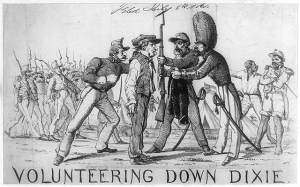
Volunteering Down Dixie,a northern cartoon, satirizes the enlistment of Confederate troops as two "Black Confederates" look on.

Volunteering Down Dixie,a northern cartoon, satirizes the enlistment of Confederate troops as two «Black Confederates» look on.

The topic of so-called “Black Confederates” is controversial. Some insist that Confederate nationalism motivated thousands of African Americans to fight alongside their masters, proving that slavery did not cause the American Civil War. The Internet has become one of the primary means of spreading this nonsense. While professional historians scoff, the “black confederate myth” is popping up on monuments across the south and even temporarily appeared in a Virginia textbook.

When asked about “Black Confederates,” historians often question the sources used by the myth’s supporters, pointing out that they are usually second-hand and anecdotal, or a product of post-war Lost Cause propaganda.  Other historians simply pooh-pooh the claims. I believe that these are not effective responses. A better approach is to place the evidence back into the context in which it first emerged.

In a number of primary sources, people claim to have seen African Americans fighting alongside Rebel soldiers. Most of these sightings were likely of slaves serving as body servants for their soldier masters, or were of the thousands of slaves impressed to work on confederate fortifications. Still, individual human motivations are rarely monolithic and therefore it is not irrational to believe that in the excitement of combat a few of these black men picked up weapons and got involved in the fighting.  Some perhaps felt that in their particular situation it was in their best interest to demonstrate “loyalty” to their masters. Others may have been deceived about the intentions of northern soldiers; white southerners repeatedly told their slaves that Yankees were intent on capturing blacks to send them away to labor in the Caribbean.

Yet while these incidences were in nowhere near the numbers that some claim today, the exaggeration of such tales to promote an agenda is not new. In pushing for emancipation, some abolitionists and radical Republicans widely publicized these stories. In propaganda-like fashion, they greatly exaggerated them to further their cause, and thus they were the first to give these reports more credence and attention than they deserved.

Immediately after the July 1861 battle at Manassas, Virginia, scattered news reports claimed that people saw blacks fighting there among the Confederates. The New York Times, for example, declared that «we hear of black regiments» in the Rebel army, and reprinted a story from the Richmond Enquirer heralding an «ebony patriot» who shot a Yankee officer and captured another. The Charlotte (N.C.) Western Democratcelebrated the «sable patriots» of Manassas and claimed «many cases . . . of [northern] prisoners being taken by negroes.» Some Northerner newspapers claimed that blacks had fought for the Confederates that day in significant numbers. «It is boasted that there are two well drilled regiments of negroes in [the Confederate] army» the Chicago Tribune reported. «The fact that negroes fought in the battle at Bull Run is undisputed,» one correspondent concluded after discussing the battle with Union soldiers who had been in it. «They were forced to do it, but they fought.»

Far more important than the veracity of these dubious claims, is that emancipationists used them to shape northern public opinion and Union war policy. The day before the battle, the U.S. Senate debated a bill that would allow the confiscation of Rebel property used to support Confederate armies. After the battle, Senator Lyman Trumbull proposed an amendment to the bill that broadened the definition of property liable for confiscation to include slaves. «I understand that Negroes were in the fight which has recently occurred,” Trumbull said on the Senate floor. “Negroes who are used to destroy the Union and to shoot down the Union men by the consent of their traitorous masters [should be confiscated].» While there was some objection to the amendment, news from Manassas swayed some senators. Conservative senator John C. Ten Eyck, for example, explained that he previously voted against the amendment, but now changed his mind. «Having learned and believing that [slaves] have been used and employed with arms in their hands to shed the blood of Union-loving men of this country,» he argued, «I shall vote in favor of this amendment.” The amendment and the Confiscation Act overwhelmingly passed, becoming the first legislation that allowed Union commanders to harbor runaway slaves.

To further promote emancipation as a military necessity, abolitionists continued to spread reports of slaves fighting for the Confederacy. In September 1861, famed black abolitionist Frederick Douglass maintained «it is now pretty well established, that there are at the present moment many colored men in the Confederate army doing duty . . . as real soldiers. . . . There were such soldiers at Manassas, and they are probably there still.» Harriet Beecher Stowe, author of Uncle Tom’s Cabin, issued a warning. «The question is not Shall there be black regiments. But, Shall they fight on our side or the side of the enemies?» If the government did not emancipate the slaves, she insisted, the North would have to fight an increasing numbers of blacks in rebel armies.

With hindsight, these fears were unwarranted. The Confederate government vehemently resisted enrolling black troops until the last months of the conflict. In fact, after the Manassas battle a Rebel officer suggested the creation of black regiments but Confederate president Jefferson Davis labeled the idea «stark madness» and claimed such an action “would revolt and disgust the whole South.»

But these were real concerns, and reports continued to come in.  On December 22, for example, Confederates attacked several companies of Union soldiers during a routine reconnaissance up the Virginia Peninsula. Some soldiers claimed that blacks were among their assailants. «Many colored men were in the enemy’s ranks,» Chaplain Richard F. Fuller recorded in his diary that night, «the rebels having no tender scruples about arming the slaves.»

A day after the skirmish, the number of blacks engaged in it was inflated to promote an agenda. In a letter to The Indianapolis Journal, a Hoosier soldier made the outrageous claim that Union soldiers encountered «a body of 700 negro infantry, all armed with muskets, who opened fire.» The wounded soldiers «testify positively that they were shot by negroes.» The soldier called on the government to act; «If they fight us with negroes, why should not we fight them with negroes too?» The story soon found its way into newspapers across the north as a means of promoting emancipation.

In the early months of 1862, these stories continued to be a regular feature in the speeches and editorials of emancipationists. In pushing for both emancipation and the recruitment of black troops, an abolitionist newspaper maintained that the Confederates «have been fighting in close companionship with negroes, from the beginning!» William Lloyd Garrison maintained that Southern blacks “are at the service of the country whenever we accept them. But the Government will not accept them, and the rebel slaveholders are mustering them in companies, and in regiments.» In front of an audience at the Smithsonian Institute, Wendell Phillips insisted «if Abraham Lincoln does not have the negro on his side, Jefferson Davis will have him on his.»

The Peninsula Campaign, the major event in the eastern theater in the spring of 1862, increased these allegations. During the Yorktown siege, for instance, Northern newspapers reported that the Confederates forced blacks to act as sharpshooters, and as artillery gunners. Both the New York Times and thePhiladelphia Inquirer claimed that blacks were seen “uniformed and armed” at Yorktown, and the Baltimore American insisted they were “keeping guard as other soldiers.”

While the Peninsula Campaign was unfolding, Congress deliberated a second confiscation act that would allow for the seizure and liberation of all slaves owned by Rebels, regardless of whether the Confederacy had impressed their labor.  Such legislation would potentially expand the number of freed slaves. To support the bill, these reports of black Confederate soldiers were a mainstay in the northern press and on the floors of Congress.

«Of course the . . . Democrats and the ‘conservatives,’ the Chicago Tribune editorialized, «see nothing wrong [with the Confederates] training the black man to cut up our troops, but let the proposition be made for a negro regiment in the Union service, and they start back in terror at the idea.» The editors were outraged that «slaves may . . . carry muskets for our Southern brethren» and «shoot down our soldiers under the fear of their master’s lash,» but were not allowed to fight for the Union cause. “Does not every man see,” Representative John Hickman told congress, that when the Confederates “are at liberty to employ their slaves, not only in the erection of fortifications, but . . . in the defense of [these] military works, it is a matter of necessity to deprive them of these auxiliaries?”

Radicals were not alone in making such assertions. Conservative Senator John Sherman told Congress, «The question must be decided whether the negro[s] . . .  shall be employed only to aid the rebels.» Sherman insisted that Southern slaves not only performed all the army’s hardest labor, but the «rebels fight side by side with them. . . . Now, shall we avail ourselves of their services, or shall the enemy alone use them?»

«I think we can not be mistaken,» moderate Republican senator James Doolittle argued, the Confederates “have employed negroes not only upon intrenchements and in camp service, but have organized and put arms in their hands to shoot down our sons and our brothers on the field of battle.» Because of this «fact,» the senator maintained, the government should authorize the president «to employ them, and even to arm them.»

Commenting on the debates, the New York Commercial Advertiser noted that the Confederates had used their slaves “as gunners on fortifications, and as picket guards. These are ascertained facts. It is also said they have some negroes enrolled in regiments.» The Commercial’s editors found it «refreshing» that «the recent debates in Congress indicate a definite policy» which would begin to deprive the South of their black laborers. The prediction proved accurate: at the end of July 1862 Congress passed the Second Confiscation Act, and Lincoln presented the Emancipation Proclamation to his cabinet.

I am not suggesting that these reports of so-called “black confederates” were the primary reason why many northerners came to embrace emancipation. However, they clearly played a significant part in the debate, and yet historians rarely, if ever, present or acknowledge these claims when discussing emancipation. As a result, they have fallen into the hands of “neo-confederates.” It is profoundly ironic that modern Confederate apologists now use these emancipationist exaggerations to support their own interpretations of southern motives.

To successfully combat the “black confederates myth,” historians should not simply explain away these accounts. Rather, we should take them out of the hands of those who attempt to use them to glorify the Confederacy, put them back into the context of the emancipation debate in which they first appeared, and in doing so reveal their true importance. While these sightings of so-called “Black Confederates” do not prove African American support for the Confederacy, they do illuminate one largely unexplored reason why Northerners came to embrace emancipation as a war aim.

Glenn David Brasher is the author of The Peninsula Campaign and the Necessity of Emancipation (2012) and winner of the 2013 Wiley-Silver Prize from the Center for Civil War Research.

Sources: Douglass’ Monthly IV (September, 1861): 516; Charlotte Western Democrat July 30, August 6, 1861; Chicago Tribune, July 29, 1861, March 19, 1862, May 29, 1862; Congressional Globe, 37th Congress, First Session, 218-219, 1484; Congressional Globe, 37th Congress, 2nd Session, 1801, 3198-99, 3229-30; Richard F. Fuller, Chaplain Fuller; Being a Life Sketch of a New England Clergyman and Army Chaplain (Boston: Walker, Wise, 1863), 232; Indianapolis Journal, December 27, 1861; Bruce Levine, «Black Confederates,» North and South 10:2 (July 2007): 42; Liberator, August 23, 1861; National Anti-Slavery Standard, August 3, 1861; New York Commercial Advertiser quoted in Cincinnati Gazette, July 15, 1862; New York Times, January 14, 1862, April 27, 1862; Philadelphia Inquirer, April 25, 1862; Principia, September 21, 1861, January 30, 1862.

Illustration Courtesy of the Library of Congress (loc.gov).

Read Full Post »

Are Historians Overestimating the Impact of Civil War Deaths on Americans of the 19th Century?

HNN     April 20, 2014

Union soldiers entrenched along the west bank of the Rappahannock River at Fredericksburg, Virginia

What did the Civil War’s death toll mean to those who lived through it? We are now told that wartime deaths were unprecedented and overwhelming, and constituted one of the fundamental experiences for the wartime generation. But is this really true?

In recent years, statistical descriptions have been used by historians — including renowned scholars such as James McPherson, Eric Foner and Drew Gilpin Faust, but also celebrated filmmakers Ken and Ric Burns, among many – to drive home a characterization of the war based on the scale of death. They may be found across the range of media regarding the war, in films, museums, popular histories, scholarly treatises and lectures.

One such statistic is that the number of soldiers’ deaths in the Civil War – approximately 750,000 – was greater than the total number suffered in all other American wars combined. A second point makes use of the first figure: If one calculates the proportion of the total population who died while in military service during the war, and applies this percentage to present-day population figures, the equivalent number of deaths in the 21st century would reach above 7 million. This is a staggering figure that suggests that the Civil War generation made almost inconceivable sacrifices.

But while factually correct, the statistics work to exaggerate the impact of the war. At its essence, the use of these statistics is designed to provide perspective, a laudatory goal. It is supposed to allow those of us looking back on the war to get a clear sense of the emotional texture of the time. The problem is that doing so violates one of the central codes of historical analysis: avoid presentism.

Instead of putting us in the minds of those who experienced the Civil War, it conjures up significance by equating disparate eras. And it is not enough simply to speak about numbers. To understand how deaths affect a culture, it is essential to examine the meaning ascribed to them beyond the statistics. In the case of the Civil War, historians have not adequately taken into account the context of death and dying in the period.

Solid scholarly work exists on the central importance of death in antebellum America and the ordinary experience of death during the war, but Civil War historians have tended to sidestep this literature in order to claim the war years as exceptional. They have also underplayed the significance of the demographic realities that Americans faced before, during, and after the war. These reveal a society constantly coping with large-scale mortality. Americans throughout the period were lucky if they survived into middle age, and they recognized that life was more fragile than we do today.

Evidence for the extraordinary importance of affliction in the lives of antebellum Americans may be found in nearly any historical source from the period. Newspapers almost always included both poems about the death of loved ones and advertisements for nostrums claiming to cure a variety of ailments. Health became an important focus of advice manuals, and fiction frequently made use of death and sickness as plot devices. In many cases, private correspondence concerned matters of health to the exclusion of most other topics, and diaries overflowed withdescriptions of suffering.

Given these circumstances, it is important to remember that approximately two-thirds of the deaths of soldiers came as a result of disease, rather than on the battlefield. Looking back from today, these numbers are difficult to fathom, and the image conjured by them is of horrendously unsanitary conditions in military camps. After all, these deathsseem to be as much a product of war as those that resulted from wounds: soldiers in camp were there to fight the war and they died because the conditions were necessary to conduct field operations with a massive army.

But this is a present-minded understanding of the circumstances, because it ignores the epic antebellum confrontation with disease. If we work from an assumption that deaths from disease were not viewed at the time as war casualties, but rather as a continuation of prewar circumstances, instead of 750,000 casualties faced by Civil War-era Americans, we are left with 250,000. If we divide this figure by the four years of war, we have a crude estimate of 62,500 battlefield deaths per year.

But even this figure requires context to understand its significance. It is important to keep in mind that death rates were tremendously variable in the period, even within relatively stable locales, because of the unpredictable nature of contagious disease. Some areas reported rates that varied from below 2 percent up to 6 percent. A conservative estimate of a 2 percent death rate for 1860 would have meant about 629,000 deaths that year for the nation as a whole, while a 3 percent rate would have resulted in 943,000 deaths (today’s rate is consistently below 0.8 percent). The additional battlefield deaths in the war would thus represent an increase of between 7 and 10 percent over the normal rates. Significant, but hardly catastrophic.

If we look at changes in estimated death rates from Massachusetts that include antebellum, bellum and post-bellum periods, we notice that these Civil War variations had contemporary parallels. The largest single change in the 19th century in Massachusetts (including the Civil War years) occurred between 1871 and 1872, a 22 percent increase. However, the greatest change in the death rate between single years for Chicago between 1847 and 1864 was an astounding 296 percent. The Civil War additions, therefore, would not be out of line with normal variations before and after the war.

The experience with epidemic sickness and death in other historical moments should also remind us that Americans have been much more blasé about death from sickness than they are today. During the global flu epidemic at the end of World War I as many as 100 million worldwide, including 600,000 in the United States (roughly five times the number of American casualties in World War I and approaching the total number of deaths in the Civil War), perished over the course of just a few months. In addition, this was an unusual strain of influenza that killed mainly the healthiest cohort of the population (those in their 20s and 30s) through a violent immune response. If any event should have triggered re-evaluation of the nation’s approach to death (based solely on changes in incidence and scale, as Civil War historians often calculate), this would be it.

Yet one historian’s book on the subject is titled “America’s Forgotten Pandemic,” and he spends a significant portion of the book trying to explain why the epidemic seemed to disappear from public consciousness so soon after it waned. The answer, in part, is that well into the 20th century Americans viewed disease — and the death that came with it — as a constant, as something that had to be dealt with as part of everyday existence.

This is not to say that deaths in the war were not emotionally wrenching, or that they did not raise any number of new issues for Americans. The antebellum evidence shows that within a sentimentalized culture, death was indeedan important and profoundly disturbing event. Deaths in the war were also viewed in this way, and the trauma associated with them was real, heartfelt and an added burden.

The demographic picture that spans the war years, however, undermines the idea that the magnitude of death in the war necessarily forced Americans to reassess the implications of the carnage. Furthermore, because so many people died young in this era, the casualties would be interpreted very differently than today. The sense of loss that 21st century Americans associate with the relatively rare death of a young person was not the standard mode of response then.

Moreover, the connection of the deaths in the war to a greater cause imbued them with a meaning that should not be overlooked, and that may be seen as an improvement over the struggle to make sense of the vast numbers of dead during the antebellum period. In some way, the significance ascribed to deaths while in the service of protecting the Union or Confederacy obviated the antebellum need for understanding God’s will when those in the prime of life were cut down. For family members of soldiers, the interpretation was easily found. As a Minnesotan soldier named Patrick Taylor noted in a letter to his parents upon the death of his brother (the two fought side by side at Gettysburg), “Isaac has not fallen in vain. What though one of your six soldiers has fallen on the altar of our country. ’Tis a glorious death; better die free than live slaves.’”

The evidence from the period makes clear that historians need to re-evaluate the way we have come to understand the carnage of the Civil War. The war added to an existing demographic and cultural problem rather than creating an entirely new one. Given this milieu, the nearly ubiquitous use by historians of a set of factually correct, yet misleading, statistics needs rethinking. To make a case for the bloodiness of the war in this manner says more about how we interpret these figures today — and the uses we make of them — than about the way Americans actually experienced the wrenching conflict.

Nicholas Marshall is an associate professor of history at Marist College. This article was adapted from Professor Marshall’s article “The Great Exaggeration: Death and the Civil War,” published in the Journal of the Civil War Era 4 (March, 2014).

Read Full Post »

Maryland Man May Have Found Two Lost of Forgotten Photos of Lincon´s Funeral Procesion

Michael E. Ruane

Washington Post   March 19, 2014

In the first photograph, the crowd outside the church seems to be waiting for something to come down the street. Children stand up front so they can see. Women, in the garb of the mid-1800s, shield themselves from the sun with umbrellas. White-gloved soldiers mill around. And a few people have climbed a tree for a better view.

(Mathew Brady/The National Archives)

In this second shot, some heads are bowed. Men have taken off their hats. And the blur of a large black object is disappearing along the street to the left of the frame. What the scene depicts, why it was photographed, or where, has been a mystery for decades, experts at the National Archives say. But a Maryland man has now offered the theory that the two photos are rare, long-forgotten images of Abraham Lincoln’s funeral procession in New York City.

(Mathew Brady/The National Archives)
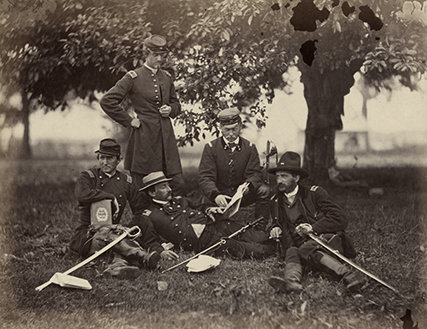
Paul Taylor, 60, of Columbia, a retired federal government accountant, believes the scene is on Broadway, outside New York’s historic Grace Church.

The day is Tuesday, April 25, 1865, 11 days after Lincoln was shot at Ford’s Theatre in Washington.

 And the crowd is waiting for, and then seems to be paying homage before, a horse-drawn hearse, whose motion makes it appear as a black blur as it passes by in the second picture.

If Taylor is right, scholars say he has identified rare photos of Lincoln’s marathon funeral rites, as well as images that show mourners honoring the slain chief executive.

Plus, it appears that the photographs were taken from an upper window of the studio of famed Civil War photographer Mathew Brady, which was across the street from the church.

“It’s a big deal,” said Richard Sloan, an expert on the Lincoln funeral ceremonies in New York. “What makes it even a bigger deal is to be able to study the people. Even though you can’t see faces that well, just studying the people tells a story.”

Sloan added, “It’s as if you’re there, and you can see the mood.”

Many people, including children, are in their Sunday best. A few look up at the camera. Flowers are in bloom. But there is no levity.

Sloan said he is convinced that the pictures show the funeral scenes: “There’s no doubt about it.”

But experts at the Archives caution that although the theory sounds good, there could be other explanations, and no way to prove it conclusively.

The digital photographs were made from some of the thousands of Brady images acquired by the federal government in the 1870s and handed down to the National Archives in the 1940s, according to Nick Natanson, an archivist in the Archives’ still-picture unit.

Next year is the 150th anniversary of Lincoln’s assassination.

The two photos in question, both captioned “scene in front of church,” apparently had gone unnoticed for decades.

“We’ve had many inquiries about many images in the Brady file,” he said. “I can’t remember . . . any inquiries about these two particular images. I don’t think I ever noticed them before.”

But something about them intrigued Taylor when he saw them among the hundreds of Brady photographs posted on an Archives Flickr photo-sharing site in January.

Both were unusual four-image pictures — four shots of the same scene grouped together.

“I was just struck by the scene,” Taylor said. “That is not your normal scene in front of church. There’s just people everywhere: the streets, the sidewalks, the roof. They’re in the trees. This is not your normal Sunday.”

In the second picture, “I saw this black streak,” he said. “When I looked at it closer, I saw what it was. It was a funeral vehicle. . . . I knew it was Lincoln. It had to be. It couldn’t be anybody else.”

Natanson, of the Archives, was skeptical. “It still strikes me as odd that . . . there wouldn’t have been some mention or some hint [in the caption] of the monumental nature of the event,” he said.

There could have been other events, “maybe even other processions, maybe even other funerals” during that time period, he said. “I don’t think its possible to establish this without any doubt.”

But if Taylor is right, it could be an important discovery, Natanson said: “It isn’t as if there are dozens of images of the funeral procession anywhere.”

The funeral observances for Lincoln, who was assassinated by actor John Wilkes Booth on April 14, 1865, went on for more than two weeks. During that time, the president’s body was moved by train on a 13-day, 1,600-mile journey from Washington to Springfield, Ill., where he was buried May 4.

Along the way, the train stopped in over a dozen major cities, and his coffin was removed for numerous processions and elaborate tributes.

Washington historian James L. Swanson has called the funeral journey a “death pageant” that was viewed by millions of people and that helped create the image of Lincoln the martyred president.

New York was the fourth major stop on the journey, after Baltimore, Harrisburg, and Philadelphia.

The president’s coffin, with the lid unfortunately open, was placed on view in New York’s City Hall on April 24, according to Swanson’s account. Lincoln had been dead for 10 days, and his face was “not a pleasant sight,” the New York Times reported.

The next day, with the lid closed, the coffin was borne through jammed streets aboard a black hearse decorated with flags and black plumes and drawn by a team of 16 horses shrouded in black.

A half-million people lined the route, much of which was along Broadway.

“Thousands and thousands of these lookers on were too young . . . and were doubtless brought in order that in old age they might say they saw the funeral procession of Abraham Lincoln,” the Times wrote the next day.

Taylor said his investigation of the photos began Jan. 4, when he first noticed them. The captions didn’t give him much to go on. The problem was that the original glass negatives probably didn’t have captions on them, said Brady biographer Robert Wilson. And by the time the government acquired the negatives, any caption information that went with them was probably lost.

Taylor turned to the Internet for images of historic churches, to see whether he could find the one in the Brady images. He looked up historic churches in Baltimore. No luck. Then he tried historic churches in New York.

That search brought up Grace Episcopal church, the 168-year Gothic edifice on Broadway at Tenth Street.

“I’m looking at it, and that was it,” he said. “I had it.”

He e-mailed his findings to the Archives on March 3.

Taylor, who said he has long been fascinated by historic photographs, said he does not think the images have ever been published before.

Bob Zeller, president of the Center for Civil War photography, agreed, but he wrote in an e-mail: “There is always a slim chance that somebody somewhere has recognized and printed [them] in some obscure . . . publication.”

“Either way, it’s incredibly historic, (a) totally fresh piece of our American photo history,” he wrote. “Even if someone materializes, that still means 99.9 percent of us, enthusiasts and historians, have never seen it.”

Read Full Post »

index2The Black Press During the Civil War

Kevin McGruder

The New York Times   March 13, 2014

Although the Civil War began as a conflict over secession, from the start most blacks saw it as an opportunity to free the enslaved with a Union victory – a theme reflected in the robust black press that prospered across the North.

In New York City, the war was closely chronicled by two newspapers, The Anglo-African and The Christian Recorder. Established in 1859 by the editor Robert Hamilton and his brother Thomas, The Anglo-African reported extensively on the Civil War and the emancipation efforts. But Anglo-African articles also covered the breadth of African-American life, with a focus on political issues relevant to black Americans, presented by black writer and activists like Frances Ellen Watkins Harper, the Rev. James W.C. Pennington and Martin Delany.

The Christian Recorder, founded in 1848, was a national weekly newspaper published by the African Methodist Episcopal Church, based in Philadelphia, but with correspondents across the country. The New York area was served by correspondents in Manhattan and Brooklyn, who, along with The Recorder’s editor, provided an unvarnished critique of the war and frequently of New York’s black community.

Black New Yorkers were uniquely positioned to participate in debates regarding the war and emancipation. In the 1860s New York City and New York State were centers of free black advocacy. The abolitionist Frederick Douglass lived in Rochester. Many of the “colored men’s conventions” that met periodically from 1830 until 1864 met in New York State. New York City was a center of philanthropy, abolitionist activism and publishing. The city’s 1860 black population of 12,000, from a total population of approximately 800,000, made it second in population to Philadelphia’s free black community.

Black newspapers weren’t just sources of information, but of activism. As the country hurtled toward war in February 1861, The Christian Recorder spread word of a meeting held to plan for a “day of humiliation, fasting and prayer that God would avert the judgments about to fall upon this guilty nation.” They were also a center for debate: As soon as the war began in April 1861, even though black troops had not yet been accepted by the Union Army, there was heated discussion in the black community about the duties of blacks in regard to the war. Some voices in the black press, like The Christian Recorder, questioned the logic of black soldiers’ risking their liberty (captured black soldiers could be enslaved) or their lives for a country whose Supreme Court had held that black people, whether enslaved or free, were not citizens.

The Anglo-African, though, actively promoted the use of black troops in an editorial titled “The Reserve Guard” that August:

Colored men whose fingers tingle to pull the trigger, or clutch the knife aimed at the slaveholders in arms, will not have to wait much longer. Whether the fools attack Washington and succeed or whether they attempt Maryland and fail, there is equal need for calling out the nation’s ‘Reserve Guard.’

The newspapers were more than just hortatory – they also provided historical and comparative analysis of the issues surrounding emancipation. On Jan. 4, 1862, The Christian Recorder reinforced calls for emancipation with a persuasive and prophetic editorial that asked, “What would be the effect of the emancipation of the slaves?” Using data from the British Caribbean, where slavery had been abolished in the 1830s, the editorial confronted two major arguments against emancipation: that the formerly enslaved would “overrun the entire North as the frogs did the Egyptians in the days of Moses,” and that if emancipated “they will refuse to work, and will engage in robbery and murder.” The editorial noted that neither points had been borne out in the Caribbean, that there were already many formerly enslaved people in the South who chose to remain in the South, and that many of these people were cultivating small farmsteads that were key to the independent lives they desired. The writer concluded that for the United States, it was in “our interest to emancipate the slaves of both the rebel and loyal citizens, for it will not only crush rebellion, but increase our prosperity, decrease crime in our midst, and prevent insurrections with their fearful horrors.”

Reading these papers offers a surprising view into the nuanced ways that blacks greeted early signs of emancipation. They greeted Lincoln’s Preliminary Emancipation Proclamation of September 1862, for example, with great anticipation but also some anxiety. Because the effective date for a permanent Emancipation Proclamation was three months away, on Jan. 1, 1863, the fear was that something might occur to change course during the intervening period. In response, in an October editorial, The Christian Recorder swept aside doubts and framed the Proclamation as an answer to prayers:

Now, let the North if they are in favor of the Union, not stop and tremble at the proclamation, but say, like all honest and good men will say, that it is the Lord’s doings, and who shall hinder it? Yes, God has looked down upon this great national sin, and is now frowning upon it, and declares His judgment upon it. He has heard the groans of His people, and has come down to deliver them.

The Emancipation Proclamation did become effective on Jan. 1, 1863, and the Jan. 10 issue of the The Anglo-African contained over a page of accounts of Emancipation celebrations in New York, St. Louis and Boston.

In addition to emancipating the enslaved in the states then in rebellion, the Proclamation also included a provision for recruiting black soldiers. While this order had national implications, the states that had remained in the Union had the final say on admitting black troops, since militias were organized by the states – a fact highlighted in the black press. Massachusetts and Rhode Island organized some of the first black regiments, and New York City’s black press played an important role in advocating for the recruitment of black troops.

That March Congress passed the Conscription Act, authorizing the first military draft. When the actual draft process began in New York City in July 1863, mobs of white workingmen, resentful of being asked to put their lives at risk for black people whom they had been told would flood Northern cities taking their jobs, destroyed the Manhattan Draft office and then roamed the city over four days in the largest assault on the black community in New York’s history. Union troops arrived on the fourth day of the rioting and put an end to the violence. In the aftermath, The Christian Recorder recounted defense efforts: “In Weeksville and Flatbush, the colored men who had manhood in them armed themselves, and threw out their pickets every day and night, determined to die defending their homes.”

But the paper also criticized other black New Yorkers: “To see strong, hearty, double-fisted men, fleeing like sheep before the whoop of a dozen half-grown Irish lads, leaving their wives behind to take care of themselves, was indeed humiliating.”

While black New Yorkers recovered from the riots, the black press redoubled its advocacy of black troop recruitment. In its final issue of 1863, The Anglo-African announced:

The War Department having at last done justice to colored men, and authorized the raising of a colored regiment in this State, to be known as the Twentieth Regiment United States Colored Troops, meetings have been called in several wards, as will be seen by reference to our advertising columns, for the purpose of discussing plans to promote enlistments and providing for the families of those who may enlist.

The recruiting was so successful that a second regiment, the 26th, was authorized. When the regiments left for battle in March of 1864, New York’s black press shifted its focus to advocacy for equal pay for black soldiers. At the same time The Anglo-African and the Christian Recorder chronicled battlefield efforts, and with a shift in wartime momentum toward the Union in 1864, began to focus on issues such as black voting, that would need to be attended to in peacetime. The Anglo-African continued publication until December 1865. The Christian Recorder continues to appear today, as a monthly publication.

Follow Disunion at twitter.com/NYTcivilwar or join us on Facebook.


Sources: The Anglo-African; The Christian Recorder; Sandy Dwayne Martin, “Black Churches and the Civil War: Theological and Ecclesiastical Significance of Black Methodist Involvement, 1861-1865”; Paul Finkelman, “Encyclopedia of African American History, 1619-1895, From the Colonial Period to the Age of Frederick Douglass”; Iver Bernstein, “The New York City Draft Riots: Their Significance for American Society and Politics in the Age of the Civil War”, Rhoda Golden Freeman, “The Free Negro in New York City in the Era Before the Civil War”; William Seraile, “New York’s Black Regiments During the Civil War.”


Kevin McGruder is an assistant professor of history at Antioch College. He is the author of  “A Fair and Open Field: The Responses of Black New Yorkers to the New York City Draft Riots” and the co-author, with Velma Maia Thomas, of  Emancipation Proclamation, Forever Free.

Read Full Post »

index2The Plot to Kill Jeff Davis

By Ronald S. Coddington

New York Times, March 10, 2014

Samuel Kingston, a Union soldier and prisoner of war, languished in a dungeon on a late winter’s day in March 1864. The cell was in the basement of infamous Libby Prison in Richmond, Va., the capital of the Confederacy. A severe cough and cold racked his body. His cellmates were similarly affected. Ten in all, they were crammed into a dank, drafty cell not much larger than a common tent. Rebel guards provided Kingston and the others with nothing more than scraps of food for subsistence and an open bucket for a toilet. If some of the guards had had their way, the prisoners would be left to rot in the filth and cold of the converted brick warehouse.

Four of the cellmates were enlisted men of color, who were often abused, if not executed, by their Southern captors. But in the minds of the guards, the other six, including Kingston, had done something even more heinous: They were implicated in an alleged assassination attempt against the Confederate president, Jefferson Davis and members of his cabinet.

The mysterious plot to take out the senior leadership of the South was uncovered in papers found during a Union cavalry raid on Richmond. The stated purpose of the coup de main was to free federal troops held in Libby Prison and the nearby Belle Isle camp.

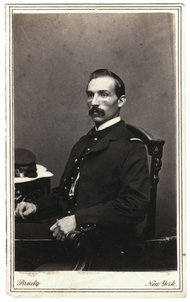
Collection of the author Samuel Kingston sat for this portrait in the photographer Mathew Brady’s New York City studio, circa 1863.

Samuel Kingston sat for this portrait in the photographer Mathew Brady’s New York City studio, circa 1863. Collection of the author.

The raid began on the evening of Feb. 28, 1864. A column of handpicked troopers, 3,584 sabers strong, crossed the Rapidan River at Ely’s Ford, about 65 miles north of Richmond. A half-dozen artillery pieces and a few supply wagons and ambulances accompanied the cavalrymen.

The brain behind the audacious operation was a junior cavalry commander in the Army of the Potomac who worked back channels to sell the plan to the Lincoln administration. Hugh Judson Kilpatrick, a West Point-educated brigadier driven by reckless personal ambition, had a penchant for suicidal charges and pushing his troopers to exhaustion. “Kill Cavalry,” as he became known, had started his career as a horse soldier in the summer of 1861 when he was named lieutenant colonel of the Second New York Cavalry. An amalgamated regiment composed of recruits from New York, New Jersey, Connecticut and Indiana, six of the 10 companies hailed from the Empire State.

Kingston was a latecomer to the regiment. A meticulous bachelor who worked as physician in the bustling community of Oswego, N.Y., he joined the Second as an assistant surgeon in May 1863. He had his baptism to war during the seven-week-long Gettysburg Campaign, although the regiment did not fight in the eponymous three-day battle that broke an unprecedented streak of victories by Confederate Gen. Robert E. Lee and his Army of Northern Virginia.

Half a year later, Kingston mounted his horse and joined his comrades on Kilpatrick’s Raid. Word of the incursion arrived in lightly defended Richmond before the Yankees. The Confederate War Department mobilized an irregular force of soldiers, government workers and volunteers to resist the invaders.

Library of Congress Artist Edwin Forbes sketched Kilpatrick’s Raid to Richmond, circa Feb. 28 to Mar. 11, 1864.

Artist Edwin Forbes sketched Kilpatrick’s Raid to Richmond, circa Feb. 28 to Mar. 11, 1864.
Library of Congress

On Feb. 29, during the first full day of the raid, Kilpatrick divided his troops into two columns. He rode hard with the main body of about 3,000 men south to Richmond, while a second, smaller column of 500 men headed to Goochland, northwest of the capital.

Kingston and the rest of the Second were part of the smaller column. It was under the command of Ulric Dahlgren, a 21-year-old colonel and son of a career Navy officer, John Dahlgren. “Ully” spent his boyhood steeped in all things military, and distinguished himself in Union blue. He had led a successful reconnaissance raid into Confederate-held Fredericksburg on Nov. 9, 1862; later, at Gettysburg, he had suffered a severe wound in the foot that resulted in the amputation of a leg below the knee. Still, he soldiered on.

Kilpatrick and his men encountered Richmond’s outermost defenses on March 1 and found them stronger than anticipated. “Kill Cavalry” balked. He turned east and skirmished with Confederates while he waited for Dahlgren’s column to arrive.

Dahlgren, unaware of Kilpatrick’s withdrawal, continued on to Goochland and made a dash for Richmond. According to Lt. Col. Mortimer B. Birdseye of the Second, “This regiment has the honor of being the only Union regiment that passed the outer line of defenses surrounding Richmond during its occupation by Confederate forces.” But Dahlgren and his men ran into stiff resistance as they closed in on the capital. Casualties mounted, and Kingston went to work to save as many men as he could.

Dahlgren pressed to within two-and-a-half miles of the heart of the capital when the defenders finally broke their momentum. Dahlgren acted to save his command. “It soon got too hot, and he sounded the retreat, leaving forty men on the field” stated one of Dahlgren’s aides, 2nd Lt. Reuben Bartley. Kingston, who was uninjured, remained with the wounded as Dahlgren and the survivors fled.

Ulric Dahlgren stands in “Studying the Art of War,” by photographer Alexander Gardner, circa June 1863. Library of Congress.

Ulric Dahlgren stands in “Studying the Art of War,” by photographer Alexander Gardner, circa June 1863. Library of Congress.

Dahlgren continued on. By now night had fallen, and in the confusion caused by the darkness and enemy activity the column became separated. One section eventually made its way back to Kilpatrick. The other section, under the command of Dahlgren, rode into an ambush arranged by about 150 Confederate cavalrymen and other local volunteers. They descended on the Yankee raiders. Dahlgren was struck and killed by four bullets, and the rest of his troopers were dispersed or captured.

Victorious Confederates found Dahlgren’s lifeless body and stripped it of clothing and valuables, including his wooden artificial leg. One man hacked off one of Dahlgren’s fingers to take a ring. Another, 13-year-old William Littlepage, came away with a cigar case, a memorandum book and a few papers.

Littlepage and his comrades read one of the papers with fascination. “Special Orders and Instructions” provided details about the raid. One statement stood out among the rest: “The men must be kept together and well in hand, and, once in the city, it must be destroyed and Jeff Davis and his cabinet killed.”

The papers were forwarded through military and political chains of command and ultimately to Davis. Publication of the contents days after they were discovered rocked Richmond. Calls for retribution and retaliation rippled across the South. The North promptly denied any assassination plans and declared the documents to be forgeries.

Dahlgren’s body, which had been unceremoniously dumped in a muddy grave near the place he fell, was disinterred and put on display in Richmond. “Large numbers of persons went to see it. It was in a pine box, clothed in Confederate shirt and pants, and shrouded in a Confederate blanket,” reported The Richmond Whig on March 8, 1864.

While this circus played out on the streets of the capital, Kingston and his white cellmates were informed that they had been condemned to death as felons for their role in the alleged assassination attempt. “This news appeared to have a very depressing effect on Dr. Kingston,” noted Lieutenant Bartley, a fellow prisoner.

Kingston’s cough and cold worsened, and he lost his appetite. On March 21, as he lay near death, the Confederates removed him from his cell and sent him North. He survived the trip home, and with good food and care came back to life. He eventually returned to the regiment, was promoted to full surgeon, and served in this capacity until the end of the war.

The Confederates never followed through on their promise to execute the prisoners, which was most likely an idle threat by overzealous guards. But their ill treatment exacted a grim toll. According to Bartley, of the six officers imprisoned in the dungeon at Libby Prison, only three survived. He did not mention the fate of the four black soldiers.

Kingston was forever damaged by the ordeal. Back home in Oswego, he was frequently incapacitated by illness, and often doctored himself. His mental health appears to have suffered as well. An acquaintance described him as “a very odd & peculiar person.” Still, he managed to practice medicine and work as a druggist. A cerebral hemorrhage ended his life in 1889, at age 53. His wife, Anne, whom he had married in 1875, and two daughters survived him.

Follow Disunion at twitter.com/NYTcivilwar or join us on Facebook.


Sources: Samuel T. Kingston military service record, National Archives and Records Administration; New York Monuments Commission, “Final Report on the Battlefield at Gettysburg”; John Dahlgren, “Memoir of Ulric Dahlgren”; Philadelphia Inquirer, March 4, 1864; Frank Moore, “The Rebellion Record: A Diary of American Events”; Richmond Whig, March 8, 1864; The New York Times, March 10, 1864; The War of the Rebellion: A Compilation of the Official Records of the Union and Confederate Armies; Anne E. Kingston pension record, National Archives and Records Administration.


Ronald S. Coddington

Ronald S. Coddington is the author of “Faces of the Civil War” and “Faces of the Confederacy.” His most recent book is “African American Faces of the Civil War.” He writes “Faces of War,” a column for the Civil War News.

Read Full Post »

Milton Bradley’s Myriopticon, a parlor game containing images from the history of the “Rebellion” or the American Civil War, came with directions, lecture, a poster and tickets. View Game »

The Toys of War

By Sarah Burns and Daniel Greene

New York Times  February 27, 2014

Just in time for Christmas 1866, a 30-year-old game creator named Milton Bradley ran an advertisement in Colman’s Rural World, a St. Louis-based publication for farmers. Bradley, a lithographer living in Springfield, Mass., was already well known for inventing “The Checkered Game of Life” in 1860. His 1866 ad promoted his games and amusements as “moral, entertaining, wonderful, and instructive.” Among these wonders was the Myriopticon, a toy panorama containing 22 scenes from the history of the “Rebellion” so recently concluded. The toy evidently caught on, at least for a time. The next year, another Bradley puff described the Myriopticon as “immensely popular with boys,” especially those ages 7 to 12.

Given the subject – the bloody conflict that ended three-quarters of a million lives – the Myriopticon might seem an unusual choice for Christmas cheer. But Milton Bradley’s picture story wrapped the grisly conflict in bright theatrical trappings fit for even the most refined middle-class parlor. In that colorful box were the tools and the script for a splendid game. It made the war dramatic, entertaining, and – above all – fun.

Made of cardboard, the elaborately decorated box – roughly a foot square – mimicked a proscenium stage, with heavy, draped curtains and patriotic bunting as well as a medieval king and queen, a harpist and a tambourine player on the sidelines. On stage, the hand-colored pictures glided past on a long scroll affixed to wooden dowels on either end that could be wound up with a crank or handle.

The complete kit included a broadside announcing the “Grand Artistic and Historical Exhibition,” of the “Great Rebellion,” a sheet of pretend tickets, and a script for the lucky little showman to follow as the pictures rolled by.

The instructions recommended that the “exhibition” take place in a darkened room, with parlor curtains drawn around the box and a candle light behind it to mimic the ambience of a real theater. The broadside played up the performance, too, “respectfully” requesting the audience to remain seated till the first scene rolled by.

The opening scene in the miniature epic represents Maj. Robert Anderson and his men entering Fort Sumter on Dec. 26, 1860, preparing to defend it against Confederate assault. The pictures move from combat to comic camp scenes, signal towers and mortars, and rebel prisoners under guard. (Bradley supposedly copied the lot from Harper’s Weekly, though no one has yet done a systematic analysis.)

Among the crude but lively renditions, Winslow Homer’s “Sharpshooter” (which ran in Harper’s as “The Army of the Potomac” on Nov. 15, 1862) stands out, the original black and white enhanced by hand coloring in red and blue. Next is the Battle of Fredericksburg, which in turn shifts to a quieter scene (verifiably from a Harper’s issue of Jan. 31, 1863) of contrabands just arriving at a Union camp.

The script is as lively as the drawings, mixing a sprightly tone, fast pace and broad humor appropriate for a target audience of prepubescent boys. A depiction of Union foragers attempting to capture some rambunctious hogs is labeled a “very pig-chew-resque scene,” and the script styles Homer’s dead-serious sharpshooter as the putative relative of a celebrated poet, because he is evidently a “very long fellow.” In other sections, the “you are there” address lends immediacy, as when viewers are warned to “proceed very carefully” in approaching a party of soldiers around a campfire.

The Myriopticon was a juvenile variant on other educational amusements made for the middle-class Northern parlor. Adults and children alike peered into stereoscopes for stunningly illusionistic three-dimensional views of Civil War camps, weapons and even dead bodies strewn on battlefields. They also could play and sing war songs around the piano. Soon after the end of hostilities, they could (if affluent) page through Alexander Gardner’s hefty two-volume “Photographic Sketchbook of the War,” which, like the Myriopticon, presented a tightly scripted history scattered with surprising elisions, notably the assassination of Abraham Lincoln. (Gardener’s “Photographic Sketchbook,” like Bradley’s Myriopticon, dates from 1866.) The last scene in the “Photographic Sketchbook” shows the dedication of the monument at Bull Run; the last in the Myriopticon is the burning and evacuation of Richmond on the night of April 2, 1865.

Of course, no one would ever accuse Gardner or Bradley of engineering a cover-up by failing to include the assassination or glossing over the achievements of black soldiers in the Union Army. But such omissions clue us in to their shared agenda. Both Gardner and Bradley structured and shaped not just the story but also the memory of the war, all scaled down to manageable size, packaged and marketed for home entertainment and instruction. Book and toy alike stand witness to the ways in which the far-off conflict infiltrated and changed daily life, even after the war had ended. A miniature theater of war designed to play and replay the war over and over again, the Myriopticon enshrined and preserved its remembrance. As the instructions put it: “It is much better to have the lecture committed to memory than to read it, as then the facts are impressed upon the memory, and any other remarks can be mixed in, or the description varied to any extent, as long as the facts and dates are retained.”

But they were very particular facts. The Myriopticon told a thrilling saga of bravery, heroic sacrifice, Yankee ingenuity and inevitable triumph, with a few chuckles along the way. It recounted the war as an almost exclusively masculine field of action. And it was very modern in the way it mediated, commercialized and mass-produced the history and memory of the war for fun and profit.

Perhaps the Myriopticon’s most modern quality is its proto-cinematic flow. Close-ups give way to distant views in seamless montage. There are lots of guns and explosions, and, just before the grand finale, the uplifting moment when “colored troops” enter Charleston, S.C., where it all began four years earlier. The final apocalyptic scene is a wide-angle view that shows the silhouettes of defeated troops fleeing Richmond as the city burns behind them. Put it in motion, and this scene could be the burning of Atlanta in the 1939 film “Gone With the Wind.”

The Myriopticon still fascinates us today because it is almost a movie. In 1866, Bradley also advertised his model of the Zoetrope, a hollow drum which, when rapidly spun, gives the illusion of motion to pictures on the inner surface. It would be decades before storytelling technology finally caught up to create the motion picture as we know it. But the engagingly interactive Myriopticon deserves a place in the genealogy of the modern war movie, which, like its distant ancestor, brings the war home with gripping narrative, vivid imagery, and rousing action.

Follow Disunion at twitter.com/NYTcivilwar or join us on Facebook.


Sarah Burns is a professor emeritus of art history at Indiana University. Daniel Greene is an adjunct professor of history at Northwestern University. They are co-contributors to “Home Front: Daily Life in the Civil War North,” a book that accompanies an exhibition in collaboration with the Terra Foundation for American Art, on view at the Newberry Library through March 24, 2014.

Read Full Post »

12 años de esclavitud

José Ragas

NoticiasSER.pe

26 de febrero de 2014

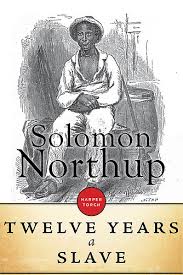
imagesEn algún momento de 1853, Salomon Northup decidió contar su historia para el que sería su primer y único libro: “12 Years a Slave”. En él, Salomon dejó por escrito lo que le había ocurrido durante más de una década de vivir como un esclavo en el Estados Unidos anterior a la Guerra Civil. Como se estilaba en aquella época, la portada fue acompañada de un largo subtítulo que no dejaba dudas sobre el contenido de la obra: “Narración de Salomon Northup, ciudadano de New York, secuestrado en la ciudad de Washington en 1841 y rescatado de una plantación algodonera cercana al río rojo en Louisiana en 1853”. El libro es, en buena cuenta, su narración personal sobre cómo descendió a los infiernos y el testimonio de quien pudo sobrevivir a dicha experiencia para transmitirlo a las generaciones futuras.

La película que se ha estrenado en estas semanas se basa precisamente en la trayectoria de Salomon. Nacido libre, pues su padre había sido liberado por el amo cuyo apellido tomaría para sí y sus hijos, Salomon fue llevado con engaños a Washington y vendido como esclavo. Demás está decir que de nada sirvieron sus explicaciones y ruegos. Su entrada al circuito de la esclavitud nos ofrece un camino distinto al de las narraciones a las que estamos acostumbrados: bien de esclavos que no pudieron escapar de tal condición o de quienes finalmente lo hicieron, ya sea fugándose, siendo liberados o comprando ellos mismos su manumisión. Pero el cambio brusco de estatus de libre a esclavo nos sumerge en un universo de explotación y brutalidad sin límites, apenas matizado por actos de misericordia y cierta protección legal que hizo posible que Salomon fuese ubicado y devuelto a su familia.

El largo periodo de tiempo incluido en la narración, así como la diversidad de escenarios, permiten apenas comprender la complejidad de una institución como la esclavitud. Institución porque tenía un marco legal sustentado en un discurso religioso y una estructura social y racial, el mismo que amparaba la propiedad de otro ser humano, su explotación y disciplinamiento (en algunos casos hasta la muerte misma). Se trató de un sistema que hoy reconocemos como bárbaro que se extendió por tres continentes por más de cuatrocientos años y que apenas fue abolido hace no más de ciento cincuenta. Si bien la más extendida fue la de la población africana, existió también la esclavitud indígena con población americana y más adelante traída de la Polinesia. Sin mencionar, por supuesto, las condiciones en las que los coolies chinos reemplazaron a los esclavos de origen africano.

El momento en que la película es exhibida es privilegiado. “12 Years a Slave” ha sido acompañada de otras películas que han narrado la experiencia de la comunidad afro-americana desde las plantaciones hasta la Casa Blanca. “The Butler” (“El Mayordomo”) aborda la historia real de un mayordomo afroamericano que sirvió a varios presidentes en la segunda mitad del siglo XX. Desde la ficción, Tarantino hizo de “D’Jango” un esclavo en busca de venganza añadiéndole una calculada violencia fotográfica al tema, además de llevar la trama no al campo de algodón sino al interior de la casa hacienda. “The Help”, por otra parte, se aproxima a las vidas íntimas de un grupo de sirvientas y su interacción con las familias blancas en el Mississippi de los años 60.

Estas películas llegan en medio de la conmemoración del sesquicentenario de la Guerra Civil norteamericana, que terminó con la esclavitud casi una década después que esta era abolida en Perú. Por supuesto, la llegada del primer presidente afroamericano a la Casa Blanca, Barack Obama, ha incentivado esta mirada retrospectiva hacia esta difícil historia, que tiene en febrero un mes dedicado a celebrarla. Por estos meses también se ha recordado medio siglo de la lucha por los derechos civiles que llevó, un siglo después del fin de la esclavitud, a un impresionante movimiento popular a buscar terminar con esta división, ya sea por medio de las marchas pacíficas promovidas por el Dr. King, el discurso militante de las Panteras Negras o la espiritualidad política del Islam como lo sugería Malcolm X. Fue necesario que el gobierno norteamericano ejerciera su autoridad para poner fin a la segregación que hacía de ciertas partes de Estados Unidos una prolongación de Sudáfrica, y obligaba a las personas ‘blancas’ a viajar, comer o bailar en espacios distintos que las ‘de color’.

En su momento, el libro de Salomon Northup fue acogido muy favorablemente. Un primer tiraje vendió alrededor de ocho mil ejemplares, y el haber sido publicado casi coincidentemente con “La cabaña del Tío Tom”, de Harriet Betcher Stowe, le dio un impulso inusitado. El libro siguió vendiéndose bien hasta 1856, la última edición que Salomon vería en vida. Posteriormente, fue casi imposible conseguir un ejemplar, ya sea en colecciones particulares o en bibliotecas, menos aún copias a la venta. Un aviso en la prensa de New Orleans en 1922 expresaba este malestar porque “los expertos” no podían conseguir ningún ejemplar. Solo en 1968 se pudo nuevamente acceder a una versión anotada, gracias a que una entusiasta de nombre Sue Ekin descubriera el libro de casualidad a los doce años en la biblioteca de una casa hacienda y decidiera hacer su tesis sobre la vida de Upnorth. Una edición posterior, de 2007, incluyó materiales provenientes de su investigación y es la que sirvió de base para la película.

newzfotoJosé Ragas es un historiador peruano, candidato doctoral en la Universidad de California en Davis, padre de una de las mejores bitácoras de historia que conozco (http://historiaglobalonline.com/) y un buen amigo.

Read Full Post »

Civil War in the Senate

By JONATHAN W. WHITE
New York Times   January 17, 2014

No word was more hotly contested during the Civil War than “loyalty.” Republicans persistently accused Democrats of disloyalty and treason for opposing Republican war measures, and no Democrat was immune from accusations of disloyalty, even at the highest levels of the government.

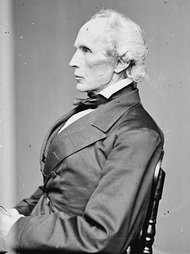
Senator Garrett Davis, Democrat of Kentucky Library of Congress

Senator Garrett Davis, Democrat of Kentucky
Library of Congress

But Democrats gave as good as they got, accusing the Republicans of disloyalty to the Constitution. On Jan. 5, 1864, Senator Garrett Davis of Kentucky introduced a series of resolutions denouncing the Lincoln administration’s allegedly unconstitutional actions. Taking up five full pages in the Senate Journal, the resolutions accused Lincoln of destroying the constitutional rights of both Northern and Southern civilians, and claimed that the president sought to “subjugate” and “revolutionize” the South by abolishing slavery. Davis called on all conservative Americans, North and South, to turn against their war leaders and elect delegates for a national convention that would negotiate an end to the war.

Davis, an antebellum Whig who had originally been a firm supporter of the war, had become disillusioned by the changing nature of the conflict. To him, the war was no longer about Union, but conquest, abolition and centralization.

Many observers were struck by the bitter language of Davis’s resolutions. One fellow senator claimed that Davis’s criticisms of Lincoln were harsher than Thomas Jefferson’s grievances against King George in the Declaration of Independence. On Jan. 8, Senator Henry Wilson of Massachusetts introduced a resolution calling for Davis’s expulsion from the Senate. Citing one of Davis’s resolutions “in which, among other things, it is declared that ‘the people [of the] North ought to revolt against their war leaders and take this great matter into their own hands,’” Wilson accused Davis of seeking “to incite the people of the United States to revolt against the President … and to take the prosecution of the war into their own hands.”

Library of CongressSenator Garrett Davis, Democrat of KentuckDavis immediately protested that this was “a garbled version of my resolution,” and that Wilson’s “jaundiced, narrow mind” made him “wholly incompetent to give a proper rendering of those resolutions.” (Indeed, Wilson had blatantly misrepresented them. By omitting any mention of the South, or of Davis’s call for a national peace convention, Wilson portrayed Davis as wanting to inflame civil war and bloodshed in the North, when in reality, Davis hoped to end hostilities by uniting the peace elements in both sections.)

The nature and purpose of free speech became a central part of the debate over Davis’s resolutions. Davis lamented that “if any man has the audacity to question” the measures of the Republican majority, he “is branded and denounced by them as disloyal, as a traitor.” But the minority party possessed a right — if not a duty, he said — to criticize the majority.

Amazingly, several Republicans came to Davis’s defense. William Pitt Fessenden of Maine argued that Davis’s words had been taken out of context in order to distort their meaning. It would be better to debate the issues, Fessenden declared, and let the voters decide which view was best. Similarly, John P. Hale of New Hampshire thought that punishing Davis would be a sign of weakness, and that the resolutions should be answered, not censored.

Even Lazarus W. Powell, a Kentucky Democrat whom Davis, during his pro-war days, had tried to have expelled for disloyalty in 1862, praised his former antagonist, arguing that Davis’s resolutions against Lincoln were prompted by “love of country.” Any senator “who believes there has been maladministration of the Government” but “has not the courage or manhood” to “sound the alarm … is an unworthy representative of a free people.”

It quickly became apparent that two-thirds of the Senate would not vote to expel Davis, so the Radical Republican Jacob Howard of Michigan proposed instead to censure him. “Like other rights,” Howard declared, free speech “is to be used in subordination to the public welfare — used to support and not to destroy the Government; and he is little better than a madman who claims to use it for the very purpose of breaking in pieces the shield by which it is protected.” Senator Wilson concurred, arguing that freedom of speech could be limited “when those words and acts give aid and comfort to enemies who are seeking to blot it from the muster-roll of nations.”

Howard’s proposition struck many senators as even more insidious than expulsion, since censure could be attained by a simple majority vote. Either censure or expulsion, explained the Republican Henry S. Lane of Indiana, would do more to silence free speech in the Senate than the caning of Senator Charles Sumner of Massachusetts had in 1856. Realizing that this effort had little momentum, Wilson withdrew his resolution on Jan. 28.

During the debate over Davis’s expulsion, Senate Republicans devised a different way to rid their body of another vocal Copperhead. In March 1863, Sumner had introduced a resolution to require that all senators swear an ironclad test oath professing both past and future loyalty to the United States. Democrats opposed this new requirement, claiming that Congress could not require a new oath of members who had already been sworn into office, that it went beyond the oath required by the Constitution, and that it was retrospective rather than promissory. After a short debate, Senate Republicans voluntarily subscribed to the oath, and most Democrats reluctantly followed suit. By December 1863 all but two senators had voluntarily taken it.

But in January 1864, Sumner’s resolution resurfaced in the Senate, with Republicans claiming that it was necessary “to keep from this body traitors in arms against the Government.” Both sides recognized that the resolution was aimed at James A. Bayard Jr., a Peace Democrat from Delaware. In response, Bayard claimed that his “past life and conduct ought to be a sufficient answer” to any charges against his patriotism. If he did not believe it was unconstitutional to require the ironclad test oath of congressmen, he declared, he would take it “without a moment’s hesitation as readily as any member of this body.”

On Jan. 25, the Republicans pressed Sumner’s resolution to a vote, and it passed over strenuous Democratic objections. The next day Bayard took the oath and then immediately resigned his seat.

In his final act as a senator during the Civil War, Bayard delivered a speech explaining his actions. He recounted how he had favored peaceable separation before the firing began. The progress of the war only confirmed his initial intuition. The North was now waging a war of “subjugation,” and the liberties of Northerners had been sacrificed at its altar. Elections in his home state had been controlled by the military, and citizens of Delaware were daily arrested without warrants, known accusers, charges, hearings or trials.

But very few, if any, of his colleagues shared his concerns. “Standing therefore almost alone in this body, I have lost the hope that I can longer be of service to my country or my State,” Bayard declared. “With a firm conviction that your decision inflicts a vital wound upon free representative government, I cannot, by continuing to hold the seat I now occupy under it, give my personal assent and sanction to its propriety. To do so, I must forfeit my own self-respect and sacrifice my clear convictions of duty for the sake merely of retaining a high trust and station with its emoluments. That will I never do.”

While Bayard professed indignation at the prospect of having to take the ironclad test oath, in truth, it is a wonder that he could have taken it conscientiously. His private correspondence reveals a man who wanted the South to win the war (he called it an “invasion of another people” as early as September 1861), and who privately expressed sorrow when the rebels suffered military defeats. “I feel very sad to-day for I believe there is truth in the report that New Orleans has fallen, and I think Savannah will follow,” he wrote in April 1862. “Yet all this will not end but only prolong this wretched war, & its devastation.” Throughout the war Bayard somehow held on to the increasingly untenable position that only “peaceful separation” would bring the war to a close.

Radical Republicans in the Senate had long wished to rid themselves of Bayard, but he had never committed a crime or public indiscretion to justify it. Bayard’s refusal to take the oath, however, opened a window of opportunity that proved much easier than expulsion. What they could not accomplish with Garrett Davis, whose “disloyal” speech was protected by the Constitution, the radicals could do with James A. Bayard. Through a simple change in Senate rules, the Republicans compelled a conscientious rebel sympathizer to resign his seat.

Follow Disunion at twitter.com/NYTcivilwar or join us on Facebook.


Jonathan W. White is an assistant professor of American studies at Christopher Newport University. He is the author of “Abraham Lincoln and Treason in the Civil War: The Trials of John Merryman” and “Emancipation, the Union Army, and the Reelection of Abraham Lincoln.” He is also writing a book called “Midnight in America: A History of Sleep and Dreams during the Civil War.”

Read Full Post »

« Newer Posts - Older Posts »