Feeds:
Entradas
Comentarios

Archive for the ‘Estudios Afro Americanos’ Category

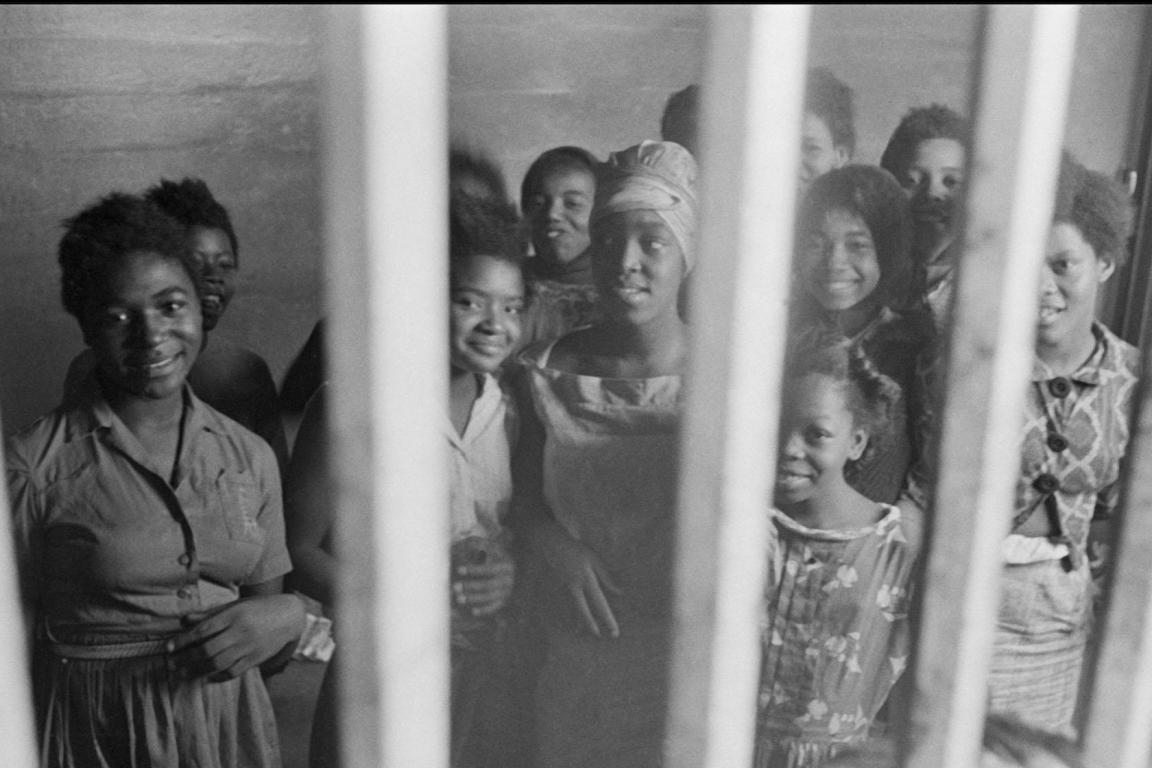
Acabo de leer una fascinante nota sobre un episodio que desconocía y que confirma la profundidad de la lucha por los derechos civiles en los Estados Unidos. Se trata de un escrito de Deborah Tulani Salahu-Din publicado en la página del National Museum of African American History and Culture. Titulado   «Hidden Herstory: The Leesburg Stockade Girls«, el trabajo de la Sra. Salahu-Din relata la historia de quince niñas afroamericanas de entre 12 y 15 años que, en julio de 1963 fueron encarceladas en Atlanta por retar la segragación racial. Las llamadas Leesburg Stockade Girls se negaron a sentarse en los asientos de la parte posterior de un cine, como les «correspondía» según ley, y por ello fueron arrestadas.  Encarceladas por casi tres meses, las niñas fueron liberadas el 15 de setiembre de 1963. La valentía de estas chicas demuestra que la lucha a favor de los derechos civiles fue un movimiento amplio en el que los niños también hicieron su aportación.


Hidden Herstory: The Leesburg Stockade Girls

Tulani Salahu-Din

I never fully realized the monumental role that massive numbers of children played in civil rights protests. Law enforcement arrested and jailed children by the thousands for days, and sometimes months, and their involvement helped to enable one of the greatest legal and social assaults on racism in the 20th century—the Civil Rights Act of 1964. The Leesburg Stockade Girls are an incredible example of these courageous, young freedom fighters.

You may ask, “Who were the Leesburg Stockade Girls?” In July of 1963 in Americus, Georgia, fifteen girls were jailed for challenging segregation laws. Ages 12 to 15, these girls had marched from Friendship Baptist Church to the Martin Theater on Forsyth Street. Instead of forming a line to enter from the back alley as was customary, the marchers attempted to purchase tickets at the front entrance. Law enforcement soon arrived and viciously attacked and arrested the girls. Never formally charged, they were jailed in squalid conditions for forty-five days in the Leesburg Stockade, a Civil War era structure situated in the back woods of Leesburg, Georgia. Only twenty miles away, parents had no knowledge of where authorities were holding their children. Nor were parents aware of their inhumane treatment.

A month into their confinement, Danny Lyon, a twenty-one year old photographer for the Student Non-violent Coordinating Committee (SNCC), learned of the girls’ whereabouts and sneaked onto the stockade grounds to take pictures of the girls through barred windows. After SNCC published the photos in its newspaper The Student Voice, African American newspapers across the country printed the story, and the girls’ ordeal soon gained national attention.On August 28, 1963, as Martin Luther King Jr. gave his historic “I Have a Dream” speech in Washington, DC,  these children sat in their cell bolstering their courage with freedom songs in solidarity with the thousands of marchers listening to Dr. King’s indelible speech on the National Mall. Soon after the March on Washington, during the same week of the bombing of the five little girls at Sixteenth Street Baptist Church on September 15, 1963, law enforcement released the Leesburg Stockade Girls and returned them to their families.

Their story was part of the broader Civil Rights effort that engaged children in a variety of nonviolent, direct actions. In Alabama, for example, thousands of youth participated in the 1963 Children’s Crusade, a controversial liberation tactic initiated by James Bevel of the Southern Christian Leadership Conference (SCLC) and led by Dr. Martin Luther King, Jr. After careful deliberation about the merit of involving children in street protests and allowing them to be jailed, Dr. King decided that their participation would revive the waning desegregation campaign and would appeal to the moral conscience of the nation.

On May 2, 1963, in response to an invitation from Dr. King, roughly a thousand students—elementary through high school—gathered enthusiastically at Sixteenth Street Baptist Church and joined a civil rights march throughout the streets of Birmingham. By day’s end, law enforcement had jailed over 600 children.

The next day the number of children doubled. However, the training classes provided by SCLC leaders could not have prepared the children for the violence they would encounter. The Commissioner of Public Safety Eugene “Bull” Connor directed the use of fire hoses and attack dogs on the children, and people in America and around the world witnessed this brutality. Authorities arrested nearly 2,000 children—one as young as four years old.  These protests continued throughout the first week of May, with over 5,000 children being jailed.

Within days, SCLC and local officials reached an agreement, in which the city agreed to repeal the segregation ordinance and release all jailed protestors.  Ultimately, the activism of thousands of African American children in 1963, including the Leesburg Stockade Girls, provided the momentum for the March on Washington and contributed to the passage of the Civil Rights Act the following year.

The history of children’s Civil Rights activism continues to be important to tell. The Leesburg Stockade Girls realize this importance, and they are documenting their story. In 2015, as the keynote speaker at a commemorative event for the Leesburg Stockade Girls at Georgia Southwestern State University, I engaged with ten of the surviving women, who shared recollections about the day of their arrest. Remarkably, these women still possess a collective spirit of resistance to social injustice, and they are beginning to embrace their place in history.

As we reflect on their story and the broader history of youth activism, let us consider:  How might children today play an equally significant role in promoting racial equality in the United States?
Written by Tulani Salahu-Din, Museum Specialist, National Museum of African American History and Culture.

Read Full Post »

La Editorial de la Universidad de Valencia acaba de publicar el libro de la colega Valeria L. Carbone, Una historia del movimiento negro estadounidense en la era post derechos civiles. La Dr. Carbone  (@Val_Carbone) es profesora en la Universidad de Buenos Aires y editora de la revista Huellas de Estados Unidos.

Comparto la descripción del libro que aparece en el portal de la editorial y felicito a su autora, pues su obra ayuda a llenar el vacio existente de trabajos monográficos en castellano sobre temas de historia estadounidense.


Una historia del movimiento negro estadounidense en la era post derechos civiles (1968-1988)La presente obra analiza la evolución de la lucha y la resistencia de los afro-norteamericanos a lo largo de las décadas de 1970 y 1980 desde una perspectiva que incorpora las categorías de racismo, raza y clase. Desde la centralidad de las elaboraciones discursivas e institucionales de las nociones de raza y racismo, así como desde el papel fundamental que ha adquirido la ideología de la supremacía de la raza blanca en el devenir histórico estadounidense, la población negra ha entendido su lucha desde la noción de raza como lugar de resistencia, lo que ha delimitado sus acciones a la hora de perfilar estrategias de lucha colectiva. El estudio de determinados movimientos significativos de cada región del territorio (centro-oeste, el sur profundo, noreste, este) evidencia cómo estos permiten establecer conexiones y continuidades en cuanto a problemas, tácticas y estrategias, formas de organización, retóricas discursivas y tipos de participación, que dieron forma a un complejo, heterogéneo y versátil proceso de incesante movilización nacional mediante el cual la comunidad negra desafió al racismo institucional estadounidense bajo las consignas de raza y clase.

Read Full Post »

Comparto este intetesante artículo sobre la criminalización de la música y los músicos afroamericanos. Su autora es la escritora Harmony Holiday, quien nos muestra como el racismo institucional de la sociedad estadounidense abarca básicamente todas las esferas, incluyendo la cultura popular. Holiday analiza como grandes estrellas de la música afroamericana como Billie Holiday, Thelonius Monk, Charles Mingus,  y Miles Davis sufrieron persecucióny violencia policiaca por ser negros. La imagen de Billie Holliday muriendo esposada a su cama de hospital resulta demoledora.  A otros como Abbey Licoln  se les cerraron las puertas a clubs y casas disqueras.


A Brief History of the Policing
of Black Music

Harmony Holiday Dreams of a Black Sound Unfettered
by White Desire

Harmony Holiday


Literary Hub     June 19, 2020

Billie Holiday died handcuffed to her hospital bed because her drug addiction had been criminalized. A Black FBI informant posed as a suitor, hunted her, fell in love with her even, and turned her in for heroin possession, not for hurting anyone, or violence, or for singing too beautiful and true a song but because she was self-medicating against the siege of being a famous Black woman in America, a woman who carried the weight of the nation’s entire soul in her music.

For as long as Black music has been popular, crossover, coveted by white listeners and dissected by white critics, it has also been criminalized by white police at all levels of law enforcement. A micro-archive of the criminalization of Black music and police presence within the music, focused on jazz music and improvised forms, shows why we now cry and chant unapologetically for abolition. Even when our life’s work is to bring more beauty into the world, to create new forms, we are brutalized, policed, jailed, and die in contractual or physical bondage. Or both.

Thelonius Monk’s composition In Walked Bud is dedicated to his friend, fellow pianist Bud Powell, a memento to the night when Bud protected Monk from police during a raid of the Savoy Ballroom in 1945. The Savoy was targeted as one of Black music’s epicenters in Harlem. Bud stepped between an officer and Monk and was struck in the head, incurring injuries that damaged his cognition, causing him to be institutionalized on and off for the rest of his life.

In 1951, Monk and Bud were sitting in a parked car when the NYPD narcotics division approached. Unbeknownst to Monk, Bud had a small stash of heroin and attempted to toss it out the window. It landed on Monk’s shoe instead—Monk was blamed, did not snitch on his friend, and was sent to Rikers Island for 60 days, held on $1,500 dollars bail. When released, Monk’s Cabaret Card, which granted him legal license to play in New York clubs, had been revoked. It would take years for the charges to be dropped and the license reinstated, years the Monk family and innovation in Black music suffered at the whims of the police. And the policing of Monk didn’t stop there.

In 1957, on a drive with Charlie Rouse and Nica, his rich white baroness friend, in Nica’s Bently, Monk asked to stop for a glass of water. Denied this simple request by the white waitress at the cafe they found, Monk just stood and stared at her, agape with disgust. The waitress called the police; when they arrived Monk walked right past them back into the car with Nica and Charlie. He would not get out when the police approached. Get out of the car you fucking nigger. Monk’s window was down and the officer started smashing his hands with a night stick: our genius Black pianist who gave us the break the space between Black thoughts and Black notes, getting his hands bashed and broken by police because he wanted a glass of water. Monk was cuffed, humming, his bloodied hands behind his back in chains.

Monk’s window was down and the officer started smashing his hands with a night stick: our genius Black pianist who gave us the break the space between Black thoughts and Black notes, getting his hands bashed and broken by police.

In 1959 Miles Davis was standing on the sidewalk outside of his own gig at Manhattan’s Birdland. He was with a white woman, smoking a cigarette between sets. A police officer pulled up and asked him what he was doing loitering—at that time a Black man just standing was criminalized, but especially one standing with a white woman. Miles pointed out his name on the marquee, explaining that he was between performances. This cavalier deference to the matter-of-fact seems to trigger the racism always-already seething in some cops.

Miles was beaten over the head with a nightstick, bloodied, cuffed, taken to jail. The incident was a legal nuisance and also altered his disposition, made him both more brooding and more volatile. In Miles’s case being policed in public life led to a rage he would only display in private, that he took out on his wives. His intimate relationships with Black women were overwhelmed by violence, he victimized them and beat into them deflected confessions of his feelings of powerlessness in the face of state violence. He could not be the father of “Cool” and a blatantly dejected Black man, so Black women became the symbols of a trouble he didn’t want to admit stemmed from white men, their policing, their scrutiny, and their over-familiar criticism.

Miles Davis in a New York courtroom, 1959.


Later in his life, when he lived in Malibu and drove expensive sports cars on its canyon roads, police would stop Miles routinely when he was on his way home, to interrogate him on the true owner of his car, had he stolen it, was he some white man’s driver, what was he doing in this white neighborhood with this expensive machine. Money, fame, all levels of success, were no exemption. Miles’s presence as a Black man was as policed by the state as his changing sound was by white music critics. Everyone wanted him as they saw him, in return he became so original that he could take his tone into almost any form, from painting to boxing, to screaming back at their prejudice on his horn, hexing detractors back into their formless obsessions with his immaculate Blackness.


Abbey Lincoln - It's Magic (1958, Vinyl) | Discogs


In 1961, when the “Freedom Now!” Suite debuted, written by Max Roach and Oscar Brown, Jr., performed most visibly by Abbey Lincoln as she moaned and screamed its depiction of the path Black Americans took from slavery to citizenship, the result was the blacklisting of Max, Abbey, and Oscar from many performance venues in the US. The hushed accusations that they were controversial for making true music policed their ability to share that music with American audiences. Abbey screaming on stage like a fugitive slave found and being branded and beaten was a vision the country was not ready to allow without backlash.

Club owners and record companies helped marginalize their music, interrupted the course of star-making, and tamed some of the candid militancy in all of their spirits. The state can police Black music directly, but it can also deploy its tacit muzzle, which is almost worse for the anxiety and psychic distress it invites. These artists knew they were being surveilled and penalized for their expression but had no single name or entity to hold accountable, ensuring that some part of them blamed themselves and one another. Oscar Brown, Jr. even expressed resentment toward Max Roach for performing and releasing the suite at all, turning his reputation from benign griot to troublemaker in the eyes of the overseer owners of venues.

The fact that record companies and clubs and recording studios are owned primarily by white men adds another trapdoor to the labyrinth that polices Black music at every level. The boundaries between rehearsal and performance are skewed—with white men always watching and keeping time and signing the paychecks, the code switch isn’t flipped as often as it otherwise would be. There is always a stilted professionalism constraining the freest Black music when it’s recorded in white-owned studios or clubs—the music is not completely ours in those spaces. No matter how good we get at tuning out the white gaze its pressure is always immanent.

Hip hop’s most famous liberation chant is fuck the police. It’s been repeated so often it means almost nothing, it’s almost a call of endearment…

We feel this today in the music that jazz helped make way for. Hip hop, which began in Black neighborhoods as entirely ours, was colonized and coopted and policed into a popular form whose translation to white venues often reduces the music to sound and fury. What is the point of yelling about Black liberation to a bunch of white middle class college students, or at festivals where Black people aren’t even really comfortable or in attendance? What is the point of producing all this music to make white record executives richer and give them what they believe is a hood pass to obsess over and imitate Black forms.

Jazz begat hip hop, and we learned that our most militant sound was also our most commodifiable. The militancy was quickly overshadowed by criminalization, open-secret wars between Black rappers, public awareness of their rap sheets, of the personal business, all of that given to listeners who felt entitled, still do. Criminality became the vogue and Black criminality a fetish within hip hop, the parading of the rap sheet increasing desirability among white audiences who conflated crime with authenticity and realness, trouble glamorized and traded for clout. (When jazz musicians were criminalized it was more devastating, costing them their right to play.)

Prison and bondage have been effectively woven into Black acoustic consciousness. Policing and the police have become the most familiar chorus. Hip hop’s most famous liberation chant is fuck the police. It’s been repeated so often it means almost nothing, it’s almost a call of endearment, a calling forth of the police, a fuck you to them that implies they are omnipresent and within earshot all the time, ready to strike out against any Black song or singer who threatens their lurking fixation on Black life and Black sound.

As the musicians are policed and incriminated so too are their forms, so too is that thought that leads to new Black musical temperaments. Musicians who seek to remain true to themselves often self-marginalize, police their own public presence, reject fame and affiliation in order to keep from being ruined by it or policed into oblivion from the outside—and so fewer Black people hear them. Even still, the police ambush these private sects, asking why they’re at their gig or in response to a noise complaint, escalating to yet another incident, always haunting their music with some threat of captivity.

Presents Charles Mingus - Jazz Messengers

In the late 1960s jazz bassist Charles Mingus tried to open a jazz school in Harlem. He wanted a Black-owned and Black-run place, outside of the university, the studios, and clubs all owned by whites, to teach and develop the music. The city of New York kicked him out of the space, not for any real legal issues but because his wish was a threat to their embedded policing. They removed all of his belongings and arrested him, he cried in the back of the cop car as sheets of his music were left on the street to be swept away by the wind. No such school has been attempted since and Black music is developed and studied in heavily policed white westernized institutions or not at all.

My own father, a Black musician, was getting arrested the last time I saw him. He went to jail, he died. He had spent his life as a kind of warrior: he carried guns, he was the quickest draw anywhere, he mangled studio engineers or lawyers he felt were trying to rip him off, he could not read, had never been taught that skill, but he could kill if he had to. He was avenging something all the time, his vengeance was finally policed and criminalized, never rehabilitated in any more tender way, just returned as bondage. He sang songs in jail, entertained his jailers with stories and songs. I’m still avenging him. I’m still imagining his alter-destiny in a world where his very existence had not been criminalized.

In his story, “Will the Circle Be Unbroken,” Henry Dumas, who himself was killed by police, invents a Blacks-only jazz club set in Harlem and an “afro-horn” that if heard by white people kills them. A group of white hipsters comes to the club one night, name drops, begs for entrance, and when they are denied repeatedly, they call on a police officer who forces the bouncer to let them in. They enter and start to absorb the music and before the first song is over they are dead, the frequency kills them. They were warned.

I dream of a Black music, a Black sound, free of the shackles of the white gaze, impossible for police to attack or scrutinize, ineffable to those forces, free even of white desire. Unbroken, lethal to detractors, wherein we can hear our unobstructed selves and get closer to them in other spheres of life, where the pleasure we derive from our music isn’t always fugitive, in escape from those forces that police it, and escaping us to reach or appease white audiences and white modes of consumption. I dream of the notes that only we can hear recovered, the ones multi-instrumentalist Rahsaan Roland Kirk called the missing Black notes that have been stolen and captured for years and years and years.

Harmony Holiday is a poet, dancer, archivist, mythscientist and the author of Negro League Baseball (Fence, 2011), Go Find Your Father/ A Famous Blues (Ricochet 2014) and Hollywood Forever (Fence, 2015). She was the winner of the 2013 Ruth Lily Fellowship and she curates the Afrosonics archive, a collection of rare and out-of print-lps highlighting work that joins jazz and literature through collective improvisation.

Read Full Post »
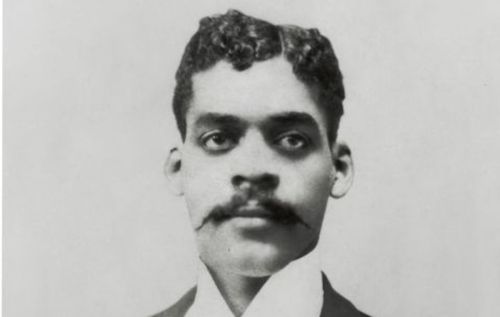
Arturo Alfonso Schomburg, quien podría ser considerado el padre de los Afro-American Studies, nació en Santurce, Puerto Rico, en enero de 1874. Como muchas otras grandes figuras de la historia puertorriqueña, Schomburg es un desconocido para la mayoría de sus compatriotas. Por el contrario, en Estados Unidos se le honra y recuerda con devoción por su gran aportación a la comunidad afro-estadounidense. Comparto con mis lectores esta reseña crítica del libro de Vanessa K. Valdés Diasporic Bkackness: The Life and Times of Arturo Alfonso Schomburg (SUNY Press 2017). Escrita por Regina Mills, esta reseña fue publicada en la excelente bitacora Black Perspectives de  la African American Intellectual History Society (AAIHS).

Vanessa K. Valdés es directora del Black Studies Program del City College of New York-CUNY. Regina Mills es profesora el Departamento de Inglés de la Texas A&M University.

Schomburg

Arturo Alfonso Schomburg

Arturo Schomburg in Mind, Body, and Spirit

Vanessa K. Valdés

Black Perspectives  February 19, 2019

Arturo Alfonso Schomburg, known to many by his anglicized name Arthur A. Schomburg, is no stranger to most African American and diaspora studies scholars. The impressive collection that he donated to the New York Public Library has formed the foundation of much of the scholarship in the field. However, until very recently, scholarly research on Schomburg himself has been sparse. For this reason, I welcome Vanessa K. Valdés’s study of this foundational figure. Valdes’s Diasporic Blackness: The Life and Times of Arturo Alfonso Schomburg (2017) is the premier work for any scholar seeking more information on Schomburg’s multiple roles as an independentista, collector, and writer.

The book is framed as a biography, promising to educate the reader on Schomburg’s life and the contemporary events that shaped his intellectual journey. Valdés offers a comprehensive view by framing the work around the five facets of Schomburg’s identity and influence. In the first chapter, she contextualizes the Antillean independence movement, focusing especially on the Puerto Rican and Cuban figures that make up Schomburg’s “intellectual genealogy” (27). Across the remaining chapters, she presents Schomburg as institution builder, writer/historian, archivist, and portrait subject. Valdés’s project is strongly archival, pulling not only from the Schomburg Center for Research in Black Culture (SCRBC) but from scrapbooks, letters, and photographs held by Fisk, Columbia, Yale, and Hunter College (el Centro).

The introduction lays out Valdés’s primary concern: how Schomburg illuminates “definitions of blackness, masculinity, citizenship, and nation” and how his engagement “with these multiple discourses throughout his life, and his interpretation of said notions offers an assessment of Afro-Latinx subjectivity in the late nineteenth and early twentieth centuries in the United States and its commonwealth, Puerto Rico” (3). Like many Afro-Latinx Studies scholars, she often describes Schomburg using “bridge” language, viewing him as “a link” and “a conduit” (5) in the circles in which he traveled, continuing a common trope of the Afro-Latinx figure as a bridge between Black and Latinx communities. However, her analysis often goes beyond this figuration, particularly due to her thorough analysis of Schomburg’s representation and performance of Afro-Puerto Rican masculinity. Schomburg is never just a symbol; he is a fully embodied subject.

This first chapter is largely one of historical context and biography, focused on those who came before Schomburg rather than Schomburg himself. This chapter dispels the common charge in Schomburg’s time, and even in our own, that he abandoned his Puerto Rican roots and assimilated into the US Black community. Valdés’s attention to the impact of Haitian independence on the Hispanic Caribbean is particularly welcome, as it situates the influence of Black liberation and anti-blackness in the social and political history of Puerto Rico and Cuba. For example, in her reading of Salvador Brau’s tribute to Rafael Cordero, who started the first school open to students of all colors and backgrounds in Puerto Rico, she details how Brau represents Cordero in opposition to Haitian blackness, invoking a politics of respectability (48). By convincing the reader of Brau’s influence on Schomburg, we see how Brau’s own problematic ideas about race influenced Schomburg’s collecting and writing. In addition to Brau, she argues that five other Puerto Rican and Cuban intellectuals shaped Schomburg’s Afro-Latinx subjectivity: from Ramón Emeterio Betances he learned of Afro-Puerto Rican resistance, from Eugenio María de Hostos educational philosophy, and from Lola Rodríguez de Tío, Rafael Serra y Montalvo and José Martí he came to value pan-Caribbean activism.

The second and fourth chapters focus primarily on his institution building through organizations and the archive.They, however, are the weakest of the chapters, as they often read more as literature reviews rather than her own findings. Chapter Two’s focus on the organizations in which Schomburg held important leadership positions—the Prince Hall Masons and two Black historical associations—adds little new information to those topics. Chapter Four focuses on Schomburg as an archivist and his views on archival access and dissemination of knowledge. Valdés sets Schomburg up as a different kind of historian from Salvador Brau. She sees Brau’s motivation as “firmly establishing Puerto Rico as an inheritor of Spanish cultural values” and Schomburg’s as outside of the nationalist framework, focused instead on “collective histories of peoples of African descent” (96). However, this argument could be further developed by accessing a broader source base. For example, I was very interested in her section on his impact on the development of Fisk’s Negro Collection, since that topic has received less attention than the SCRBC, but she provides only two pages on this section. Overall, there is more focus on the theory of archive-building and other scholars’ views on archives than on Schomburg’s own philosophy of the archive, something that might have been thoroughly developed through analysis of his letters or other sources.

In Chapter Three, Valdés focuses on Schomburg’s published essays, which “broaden the parameters of his audience’s conceptions of blackness so as to include the Spanish-speaking populations of African descent” (72). She makes the case that “Schomburg’s historical articles,” though written primarily in English, should be viewed as crónicas, a Latin American genre of vignettes often written for periodicals, following closely Susana Rotker’s definition in La invención de la crónica (1992). Valdés makes a good case, since the genre is known for its skepticism of ‘objectivity,’ a perfect format in which to question the so-called logic of white supremacy. Valdés’s invocation of the crónica in many ways parallels Claudia Milian’s use of that genre, in her 2013 study Latining America, as a lens through which to consider Langston Hughes’s and James Weldon Johnson’s writing in and on Latin America. Valdés’s chapter does not provide a thorough literary analysis, per se, of his works, which is unfortunate since at the beginning of the chapter Valdés emphasizes Rotker’s argument that the crónica is a genre at “the juncture between the literary and the journalistic” (73). However, Valdés succeeds in introducing the reader to “representative pieces that reveal not only [Schomburg’s] dedication and commitment to the acknowledgment of Afro-Latinx contributions to the hemisphere but that also highlight the complexities of Afro-Latinx subjectivity” (72). In particular, she provides detailed and helpful historical context for the reader, so they can better appreciate, for example, Schomburg’s 1912 article in Crisis entitled “General Evaristo Estenoz,” written in the middle of what would be known as the Race War of 1912 in Cuba.

screen-shot-2018-04-21-at-4-35-38-pm

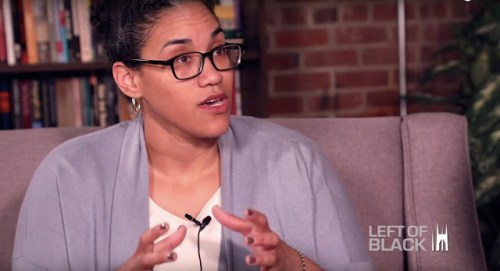
Vanessa K. Valdés

Valdés’s strongest intervention is her analysis of photographs and portraits of Schomburg. Largely ignored in previous works, Valdés’s close reading of a commonly circulated photo immediately grabs the reader’s attention. This examination of his engagement, and especially his resistance, to photography is powerful because it focuses on Schomburg’s agency over his body. Valdés’s emphasis on Schomburg’s embodied existence is apparent throughout the book and provides readers an image of the man as more than just a disembodied mind, an image that may have contributed to the erasure of his complex identity. In Chapter Two, she even imagines Schomburg’s sonic impact, asking how his voice, which may have “carried an accent conveying a youth spent in the Caribbean, one that was accustomed to speaking Spanish fluently” could have impacted the diverse audiences in which he held space (56). By examining the photographic representation of Schomburg as an Afro-Puerto Rican man, taking up space across a variety of communities, most of which were uncomfortable with his ambiguity, Valdés gives us a new way to see Schomburg. While much of his writing fits a particular kind of respectability politics, focusing on Black excellence rather than the ordinary humanity of blackness, Valdés’s analysis of Schomburg’s embodied choices depicts his defiance and Antillean revolutionary spirit.

At a relatively slim 138 pages (with 26 pages of endnotes), this book provides an excellent introduction to students and scholars seeking an accessible portrait of Arturo Schomburg. Not only does Valdés craft a compelling biography, she fully contextualizes his life and the transnational circumstances that most impacted his intellectual development. Most previous works view Schomburg through a US-centric lens, placing him as a Harlem Renaissance figure who forsook Puerto Rico. Diasporic Blackness, however, restores Schomburg’s Puerto Rican upbringing and his connection to African diasporic communities in the Caribbean and US. For those seeking an extended depiction of Schomburg’s diasporic identity, Valdés’s study can be placed alongside Flor Piñiero de Rivera’s 1992 collection of his writings and Elinor Des Verney Sinnette’s 1990 biography.

Though the above critiques suggest that Schomburg’s life and work demand further explorations, Valdés’s book is a necessary addition to the previous literature. It will be, without a doubt, the book recommended to curious community members who see Schomburg’s portrait on the wall of the SCRBC, or a graduate student who wants to know more about this iconic figure. Future researchers can build on the work of Diasporic Blackness by discussing the literary value of Schomburg’s writing, providing a fuller account of his impact on the archives at Fisk University, and examining Schomburg as a theorist of the archive.

Read Full Post »

« Newer Posts