Feeds:
Entradas
Comentarios

Saturday Night Massacre

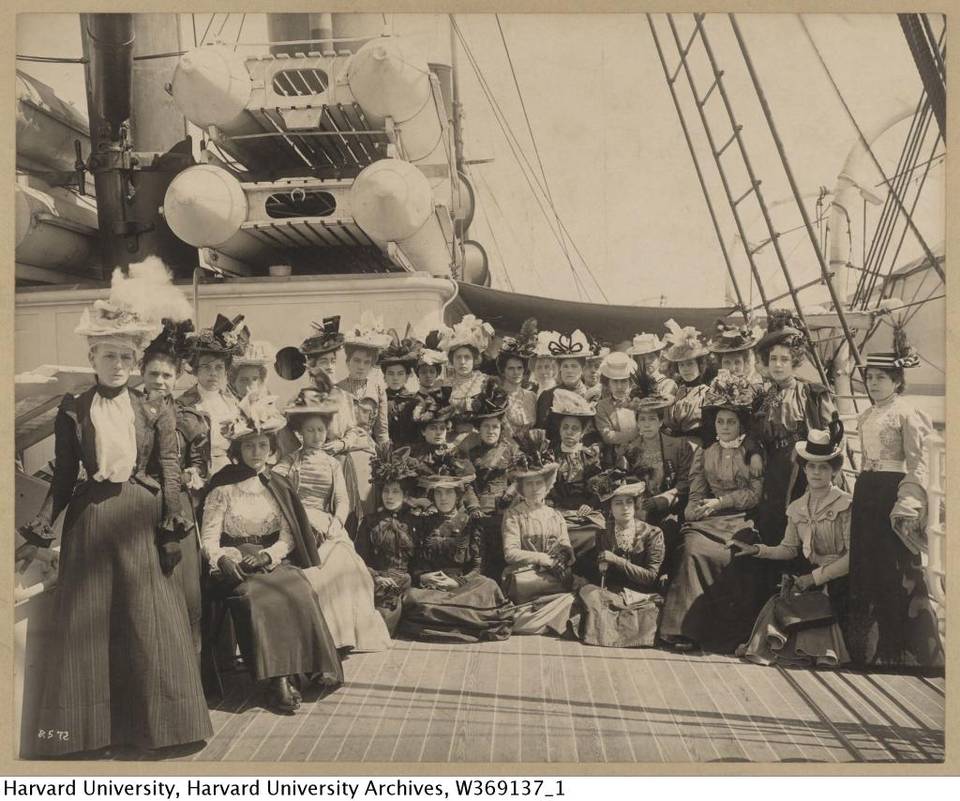
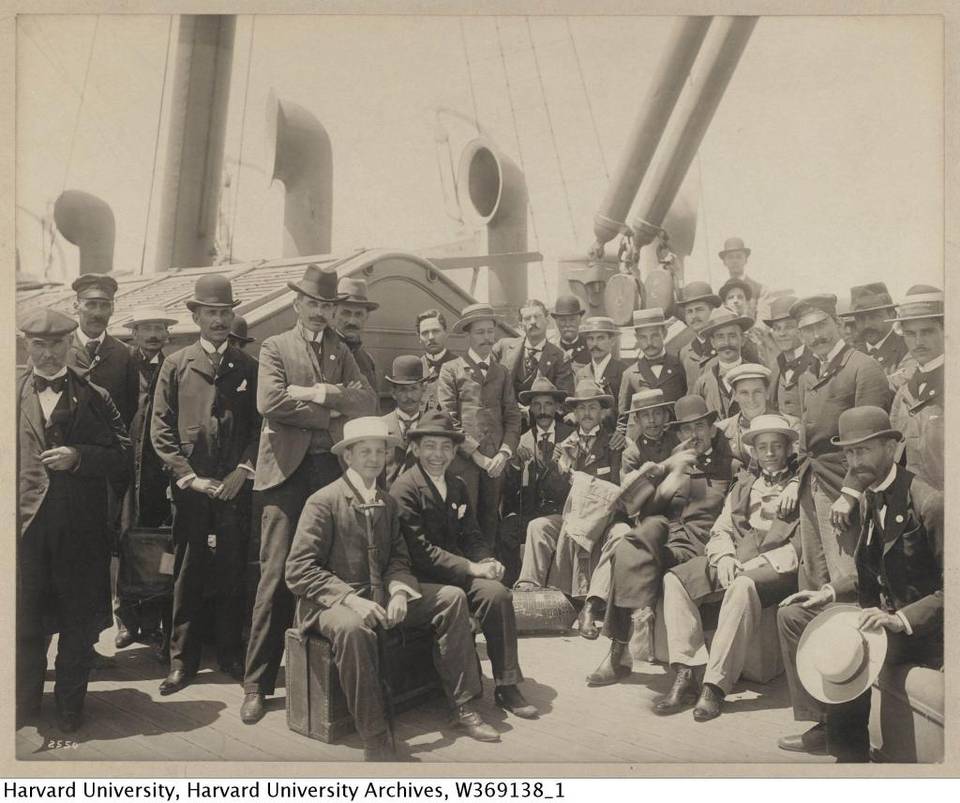
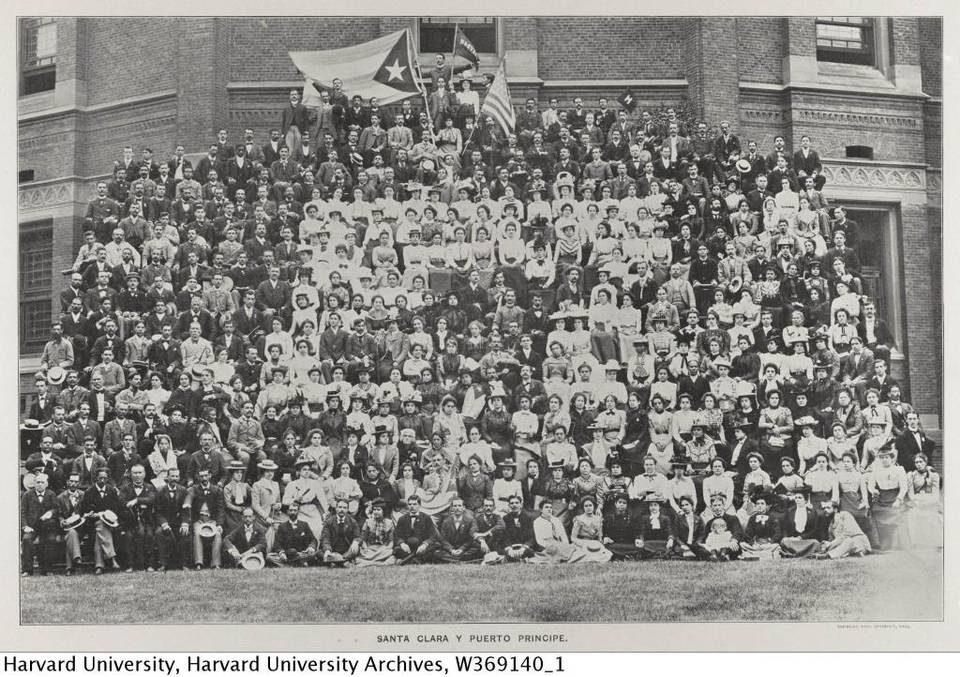
Maestros cubanos en Harvard, una historia a rescatar

Muhammad Ali and the Supreme Court Case that Redefined the Role of Sports Heroes in American Culture: Part 1

HNN    October 4, 2015

Over 40 years have passed since the Supreme Court of the United States decided the case of Clay, aka Ali, v. United States, which was argued before the Supreme Court Justices on April 19, 1971. On June 28th of the same year, the High Court ruled in favor of the petitioner Muhammad Ali (born Cassius Marcellus Clay Jr.), the boxing heavyweight champion of the world, who was stripped of his title by various boxing commissions when he refused to be inducted into the U.S. Army. Ali claimed exemption due to the fact that he was a Nation of Islam (also known as the Black Muslims) minister. The fact that he did so when the U.S. was involved in a war — Vietnam — angered many people.

The idea that sports stars in the U.S. were infallible athletic gods walking among us mere mortals was always disputed by some and with good reason. Ty Cobb, according to many accounts, was a virulent racist and Babe Ruth spent most of his adult life in an alcoholic stupor. For decades, beer companies supplied free samples of their beverage to National Hockey League (NHL) players and beer is not the ideal beverage if one is a professional athlete. Before the days of million dollar contracts, the beer companies employed these same athletes as salesmen during their off-season free time. The Molson Brewing Company once owned the Montreal Canadiens. Since World War Two, the National Football League (NFL) team owners have had to deal with the fact that gambling on NFL games happens and in the long history of the league, occasionally NFL players have been found guilty of betting on their own team. Regarding gambling, Major League Baseball (MLB)’s all-time hit accumulator, Pete Rose, received a life-time ban on participating in the sport when he admitted to betting on baseball games. For much of American boxing history, the sport was controlled by mobsters, who made sure that the outcome of bouts was fixed beforehand.

Yet what Muhammad Ali stood for somehow superseded all of the above. He was a 6’4,” 235 pound bombastic personality named after the 19th century abolitionist and anti-slavery newspaper editor, Cassius Clay. His father, Cassius Marcellus Clay Sr., was a talented artist and sign painter who was proud of his black lineage. Odessa Clay, Ali’s mother, was born of mixed blood and was part Irish — and so, of course, is her famous son. Born a Christian, Clay converted to the Black Muslim faith 24 hours after he won the heavyweight championship of the world in 1964. At first he told reporters that he wanted to be known as Cassius X, but then amended that to the name of Muhammad Ali. He began boxing at the age of 12, won the 1960 Olympic Light Heavyweight gold medal, and did not retire from the sport until he was badly beaten by Trevor Berbick in a December, 1981 match held in the Bahamas. Until Parkinson’s Syndrome had begun to stop his speech (he actually began to shown early signs of the disease at the time of the Berbick fight), Ali was always talkative and displayed a colorful and outgoing personality.

So during the 1960’s, here came a brash, young (he was only 22 when he won the heavyweight title), prolix man on the world stage. The fact that he publicly renounced Christianity, and took up the Nation of Islam religion (in 1975, he would convert to Sunni Islam) at a time when the American power structure (legislative; judicial; presidential; media and press; corporate; military) was run either by Christians or Jews baffled Americans. At the press conference where Ali made his announcement that he was a member of the Nation of Islam, he famously said, “I don’t have to be what you want me to be. I’m free to be what I want.” Influential newspaper sports columnists Jimmy Cannon and Red Smith belittled Ali in their columns.

The day after Ali returned from a trip to New York with his then good friend Malcolm X (Ali would later stop following Malcom X’s beliefs and devote himself to Black Muslim founder Elijah Muhammad’s tenets) at a Muslin rally, he “received a notice to report to the Armed Forces Induction center in Coral Gables, Florida to take a military qualifying examination,” wrote Howard L. Bingham and Max Wallace in their book, published in 2000, entitled Muhammad Ali’s Greatest Fight: Clay v. The United States of America. Bingham was Ali’s long-time personal confidante and personal photographer. Later, on March 20, 1964, Ali’s military aptitude test results were made public. He failed the test, and especially had trouble with the mathematical questions on the test.

For once, the talkative Ali (who had barely graduated from the public high school that he attended in his native Louisville, Kentucky) was quiet; frankly, he was embarrassed by the disclosure that he flunked the test. “I said that I was The Greatest [a title he bestowed on himself previously], not The Smartest. When I looked at a lot of them questions, I just didn’t know the answers. I didn’t even know how to start about finding the answers,” confessed Ali.

All of this took place during the time of the civil rights movement for blacks and also the American military build-up in Vietnam. Both of these events created emotional turmoil for Americans, so Ali’s growing discovery of his true self (i.e., his religious conversion, and his inchoate reflections about the world), which he was always glad to share with reporters and audiences, made for yet another spicy ingredient in the American societal stew.

Federal Bureau of Investigation (FBI) Director J. Edgar Hoover, U.S. Senators, and others in the 1960’s federal government power structure refused to believe that Ali failed his military aptitude test. When the FBI began an investigation they found that Ali was at best a sub-par high school student. For some months Ali himself believed that all of this meant that he was stupid, but his former high school teachers, reporters, and others who knew him well have noted that he was a highly intelligent person. The military aptitude test was as flawed as the standard IQ test. Author Norman Mailer (who attended Harvard, and was certainly no mental midget) knew Ali well and told of Ali being wise and intelligent on a number of subjects. After Ali’s retirement from boxing, he acted as a Goodwill Ambassador. He knew numerous world leaders well, ranging from Cuba’s Fidel Castor to South Africa’s Nelson Mandela. He personally designed many of the buildings at his personal; boxing training camp. Citizens, irate that Ali was preparing himself not to be drafted, wrote letters to President Lyndon B. Johnson asking him to do something about the situation.

A lesson that professional athletes learned from Ali is that, thanks to a progression in communications, they can voice their comments and ideas on any topic in the world and they will be known throughout the world. Furthermore, the more famous and talented the athlete, the more people will somehow react when he or she voices said comments and ideas. Thanks to a boom in satellite technology, and also other media and press technology, which began in the 1960’s, Muhammad Ali became the world’s first truly international sports star. People from Atlanta to Zanzibar could see Ali daily in television news reports and also watch his boxing matches. Ali became a hero to other famous black American athletes of the 1960’s (most notably football’s Jim Brown and basketball’s Lew Alcindor, who would become known as Abdul-Jabbar). They saw that — contrary to notable American black athletes of the past — they were free to offer their opinions on anything they wanted. Both Brown and Abdul-Jabbar also took note that Ali spent much of his free time doing charity work and also kept busy with other altruistic activities and so Brown and Abdul-Jabbar began to do so as well.

In April of 1964 Ali went on a tour of numerous countries in Africa. The tour was scheduled previous to his military draft imbroglio. Tens of thousands of Africans came out from their homes, shops, and places of work to see and hear the boxing heavyweight champion of the world. By a strange twist of fate, Ali just happened to notice Malcolm X, from a distance, walking in a city square in Ghana. He did not attempt to get Malcolm X’s attention for by this time, Ali and Malcolm X’s friendship was null and void. Ali had decided to follow the beliefs and tenets of Nation of Islam founder Elijah Muhammad rather than those of Malcolm X. As Ali was preparing to defend his heavyweight title against Liston in a 1965 rematch (which Ali would win by a knock out in the first round), Malcolm X was publicly predicting to CBS-TV’s Mike Wallace and other reporters that he, Malcolm X, would be assassinated due to his conflicts with Elijah Muhammad. In 1965 he was, and ever since Ali had feelings of remorse about his and Malcolm X’s failed friendship. After Malcolm X’s murder, five FBI agents were assigned to bodyguard Ali.

Numerous polls taken during this time period of the mid-1960’s show that the majority of Americans supported the U.S. military activities in Vietnam but, ever so slowly, this was beginning to change. President Johnson announced that 17,500 more men would be drafted and additionally, he ordered another 50,000 more troops be assigned to Vietnam. In November, the Pentagon issued a directive in which any person who took a military induction test and had a recorded score of 15 could be eligible to be drafted. As Ali’s score was 16, this now meant that, by the unit of measurement of a sole point, he could now be drafted. Numerous prominent athletes of the 1960’s served in the military. The most notable was Roger Staubach, who won the 1963 Heisman Trophy after successfully quarterbacking the U.S. Naval Academy to a winning season. So Ali’s upcoming refusal to be drafted was something that U.S. citizens, of all creeds, races, and religions, were thinking about.

This simple fact — that a prominent athlete was by his conduct outside of his work place (in Ali’s case, a boxing ring) — virtually forcing a country’s people to confront a major issue of enormous controversy — was, and still is, quite rare. Ali was, in essence, defying the federal government and the military during a war.


Mark Weisenmiller is a Florida-based author/historian/reporter. Previous employers include United Press International (UPI); Deutsche Presse Agentur (DPA); Inter Press Service (IPS); The Economist, and the Xinhua News Agency (XNA). He is currently at work on a non-fiction book of reportage about China, which will be the second in a planned series of non-fiction books of reportage about the countries and regions of the world.

Muhammad Ali and the Supreme Court Case that Redefined the Role of Sports Heroes in American Culture: Part 2 

HNN   October 11, 2015

Muhammad Ali was boxing heavyweight champion of the world for much of the 1960’s. During this decade he was admired internationally, but not in his native country of the United States. Chief reason for this was his vocal opposition to serving in the U.S. Army, or any other branch of the military which, as fate would have it, was the same time period as the U.S. military intervention into Vietnam.

Ali was controversial ever since becoming famous. This applies to both his boxing style (in which he moved away from his opponent’s punches and also specialized in moving laterally, rather than the conventional method of moving toward an opponent’s punches and vertically) and also his behavior outside the ring (such as his proclamation that he was renouncing Christianity and his given name and was joining the National of Islam). Looking to Ali as an example, more and more athletes the world over, and especially American black athletes, began to become influential members of society. No longer would athletes be silent automatons mindlessly providing sports entertainment.

While in Miami in 1966 awaiting word from his draft board when to report for induction, Ali was told by a news wire reporter that he was eligible for the draft. Not long afterwards, many television news reporters arrived in their television station trucks, parked outside of Ali’s home, and began annoyingly asking for him to step outside and make a statement. What happened next was, and still is, unclear. For we reporters who have covered stories in which numerous reporters place numerous microphones in front of an interviewer and ask him or her to speak, we know that, despite technological advances, something can be said and not fully understood. This now happened with Ali. Reporters were asking him many questions and he clearly began to lose his temper. After he was asked the question “What do you think of the Viet Cong ?” many reporters quoted him as saying “I ain’t got no quarrel with them Viet Cong.” However Robert Lipsyte of the New York Times and some other reporters who were present noted that Ali answered with “I ain’t got nothing against them Viet Cong.” In either case, whatever Ali said began a series of social and politically vindictive attacks.

Here we have another first, in this two-part story, that resonates with today’s times. If the reader is a professional athlete, the lesson is the following: Be careful and deliberate what you say in public and furthermore, be honest and sincere in said speech. With the gift now of hindsight, we now know that Ali did not do the first, but did the second. Also, whatever one’s opinion of Ali and his refusal to be drafted, one cannot deny Ali’s courage in standing up for his religious convictions. It would have been very, very easy for him to simply move to Canada to live and avoid the draft (as thousands of men did) — and thus be able to obtain boxing licenses in other countries and to fight for millions of dollars — but as Ali often said, “The United States is my home country. I don’t run away from home.”

Something else needs to be recorded here, even though the following is slightly off our narrative: many Americans — such as liberals, Democrats, and especially hippies — took up Ali’s cause with gusto, but Ali frequently did not reciprocate their feelings. For example, the piously religious Ali (he has never smoked or drunk a drop of alcohol in his life, and, as per Muslim custom, he avoids all pork products and prays five times daily) was repulsed by the hippies’ fondness for recreational alcohol and drugs. Even though Ali is now quite aware that due to his Parkinson’s Disease he must take medications, he still, after all of these years, dislikes taking these medications and also putting any sort of chemicals into his body. Many “long-hairs” (to use a popular word of the 1960’s and 1970’s) spent much of their time doing the polar opposite. Ali strongly disliked long hair on men and scorned men who burned their draft cards. Even when he spoke before audiences composed mostly of young people, he was always well groomed (he has always been narcissistic about his appearance) and wore a well-cut suit and matching tie.

After Ali heard black leader Stokely Carmichael say “ain’t no Viet cong ever called me nigger,” Ali borrowed this saying and modified it for himself to be “No Viet Cong ever called me nigger.” The Illinois Athletic Commission (which issued boxing licenses in that state) ordered Ali to appear before them and publicly apologize for his anti-war remarks. Usually Ali avoided such orders, but this time he did appear before the commission and publicly refused to apologize.

Thus another lesson to be learned from this complicated story. To wit: if a sports commission tries to mandate how an athlete conducts their personal life, the commission is likely to face criticism.

In February of 1966, Ali’s attorneys filed their famous client’s first request for military draft exemption status. The exemption was mostly based on finite, picky legal grounds. However three weeks later, in mid March, the lawyers adopted a new legal tactic. They argued that since Ali was a minister of the Nation of Islam, and since as per the Holy Koran, pious Muslims could only fight in holy wars, Ali should be exempted from the legal draft. To many Americans, this latter legal tactic sounded dubious. How, they wondered, could Ali proclaim that his religious belief in international brotherhood and peace made him exempt from the military draft when he beat people up for a living? This particular draft exemption was denied, and then his team of lawyers filed an appeal. However as per federal law, before the appeal could be heard (before ae state appeal board), the U.S. Justice Department had to review the case and decide whether or not Ali was sincere in his beliefs. A retired judge named Lawrence Grauman heard the case.

Ali’s fate rested in this judge’s hands. To most people’s surprise, but not to Ali himself, Grauman ruled in Ali’s behalf. “I recommend that the registrant’s claim for conscientious objector status be sustained,” wrote Grauman. Despite the ruling, the federal government pressed onward, ordering Ali to report for military induction in Houston, where he had moved to lead a mosque.

On April 28, 1967, Ali went. When an Army officer said, “Mr. Cassius Clay, you will please step forward and be inducted into the United States Army,” Ali refused to do so. “Furthermore, Ali faced imprisonment for his action and was barred from boxing while his case was litigated. He called himself ‘The People’s Champion’ and continued to be recognized as the world heavyweight title holder in Great Britain and Japan,” reads a paragraph of Ali’s biography in the 1999 reference book, The Boxing Register International Boxing Hall of Fame Official Record Book.

From this time, the late 1960’s to today, athletes would no longer mindlessly do what their bosses, and other well-established institutions (military, political, religious, etc.) told them to do if they disagreed. Atop that, if these athletes refused to do so, they would try to make their points in the courts. Major League Baseball St. Louis Cardinals star outfielder Curt Flood’s case to the U.S. Supreme Court (which he would lose) proclaiming that the reserve clause in baseball is illegal is but one example.

From this point onwards, Muhammad Ali was considered a pariah to millions of Americans. Denied a right to make a living in his home country, he did all sorts of things: spoke for fees on college campuses, starred in a Broadway musical titled “Buck White” (where he surprised all by displaying a very melodic and pleasant singing voice), and doing pro-bono work for charities. He continued to make his case to anybody who cared to listen. The day of the quiet, taciturn sports star was over. Singer-songwriter Paul Simon neatly captured frustrated Americans views about pushy athletes with the line, “Where have you gone Joe DiMaggio? Our nation turns its lonely eyes to you” in the 1968 song “Mrs. Robinson.”

Ali’s case wound its way upwards through the judicial system all the way to the Supreme Court of the United States after the Fifth Circuit confirmed his June 20, 1967 conviction (on a felony charge of refusing to be drafted). He remained free on appeal. From March 1967 to October 1970, due to his military draft problems, he was inactive in boxing. The case got to the Supreme Court in January of 1971 and Justice William Brennan convinced his colleagues to grant certiorari (approval to hear the case). As Justice Thurgood Marshall had been Solicitor General when Ali was originally convicted, he recused himself. (Another reason he did so, known to his colleagues and their respective law clerks but less well-known to the general public, was that he despised the Black Muslims.)

In their 1971 book The Brethren: Inside The Supreme Court, Scott Armstrong and Bob Woodward write that “On Friday, April 23… the [Supreme Court Justices’] conference decided, 5 to 3, that it agreed with [Solicitor General Erwin N.] Griswold. Ali was not really a conscientious objector and should go to jail.” Yet Ali didn’t. This was thanks to Justices John Harlan and Potter Stewart (though Ali didn’t learn this for years).

Harlan was assigned to write the majority opinion by Chief Justice Warren Burger, but before he did so, Harlan (who had served in the military during World War II) read the Nation of Islam treatise book, Message To The Black Man in America, at the suggestion of his law clerks. In it was stated that Black Muslims could fight holy wars, but the fact that Ali obviously disapproved of ALL wars convinced Harlan to change his vote. This now dead-locked the Justices vote at four for conviction and four for Ali’s freedom. If the court stayed deadlocked Ali would go to jail, but as it is long tradition that deadlocked cases do not come with written legal opinions by Supreme Court Justices, Ali would never know why he lost the case and never would really know why he went to jail.

Justice Stewart came up with a solution: he and his law clerks discovered that a state appeals board gave no reason for the denial of Ali’s conscientious objector status. With this in mind, and also considering that there are three legal grounds a claimant must meet for conscientious objector status, it would therefore be impossible to determine on which of the three legal grounds the U.S. Department of Justice decided to proceed with its case against Ali. Therefore, went this legal argument, Ali should go free. In a unanimous 8-0 decision, that is the legal conclusion that the eight Supreme Court Justices came to.

Ali heard the news that he had won when he was shopping in a grocery store in Chicago and a grocery clerk came over and hugged him and told him the news. Ali then thanked Allah and the Supreme Court, in that order, then immediately went to a South Side gym to work out.

Angelo Dundee, Ali’s life-long boxing trainer, was interviewed many times by this reporter and, when reflecting on Ali’s career, told me, “We never saw Muhammad Ali at his peak. He was out of the ring for three and a half years and those three and a half years [in Ali’s case, when he was just short of age 25 to the age of 28] are primary years for most boxers. Who knows what he could have done?” Herewith our final lesson: whenever a prominent athlete takes issue with a government agency — or worse, as in Ali’s case, the federal government and the military — he or she will somehow, someway be punished—even if the punishment isn’t just.

SOURCES FOR THIS TWO-PART STORY

Websites: www.aavw.orgwww.oyez.orgwww.scotus.comwww.hbo.com.

Books: “Muhammad Ali’s Greatest Fight: Clay v. The United States of America” by Howard L. Bingham and Max Wallace; “The Boxing Register International Boxing Hall of Fame Official Record Book, 1999 Edition”; “The Brethren: Inside The Supreme Court” by Scott Armstrong and Bob Woodward; “The Muhammad Ali Reader,” Edited by Gerald Early; “Muhammad Ali: The Greatest” by John Hennessey; “The Greatest: My Own Story” by Muhammad Ali with Richard Durham; “Muhammad Ali: The Greatest Of All Time” by Robert Cassidy, “King of the World: Muhammad Ali and the Rise of an American Hero” by David Remnick.


Mark Weisenmiller is a Florida-based author/historian/reporter. Previous employers include United Press International (UPI); Deutsche Presse Agentur (DPA); Inter Press Service (IPS); The Economist, and the Xinhua News Agency (XNA). He is currently at work on a non-fiction book of reportage about China, which will be the second in a planned series of non-fiction books of reportage about the countries and regions of the world.

The First World War and the US State Dept.

Imperial and Global Forum   September 22, 2015
Cross-posted from the Office of the Historian (US Dept. of State)

Dept. of State*To mark the centenary of the First World War, the Office of the Historian and U.S. Embassy France have carried out a study into the role of the U.S. diplomatic corps stationed in France during 1914–1918. In contrast to the well known record of U.S. actions after it entered the war in April 1917, the stories of U.S. diplomats, consuls, and their family members—particularly during the early months of the crisis (August-December 1914)—were long forgotten, overshadowed by subsequent events of the tumultuous twentieth century. By researching U.S. Government and Government of France records, memoirs, personal papers, and newspaper archives, this study presents a fascinating account of how actions spearheaded by U.S. diplomats—and American citizens—significantly strengthened Franco-American relations in unique, unparalleled ways.

The Office of the Historian has released this electronic preview editionof Views From the Embassy: The Role of the U.S. Diplomatic Community in France, 1914 (PDF, 818 KB). Over the upcoming months, this preview edition will be superseded by a more complete version. The material complements U.S. Embassy France’s WWI Centennial page. Readers may view full copies of several documents referenced in “Views From the Embassy” through links on the Embassy’s WWI Interactive Timeline.

The material in “Views From the Embassy” differs substantially from documentation printed in the Foreign Relations of the United Statesvolumes covering World War I, which focus upon high policy decisions and matters of international law rather than on-the-ground operations. Readers may access Foreign Relations of the United Statesvolumes, such as the 1914 War Supplement volume, through the Office of the Historian website. [to continue reading and download the PDF, click here.]

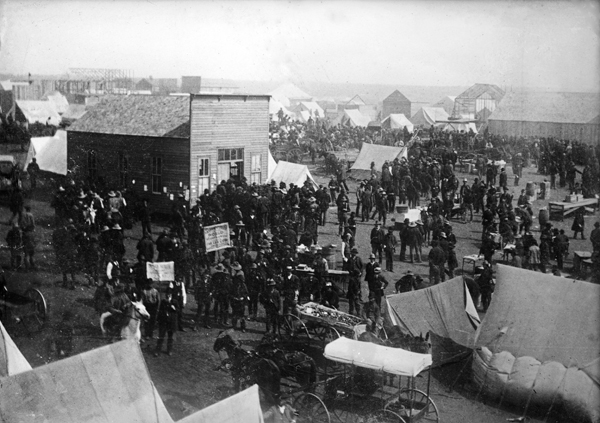
Land Office photo, Oklahoma, 1900. The General Land Office, formed in 1812, was an early example of the administrative state, responsible for parceling and legal settlement of western U.S. territories. Photo: Library of Congress, George Grantham Bain Collection.

Land Office photo, Oklahoma, 1900. The General Land Office, formed in 1812, was an early example of the administrative state, responsible for parceling and legal settlement of western U.S. territories. Photo: Library of Congress, George Grantham Bain Collection.

Hail to the Pencil Pusher

American Bureaucracy’s Long and Useful History

Nineteenth-century America was a place full of hazards. Disease, political oppression, imperialist warfare, poor living conditions, and hard manual labor took their toll, as they still do. But some dangers were peculiar to the era—among them, exploding steamboats.

Between 1825 and 1830, 273 people died in such accidents. DeBow’s Review (1848) noted 233 cases of “bursting boilers,” “collapsing flues,” and other breakdowns, which could cause massive damage. In his 1833 State of the Union address, President Andrew Jackson noted the “many distressing accidents which have of late occurred . . . . by the use of steam power.” But he didn’t simply mourn, instead arguing that the problem demanded “the immediate and unremitting attention of the constituted authorities of the country.” He sought criminal penalties to prevent what he saw as the negligence of carriers.

But the problem was so severe that Congress eventually decided tackle it administratively. Criminalizing bad behavior wasn’t enough; for the good of individual lives and the larger economy, the government would take positive steps to prevent explosions. Under the Steamboat Act of 1852, Congress mandated standards for boiler pressure and testing. Pilots and engineers would be federally licensed. And government inspectors could enforce these rules.

This “steamboat agency” seems like something straight out of the twentieth century. It relied on the Constitution’s commerce clause to regulate a specific industry for personal safety. It developed these regulations based on scientific understanding. And it combined licensing, rule making, and adjudication, as the New Deal and Great Society agencies did and continue to do. It was, in sum, an early manifestation of an administrative state that contemporary conservatives insist did not exist until Progressive Era reformers built it upon the ashes of a former libertarian utopia.

By the administrative state, I mean the network of agencies created by Congress to carry out the work of the federal government. These agencies differ in the structure of their supervision, their sources of funding, and their ability to write and enforce rules, but collectively they have similar mandates: to carry out laws that Congress and the judiciary lack the time and expertise to implement on their own.

To some observers, this situation is fundamentally at loggerheads with the Constitution. The problem isn’t this or that agency; it is the administrative state itself, an alien import from European collectivism, which destroyed the laissez-faire liberty Americans supposedly enjoyed in the nineteenth century. Today, opposition to the administrative state unites everyone from George Will, who says the Affordable Care Act “serves principally to expand the administrative state’s unfettered discretion,” to Supreme Court Justice Clarence Thomas, who sees the administrative state as evidence of a “belief that bureaucrats might more effectively govern the country than the American people,” to Senator Mike Lee, Glenn Beck, and the Tea Party broadly.

But a new wave of legal history is overturning the narrative of paradise lost. In Jerry Mashaw’s Creating The Administrative Constitution: The Lost One Hundred Years of American Administrative Law (2012), we see that the early U.S. government was both far more bureaucratic and expansive than partisans of deregulation assert. And Daniel Ernst, in Tocqueville’s Nightmare: The Administrative State Emerges in America, 1900–1940(2014), attacks the alien-import thesis, arguing that modern American regulatory agencies were justified by domestic legal norms.

Indeed, this scholarship does more than just show how far back the administrative state goes in American history. It shows that the practices and institutions of bureaucrats have not assaulted our Constitutional liberties but rather have helped define and expand our very notion of liberty. This emergent school of thought, known as “administrative constitutionalism,” documents how our institutions, in their everyday dealings with the public, provide the basis for the liberties courts end up adopting and ratifying.

• • •

Most academic discussion of the U.S. administrative state starts with the creation of the Interstate Commerce Commission of 1887, followed by a major ramp-up in the early twentieth century. This leaves a hundred years in which to fill in the blanks.

But, Mashaw argues, “We should rid ourselves of the nostalgic idea that the emergence of administrative governance in the twentieth century upset the grand design of a non-administrative state.” There “simply never was a time” in which federal law was “self-executing, fully specified by Congress, and enforced through judicial decree.” Mashaw digs up a deep and fascinating world of administrative practices that, from the beginning, were intended to solve the urgent problems Congress and the courts could not by themselves.

Take the settlement of the West. The surveying, sale, and settlement of the new public lands was the largest administrative challenge facing the early federal government. People moving westward, especially after the Louisiana Purchase, didn’t form the bargaining, enclosing paradise of libertarian lore. Settlements involved endless fighting in courts over who owned what under a mix of state, federal, and international law. Courts were ill equipped to handle these cases and quickly buckled under the endless, costly claims, some of which would take decades to negotiate. The time and energy absorbed by the legal process slowed the work of making new land available for settlement. Dysfunction fed back on dysfunction, with lawsuits provoking further lawsuits and uncertainty.

U.S. government bureaucracy helped to define and expand American notions of liberty.

In order to deal with this chaotic situation, Congress created the General Land Office in 1812. It was not without controversy of the sort we might recognize today: during the republican era, Congress wanted to explicitly control every aspect of policy. But rules drafted in Washington D.C., no matter how meticulous, required expert implementation on the ground. The process of surveying, recording, and selling land had to be subject to uniform rules, but the land itself was not uniform, and the rules weren’t easy to apply. Congressional strictures originally prevented Land Office administrators from correcting record-keeping errors resulting from the disconnect between the law and facts on the ground. Eventually, though, Congress realized the need to tolerate some administrative discretion. So, for example, while the law required planting trees to demarcate townships, where trees could not be planted, administrators might fix stones. Land Office agents, newly empowered to make at least some decisions, filed reports with Congress to ensure accountability.

Mashaw extends a project of finding the state in the nineteenth century, which historians have undertaken since the 1990s. Books such as William J. Novak’s The People’s Welfare: Law and Regulation in Nineteenth-Century America (1996) have documented the extensive state regulation of behavior that characterized the time period. Mashaw shows that the government not only regulated through law, but also expanded its capacity to enforce those laws by means of the administrative state.

But even if the administrative state is older than some realize, what should we make of the still-important changes that befell it in the early twentieth century? Here Ernst, in Tocqueville’s Nightmare, offers a compelling mix of history and legal thought, as politicians, lawyers, and bureaucrats try to find a way to balance public needs under administrative purview against judicial accountability.

Ernst’s title is ironic. Alexis de Tocqueville’s nightmare, in Ernst’s telling, was that a “centralized administration” would take hold in the United States. Local municipal bodies, townships, and counties form a shield against federal power. But, Tocqueville wrote, if a federal bureaucratic state ever “sunk deep into the habits and the laws of the people . . . a more insufferable despotism would prevail than any which now exists.”

A century later we had the formal bureaucratic state Tocqueville warned about. Yet ours was still a liberal democracy, with no despotism in sight. What happened?

Ernst argues that the Constitution survived the construction of the administrative state because the courts built judicial values and process into the DNA of the new government agencies. The norms of due process and evidence would give “a distinctly legalistic cast to the administrative state.” Evidently, “Americans decided they could avoid Tocqueville’s nightmare if administration approximated the structure, procedures, and logic of the judiciary.”

Specifically, the administrative apparatus approximated the structure, procedures, and logic of the American judiciary, not a foreign import. While some historians claim a Progressive embrace of European social insurance, city planning, and market regulation, Ernst points out that the German ideal of the Rechtsstaat—a state with only strict, clearly demarcated rules—was advanced in the United States but found little traction.

Instead, the Supreme Court, led in this effort by Justice Charles Evans Hughes, built over the course of decades a theory whereby it could “see” what administrators did if their actions were justified in a purely legalistic way. As long as administrators observed due process and made their decisions based on well-established facts, courts would defer to their actions rather than find that administrators had been making laws themselves.

This focus on Hughes as hero allows Ernst a particular reading of the tension between the Roosevelt administration and the Supreme Court during the New Deal, a critical moment in the history of the administrative state and in the contest over that history. The right sees the New Deal as a clear instance of executive overreach in which the White House cowed a reluctant Court into doing its bidding. But Ernst tells a different story, in which the Court gradually brought administrative law into line with American jurisprudence.

At first the Court was hostile to the New Deal, striking down the National Industrial Recovery Act. But NIRA’s administrative character wasn’t at odds with the Constitution. The problem was a lack of set procedures, and its goals were unclear, meaning that administrators would be left to operate at their discretion. According to Ernst, Hughes, with his opinion in the case eliminating NIRA, was “teaching the New Dealers the first principles of administrative law and procedure.” When the Supreme Court finally began approving New Deal legislation in 1937, it was “less a revolution than a reconciliation between the judicial and executive branches.”

• • •

The administrative state was not only built on the basis of American legal norms, but it also helped to create them, and, in the process, American conceptions of liberty itself. What sort of bureaucracy could do that? One of the strongest examples is also one of the most prosaic: the Post Office.

The Post Office was, at one time, a massive federal state-building enterprise. Spanning and keeping pace with a rapidly expanding frontier, the Post Office was one of the most impressive features of the early state. But not just that. As legal scholar Anuj Desai argues, it is also via the Post Office that our notion of privacy gained shape.

We take for granted that the Fourth Amendment protects the privacy of communications, such as our email. But where does that come from? Most look to wiretapping cases of the 1960s, which took their precedent from Justice Louis Brandeis’s notion of a right to privacy. However, Desai contends that communication privacy really began with everyday bureaucratic practices at the Post Office. In the 1780s and ’90s, the Post Office consciously prevented government agents from opening the mail without a government warrant, which itself was a reaction to activities of the British government during the Revolutionary War. The Supreme Court eventually incorporated these practices into law in the 1878 case Ex parte Jackson, when it protected communications privacy under the Fourth Amendment.

Privacy protection emerged from the early Post Office’s resistance to government snooping.

This is not how we usually understand the development of our constitutional liberties. Instead of judges abstractly thinking through the Fourth Amendment and its implications, normative commitments evolving from bureaucrats’ daily routines came to define a constitutional right to privacy.

Modern free speech, too, is an outgrowth of the administrative state, in this case the Progressive variety. Historians have long believed that Progressive intellectuals, normally skeptical of individual rights and interested in muscular state-building, came to defend civil liberties only after the repression of dissent during World War I compelled them to place new limits on the state. But as legal scholar Jeremy Kessler has argued, Progressives first turned to civil libertarianism in order to bolster the state, not to limit it. Working as bureaucrats in the Wilson administration during World War I, they created a conscientious objector exemption from the draft, much to the anger of Congress and the military. But those in charge of executing the draft, including future Supreme Court Justice Felix Frankfurter, saw it as essential that the state make room for draftees to express their moral and political opposition to military duty and to perform alternative forms of national service.

Supreme Court Justice Oliver Wendell Holmes was close with Frankfurter and his circle, which influenced the famous defense of free speech he articulated in dissent to Abrams v. United States (1919). This defense, which emphasized the way free speech for the government’s political opponents could improve public policy and foster democratic participation, was a judicial embodiment of earlier, administrative efforts to accommodate antiwar citizens.

This is an example of what legal theorists call administrative constitutionalism, which, again, reverses the conventional wisdom according to which constitutional norms are created from on high. As William N. Eskridge Jr. and John Ferejohn explain in A Republic of Statutes: The New American Constitution (2010), our “normative commitments are announced and entrenched not through a process of Constitutional amendments or Supreme Court pronouncements but instead through the more gradual process of legislation, administrative implementation, public feedback, and legislative reaffirmation and elaboration.”

The authors focus on small-c constitutional norms, or what they call superstatutes. These norms start with social movements and economic problems that create demands for state action, resulting in public and legislative deliberation and eventually laws. Implementation elicits responses and opposition from the public and the courts, is revised and elaborated with feedback, and finally turns into a norm, be it privacy or free speech, which may not be entirely encompassed in the direct language of the Constitution. The administrative practices of the state, built through everyday democracy, push just as much on the courts as the courts push on democracy.

These efforts to craft new norms create conflicts, which administrators balance alongside legislators and the courts. Consider the National Labor Relations Board (NLRB), which, as legal scholar Sophia Z. Lee demonstrates in The Workplace Constitution from the New Deal to the New Right (2014), found its postwar goals in contradiction. The NLRB was committed to allowing workers to organize. But it also was committed to ending segregation, including within unions, which ran counter to the objective of maximal unionization. Eventually the courts took over this battle, largely limiting workers’ rights. Whether the courts made the right calls in these cases is not so important in this context. What is important is that negotiations within the administrative state, themselves responsive to public demands, inspired the elaboration of new norms, which then became the subject of constitutional debate. Only by incorporating this realm of the administrative constitution into our debates over history and politics can we get a full picture of how the law really works.

• • •

The recent scholarship on the administrative state provides a wealth of arguments to counter the right’s historical and legal theories. Americans have long turned to bureaucracy to solve problems and to advance liberty.

But the historical presence of an administrative state based in and expressive of American legal norms doesn’t mean that administration is without challenges. The surveillance apparatus, for instance, is opaque and invasive. Immigration agencies have been slapped down by courts for their unconstitutional punitiveness and for engaging in what amounts to administrative lawmaking. Agencies can also be too lax: for instance, the apparent inability of the Securities and Exchange Commission and other financial oversight institutions to corral Wall Street has provoked serious concern over bureaucratic capture.

Our deepening understanding of the history and theory of the administrative state should remind us that we can’t simply wish away these challenges, which reflect ideological contest. As Mashaw shows, administrative agencies have always been subject to and indicative of political dispute. For example, the composition of their staffs and the nature of their practices reflect broader public commitments. During the republican years of the early nineteenth century, agencies hired on the basis of “character” and “standing in the community.” But during the period of Jacksonian democracy, this scheme was attacked as a miniature aristocracy and replaced with a “spoils system,” whereby employment was determined by the party that won office, which seen as a democratic advance. These systems each had their advantages and disadvantages, but there was no way to divorce them from politics.

There is no time before the administrative state we can revert to, no simple practices we can adopt to fix abuses or failures. If correcting administrative faults were simple, then the administrative state really would be outside the bounds of politics. The truth, though, is that through our political institutions, Americans have been struggling since the earliest days of the republic to make administration work, just as administrators have, with great consequence, struggled to make the state function. That is the normal state of U.S. politics. But undoing the administrative state entirely? That would mean returning to a country that never was.

Mike Konczal

Mike Konczal is a fellow at the Roosevelt Institute. His work has appeared in The NationSlate, and The American Prospect. He blogs at Rortybomb.

EPISODE 15: PHIL TIEMEYER ON MALE FLIGHT ATTENDANTS AND SEXUALITY IN THE WORKPLACE

Plane Queer cover

Today’s guest discusses the history of sexuality in the workplace through the lens of male flight attendants. We speak with Phil Tiemeyer about the shifts and changes in the airline industry across the 20th century. Phil steers us through this history and reveals the importance and difficulty of braiding together race, gender, and sexuality in a study of the labor and capitalism.

Phil Tiemeyer is Associate Professor of History at Philadelphia University. He is author of Plane Queer: Labor, Sexuality, and AIDS in the History of Male Flight Attendants. You can read more about his work here.

Check out the episode here!

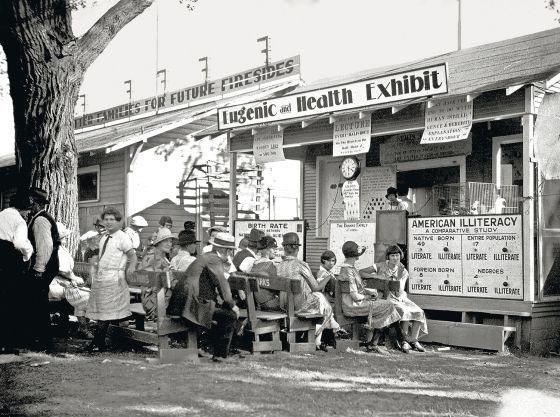
Conferencia sobre la eugenesia celebrada en Kansas en 1925. / AGE PHOTOSTOCK

Conferencia sobre la eugenesia celebrada en Kansas en 1925. / AGE PHOTOSTOCK

La caída de la gran raza

El lío va a ser cuando lo descubra Donald Trump. El año próximo, mientras las internas norteamericanas derramen su luz sobre Occidente, se cumplirán cien años de un libro que influyó como pocos en la vida de ese país –y que tantos, después, quisieron olvidar.

Su autor, Madison Grant, había nacido en 1865 en Nueva York, en una de esas familias que se decían patricias porque habían desembarcado en el siglo XVII, cuando había que ser muy pobre para migrar a ese islote salvaje. Grant se educó en Yale y Columbia, se recibió de abogado, no ejerció porque no necesitaba y se dedicó, sobre todo, a la caza mayor. De ahí su interés por las ciencias naturales, que pronto se le volvió monomanía. En 1916, ya cincuentón, publicó su ópera magna: se llamaba The Passing of the Great Race –La Caída de la Gran Raza– y fue un éxito.

La Gran Raza era, por supuesto, la blanca, y el libro se dolía por su supuesta decadencia. Para explicarla empezaba por una clasificación donde dividía a los “caucasoides” –muy superiores a los “negroides” y “mongoloides”– en tres clases. Los “nórdicos” eran los mejores, después venían los “alpinos” y, al final, lacra viciosa perezosa y boba, los “mediterráneos”: griegos, italianos, españoles. De donde su tesis central: la inmigración indiscriminada de esos inferiores estaba destruyendo América; los brutos se reproducían tanto, con tal carga genética, que arruinaban el nórdico pueblo americano. Era una vergüenza, decía Grant, que sus compatriotas “quisieran vivir unas pocas generaciones de vida fácil y lujosa” importando esa mano de obra barata que arrasaría su raza.

América se derrumbaba, pero Grant le ofrecía sus soluciones: para los casos más extremos de la degradación proponía “un rígido sistema de selección a través de la eliminación de los débiles o incapacitados –los fracasados sociales– que en cien años nos permitirá deshacernos de los indeseables que colman nuestras cárceles, hospitales y manicomios”. Ni siquiera era necesario matarlos, decía: alcanzaba con esterilizarlos. “Es una solución práctica, piadosa e inevitable que puede ser aplicada a un círculo creciente de desechos sociales, empezando por el criminal, el enfermo y el loco para extenderla gradualmente a los tipos que podríamos llamar ya no defectuosos, sino débiles, y por fin a los tipos raciales inútiles”.

La eugenesia era una corriente poderosa, y La Caída fue su estandarte. Su prédica funcionó: pocos años después la Suprema Corte americana declaró constitucional la esterilización de los “débiles mentales”. En la década siguiente unas 60.000 mujeres fueron esterilizadas.

Fue uno de los grandes éxitos de Grant y los suyos; el mayor llegó cuando su insistencia consiguió acabar con la inmigración que había conformado su país. La Inmigration Act promulgada en 1924 por un Gobierno republicano estableció cuotas que limitaban al máximo la llegada de italianos, polacos, chinos, japoneses, judíos varios y cerró la primera gran ola migratoria americana.

La Caída de la Gran Raza se reimprime cada tanto, aunque sus editores no se atreven a poner en tapa la opinión de Adolf Hitler: “Este libro es mi biblia”. Dichas así, a lo bestia, sus ideas pueden sonar intolerables o ridículas. En su momento se consideraban científicas y produjeron efectos importantes: su recuerdo sirve para preguntarse qué ideas que tomamos en serio parecerán ridículas o intolerables en unas pocas décadas. Y, de todas formas, tras el mínimo barniz de la corrección política, sus conceptos reaparecen en cada patera mediterránea, en cada Trump gritando, en tantas charlas de café.

Madison Grant murió en 1937. Su libro se estudiaba, sus ideas influían, sus discípulos medraban. Él, mientras tanto, obsesionado por conservar, había dedicado sus últimas décadas al ecologismo, y descolló: se le debe, dicen, la supervivencia del bisonte y otras grandes bestias que el hombre amenazaba.


«Martín Caparrós (Buenos Aires, 1957) se licenció en historia en París, vivió en Madrid y Nueva York, dirigió revistas de libros y revistas de cocina, recorrió medio mundo, tradujo a Voltaire, Shakespeare y Quevedo, recibió el Premio Planeta Latinoamérica, el Premio Rey de España y la beca Guggenheim. Es autor de unos treinta libros que lo han encumbrado como uno de los grandes escritores latinoamericanos de nuestro tiempo.» (http://www.anagrama-ed.es/autor/1214)

The Peculiar Institution Expands: Slavery and the Constitution

We’re History  September 22, 2015
Women and Children Picking Cotton

Women and Children Picking Cotton.(Photo: Avery Research Center at the College of Charleston)

From the Editors…There is a currently a dust-up in political and historical forums over whether or not the Constitution sanctioned slavery or was an anti-slavery document. It is heated, and personal, and must, to many people, seem arcane. Who really cares, today, whether or not the Founding Fathers technically saw the nation as one based on slavery, when the reality was that the Constitution permitted the institution? Slavery existed before the American Revolution, it expanded afterward, and Americans had to fight a four-year war that cost more than $5 billion and 600,000 lives to end it.

So why does this issue matter so much?

It is really a fight about politics, and the nature of modern-day America.

Princeton professor Sean Wilentz launched the fight with an op-ed in the New York Times on September 16 shortly after Bernie Sanders said that the United States was “created…on racist principles.” Wilentz, a long-time Clinton supporter, vehemently disagreed. He insisted that the Constitution, which established the nation, was anti-slavery because it kept slavery a local, rather than a national, institution.

The larger question at stake in this argument is about whether or not America needs to address a history of inequality that is knit into the fabric of our society, or whether the problems we see today are largely policy issues that are not part of the nation’s fundamental make-up. This translates to politics because Sanders has been a more vocal supporter of the Black Lives Matter movement than Hillary Clinton has been. At a more general level, though, it is a fight about how to incorporate new voices into a discussion about America’s future.

We’re History believes the best way to address these questions is by looking at what, exactly, happened in the past. Today Professor Joshua D. Rothman from the University of Alabama explains how the Constitution encouraged the growth of slavery.


Critics of Sean Wilentz’s essay in the September 16 New York Times have rightfully noted that contrary to Wilentz’s claims, the Constitution quite clearly entrenched racial slavery in the national government and made it a national institution. The Constitution contained enough ambiguity to allow antislavery forces to maintain by the middle of the nineteenth century that the federal government could legitimately put slavery on the path toward extinction. But to make the case that the Constitution was nationally antislavery in intent in 1787 is to read history backwards from 1865.

Perhaps more significantly, such an argument makes American history in the years between the ratification of the Constitution and the outbreak of the Civil War difficult if not utterly impossible to understand. For if the Constitution was indeed, in Wilentz’s words, “based on a repudiation of the idea of a nation dedicated to the proposition of property in humans,” slavery never should have become an even more powerful force in American life after ratification than it had ever been before. If the Constitution was truly antislavery at a national level, the enslaved population that stood at around 700,000 in 1790 never should have increased nearly sixfold to roughly 4,000,000 people by 1860, at which point the United States had the largest enslaved population on the planet. The landscape of slavery and the number of people imprisoned on it in the United States expanded not because white southerners somehow conspired against the intentions of the framers, but because structurally and politically the Constitution encouraged it.

Some of the men involved in drafting the Constitution did believe that the institution of slavery was morally problematic and hoped that it would fade over time before effectively ending on its own. Given the declining Chesapeake tobacco economy of the late eighteenth century, it was not unreasonable to imagine that the compromises that made slavery part of the infrastructure of the national government were temporary expedients that would largely cease to matter within a generation or two. Even as some northern states began moving toward gradually emancipating their enslaved populations, however, no constitutional provision was ever made to nudge the nation as a whole in that direction, and in short order after ratification the burgeoning cotton economy of the southwest shattered the illusion that slavery might somehow simply disappear.

If any sense of urgency for moving against slavery at the national level ever really existed around the time of ratification, congressmen abandoned it quickly. In the late 1790s, Congress formally opened for settlement the Mississippi Territory, comprising what is now Mississippi and Alabama, and, after briefly debating alternatives that were within its power to enact, endorsed slavery’s legality there. The United States then acquired the massive Louisiana Territory in 1803. Here too lay an opportunity for the national government to demonstrate its commitment at least to restricting slavery’s growth if not to ending it. But no such commitment existed, and white settlers expanded slavery throughout the Southwest. In the region of the Mississippi Territory alone, the enslaved population increased from fewer than 4,000 people in 1800 to more than 180,000 by 1830.

To the extent that Congress used the Constitution to circumscribe slavery at all, it did so in ways that actually entrenched the institution and nurtured its growth. The Missouri Compromise of 1820, for example, drew a line across the Louisiana Purchase above which federal law banned slavery’s expansion. But it simultaneously recognized and affirmed federal support for slavery’s expansion below the line. Then Congress demonstrated its support for that expansion through its program of Indian removal that used federal money and military might to clear Native Americans off millions of acres of cotton land for white slaveholders to exploit.

Similarly, while Congress did enact legislation to abolish the transatlantic slave trade as soon as it was constitutionally permissible in 1808, it simultaneously gave national license for Americans to engage in the domestic slave trade that had been growing in the United States to feed white demands for labor in the cotton lands. The very same legislation that barred the importation of enslaved Africans for sale placed no restrictions on the sale of enslaved people across state lines. On the contrary, the law required only that ships transporting enslaved people from the failing tobacco fields of Maryland and Virginia to the thriving cotton and sugar regions of the Southwest had to document on their manifests that their cargo had lived in the United States by 1808. Congress thus had the explicit constitutional power to regulate interstate commerce, and at the very moment the minds of its members turned to the horrors of the transatlantic slave trade, they used that power to legitimize the domestic slave trade as an acceptable form of commercial exchange in the United States.

All of these developments had their greatest meaning in the places where slavery continued to exist in the nineteenth century, but all of them were national in significance. Cotton only grew in the South, but by the 1830s it was by far the nation’s most vital export. Slave-grown cotton made up more than half of everything the United States shipped overseas, and it fueled the early Industrial Revolution specifically and the evolution of American capitalism more generally. Enslaved people were traded only in the South, but the profits from their sales were shared nationally, and even internationally, as banks scattered across the United States and England provided the credit that facilitated the trade. In fact, during the 1820s and 1830s, the years when the trade was arguably at its most flourishing, that credit came directly from the federal government, with the Second Bank of the United States pouring millions in government funds into the Southwest.

Growing numbers of American antislavery activists understood that the profits of slavery accrued generally in the United States. As abolitionist Joshua Leavitt put it in 1840, the wealth produced by slavery was “the common plunder of the country.” And abolitionists understood equally well from whence the authority to carry out what Leavitt called “this general robbery” of the enslaved ultimately derived. One might make the case that the Constitution’s omission of the word “slavery” eventually helped enable that institution’s demise. But that linguistic squeamishness notwithstanding, only the fact that the Constitution confirmed the legitimacy of racial slavery can explain its explosive growth before the Civil War.


About the Author

Joshua D. Rothman

Joshua D. Rothman is Professor of History and Director of the Frances S. Summersell Center for the Study of the South at the University of Alabama. He is the author, most recently, of Flush Times and Fever Dreams: A Story of Capitalism and Slavery in the Age of Jackson (2012), and is currently working on a book about the slave traders Isaac Franklin, John Armfield, and Rice Ballard.

Why We Have Loved Gangster Movies for 100 Years
HNN  September 11, 2015

Bonnie Parker and Clyde Barrow, sometime between 1932 and 1934 . Wikipedia.

Gangster James “Whitey” Bulger had been gone for sixteen years, vanished into the American landscape. The brutal New England mob boss, who murdered numerous people and controlled a powerful mafia family for more than twenty years, and at the same time betrayed his men as an FBI informer, had disappeared like a puff of smoke. Then, suddenly, in 2011, he was arrested in Santa Monica, California. A crime stopper television show aired a biography of him and the secretive, ordinary looking old man who lived in an apartment in Venice Beach with his longtime girlfriend not only surrendered without a classic movie shootout, but surrendered without even a whimper.

Whitey Bulger’s story is the basis for new Johnny Depp movie, Black Mass, that opens this week. The movie recounts the odd life of Whitey, whose brother Bill, astonishingly, was the President of the Massachusetts State Senate and the President of the University of Massachusetts.

It is yet another American gangster movie. The mob movie has been a staple of American entertainment history since the silent movie era. It flourished after the arrival of sound with movies such as The Public Enemy and Little Caesar. The public’s love of the gangster boomed again in the late 1940s with film noir hoods like actor Richard Widmark, and crested in the 1970s with The Godfather movies. They were seen along with crime classics such as Bonnie & Clyde, Goodfellas, The Departed. Donnie Brasco and the HBO television series The Sopranos, starring Tony Soprano and his lovable New Jersey crew, understanding wife and troublesome kids.

The gangster movie is not only as American as apple pie; it is better than apple pie. You finish an apple pie; the mob movie never disappears.

Why do we love gangsters and crime cinema so much? They represent everything that America, and Americans, do not stand for. They focus on brutish, murderous thugs whose sole goal is accumulating power and money by using fear tactics. They will do anything to anybody to get ahead, regardless of how many laws they break or people they shoot.

We should hate gangsters, real or Hollywood, and yet we embrace them. Why?

The film and TV gangsters are a cultural phenomenon that dates back to the turn of the 20th century and the arrival in America of the Italian mafia, then called ‘The Black Hand.’ They split up into various “families” in New York and then in other American cities as organized crime, the mafia, the mob, the underworld – call it what you will – and succeeded not just in the streets, but in the box offices of theater and later on television stations.

Why?

The screen or television gangster is somebody many Americans wish they could be – tough, resilient, fearless – but, of course, we are not. The hoods live in a chaotic, violent world that Americans want to control themselves, but not really. We love to admire them, to talk about them, read about them and see them on the silver screen and wish we could be them – up to ‘the line,’ the line that, of course, we do not cross. We just sit back and live like them, machine guns and all – vicariously.

The Hollywood mobster is an historic character. He got his start in the early days of sound film because during the 1920s, thanks to endless media attention, he had already become a major figure on the American scene. Most of the early real life gangsters were immigrants who could not succeed in American because of persecution and discrimination against ethnic groups. So, nowhere else to go, they turned to crime. They had to turn to crime, shrugged Americans. Since all of us are, way back, immigrants from somewhere, we understood that.

The gangsters left us alone. They went about their business – robbery, murder, kidnapping, extortion – but did not bother the average citizen. They were successful, made a lot of money and lived in large homes. Nobody loves successful people like Americans. The mobsters were admired for their ability to rise above discrimination and succeed. By 1930, Americans saw them just like other people successful people– well-dressed men who drove flashy cars, hung out at posh night clubs, mingled with movie stars, dated beautiful women and lived the American dream. They achieved what we all wanted to achieve. They just did it in a different way.

What movie writers did was take the real gangster, sanitize him, glamorize him and put him on the big screen as a hero. He was the immigrant tough guy who blasted his way to the top. The judges, public officials and cops were the villains in all those 1930s gangster movies (did they all star James Cagney or did it just seem that way?). They were Robin Hoods with machine guns.

The movie gangster succeeded because real life gangsters of the era, such as Al Capone, Bonnie and Clyde and John Dillinger, had also become folk heroes, thanks to huge press coverage of their lives. The movies just took real life, put some make up on it, added music, printed posters and rolled the cameras.

In his wonderfully analytic book, Inventing the Public Enemy, David Ruth wrote of Capone that “In press conferences, interviews with reporters and a highly theatrical social life, Al Capone worked as hard as any movie star to create a favorable public image…. He was the subject of popular books, numerous pulp publications, movies and feature articles in newspapers and magazines ranging from Master Detective to Collier’s.”

The gangster movie was in a lull from the late ‘30s to the late 40’s and then from the early 1950s to the early 1970s. Then came Marlon Brando (“I’ll make him an offer he cannot refuse”), Al Pacino and Robert DeNiro in the Godfather movies. The public loved the Corleones and despised anybody trying to injure them, such as the FBI, the New York City Police Department and the Supreme Court.

The Corleones, and all screen gangsters, were good people. They never killed people out of personal hatred. It was all “just business.” They loved their wives, were good family men, raised kids, went to church and respected each other. They were men who acted like all men wanted to act. They just had a different type of job, that’s all – real different. They died just like we all died, except they died suddenly.

The Sopranos cemented the role of the beloved gangster in American entertainment. There were only two endings for Tony Soprano as the series was going to off the air – murder or prison. The public did not want that, though. In a New Jersey Star Ledger poll, over 80% of those queried begged the producer of The Sopranos to somehow let Tony live. The public loved Tony. He was everybody’s favorite uncle. He cared for his wife, loved his kids, helped his family, fought with his mother and Uncle, put up with his shrink and always tried to do what he could, with his working class, immigrant background, to get ahead in America. Tony Soprano did kill a lot of people but … oh, well.

So your son wants to be a doctor, an architect, a United States Senator? Your daughter wants to be an engineer, college professor, scientist?

Just remember one of the first lines in the mob movie Goodfellas. “As far back as I could remember, I always wanted to be a gangster. To me, being a gangster was better than being President of the United States.”

Bruce Chadwick lectures on history and film at Rutgers University in New Jersey. He also teaches writing at New Jersey City University. He holds his PhD from Rutgers and was a former editor for the New York Daily News. Mr. Chadwick can be reached at bchadwick@njcu.edu. Bruce Chadwick lectures on history and film at Rutgers University in New Jersey. He also teaches writing at New Jersey City University. He holds his PhD from Rutgers and was a former editor for the New York Daily News. Mr. Chadwick can be reached at bchadwick@njcu.edu.

– See more at:Why We Have Loved Gangster Movies for 100 Years