Feeds:
Entradas
Comentarios

Archive for mayo 2015

JENNIFER DELTON Rethinking the 1950s: How Anticommunism and the Cold War Made America Liberal

CAMBRIDGE UNIVERSITY PRESS, 2013
by CHRISTINE M. LAMBERSON
New Books in History  APRIL 23, 2015

Jennifer Delton

Conventional wisdom among historians and the public says anticommunism and the Cold War were barriers to reform during their height in the 1950s. In this view, the strong hand of a conservative anticommunism and Cold War priorities thwarted liberal and leftist reforms, political dissent and dreams of social democracy. Jennifer Delton is a professor of history at Skidmore College, and her new book, Rethinking the 1950s: How Anticommunism and the Cold War Made America Liberal (Cambridge University Press, 2013) encourages us–as the title suggests–to rethink that conventional view. She argues that in fact the Cold War and anticommunism promoted and justified many liberal goals rather than stifling them. Her book demonstrates that supposed conservatives championed many liberal causes while many liberals genuinely supported the Cold War and anticommunism. For example, she discusses the liberal beliefs and actions of business leaders and politicians like Dwight Eisenhower, who are often thought of as conservative figures, to show the dominance of liberal political ideas during this period. On the other side, she also argues that liberals, such as many labor activists, were themselves strongly anticommunist because they saw communism as truly damaging to their cause, not simply because they aimed to avoid the taint of a communist label. These sentiments had important effects on policy as well. From high taxes to regulation, civil rights and the continuance of New Deal programs, liberal ideas held sway. They had a powerful effect on policy, not in spite of, but because of the larger Cold War context. In the interview, Delton discusses her book and its importance in reforming both historians’ views of the period and our broader thinking about partisan politics and nationalism.

Read Full Post »

Library of Congress

A Brief History of American Executions

From hanging to lethal injection
Matt Ford
 The Atlantic   June 2015

nging is perhaps the quintessential American punishment. In the pre-revolutionary era, criminals were also shot, pressed between heavy stones, broken on the wheel, or burned alive. (An estimated 16,000 people have been put to death in this country since the first recorded execution, in 1608.) But the simplicity of the noose triumphed, and its use spread as the republic grew.

In theory, a hanging is quick and relatively painless: the neck snaps immediately. But hangings can be grisly. If the rope is too short, the noose will slowly strangle the condemned. If the rope is too long, the force of the fall can decapitate the person.

The Supreme Court has never struck down a method of execution as unconstitutional. But states have at times tried to make the process more humane. “Hanging has come down to us from the dark ages,” New York Governor David B. Hill told the state legislature in 1885. He asked “whether the science of the present day” could produce a way to execute the condemned “in a less barbarous manner.”

Thomas Edison offered up his Menlo Park laboratory for New York officials to test electrocution on animals. Confident that the method would be painless and instantaneous, state legislators abolished hanging and mandated the use of the electric chair for all death sentences, starting in 1890. Other states slowly followed, although hanging never truly disappeared—the most recent one took place in Delaware in 1996.

Despite their scientific veneer, new methods had their own pitfalls. When Nevada performed the first execution by lethal gas in 1924, prison officials initially considered pumping the gas into the inmate’s cell while he slept. They opted instead to build an airtight chamber, but it was initially so chilly inside—just 49 degrees—that the gas pooled ineffectually on the floor.

Electrocution also proved to be far from foolproof. In 1946, Louisiana’s electric chair, set up by a guard and an inmate who were drunk, failed to kill 17-year-old Willie Francis, who had been convicted of murder. “I am not dying!” he screamed as he writhed. Francis appealed to the Supreme Court and argued that another turn in the electric chair would constitute cruel and unusual punishment. He lost his case, 5–4, and the state’s second attempt to electrocute him worked.

In 1972, the Supreme Court halted all executions in the U.S., ruling that state death-penalty statutes were too arbitrary. Four years later, the justices upheld revised statutes, and capital punishment resumed. Soon after, an Oklahoma legislator asked Jay Chapman, the state’s chief medical examiner, to help create a method to replace electrocution. Chapman, who once described himself as “an expert in dead bodies but not an expert in getting them that way,” devised a three-drug cocktail of sodium thiopental, pancuronium bromide, and potassium chloride. If administered via intravenous injection, he said, it would anesthetize and paralyze an inmate and then stop his heart. Texas was the first state to use lethal injection, in 1982; by the 1990s, the method was widespread. (Some states were reluctant to give up electrocution, however. Florida kept its aging electric chair running through the 1990s, even after two inmates’ heads caught fire.)

If lethal injection goes—whether because states can’t find execution drugs or because the Supreme Court strikes it down—what will replace it? Some states have already begun bringing back old methods in case they need an alternative. Tennessee is reviving the electric chair, and Oklahoma has authorized the use of lethal gas. In March, Utah reauthorized firing squads after abandoning them in favor of lethal injection 11 years ago.

ABOUT THE AUTHOR

  • MATT FORD is an associate editor atThe Atlantic, where he covers law and the courts.

Read Full Post »

Getting Right with Brown

Brown vs Board team

Brown v. Board team.(Photo: NAACP Legal Defense

For over sixty years, no matter where you stand on the constitutional spectrum, you have had to get right with Brown v. Board of Education. Decided sixty-one years ago this coming May 17, Brown is one of the best-known decisions of the U.S. Supreme Court, one of the Court’s most beloved – or at least well-regarded – decisions, and a key juncture in the development of American constitutional law.

There are several reasons why Brown should matter that much.

First, Brown was a watershed decision by the Supreme Court, putting an end, at least on paper, to nearly sixty years of “separate but equal” as a constitutional rule governing access to public facilities and accommodations. Ever since the 1896 Plessy v. Ferguson decision, in which the Court established the “separate but equal” rule as a guide to interpreting the Fourteenth Amendment’s equal protection clause, a central goal of the NAACP’s Legal Defense Fund (usually called the “Inc Fund”) was to end “separate but equal.” For years, Thurgood Marshall led the Inc Fund in combating “separate but equal” by applying legal ju-jitsu to the rule: if facilities were not equal, they could not be separate. If they were unequal and the state insisted on separation, the state had to create a whole new facility equal to the segregated facility for African-Americans to use. Thus, in a lawsuit requiring the University of Oklahoma to integrate its law school, the Court held that a roped-off desk in the Oklahoma Supreme Court’s library was not an equal law school for the African-American who had been admitted to the University of Oklahoma’s law school. Either the state had to create a new law school matching the existing one lecture-hall for lecture-hall, library for library, moot-court society for moot-court society, brick for brick, or it had to integrate its existing law school and admit the black student. Thurgood Marshall had tired of this incremental game, realizing that segregationists would apply legal ingenuity to create new ways of segregating so that the Inc Fund would have to fight each one, step by step. Thus, Marshall concluded, it was time to “go for the whole hog” and mount a head-on attack on segregation as inherently unequal.

Second, Brown was a triumph for public-interest lawyering. Marshall and his colleagues at the Inc Fund had won, at least on paper, an epochal victory for equality before the law. It would encourage lawyers taking on many other kinds of cases – for women’s equality, for equality of gays and lesbians, to name just two categories – and to use American constitutional law as an instrument of reform. In particular, when political processes were unresponsive to the growing demand for embracing racial equality, lawsuits seeking judicial action would prove to be an effective and versatile tool of forcing social change.

Third, Brown was a test of the Supreme Court and the lower federal courts. It opened the door for a generation of litigation and appeals focusing on defining what the commands of the original Brown decision meant and should mean.Brown launched an era of judicial intervention in school governance, in public accommodations, and in other areas of law. The courts would superintend the ways that an entire society treated the black and white races. No longer could discrimination continue in schools or in other forms of public accommodations, without having to meet the scrutiny of courts and judges using the equal-protection clause as a yardstick.

Fourth, Brown was a test of the Constitution itself, and of ways to interpret it. The debate sparked by Brown (and the line of cases following and developing its holdings) focused on the Court’s interpretation of the Fourteenth Amendment and its history. The Court had decided that the passing of time and the evolution of values might render a rule of constitutional interpretation no longer valid. Scholars debated whether the Court had overreached in deciding Brown as it had. Some emphasized the need for “neutral principles” of constitutional law as the only sound basis for sweeping constitutional change via courts – and disputed whether Brown was based on such principles. Some emphasized the need for judicial prudence and self-restraint in exercising judicial review – and disputed whether Brown had been consistent with or in gross violation of such judicial prudence and self-restraint. Some insisted that the Court had to be bound by the original intent of the framers of the Fourteenth Amendment, while others argued that an originalist methodology of constitutional interpretation needlessly froze the Constitution as of 1868. Many disputes still roiling the waters of American constitutional jurisprudence can trace their roots to the dispute over Brown.

At the same time, a fifth significance of Brown is that the decision found surprisingly swift acceptance by many Americans as just, symbolizing the Court’s role in American life as distilled by the inscription over the front door of the Supreme Court Building: EQUAL JUSTICE UNDER LAW. The decision signaled a major shift in public opinion about how the nation ought to treat African-Americans and a major public reconceptualization of the Court itself, one that to some degree is still with us. One source of the anger that many Americans feel against the Supreme Court’s recent decisions on gun rights and campaign finance is the disparity that they see between such decisions and what the Court achieved in Brown.

On May 17, 1954, the announcement of the Court’s unanimous decision of Brown v. Board of Education set off a constitutional earthquake that shook all of American society and law. That earthquake still reverberates among us, as it enters its seventh decade – and we all should remember it.

About the Author

R. B. Bernstein

R. B. Bernstein teaches at City College of New York’s Colin Powell School and New York Law School; his books includeThomas Jefferson (2003), The Founding Fathers Reconsidered (2009), the forthcoming The Education of John Adams, and the forthcoming The Founding Fathers: A Very Short Introduction, all from Oxford University Press.

Read Full Post »

Avatar de CIGH ExeterImperial & Global Forum

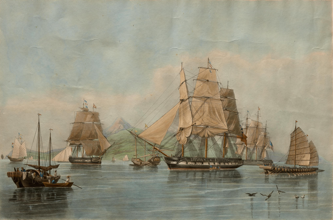
“Opium ships at Lintin in China, 1824,” by William John Huggins, 1828. Courtesy of Peabody Essex Museum. “Opium ships at Lintin in China, 1824,” by William John Huggins, 1828. Courtesy of Peabody Essex Museum.

Dane Morrison
Salem State University
Follow on Twitter @trueyankees

On a balmy Sunday evening in March 1838, a colorful conclave of English, Parsee, American, and Hong merchants crowded the resplendent grand hall of the New English factory in Canton in a sort of town meeting to hear Chief Superintendent and Plenipotentiary of Britain’s China trade, Charles Eliot. Eliot was there to announce Britain’s response to the arrival of Imperial Commissioner Lin Zexu, who had arrived days earlier with a commission to eliminate the opium trade, his sweeping proclamation demanding they deliver “every particle of opium” to him for destruction. It was addressed to “the Barbarians of every nation.” Recognizing the sprinkling of Americans in the hall, Eliot expressed his delight for their tacit cooperation, and assured them, too, of the protection of the…

Ver la entrada original 1.466 palabras más

Read Full Post »

The War of Northern Aggression

A leading Civil War historian challenges the new orthodoxy about how slavery ended in America.
 

Jacobin.com  Issue No. 7

EMANCI4 On November 6, 1860, the six-year-old Republican Party elected its first president. During the tense crisis months that followed — the “secession winter” of 1860–61 — practically all observers believed that Lincoln and the Republicans would begin attacking slavery as soon as they took power.

Democrats in the North blamed the Republican Party for the entire sectional crisis. They accused Republicans of plotting to circumvent the Constitutional prohibition against direct federal attacks on slavery. Republicans would instead allegedly try to squeeze slavery to death indirectly, by abolishing it in the territories and in Washington DC, suppressing it in the high seas, and refusing federal enforcement of the Slave Laws. The first to succumb to the Republican program of “ultimate extinction,” Democrats charged, would be the border states where slavery was most vulnerable. For Northern Democrats, this is what caused the crisis; the Republicans were to blame for trying to get around the Constitution.

Southern secessionists said almost exactly the same thing. The Republicans supposedly intended to bypass the Constitution’s protections for slavery by surrounding the South with free states, free territories, and free waters. What Republicans called a “cordon of freedom,” secessionists denounced as an inflammatory circle of fire.

The Southern cooperationists — those who opposed immediate secession — agreed with the secessionists’ and Northern Democrats’ analysis of Republican intentions. But they argued that the only way the Republicans would actually have the power to act on those intentions was if the Southern states seceded. If the slave states remained within the Union, the Republicans would not have the majorities in Congress to adopt their antislavery policies. And if the South did secede, all bets would be off. The rebellious states would forfeit all the constitutional protections of slavery. The South would get something much worse than a cordon of freedom. It would get direct military intervention, leading to the immediate and uncompensated emancipation of the slaves.

The slaves themselves seem to have understood this. They took an unusual interest in the 1860 election and had high hopes for what Lincoln’s victory would mean. They assumed that Lincoln’s inauguration would lead to war, that war would bring on a Union invasion of the South, and that the invading Union army would free the slaves.

But to read what historians have been saying for decades is to conclude that all of these people — the Democrats, the secessionists, the cooperationists, and the slaves — were all wrong. The Northern Democrats were just demagogues. The secessionists were hysterical. And the slaves were, alas, sadly misguided.

Unwilling to take seriously what contemporaries were saying, historians have constructed a narrative of Emancipation and the Civil War that begins with the premise that Republicans came into the war with no intention of attacking slavery — indeed, that they disavowed any antislavery intentions. The narrative is designed to demonstrate the original premise, according to which everyone at the time was mistaken about what the Republicans intended to do.

It’s a familiar chronology: Under the terms of the First Confiscation Act of August 1861, disloyal masters would “forfeit” the use of their slaves, but the slaves were not actually freed. Lincoln ordered General John C. Frémont to rescind his decree of that September freeing the slaves of rebels in Missouri, and several months later the President rescinded General Hunter’s order abolishing slavery in three states. As late as the summer of 1862, we are reminded, Lincoln was writing letters to Horace Greeley saying that if he could end the war without freeing a single slave, he would do so. Even after the President finally promised an emancipation proclamation, in September 1862, several months elapsed until the proclamation actually came on January 1, 1863.

Only then, according to the standard narrative, was the North committed to emancipation. Only then did the purpose of the Civil War expand from the mere restoration of the Union to include the overthrow of slavery.

In one form or another, this narrative is familiar to all scholars of the period. Historians who agree on little else will agree on this version of the story, even when they have entirely divergent interpretations of what it means.

But what if the original premise is wrong? What if, during the secession winter of 1860–61, everybody was right about what the Republicans intended to do about slavery? What if the Republicans came into the war ready and willing to destroy slavery? What does that do for a narrative of emancipation?

For one thing, it flies in the face of the prevailing neo-revisionism in contemporary Civil War scholarship. The old revisionist interpretation, which reached its zenith of influence in the 1930s and 1940s, came in many varieties. But it always rested on an essentially negative proposition: whatever else the war was about, it was not about slavery. This viewpoint required one set of claims about the South, and another about the North.

Jacobin-Series-3bdd91b95cfc219305403acaa1630163

Revisionists claimed that slavery was already dying in the South, that it was unprofitable, that it wasn’t important to Southern economy and society, that it had reached the natural limits of its expansion, and that Southern leaders were more concerned about defending state rights than protecting slavery. Most contemporary historians, though not all of them, now reject these old revisionist claims. Slavery was thriving and the Southern states seceded to protect it.

But revisionists also claimed that the North did not go to war over slavery. If there were “interests” involved, they were the interests of Northern capitalists against Southern agrarians. The Civil War was an accident brought on by bungling politicians. The abolitionists were a tiny, beleaguered minority; most Northerners shared the general conviction of black racial inferiority. 
The South had slavery, the argument went, but the North was racist too. This argument, in turn, was really just a revival of the antebellum Democratic Party’s relentless efforts to shift the terms of debate from slavery to race.

Today, this revisionist interpretation of the North is alive and well. Indeed, it is pervasive among historians. We are repeatedly told that the North did not go to war over slavery. The Civil War is once again denounced as morally unjustified on the grounds that the North was not motivated by any substantial antislavery convictions. Emancipation itself is described as an accidental byproduct of a war the North fought for no purpose beyond the restoration of the Union. A recent study of the secession crisis states that during the war, slavery was abolished “inadvertently.”

Contemporary scholarship is saturated by this neo-revisionist premise. Like the antebellum Democrats and the Civil War revisionists, neo-revisionists have insistently shifted the terms of the debate from slavery to race. Virtually any Republican in 1860 would have recognized this argument as Democratic Party propaganda.

If I sound skeptical, that’s because I am. On the basis of my research, I can no longer accept the thesis that the Union did not begin emancipating slaves until 
January 1, 1863.

It was never my intention to overturn the conventional narrative. I began by accepting the standard assumption that that the first Confiscation Act achieved nothing. But I still wanted to know what Republicans thought they were doing when they passed the law. Why did the Act turn out to be so toothless? Why did it fail to free any slaves? Secondary accounts usually pass over this question; they couldn’t provide me with the answers I needed: who wrote the law, where did it come from, how did people talk about it?

To my astonishment, I discovered that Section Four of the Act, the clause specifically authorizing the forfeiture of slaves, was written by Senator Lyman Trumbull, chair of the Judiciary Committee, as an emancipation clause. Indeed, it was understood by everyone in Congress to be an emancipation clause. Trumbull’s proposal was denounced by Democrats and border-state congressmen as an emancipation clause, defended almost unanimously by congressional Republicans as an emancipation clause. These men thought they were writing an emancipation bill. That’s what they said at the time.

A full-scale congressional debate erupted in July of 1861, focusing on the legitimacy of the emancipation that Republicans were undertaking. When I read those debates I wondered where the arguments for emancipation had come from.

I went back to the secession debates. And sure enough, everything critics had accused the Republicans of planning to do was exactly what Republicans themselves were saying they were going to do.

The great mistake that historians have made, I realized, was a misreading of the constitutional premises of the Republican antislavery agenda. I doubt anything Lincoln said is more commonly repeated by historians than the promise he made in his inaugural address not to interfere with slavery in the states where it already existed. That little quotation is all the proof historians seem to require to demonstrate that when the war began, neither Lincoln nor the Republicans had any idea of emancipating slaves.

In fact, nearly every abolitionist (and just about every historian I can think of) would agree with Lincoln: the Founders had made a series of compromises resulting in a Constitution that did not allow the federal government to abolish slavery in any state where it existed.

William Lloyd Garrison wrote that consensus into the founding document of the American Anti-Slavery Society, the 1833 Declaration of Sentiments, which flatly declared that the power to abolish slavery rested exclusively with the states. Theodore Dwight Weld said the same thing. So did Joshua Giddings, Salmon Chase, and Charles Sumner. The federal government had no power to interfere with slavery in the states where it already existed.

Which raises the obvious question: how did the abolitionists expect to get slavery abolished? A small group of nonpolitical abolitionists argued for moral suasion. An even smaller faction of antislavery radicals argued that the Constitution was an antislavery document. But most abolitionists believed, on the one hand, that the Constitution did not allow the federal government to abolish slavery in the states, but that on the other hand, political action was necessary for slavery to be abolished. Given the Constitution’s restrictions, what did opponents of slavery think could be done?

Coming out of the 1860 election, Republicans declared that there were two possible policies. The first was to make freedom national and restrict slavery to the states where it already existed. Republican policymakers would seal off the South: they would no longer enforce the Fugitive Slave Clause; slavery would be suppressed on the high seas; it would be abolished in Washington DC, banned from all the Western territories, and no new slave states would be admitted to the Union. A “cordon of freedom” would surround the slave states. Then Republicans would offer a series of incentives to the border states where slavery was weakest: compensation, subsidies for voluntary emigration of freed slaves, a gradual timetable for complete abolition.

Slavery was intrinsically weak, Republicans said. By denationalizing it, they could put it on a course of ultimate extinction. Surrounded on all sides, deprived of life-giving federal support, the slave states would one by one abolish slavery on their own, beginning with the border states. Each new defection would further diminish the strength of the remaining slave states, further accelerating the process of abolition. Yet because the decision to abolish slavery remained with the states, Republican policies would not violate the constitutional ban on direct federal interference in slavery.

The South would simply have to accept this. And if it couldn’t tolerate such a federal policy, it could leave the Union. But once it seceded, all bets would be off — it would lose the Constitutional protections that it had previously enjoyed. The Republicans would then implement the second policy: direct military emancipation, immediate and uncompensated.

Republicans said this openly during the secession crisis. And that’s what they were saying in Congress as they debated the Confiscation Act. It’s time to start rethinking our fundamental assumptions about the causes as well as the trajectory of the Civil War. And we can start by taking the perceptions of its contemporaries a great deal more seriously.

James Oakes teaches American History at the CUNY Graduate Center. His latest book is The Scorpion’s Sting: Antislavery and the Coming of the Civil War.

Read Full Post »

Confederates in the Jungle

disunion45The Fourth of July celebration has all the hallmarks of a scene from “Gone with the Wind,” or a county fair in the most unreconstructed corners of Mississippi or Alabama. The men, dressed in Confederate gray shell jackets, yellow-trimmed frock coats, kepis and plumed black slouch hats, cross the dance floor to select their partners, elegant young women in colorful hoop-skirted ball gowns. Arm in arm, they step to the rhythms of ancient dances, as the fiddle and banjo strike up the old-time strains of “Dixie’s Land,” “The Yellow Rose of Texas,” “The Virginia Reel” and “Cumberland Gap.”

Meanwhile, families gather around banquet tables loaded down with dishes that are the products of centuries-old Southern family recipes. Along the sidelines, vendors hawk rebel battle flags, Confederate campaign caps, and T-shirts, mugs and bumper stickers emblazoned with slogans like “Hell no, we won’t forget!”

Nearby stands a small stucco-walled chapel. An old cemetery, shaded by Alabama pines and bougainvillea, contains over 500 graves with stones bearing such venerable Southern names as MacKnight, Miller and Baird, Steagall, Oliver, and Norris, Owens, Carlton and Cobb.

The setting is, in fact, in the South – very far south, in Brazil.

The Festa Confederada is held as often as four times a year in Campo, an area carved out of the sugar cane fields outside Americana, a modern city of some 200,000 residents in the state of São Paulo. All the participants are “Confederados” – fifth-generation descendants of Southerners who immigrated here in the days following the Civil War. The entire scene – the dress, the music, food, even the conversation – is a carefully rendered homage to those disaffected rebels who elected to leave their conquered nation and make a new home in a foreign land.

By 1866, the future for countless Southerners appeared bleak. Not only had their bid for nationhood been destroyed; in many instances, so had their homes, their communities and their livelihood. The prospect of living under the harsh fist of the conquering North was more than many were willing to bear. As one Confederado descendant wrote, “Helpless under military occupation and burdened by the psychology of defeat, a sense of guilt, and the economic devastation wrought by the war, many felt they had no choice but to leave.”

There were other reasons. For some, the prospect of laboring alongside former slaves was unacceptable. And then there were those adventurers who hoped to find gold or silver in what was being widely touted as a tropical paradise. Whatever their impetus, for tens of thousands of Southerners, the promise of a new beginning in a new land was irresistible, and Latin America beckoned.

The Southerners’ knowledge of agriculture made them an attractive asset, and a number of countries, including Mexico, Honduras and Venezuela, competed to colonize the disaffected Americans. The most favorable offer, however, came from Brazil’s Emperor Dom Pedro II. Desperate to expand the cultivation of cotton in his country, he put together a proposal offering an impressive list of amenities, including the building of a new road and rail infrastructure for conveying crops to market. Brazil had been a strong ally to the Confederacy throughout the war, harboring and supplying rebel ships. And although Brazil had closed its ports to the African slave trade in 1850, it would not abolish slavery for another 38 years. Of all the Latin American nations, Brazil was the one with which the Southerners felt the strongest bond.

Joseph Whitaker and Isabel Norris, two early Confederate migrants to Brazil.

Joseph Whitaker and Isabel Norris, two early Confederate migrants to Brazil.Credit Whitaker Family Archive

In contrast to the often tired crops of the American South, Brazilian cotton was of a high quality, and could be harvested twice a year. Sugar cane, corn, rice, tobacco, bananas and manioc flourished as well, and Southern farmers, as well as doctors, teachers, dentists, merchants, artisans and machinists, envisioned a glowing future. Brazil would become the New South! The all-too-real obstacles – a foreign culture with a difficult language, strong native competition, an often hostile environment, a racially mixed society, a restrictive national religion, homesickness and the loneliness of distance and isolation – factored little in their plans.

There are no accurate records documenting the exact number of émigrés; some historians have placed the figure at around 40,000, from across the former Confederacy, and even loyal border states. It was high enough, however, to necessitate the formation of colonization societies, with agents whose main functions were to gather information on living conditions and financial prospects, and to ensure a smooth transition.

For most, the first destination was Brazil’s capital, Rio de Janeiro. The vessels in which they sailed ranged from small packets to large ships, and while some completed the 5,600-mile voyage in an uneventful month, for others the voyage was arduous, and sometimes fatal. The Neptune sank in a storm off the coast of Cuba, taking with it all but 17 passengers. And an outbreak of smallpox on the Margaret claimed the lives of nearly everyone aboard.

When the Southerners disembarked, they were greeted by brass bands, parades and flowery speeches. One former Confederate general recalled, “Balls and parties and serenades were our nightly accompaniment and whether in town or in the country it was one grand unvarying scene of life, love and seductive friendship.” The emperor greeted many of the new arrivals personally, as the bands played “Dixie.” As he had promised, the new arrivals were given free temporary living quarters in a Rio hotel, and the food and accommodations far exceeded their expectations.

Conditions would never be this elegant again. Dom Pedro’s grand promises of governmental support for the farmers went generally unfulfilled, through no fault of his own. Coincidentally, the year the Civil War ended brought the outbreak of the War of the Triple Alliance, in which Brazil played a major part. The booming economy of the previous decades collapsed, plunging the country into an economic depression. By the time the first Southerners arrived, the emperor was confronting enormous internal issues, and struggling with poor health. The colonists were left to make their own way.

While most members of the Southern professional class settled in the larger cities, such as Rio and São Paulo, the rest chose to literally plant their roots farther down the coast or in the vast, dense interior. Their scattered colonies dotted a 250-square-mile stretch along the country’s east coast, and great distances often separated them. Many of the chosen locations were inhospitable and ill-suited for growing crops. Without the promised road and rail system, crops that did thrive often grew too far from the market. Farms failed, community leaders died and colonies fell apart under power struggles and losing battles with illness and the elements. The few planters who bought slaves and sought to replicate the old antebellum plantation system found only failure.

Some disillusioned colonists returned home; others migrated to the most successful settlement — the Norris Colony, established in 1865 by Col. William Norris. The former Alabama senator had chosen the site carefully, and it soon became the most populous and productive American colony in Brazil, eventually containing some 100 families. And when the railroad finally did come through, the settlers built the beginnings of the nearby market town that survives today as Americana.

Even here, though, life could be brutal. The former rebel Col. Anthony T. Oliver had immigrated among the first settlers, along with his wife, Beatrice, and two teenage daughters. Within the first year, Beatrice died of tuberculosis, followed shortly by both daughters. When locals denied his wife burial in the Catholic graveyard, Oliver donated a section of his land – dubbed “Campo” – for a Protestant cemetery exclusively for the Confederados. Soon, the colonists built a small chapel nearby, which became the center of worship and connection for the transplanted Americans.

Hard though the life could be, many who chose their locations well and put in the work succeeded. Through the use of what the native Brazilians perceived as advanced cultivation methods and tools, the colonists’ crops flourished. In addition to raising native produce, they introduced such homegrown crops as watermelon and pecans. So popular was the “Georgia Rattlesnake” watermelon that by the late 19th century, Confederados were shipping 100 carloads daily from Americana to various parts of Brazil. Within a short time, the displaced rebels established a reputation as hard workers and as diligent and independent citizens.

Fort Sumter

They did, however, go to great lengths to maintain their own identity. Although subsequent generations intermarried with the Brazilians, they never lost sight of their history and traditions. This was not always viewed in a positive light. Wrote one former Georgia planter in 1867, “The Anglo-Saxons are completely ignorant of amalgamation of thoughts and religion. Naturally egotistical, they do not admit superiors, nor do they accept customs which are in disagreement with their preformed ideas. They think it is their right to be boss. In my opinion … the Anglo-Saxon and his descendants are birds of prey, and woe to those who get in their way.”

One clear indicator of the fierceness with which the rebel settlers maintained their identity is in their speech. Despite five generations of assimilation, the English language has survived, perfect and intact, among a number of the bilingual Confederados. Amazingly, although most have not visited the United States, their speech clearly reflects that of the American South. When Jimmy Carter, then the governor of Georgia, visited Campo in 1972, he was stunned: “The most remarkable thing was, when they spoke they sounded just like people in South Georgia.”

The Confederados represent a human treasure trove for modern-day linguists. Throughout the past century and a half, scholars have puzzled over what the Southerners of the Civil War era actually sounded like. The Brazilian descendants’ English, in the words of one latter-day rebel, has been “preserved in aspic”; in its purist form, it stands virtually frozen in time, reflecting the pronunciations and speech patterns of their forebears, dating from the third quarter of the 19th century.

Similar settlements in Mexico and other Latin American countries faltered; Brazil was the only place where the Confederate émigrés managed to carve a life and an extended community from the jungle, and to found a thriving dynasty. Today, the living descendants of Brazil’s original rebels are scattered throughout the country, and they enjoy the richness of a dual culture. They see themselves as Brazilians, but also as distinctly American – the last rebels of the Civil War. Says one historian, “They are proud to have Brazil as their mother country, and the United States as their grandmother country.” As one descendant, who learned English before he learned Portuguese, put it, “Actually, we’re the most Southern and the only truly unreconstructed Confederates that there are on Earth. We left right after the war, and we never pledged allegiance to the damn Yankee flag.”


Ron Soodalter

Ron Soodalter is the author of “Hanging Captain Gordon: The Life and Trial of an American Slave Trader” and a co-author of “The Slave Next Door: Human Trafficking and Slavery in America Today.” He is a frequent contributor to America’s Civil War magazine, and has written several features for Civil War Times and Military History.

Read Full Post »

Vietnam: 40 años de una masacre

Por Luis Mazarrasa Mowinckel

EL PAÍS  04 de mayo de 2015
PeticionImagenCAGDPPIW

Un tanque norvietnamita cruza delante del palacio presidencial en Saigón el 30 de abril de 1975. / Reuters

El 30 de abril de 1975 los telediarios mostraban la imagen en blanco y negro de un tanque con la bandera del Vietcong derribando la verja metálica del Palacio Presidencial de Saigón. La Guerra de Vietnam había terminado. Atrás quedaba un conflicto de altísima intensidad que había durado quince años, si se cuenta a partir del comienzo de la actividad guerrillera del Vietcong contra el Gobierno de Vietnam del Sur, en 1959, o incluso 34 si se considera como punto de partida los ataques de las guerrillas de Ho Chi Minh contra el colonialismo francés.

La Guerra de Vietnam, que tomaba por asalto a diario los noticieros de los años sesenta y setenta, fue el enfrentamiento bélico más fotografiado y filmado de la historia, el mayor filón que haya existido para un corresponsal de guerra y el que dejó también casi tantas bandas sonoras como los filmes sobre la II Guerra Mundial.

Esa cobertura exhaustiva del conflicto, sobre todo a partir de la total implicación del Ejército de EE UU a favor de Vietnam del Sur en 1964, fue precisamente un factor fundamental en su desarrollo, ya que incendió a la opinión pública mundial, incluida la norteamericana, que reclamó masivamente la retirada de esa potencia de la guerra en un país del Sureste asiático.

El origen de la contienda que terminó con la victoria de las tropas del Norte y la reunificación de Vietnam en 1975 se encuentra en la lucha del Viet Minh –el ejército guerrillero al mando del líder Ho Chi Minh- en los años cincuenta contra la potencia colonial que desde 1883 había integrado el país, junto con Laos y Camboya, en la Indochina Francesa.

Efectivamente, tras la derrota del invasor japonés al término de la II Guerra Mundial la actividad guerrillera y las ansias independentistas de los vietnamitas se recrudecieron. Así, con la rendición del ejército colonial en 1954 a los vietnamitas del general Giap, en lo que se calificó como el desastre de Dien Bien Phu, Francia se vio obligada a abandonar sus colonias en Indochina.

Los Acuerdos de Ginebra de ese mismo año establecieron una frontera temporal a lo largo del río Ben Hai, a la altura del Paralelo 17, que separó hasta las elecciones de 1956 el norte del país, con un Gobierno comunista que había liderado la victoria, de un Vietnam del Sur, capitalista y cuyos dirigentes se habían alineado con la Francia colonial.

Sin embargo, ante la previsible victoria de Ho Chi Minh –el líder del Norte apoyado por China- en las elecciones acordadas en Ginebra por todas las partes, el primer ministro del Sur, Ngo Dinh Diem, convocó un referéndum en su territorio que lo reafirmó en el cargo, suspendió los comicios y estableció como definitiva la frontera que dividía a la República Democrática de Vietnam del Norte –con capital en Hanoi- y a Vietnam del Sur, con un gobierno instalado en Saigón, también dictatorial, anticomunista y fuertemente ligado a los intereses de Estados Unidos, que desde la marcha de los franceses había inundado el sur de asesores militares.

Museo de Arte (11)

Cartel de propaganda en el Museo de Arte de Vietnam. / luis mazarrasa

La flagrante violación de los acuerdos de paz provocó el fin del alto el fuego y la reanudación, pues, de los ataques del Ejército del Norte en los alrededores del Paralelo 17 y de su guerrilla aliada del Vietcong en numerosos puntos del Sur donde se había infiltrado.

1964 marca el inicio de la implicación total de EE UU en el conflicto. El presidente Lyndon B. Johnson, que ha sucedido al asesinado John F. Kennedy, aprovecha el incidente del Golfo de Tonkín, en agosto de ese año –cuando dos buques norteamericanos fueron supuestamente atacados-, como pretexto para bombardear Vietnam del Norte y ordenar el desembarco masivo de marines en las playas de Danang. A finales de 1965 ya eran 184.000 los soldados estadounidenses en el territorio y dos años más tarde, medio millón.

Años después del fin de la contienda se reveló que, en realidad, el destructor Maddox sufrió un ataque al encontrarse en aguas jurisdiccionales norvietnamitas apoyando una operación de tropas de Vietnam del Sur, mientras que el Turner Joy no sufrió agresión alguna. Además, también se demostró que Lyndon Johnson ya disponía de un borrador de la resolución del suceso con fecha anterior a que el incidente de Tonkín hubiera ocurrido.

Las razones que en un principio los presidentes Kennedy y Johnson declararon a la opinión pública norteamericana para justificar la implicación en una guerra: la agresión a un país aliado por los comunistas de Ho Chi Minh y la “evidente” amenaza de un contagio a todo el Sureste asiático en caso de la victoria del Norte, que podría inducir a Tailandia, Camboya, Laos y Corea del Sur a integrarse en el bloque socialista, fueron perdiendo fuerza a medida que las noticias mostraban la terrible devastación provocada por los bombardeos de los B-52 en ciudades y aldeas y los testimonios de numerosos veteranos licenciados del combate y de otros tantos objetores a filas que rechazaban “ir a masacrar a unos campesinos de un país tan lejano”, como declaró algún marine a la vuelta a casa.

PeticionImagenCAQC6OHG

Dos niños corren por una carretera intentando escapar de un ataque con napalm, en Trang Bang, a 26 millas de Saigón, el 8 de junio de 1972. / Reuters

Mientras el conflicto se enconaba, EE UU bombardeaba incesantemente Hanoi y otras ciudades del Norte y el presidente de Vietnam del Sur era asesinado en un golpe de Estado apoyado por la propia Administración norteamericana, las fuerzas armadas de Ho Chi Minh protagonizaban espectaculares golpes de mano, como la Ofensiva del Tet en 1968, que marcó el punto de inflexión en la guerra. Las imágenes en directo de la mismísima embajada de EE UU en Saigón tomada durante unas horas por un grupo de guerrilleros, que actuaban en coordinación con otros que atacaron más de cien ciudades y pueblos protegidos por los marines, conmocionaron aún más a una sociedad que meses más tarde viviría las manifestaciones pacifistas del verano  del amor en 1968 en California y las más violentas del mayo francés.

A ello se sumó la revelación de masacres cometidas por los marines en distritos como My Lai, donde el 16 de marzo de 1968 tres pelotones asesinaron a cientos de campesinos, mujeres, ancianos y niños, y las imágenes de la destrucción causada por los bombardeos y la utilización masiva por parte de EE UU de armas químicas, como el napalm y otras.

En 1970, el descrédito del Gobierno norteamericano por la guerra de Vietnam alcanza su cenit a raíz del golpe de estado tramado por los servicios de inteligencia estadounidenses contra el rey de la vecina Camboya, Norodom Sihanouk. Los soldados norteamericanos cruzaron la frontera para respaldar al dictador Lon Nol como mandatario del país y la Administración de Richard Nixon, el nuevo presidente de EE UU, se vio inmersa en otra guerra hasta entonces llevada en secreto.

Para entonces Estados Unidos ya había perdido más de 40.000 soldados en la Guerra de Vietnam, algo inaceptable para su opinión pública. Por contra, los cinco millones de víctimas vietnamitas –entre combatientes y civiles- no suponían lastre alguno para el Gobierno de Lê Duân, sucesor del recién fallecido Ho Chi Minh. Nadie cuestionaba el precio que habría de pagarse por una guerra nacionalista de liberación.

El 27 de enero de 1973 Estados Unidos, los dos Vietnam y el Vietcong firmaron en París un alto el fuego, la retirada total de las tropas estadounidenses, la liberación de prisioneros y la creación de un Consejo Nacional de Reconciliación. Por primera vez en 115 años el país se veía libre de la presencia de militares extranjeros. EE UU sufría la primera derrota de su historia, que le había causado más de 58.000 militares muertos.

PeticionImagenCAX3DEV2

Atentado del Vietcong en la embajada de Estados Unidos en Saigón. / Agencia Keystone

Pero los Acuerdos de París no trajeron la paz inmediata, con el Sur tremendamente debilitado por la marcha de EE UU y las deserciones masivas de sus tropas. Las hostilidades se reanudaron y en enero de 1975 el Ejército del Norte cruzaba el Paralelo 17 en dirección a Saigón, esta vez sin ceder el protagonismo a los guerrilleros Vietcong.

El general Nguyen Van Thieu, a la cabeza de la República de Vietnam del Sur desde 1967, vio como la promesa de ayuda económica de EE UU para la fase de transición después de los Acuerdos de París era rechazada por la nueva Administración de Gerald Ford, al frente de un país con las heridas del conflicto vietnamita en carne viva y la vergüenza de la dimisión de Richard Nixon una año antes, en 1974, por el caso Watergate.

Con las ciudades del centro del país: Hue, Danang, Nha Trang… cayendo en manos del Norte como fichas de dominó, Van Thieu se atrincheró con sus pocos leales en Saigón hasta el 21 de abril de 1975, cuando dimitió y huyó camino del exilio. Nueve días más tarde, el 30 de abril, Saigón –que las nuevas autoridades de un Vietnam reunificado cambiarían el nombre por Ciudad de Ho Chi Minh- caía en medio de la euforia nacionalista. Las imágenes de la apresurada huida del embajador norteamericano y del personal de la CIA a bordo de helicópteros, horas antes desde las azoteas de sus edificios hacia portaaviones anclados en el Mar del Sur de China, serían la última humillación mediática para EE UU, envuelto en un conflicto que, como declararía años más tarde Robert S. McNamara, el ideólogo de los bombardeos sobre Hanoi y uno de los cocineros del embuste del incidente de Tonkín, fue un tremendo error: “No fuimos conscientes que los vietnamitas no luchaban solo por imponer el comunismo, sino por un ideal nacionalista”.

Hoy, cuando Vietnam celebra los cuarenta años de paz casi por primera vez en su convulsa historia, el país pasa por un espectacular desarrollo económico en el que la pobreza extrema prácticamente se ha erradicado y llueven las inversiones nacionales y extranjeras, aunque sus campos de verdes arrozales todavía sufren las secuelas de los bombardeos y la guerra química. Y medio millón de niños, muchos de ellos nacidos cuatro décadas después, padece terribles deformidades como consecuencia de la irrigación de la jungla con el agente naranja, el defoliante utilizado por EE UU para destruir el ecosistema del país. Su componente principal, la dioxina, daña el ADN de las personas expuestas y se estima que puede transmitir sus efectos durante tres generaciones.

Con un modelo calcado de su gigante vecino chino, Vietnam es una dictadura de partido único en lo político y sin asomo de libertad de expresión ni disidencia y, al mismo tiempo, se halla inmerso en un capitalismo casi salvaje en lo económico.

Luis Mazarrasa Mowinckel es autor de Viajero al curry (Ed. Amargord) y de la Guía Azul de Vietnam y de numerosos reportajes sobre este país.

Read Full Post »

Saigon-hubert-van-es

By 

New Republic    April 29, 2015

On April 23, 1975, before a youthful crowd of forty-five hundred at Tulane University, President Gerald R. Ford announced that the Vietnam War was over. “Today,” the president proclaimed, “America can regain the sense of pride that existed before Vietnam, but it cannot be achieved by refighting a war that is finished as far as America is concerned.” The crowd erupted in “a jubilant roar” and “nearly raised the roof with whoops and hollers,” the New Republic’s White House correspondent wrote. In less than a week, thousands of Americans and tens of thousands of Vietnamese would be evacuated from Saigon as the North Vietnamese Army closed in on the capital city.

One hundred and thirty thousand Vietnamese left South Vietnam that April, ten times the number that the State Department had planned for. In the final phase alone, in just over 14 hours’ time, Marine helicopters lifted out almost 8,000 U.S. military personnel, South Vietnamese, and their dependents—about 5,600 from Tan Son Nhut airport, another 2,206 from the roof and courtyard of the U.S. embassy in Saigon, and dozens more from other locations.

Like the Vietnam War itself, the evacuation of Saigon was both a demonstration of extraordinary courage and resolve, and an ignominious failure.  Thousands of Americans and many South Vietnamese acted heroically and selflessly during those final weeks of near chaos, among them State Department, Defense Department, and intelligence officials, Marine Corps soldiers and officers, Marine helicopter pilots and crews, Air America pilots and crews, and many South Vietnamese civilians and military personnel. The United States thereby avoided what could have been a horrible disaster. As National Security Council official Richard Smyser noted, “I can at least say that we did do the decent thing to get the people help.”

At the same time, the evacuation of Saigon was a disaster in some fundamental respects. As Smyser also pointed out: “It was obvious that we couldn’t help them all.” Hundreds of thousands of Vietnamese who wanted to leave could not. These were the people who didn’t make it on board USAF transport aircraft or the CIA’s Air America flights, who couldn’t reach the helicopters, who were unable to make it onto the U.S. embassy grounds, or who could not escape by boat. Many simply did not have the political clout, military standing, personal ties, cash and other valuable possessions, good looks—many dancers and bar girls were among those taken out—or other assets that allowed them to get out.

The sheer numbers were daunting. As of mid-April, about 4,000 Americans remained in Saigon, according to the U.S. embassy and NSC’s calculations, and they figured there were another 90,000 relatives of U.S. citizens who likely wanted to leave. There were also 17,000 local employees of the U.S. government and their 120,000 relatives, whom Graham Martin, the U.S. ambassador to South Vietnam, had promised he’d evacuate. Martin wrote Brent Scowcroft, then deputy national security advisor, that the United States owed protection to about 175,000 people, among them “local national employees, in-laws of U.S. citizens, Vietnamese employees of American concerns, including the communications media, American foundations, and volunteer agencies, religious leaders, and Western educated professionals” in the employment of the Thieu government. The government of South Vietnam had about 600,000 employees of its own, too, together with their dependents—and all of them would be vulnerable to reprisals after the fall of Saigon. A total of two to three million people thus had a legitimate claim for being evacuated or a good reason to fear for their safety should they stay in South Vietnam.

With the North Vietnamese forces [in late March and early April, 1975] advancing much faster than either Hanoi or Saigon had expected, the situation in South Vietnam became acute. One hundred and twenty-five Vietnamese Air Force planes were able to flee to U-Tapao and other bases in Thailand—many of the aircraft filled with refugees—and much of the Vietnamese navy was also able to escape, eventually making it to Subic Bay in the Philippines. But ARVN personnel, officials of the Thieu government, and others who had worked for the U.S. and South Vietnam governments were trapped. “It was frantic, a mess,” Scowcroft told Newsweek.

Survivors from both the North Vietnamese and South Vietnamese armies have attested to the fact many ARVN units fought vigorously to defend what remained of South Vietnam against the advancing communist divisions, despite their logistical handicaps and waning morale, especially around Xuan Loc. However, that same commitment wasn’t apparent among South Vietnamese government officials or its civilians. “No spirit of support or sacrifice has been summoned,” wrote one reporter. “No crowds of Saigonese collected blood or money or food for the soldiers, or helped care for the sick and wounded in the hospitals, or offered their services for the refugees,” observed another. “No swarms of volunteers appeared at recruiting stations. No civilians built barricades or filled sandbags or dug antitank ditches. Nor were they asked to.” Ultimately, “the Saigon regime could find no reserve of will largely because it had no relation to its own people,” the reporter, Arnold Isaacs, found. “Its leaders could conceive [of] useless appeals to the United States for the return of B-52s, but not to their countrymen for a common effort at survival.”

“Vietnam [was] falling to pieces,” in the words of David Hume Kennerly, Ford’s prize-winning photographer. Kennerly agreed with the State Department’s William Hyland that Vietnam was a lost cause. “I don’t care what the generals tell you,” Kennerly told the president after visiting Vietnam with Army Chief of Staff Frederick C. Weyand in April, “they’re bullshitting if they say that Vietnam has got more than three or four weeks left.”

Ford, Kissinger, Scowcroft, Schlesinger, Ambassador Martin, and Joint Chiefs Chairman General George S. Brown (who succeeded Admiral Moorer in July, 1974) now [had to decide] how to evacuate Saigon.

In early April the planning began in earnest. “Timing is of utmost importance,” the State Department reported to Scowcroft, adding that “for maximum success the implementation must begin promptly after intelligence sources have indicated Saigon is doomed—and before it is too late to be effective.” Since the evacuation would most likely leave South Vietnam without any effective political and military governing authority, the White House wanted to start the evacuation only when absolutely necessary. Yet the more it delayed, the less the chance that all U.S. officials, American citizens, and high-risk Vietnamese needing to leave Saigon would be able to get out safely. Fundamentally related to the matter of timing was, therefore, the matter of “sufficient speed,” since the logistics of the evacuation depended on which assets—ships, helicopters, cargo planes, commercial aircraft—were available, in what numbers, and when.

The timing and speed of the operation depended, in turn, on more basic questions. Who was to be evacuated? How many were to be taken out? And what was their order of priority? It was assumed that virtually all U.S. citizens would leave (some missionaries, humanitarian volunteers, and contractors excepted), but it wasn’t obvious to U.S. officials which and how many South Vietnamese were to be evacuated. Defense Secretary Schlesinger and some members of Congress wanted to evacuate few, if any, South Vietnamese. In many of his decisions on the evacuation, the president was given the option to leave all South Vietnamese (or those South Vietnamese remaining, as the case may be) behind to face the North Vietnamese.

Another factor Ford’s advisers had to consider was how the U.S. government was going to protect those being evacuated, as well as the flight crews and the soldiers helping get people out, since Congress had prohibited U.S. forces in Vietnam from engaging in further conflict. Would extra forces need to be brought in? How was the U.S. military to respond when attacked by hostile fire? And would some in the South Vietnamese military who opposed the Americans’ departure resist and obstruct the evacuation?

In addition, Ford’s top military and civilian advisers had to decide on a policy for those rescued at sea, since many South Vietnamese were fleeing by boat. What resources should the United States spend on rescuing the boat people, especially if most were not in the high-risk category? How was the administration going to handle the thousands of refugees? Where were these people to be housed, fed, processed, and eventually located?

Scowcroft and his NSC staff, Bud McFarlane in particular, were responsible for overseeing and coordinating almost all phases of the evacuation. They monitored how many Americans and Vietnamese U.S. forces took out each day, using figures from the Saigon embassy and Department of Defense, so as to calculate how many people remained to be evacuated. They coordinated actions with the State Department and the Pacific Command. Mostly, they simply tried to impose a modicum of order on what Scowcroft called a “confusing, crazy” mess.

Under the circumstances, Scowcroft advocated evacuating “as many as possible,” believing the United States had a “moral obligation” to those who worked for the U.S. government and to U.S. contractors. He also believed that Washington’s management of the evacuation would affect the United States’ international reputation: “Other nations will see in our handling of this issue how the U.S. deals with the people of a country which has long been involved with us.”

The administration feared that the Americans still in Saigon would effectively become hostages. DCI [William] Colby and embassy officials warned that some South Vietnamese held the position that the “evacuation of Americans should not be permitted unless guarantees for their own safety [were] made.” Americans might be subject to “reprisals” if the United States attempted to evacuate U.S. citizens “without taking along friendly South Vietnamese.” The South Vietnamese might even “fire on anyone trying to leave.”

Ford decided to evacuate as many as possible, including the South Vietnamese dependents of American personnel, the high-risk Vietnamese along with their families and other dependents, and others who had assisted or collaborated with the United States.  Scowcroft gave Ford immense credit for this decision, especially since members of the Senate Foreign Relations Committee had unanimously recommended that the last U.S. forces be withdrawn “as fast as possible.” Ford had “nothing to gain” politically by refusing to abandon the Vietnamese, Scowcroft pointed out, while he had “everything to lose” had the evacuation led to U.S. casualties or a subsequent military engagement with the North Vietnamese. It was, he later wrote, “perhaps Ford’s finest hour. It was a tough, lonely decision made with great courage.”

With the North Vietnamese about to overrun Saigon, Kissinger and Scowcroft depended on Ambassador Martin’s presence on the ground and relied on his judgment of the situation.  Martin nevertheless attempted to stall the evacuation as long as he could and tried to delay the closing of the defense attaché’s office, the withdrawal of U.S. military forces, and the shutting down of the South Vietnamese government.

On April 21, after Martin told Thieu it was time to leave, the South Vietnamese president resigned and was flown to Taipei, where his brother was ambassador (Thieu’s wife had already left for Taiwan). On April 28, after a weeklong interregnum during which the vice president was in charge, Duong Van Minh (known as “Big Minh”) became president of South Vietnam. The next morning, the situation deteriorated further. The South Vietnamese army began to disband and the North Vietnamese shelled Tan Son Nhut airport—the center of the U.S. military presence in South Vietnam—littering the runway with the debris of destroyed aircraft and wrecked trucks.

When [Secretary of Defense James] Schlesinger heard the news that the airport was inoperable, he called Scowcroft, yelling at him, “For Christ’s sake, let’s go to the helos.” Ford checked with Kissinger and agreed: “We have no choice but to send in the helicopters, get our Americans out, and try to save as many friends as we can,” Ford told Scowcroft. Thirty minutes later, Armed Forces Radio in Saigon played “White Christmas,” signaling that the final evacuation was under way. Some South Vietnamese had their own name for the operation: “The Running.”

Over the final two days of April, 71 helicopters made 689 sorties staffed by 865 Marines. As long as Americans remained at the embassy, Martin knew, the helicopters would keep flying. So he used the flights to evacuate dependents and other at-risk Vietnamese, even as hundreds of Americans at the embassy remained to be evacuated. To Kissinger, Scowcroft, and the Joint Chiefs, Martin’s insistence on evacuating Vietnamese against explicit orders to the contrary was insubordinate. “Graham gave me an initial headcount of several hundred that included both Americans and Vietnamese,” McFarlane reports in his memoirs, “and we started the [last set] of sorties.” Once the helicopters lifted off, however, “Graham reported back” and gave McFarlane “a number that was more than we had started with.” Since McFarlane “knew what [Graham] was doing,” and since he agreed with “his desire to evacuate as many Vietnamese as possible,” he didn’t pass anything along. After a while, “Henry caught on,” and he became very upset when his military assistant admitted that Martin “was padding things a bit and bringing out more Vietnamese.”

The usually calm Scowcroft snapped. “Understand there are still about 400 Americans in embassy compound,” he cabled Martin. “You should ensure that all, repeat all, Americans are evacuated in this operation ASAP.”

Furious, the ambassador gave as good as he got:

Perhaps you can tell me how to make some of these Americans abandon their half-Vietnamese children, or how the president would look if he ordered this.  Am well aware of the danger here tomorrow and I want to get out tonight. But I damn well need at least 30 CH-53s [Sikorsky Sea Stallion helicopters] or the equivalent to do that. Do you think you can get president to order CINCPAC [Office of the US Commander in Chief Pacific] to finish job quickly? I repeat, I need 30 ch-53s and I need them now.

As the waves of helicopters scurried back and forth between the U.S. embassy and the U.S. fleet, Martin kept boarding Vietnamese, even though embassy staff, U.S. Marines, and others waited at the mission. “Brent Scowcroft had promised me 50 more of those big helicopters,” Martin recalled. “We had taken the Vietnamese and the Koreans to whom we had made a promise, we carefully counted them and brought them across the wall into the inner compound. We had no intention of bringing the people we had left in the outer compound. We were going to bring these other people out—some of them were cabinet ministers and so on.”

Many wouldn’t get out. The word in the White House and in the Pentagon was that Martin was “always going to have 2,000 more.” “No matter how many helicopters left, the estimate of the number of evacuees remaining never changed,” one helicopter squadron commander said. “It was like trying to empty a ‘bottomless pit.’” Military leaders already held Martin responsible for delaying the evacuation, and they now (rightly) suspected that he was deliberately withholding Americans so he could evacuate more Vietnamese.

For his part, Martin blamed Scowcroft for not ordering enough helicopter sorties so he could evacuate all of the Vietnamese still at the embassy. “Actually we very carefully calculated the whole bloody business, taking ninety at a time, and with what Scowcroft had promised me—well, God knows if you can’t count on the President’s National Security Adviser, who the hell do you count on?”

But the decision wasn’t Martin’s to make. The White House and Joint Chiefs had decided that time was up. Recounted Martin, “Suddenly we got this message that everything was off. ‘The next helicopter is coming; please come out.’” After receiving the news, he cabled Scowcroft, “Plan to close mission Saigon approximately 0430…Due to necessity to destroy [communications] gear, this is the last Saigon message to SecState.”

At 4:42 a.m. on April 30, the ambassador, pale, suffering from insomnia, unsteady on his feet, and still recovering from a recent medical operation, was helicoptered from the embassy. Additional helicopters rescued the remaining few Americans. The final CH-46 and its escort of Cobra gunships landed just before 8:00 a.m.—in full daylight—to pick up the last eleven Marines. As the last Marines quickly climbed the stairs up to the embassy roof, desperate South Vietnamese raced up behind them. And as the Marines hastily boarded the one waiting helicopter, the first Vietnamese to reach the roof made a dive for the helicopter as it began to lift off.

About 400 Vietnamese who were crowded in the embassy courtyard and whom Martin or other U.S. officials had promised to evacuate were stranded. For the U.S. officials and Marines taking the last few helicopters, the scene was excruciating: Although orders were orders, many of them had worked for years with the South Vietnamese, and they felt responsible for abandoning them.

At about noon on April 30, the lead tank from the 324th Division of the North Vietnamese army crashed through the gates to the presidential palace in Saigon. Big Minh was placed under arrest, and the U.S. embassy was ransacked not long afterward. All of Vietnam was in communist hands.

The evacuation crisis was the most severe leadership test Brent Scowcroft had faced in his career. Throughout it, he was constantly in touch with Kissinger and frequently with the president. He spoke often with Schlesinger and others in the Department of Defense as well as with Ambassador Martin, Wolfgang Lehmann, [CIA station chief] Tom Polgar, and President Thieu, whether by telephone or cable. He also worked closely with Adm. Noel Gayler, commander in chief of the Pacific Command. And he was “able to knock heads together at CINCPAC and with the fleet commanders when critical bottlenecks showed up,” historian John Prados reported, not losing sight of what the U.S. hoped to achieve.

Scowcroft ran the situation room “for a long, exhausting day of one emergency after another.” And with the twelve-hour time difference between Washington and Vietnam, he was often up most of the night and sometimes all night during those final days. To others in the White House, he appeared “frail and exhausted.” In contrast to Kissinger, who “grew increasingly irate and short-tempered” as the evacuation drew to a climax, Scowcroft kept his poise. Hartmann, who disliked the holdovers from the Nixon White House, especially Kissinger, appreciated Scowcroft’s “tireless and unflappable” personality.

Still, Scowcroft found the end of the Vietnam War greatly disturbing. Having dealt with hundreds of families of POWs and MIAs in his role as military assistant and having himself been confined to military hospitals for two years, he couldn’t view the episode and the suffering it involved from twenty thousand feet.

The end of the Vietnam War was in many ways a microcosm of the multifaceted history of the failed U.S. involvement in Indochina. “It was,” admitted Scowcroft, “a miracle we got out.”

This piece was excerpted from The Strategist: Brent Scowcroft and the Call of National Security. (PublicAffairs Press, 2015)

Bartholomew Sparrow is a professor and associate chair of the Department of Government at the University of Texas at Austin

Read Full Post »

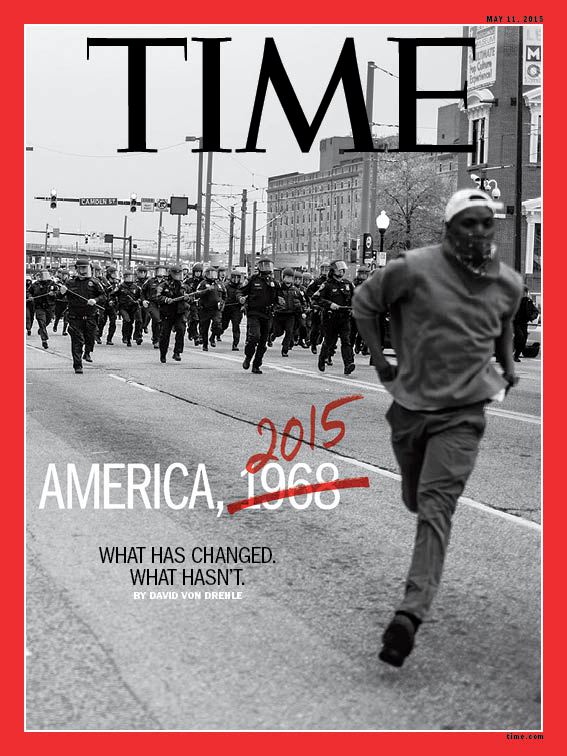
Why Race Riots Happen in US Cities

baltimore-cover-final

Recent images from Baltimore of citizens clashing with police, police in riot gear, and burning buildings appear similar to other riotous incidents in U.S. urban history.

One could go back to the late-90s in Wilmington, NC and see much, much worst.

During that urban upheaval, citizens destroyed parts of the town and forcefully removed dozens of members of a recently defeated political party.

But those rioters were white. The victims of mob violence were black. And the late-90s refers to the 1890s.

The Wilmington, NC, race war, like the NYC draft riots in 1863 and the violence that destroyed the Black sections of Tulsa, Oklahoma in 1921, represents one of many moments of urban racial violence in U.S. history.

If one wants to begin to try and understand what currently unfolds in the streets of Baltimore, one should bear in mind a few historical facts.

First, such violence has happened many times before. Urban race riots in the U.S. happened when civil society showed disregard for black life and people had no faith in their justice system.

Second, history matters a great deal in understanding why urban racial violence occurs, when it happens, and why it happens.

Commentators often discuss all of these moments of violence as race riots, as if they were all the same. They are not, especially when we take a long historical view of racial violence in American cities. Urban race riots from the early twentieth century are not even remotely similar to what people in the U.S. have called race riots since the 1940s.

The three examples I mentioned above featured riotous whites killing black citizens, often with tacit approval – and sometimes active participation – of local law enforcement.

The social, political, and historical context of the violence matters.

So does the very long history of this violence in our country.

We cannot understand what happens today without a deep knowledge of how this violence unfolded in the past, and the recent events that triggered a current conflagration.

Despite profound differences between various types of race riots in US cities, the long history of these destructive moments reveal four commonalities, which might help us understand what is happening in our current cities and how these events connect to past moments of urban racial violence.

One, urban race riots occur when large numbers of people have no or little faith in their current legal system to repair widely perceived injustices.

This fact is probably most important. It is why white men destroyed black Tulsa in 1921. It is why black people burned Los Angels in 1965 and 1992.

Two, violent uprisings usually occur in American cities when groups of people congregate, either in unplanned, spontaneous ways or after scheduled gatherings that descend into unfocused action. In Wilmington, NC, in 1898, the expulsion of black voters happened after a planned political coup led by Democrats. In Memphis in the spring of 1968, some marchers who supported the striking black sanitation workers peeled off from Dr. Kings nonviolent protest and broke windows of downtown stores.

Three, a large presence of law enforcement absent direct one-on-one engagement with angry protesters makes matters worse, not better.

No one really knows why riots stop when they do. But military forces and mass arrests, historically, do not help matters, at least not in the short term.

In Detroit in 1967, the National Guard caused even more deaths than happened during the initial riot.  Once the violence ceases, such police forces do keep order, but peace ensues more quickly and with less reverberations when representatives of civil society – mayors, governors, police forces, respected figures from the angered community – show empathy and try to connect with enraged citizens.

This happened in NYC in 1968 when the mayor and local leaders walked all around Black communities after MLK’s assassination. Some sporadic violence occurred in Harlem and Bed-Sty, but those areas did not burn like over 100 other places that April.

Four, riotous violence does long term damage to the social and economic stability of urban communities where they occur. Some people still point to the riots in Newark in 1967 and how the business districts in that city’s black sections never came back after that violence. Same with the once thriving U street in DC, which burned in 68 and was an economic desert until gentrification revitalized it, and not in ways that benefited low-income black Washingtonians. LA burned in 65 and all sorts of revitalization efforts went into effect, mostly through an organization called the Watts Labor Community Action Council. Then in 1992 the riots destroyed the WLCAC headquarters. The white riots in Tulsa in 1921 totally destroyed the Black business district, and the Black community there never recovered fully.

White riots against black people up through the 1940s and black riots against property and police from the 1960s through the present are certainly not the same types of urban violence. Not by a long shot.

But the long history of urban race riots in America and the contemporary case of Baltimore have some similarities and issues one should consider when trying to make sense of what is happening, and might happen in the future.

These riots in Baltimore did not just happen.

They reflect people’s lack of faith in their civil society – all of it – especially the justice system.

They happened when groups of people got together – sometimes in peaceful assembly and sometimes spontaneously – and then vented their anger and frustration through violence. This violence might be focused insofar as it targets specific objects of frustration, namely police officers and businesses; but it is largely uncoordinated.

A bold presence of law and order, absent direct outreach with angry citizens, or major peaceful protests, which are happening in Baltimore, will probably not make matters better in the short run. Most important, police force without empathy and understanding does not repair the initial lack of faith in the justice system.

The violence, the initial spark of Freddie Gray’s murder, and the rebellious violence that followed, hurts the areas where it happens in the long run. Businesses and communities destroyed by violence, especially ones where low-income people live, work and shop, do not do well in the long term after such violence.

A lot of people want to condemn the rioters in Baltimore harder and louder than they seem to condemn the malfeasance and violence that killed Freddie Gray. Others want to – need to – stay on message: the real injustice here is not broken windows, but broken spines, as DeRay McKesson said in a CNN interview. With so much coverage of burnt stores and broken windows and people throwing rocks at cops, the wider public can lose sight that, at the center of all this is another dead black man, and all known evidence indicates that police killed him.

If the U.S.  wants to address the causes of these riots in Baltimore people first need to address what killed Freddie Gray, and so many others: corrupt, brutal, police officers.

At the same time, history of urban racial violence in the U.S. since the 1960s shows that the people rioting may feel good in the short term, but in the long term their actions hurt the communities and the people their anger supposedly represents.

Those communities and people were in bad economic and social shape before the riots, and had been for a long time, and no one outside of them  seemed to care; not really.

If a contemporary urban race riot is “the language of the unheard,” as MLK said, than maybe America should wake up and listen to those people before they speak with rocks and fire.

Brian Purnell

Brian%20Purnell%200454Brian Purnell is Associate Professor of Africana Studies and History at Bowdoin College. He is the author of Fighting Jim Crow in the County of Kings: The Congress of Racial Equality in Brooklyn (Kentucky, 2013), which won the New York State Historical Association Manuscript Prize in 2012. He has worked on several public history projects with the Brooklyn Historical Society, the Bronx County Historical Society, the Brooklyn Public Library and the University of South Carolina. Before joining the faculty at Bowdoin, he worked for six years at Fordham University as Research Director of the Bronx African American History Project and as an Assistant Professor of African American Studies (2006-2010). He is currently working on two books. The first is an oral history autobiography of Jitu Weusi (Leslie Campbell), a prominent educator and Black Nationalist activist in Brooklyn, New York, during the Civil Rights and Black Power Movements. The second is a history of urban community development corporations since the mid-1960s tentatively entitled, “Unmaking Ghettos: The Golden Age of Community Development in America’s Black Metropolises.” Brian lives in Brunswick, Maine, with his wife, Leana Amaez, and their four children: Isabella, Gabriel, Lillian and Emilia.

Read Full Post »

Lyndon Johnson and the Dominican Intervention of 1965

By David Coleman

US troops patrol the streets near a food line in Santo Domingo on 5 May 1965 during the Dominican Crisis.
US troops patrol the streets near a food line in Santo Domingo
on 5 May 1965 during the Dominican Crisis.

LBJ Regretted Ordering U.S. Troops into Dominican Republic in 1965, White House Tapes Confirm; Yet He Insisted, «I’d do the same thing right this second.»

Dominican Intervention 50 Years Ago Sparked Mainly by Fear of Communists: «I Sure Don’t Want to Wake Up … and Find Out Castro’s in Charge,» President Said

New Transcripts of Key White House Tapes Clarify and Illuminate LBJ’s Personal Role in Decision-Making during the Crisis

National Security Archive Electronic Briefing Book No. 513

Posted – April 28, 2015
Edited by David Coleman
For more information, contact:
David Coleman, david@historyinpieces.com, 703/942-9245
or nsarchiv@gwu.edu, 202/994-7000

Washington, D.C., April 28, 2015 – President Lyndon Johnson regretted sending U.S. troops into the Dominican Republic in 1965, telling aides less than a month later, «I don’t want to be an intervenor,» according to new transcripts of White House tapes published today (along with the tapes themselves) for the first time by the National Security Archive at George Washington University (www.nsarchive.org).

Johnson ordered U.S. Marines into Santo Domingo 50 years ago today. Three weeks later, he lamented both that the crisis had cost American lives and that it had turned out badly on the ground as well as for the United States’ – and Johnson’s own – political standing. Nevertheless, he insisted he would «do the same thing right this second.»

In conversations with aides captured on the White House taping system, Johnson expressed sharp frustrations, including with the group surrounding exiled President Juan Bosch, whom the United States was supporting. Speaking in late May 1965, Johnson told an adviser, «they have to clean themselves up, as I see it, where we can live with them. Put enough perfume on to kill the odor of killing 20 Americans and wounding 100.»

Johnson’s public explanation for sending the Marines into Santo Domingo was to rescue Americans endangered by civil war conditions in the Dominican Republic. But his main motivation, the tapes and transcripts confirm, was to prevent a Communist takeover. Basing his decision largely on assertions by the CIA and others in the U.S. government that Cuba’s Fidel Castro had been behind the recent uprising, Johnson confided to his national security advisor, «I sure don’t want to wake up … and find out Castro’s in charge.»

That intelligence, along with other information Johnson received during the crisis, turned out to be erroneous – a possibility LBJ himself worried about at the time.

The tapes, transcript and introductory material presented in this posting were provided by David Coleman, former chair of the Presidential Recordings Program at the Miller Center at the University of Virginia, and a Fellow at the National Security Archive. As Coleman notes, the materials are revelatory about Johnson’s personal conduct of the crisis and his decision-making style as president. The transcripts, in several cases newly created by Coleman, are crucial to understanding the material on the tapes, which can be hard to decipher and are therefore often of limited usefulness on their own to researchers.

* * * * *

Lyndon Johnson and the Dominican Intervention of 1965

By David Coleman

Fifty years ago today, some 400 U.S. Marines landed in the Dominican Republic. By the end of the following day, over 1,000 more had landed. In the coming weeks, they were joined by U.S. Army forces. Eventually, tens of thousands of U.S. troops would be engaged in what became known as the Dominican Intervention, first as part of a U.S. unilateral military action and then under the auspices of an international force compiled by the Organization of American States.

President Johnson huddles with advisers in the Cabinet Room of the White House on April 28, 1965, just before delivering his televised speech announcing the deployment of U.S. Marines into Santo Domingo in the Dominican Republic. L-R: George Ball, Sec. Dean Rusk, President Lyndon B. Johnson, Jack Valenti, Richard Goodwin, unidentified, George Reedy, McGeorge Bundy, unidentified. Photo by Yoichi Okamoto / LBJ Library.

Four days earlier, the Dominican Republic had begun a spiral into civil war when members of the Partido Revolucionario Dominicano (Dominican Revolutionary Party) and their allies stormed the National Palace and installed a provisional president. Resistance from Loyalist forces led to escalating levels of violence.

A series of increasingly dire reports from the U.S. Ambassador to the Dominican Republic, William Tapley «Tap» Bennett, Jr., warning that the situation was getting dangerous for American citizens in the country and that outside influences were likely playing an influential role in the revolution convinced Johnson that he had to act and that he did not have the luxury of time to assemble an international coalition through the Organization of American States.

Against the advice of many of his senior advisers, Johnson personally decided to send in the Marines. Their declared mission was to protect and evacuate U.S. citizens from the island. As he explained it to a national television audience on the evening of April 28, it was «in order to give protection to hundreds of Americans who are still in the Dominican Republic and to escort them safely back to this country.»[1]

There was no mention of a communist threat in his public statement; nor had there been in his news conference comments the previous afternoon. Indeed, Johnson himself had specifically removed any such references from the drafts of his statement to encourage an emphasis on the peace-keeping and humanitarian aspects of the intervention. But there was a second important part of the military mission. As Chairman of the Joint Chiefs of Staff General Earle Wheeler put it in orders to General Bruce Palmer Jr., the commander of U.S. forces, the mission had two objectives, one announced and one unannounced.

Your announced mission is to save US lives. Your unannounced mission is to prevent the Dominican Republic from going Communist. The President has stated that he will not allow another Cuba—you are to take all necessary measures to accomplish this mission. You will be given sufficient forces to do the job.[2]

Johnson feared that Castro-ite and Communist forces were threatening to establish a Communist regime in the Dominican Republic. But there was little hard evidence of such influence—something Johnson suspected at the time and which prompted later private expressions of regret.

LBJ’s secretly recorded White House tapes provide a deeply textured and intimate view of his decision making during the crisis.[3]

The telephone had long been one of Johnson’s essential work tools, allowing him to neutralize geography and compress time in reaching out beyond the bubble of the Oval Office. During the Dominican crisis, he employed it extensively, connecting directly with Tap Bennet in Santo Domingo, and with Puerto Rico where Abe Fortas (the future Supreme Court justice) had volunteered his services as a line of communication with exiled president Juan Bosch. He was also able to get status reports at all hours directly from the duty officers in the White House Situation Room and the Pentagon Military Command Center.

President Lyndon Johnson on the telephone in the Oval Office on July 17, 1965. Photo by Yoichi Okamoto / LBJ Library.

But it did not always go smoothly. The lack of secure communications equipment meant that the President and his representatives in the Caribbean typically had to speak over open lines that were prone to interception or just the more mundane problem of crossed lines. In some cases, that led to absurdly convoluted codes being improvised that often created more confusion than clarity. In one call presented below, Johnson tells Secretary of Defense Robert McNamara to call Bennett in Santo Domingo to ask his opinion on whether to send in an additional 500 Marines. «Listen for him to cough right loud, and if he doesn’t, why, let’s move,» Johnson instructs.[4]

Reflecting Johnson’s own heavy personal involvement in directing the intervention, the crisis is represented on hundreds of tapes in the Johnson collection of secretly recorded White House telephone conversations. Below is only a small sampling taken mainly from the first days when the important decisions were being made about sending U.S. Marines into harm’s way and whether to escalate U.S. military involvement.

The transcripts presented here provide a cross-section illustrating Johnson’s personal management of the crisis. Some of them are entirely new; others are improved versions of transcripts that have been published elsewhere previously. Together they reveal the kind of information that the President was hearing, including when, how, and from whom. They reveal, strikingly and often jarringly, the kind of incomplete and often flawed information that was being used to make important decisions. And they show the gap between what was being said in public and what was being said in private, a phenomenon that had troubled the administration less than a year earlier in the Tonkin Gulf episode and would become increasingly important as the Vietnam War raged on.

* * * * *

Links to Tapes and Transcripts

[Note: The following tapes are available at the Lyndon B. Johnson Presidential Library, White House (WH) and Situation Room (SR) Series, Recordings and Transcripts of Conversations and Meetings.]

(See http://www.lbjlib.utexas.edu/johnson/archives.hom/Dictabelt.hom/content.asp.)

Read Full Post »

« Newer Posts - Older Posts »