El objetivo de este blog es fomentar el estudio de la historia de los Estados Unidos y analizar las prácticas, instituciones y discursos del imperialismo estadounidense.
Today’s guest discusses the history of sexuality in the workplace through the lens of male flight attendants. We speak with Phil Tiemeyer about the shifts and changes in the airline industry across the 20th century. Phil steers us through this history and reveals the importance and difficulty of braiding together race, gender, and sexuality in a study of the labor and capitalism.
Women and Children Picking Cotton.(Photo: Avery Research Center at the College of Charleston)
From the Editors…There is a currently a dust-up in political and historical forums over whether or not the Constitution sanctioned slavery or was an anti-slavery document. It is heated, and personal, and must, to many people, seem arcane. Who really cares, today, whether or not the Founding Fathers technically saw the nation as one based on slavery, when the reality was that the Constitution permitted the institution? Slavery existed before the American Revolution, it expanded afterward, and Americans had to fight a four-year war that cost more than $5 billion and 600,000 lives to end it.
So why does this issue matter so much?
It is really a fight about politics, and the nature of modern-day America.
Princeton professor Sean Wilentz launched the fight with an op-ed in the New York Times on September 16 shortly after Bernie Sanders said that the United States was “created…on racist principles.” Wilentz, a long-time Clinton supporter, vehemently disagreed. He insisted that the Constitution, which established the nation, was anti-slavery because it kept slavery a local, rather than a national, institution.
The larger question at stake in this argument is about whether or not America needs to address a history of inequality that is knit into the fabric of our society, or whether the problems we see today are largely policy issues that are not part of the nation’s fundamental make-up. This translates to politics because Sanders has been a more vocal supporter of the Black Lives Matter movement than Hillary Clinton has been. At a more general level, though, it is a fight about how to incorporate new voices into a discussion about America’s future.
We’re History believes the best way to address these questions is by looking at what, exactly, happened in the past. Today Professor Joshua D. Rothman from the University of Alabama explains how the Constitution encouraged the growth of slavery.
Critics of Sean Wilentz’s essay in the September 16 New York Times have rightfully noted that contrary to Wilentz’s claims, the Constitution quite clearly entrenched racial slavery in the national government and made it a national institution. The Constitution contained enough ambiguity to allow antislavery forces to maintain by the middle of the nineteenth century that the federal government could legitimately put slavery on the path toward extinction. But to make the case that the Constitution was nationally antislavery in intent in 1787 is to read history backwards from 1865.
Perhaps more significantly, such an argument makes American history in the years between the ratification of the Constitution and the outbreak of the Civil War difficult if not utterly impossible to understand. For if the Constitution was indeed, in Wilentz’s words, “based on a repudiation of the idea of a nation dedicated to the proposition of property in humans,” slavery never should have become an even more powerful force in American life after ratification than it had ever been before. If the Constitution was truly antislavery at a national level, the enslaved population that stood at around 700,000 in 1790 never should have increased nearly sixfold to roughly 4,000,000 people by 1860, at which point the United States had the largest enslaved population on the planet. The landscape of slavery and the number of people imprisoned on it in the United States expanded not because white southerners somehow conspired against the intentions of the framers, but because structurally and politically the Constitution encouraged it.
Some of the men involved in drafting the Constitution did believe that the institution of slavery was morally problematic and hoped that it would fade over time before effectively ending on its own. Given the declining Chesapeake tobacco economy of the late eighteenth century, it was not unreasonable to imagine that the compromises that made slavery part of the infrastructure of the national government were temporary expedients that would largely cease to matter within a generation or two. Even as some northern states began moving toward gradually emancipating their enslaved populations, however, no constitutional provision was ever made to nudge the nation as a whole in that direction, and in short order after ratification the burgeoning cotton economy of the southwest shattered the illusion that slavery might somehow simply disappear.
If any sense of urgency for moving against slavery at the national level ever really existed around the time of ratification, congressmen abandoned it quickly. In the late 1790s, Congress formally opened for settlement the Mississippi Territory, comprising what is now Mississippi and Alabama, and, after briefly debating alternatives that were within its power to enact, endorsed slavery’s legality there. The United States then acquired the massive Louisiana Territory in 1803. Here too lay an opportunity for the national government to demonstrate its commitment at least to restricting slavery’s growth if not to ending it. But no such commitment existed, and white settlers expanded slavery throughout the Southwest. In the region of the Mississippi Territory alone, the enslaved population increased from fewer than 4,000 people in 1800 to more than 180,000 by 1830.
To the extent that Congress used the Constitution to circumscribe slavery at all, it did so in ways that actually entrenched the institution and nurtured its growth. The Missouri Compromise of 1820, for example, drew a line across the Louisiana Purchase above which federal law banned slavery’s expansion. But it simultaneously recognized and affirmed federal support for slavery’s expansion below the line. Then Congress demonstrated its support for that expansion through its program of Indian removal that used federal money and military might to clear Native Americans off millions of acres of cotton land for white slaveholders to exploit.
Similarly, while Congress did enact legislation to abolish the transatlantic slave trade as soon as it was constitutionally permissible in 1808, it simultaneously gave national license for Americans to engage in the domestic slave trade that had been growing in the United States to feed white demands for labor in the cotton lands. The very same legislation that barred the importation of enslaved Africans for sale placed no restrictions on the sale of enslaved people across state lines. On the contrary, the law required only that ships transporting enslaved people from the failing tobacco fields of Maryland and Virginia to the thriving cotton and sugar regions of the Southwest had to document on their manifests that their cargo had lived in the United States by 1808. Congress thus had the explicit constitutional power to regulate interstate commerce, and at the very moment the minds of its members turned to the horrors of the transatlantic slave trade, they used that power to legitimize the domestic slave trade as an acceptable form of commercial exchange in the United States.
All of these developments had their greatest meaning in the places where slavery continued to exist in the nineteenth century, but all of them were national in significance. Cotton only grew in the South, but by the 1830s it was by far the nation’s most vital export. Slave-grown cotton made up more than half of everything the United States shipped overseas, and it fueled the early Industrial Revolution specifically and the evolution of American capitalism more generally. Enslaved people were traded only in the South, but the profits from their sales were shared nationally, and even internationally, as banks scattered across the United States and England provided the credit that facilitated the trade. In fact, during the 1820s and 1830s, the years when the trade was arguably at its most flourishing, that credit came directly from the federal government, with the Second Bank of the United States pouring millions in government funds into the Southwest.
Growing numbers of American antislavery activists understood that the profits of slavery accrued generally in the United States. As abolitionist Joshua Leavitt put it in 1840, the wealth produced by slavery was “the common plunder of the country.” And abolitionists understood equally well from whence the authority to carry out what Leavitt called “this general robbery” of the enslaved ultimately derived. One might make the case that the Constitution’s omission of the word “slavery” eventually helped enable that institution’s demise. But that linguistic squeamishness notwithstanding, only the fact that the Constitution confirmed the legitimacy of racial slavery can explain its explosive growth before the Civil War.
About the Author
Joshua D. Rothman is Professor of History and Director of the Frances S. Summersell Center for the Study of the South at the University of Alabama. He is the author, most recently, of Flush Times and Fever Dreams: A Story of Capitalism and Slavery in the Age of Jackson (2012), and is currently working on a book about the slave traders Isaac Franklin, John Armfield, and Rice Ballard.
Bonnie Parker and Clyde Barrow, sometime between 1932 and 1934 . Wikipedia.
Gangster James “Whitey” Bulger had been gone for sixteen years, vanished into the American landscape. The brutal New England mob boss, who murdered numerous people and controlled a powerful mafia family for more than twenty years, and at the same time betrayed his men as an FBI informer, had disappeared like a puff of smoke. Then, suddenly, in 2011, he was arrested in Santa Monica, California. A crime stopper television show aired a biography of him and the secretive, ordinary looking old man who lived in an apartment in Venice Beach with his longtime girlfriend not only surrendered without a classic movie shootout, but surrendered without even a whimper.
Whitey Bulger’s story is the basis for new Johnny Depp movie, Black Mass, that opens this week. The movie recounts the odd life of Whitey, whose brother Bill, astonishingly, was the President of the Massachusetts State Senate and the President of the University of Massachusetts.
It is yet another American gangster movie. The mob movie has been a staple of American entertainment history since the silent movie era. It flourished after the arrival of sound with movies such as The Public Enemy and Little Caesar. The public’s love of the gangster boomed again in the late 1940s with film noir hoods like actor Richard Widmark, and crested in the 1970s with The Godfather movies. They were seen along with crime classics such as Bonnie & Clyde, Goodfellas, The Departed. Donnie Brasco and the HBO television series The Sopranos, starring Tony Soprano and his lovable New Jersey crew, understanding wife and troublesome kids.
The gangster movie is not only as American as apple pie; it is better than apple pie. You finish an apple pie; the mob movie never disappears.
Why do we love gangsters and crime cinema so much? They represent everything that America, and Americans, do not stand for. They focus on brutish, murderous thugs whose sole goal is accumulating power and money by using fear tactics. They will do anything to anybody to get ahead, regardless of how many laws they break or people they shoot.
We should hate gangsters, real or Hollywood, and yet we embrace them. Why?
The film and TV gangsters are a cultural phenomenon that dates back to the turn of the 20th century and the arrival in America of the Italian mafia, then called ‘The Black Hand.’ They split up into various “families” in New York and then in other American cities as organized crime, the mafia, the mob, the underworld – call it what you will – and succeeded not just in the streets, but in the box offices of theater and later on television stations.
Why?
The screen or television gangster is somebody many Americans wish they could be – tough, resilient, fearless – but, of course, we are not. The hoods live in a chaotic, violent world that Americans want to control themselves, but not really. We love to admire them, to talk about them, read about them and see them on the silver screen and wish we could be them – up to ‘the line,’ the line that, of course, we do not cross. We just sit back and live like them, machine guns and all – vicariously.
The Hollywood mobster is an historic character. He got his start in the early days of sound film because during the 1920s, thanks to endless media attention, he had already become a major figure on the American scene. Most of the early real life gangsters were immigrants who could not succeed in American because of persecution and discrimination against ethnic groups. So, nowhere else to go, they turned to crime. They had to turn to crime, shrugged Americans. Since all of us are, way back, immigrants from somewhere, we understood that.
The gangsters left us alone. They went about their business – robbery, murder, kidnapping, extortion – but did not bother the average citizen. They were successful, made a lot of money and lived in large homes. Nobody loves successful people like Americans. The mobsters were admired for their ability to rise above discrimination and succeed. By 1930, Americans saw them just like other people successful people– well-dressed men who drove flashy cars, hung out at posh night clubs, mingled with movie stars, dated beautiful women and lived the American dream. They achieved what we all wanted to achieve. They just did it in a different way.
What movie writers did was take the real gangster, sanitize him, glamorize him and put him on the big screen as a hero. He was the immigrant tough guy who blasted his way to the top. The judges, public officials and cops were the villains in all those 1930s gangster movies (did they all star James Cagney or did it just seem that way?). They were Robin Hoods with machine guns.
The movie gangster succeeded because real life gangsters of the era, such as Al Capone, Bonnie and Clyde and John Dillinger, had also become folk heroes, thanks to huge press coverage of their lives. The movies just took real life, put some make up on it, added music, printed posters and rolled the cameras.
In his wonderfully analytic book, Inventing the Public Enemy, David Ruth wrote of Capone that “In press conferences, interviews with reporters and a highly theatrical social life, Al Capone worked as hard as any movie star to create a favorable public image…. He was the subject of popular books, numerous pulp publications, movies and feature articles in newspapers and magazines ranging from Master Detective to Collier’s.”
The gangster movie was in a lull from the late ‘30s to the late 40’s and then from the early 1950s to the early 1970s. Then came Marlon Brando (“I’ll make him an offer he cannot refuse”), Al Pacino and Robert DeNiro in the Godfather movies. The public loved the Corleones and despised anybody trying to injure them, such as the FBI, the New York City Police Department and the Supreme Court.
The Corleones, and all screen gangsters, were good people. They never killed people out of personal hatred. It was all “just business.” They loved their wives, were good family men, raised kids, went to church and respected each other. They were men who acted like all men wanted to act. They just had a different type of job, that’s all – real different. They died just like we all died, except they died suddenly.
The Sopranos cemented the role of the beloved gangster in American entertainment. There were only two endings for Tony Soprano as the series was going to off the air – murder or prison. The public did not want that, though. In a New Jersey Star Ledger poll, over 80% of those queried begged the producer of The Sopranos to somehow let Tony live. The public loved Tony. He was everybody’s favorite uncle. He cared for his wife, loved his kids, helped his family, fought with his mother and Uncle, put up with his shrink and always tried to do what he could, with his working class, immigrant background, to get ahead in America. Tony Soprano did kill a lot of people but … oh, well.
So your son wants to be a doctor, an architect, a United States Senator? Your daughter wants to be an engineer, college professor, scientist?
Just remember one of the first lines in the mob movie Goodfellas. “As far back as I could remember, I always wanted to be a gangster. To me, being a gangster was better than being President of the United States.”
Bruce Chadwick lectures on history and film at Rutgers University in New Jersey. He also teaches writing at New Jersey City University. He holds his PhD from Rutgers and was a former editor for the New York Daily News. Mr. Chadwick can be reached at bchadwick@njcu.edu.Bruce Chadwick lectures on history and film at Rutgers University in New Jersey. He also teaches writing at New Jersey City University. He holds his PhD from Rutgers and was a former editor for the New York Daily News. Mr. Chadwick can be reached at bchadwick@njcu.edu.
– See more at:Why We Have Loved Gangster Movies for 100 Years
The ferocity with which Richard Nixon and Henry Kissinger bombed Cambodia, along with the desire to inflict extreme pain on North Vietnam, had a number of motivations. Some were explicit — to wring concessions out of Hanoi; to disrupt the National Liberation Front’s supply and command-and-control lines — and others implicit — to best bureaucratic rivals; to look tough and prove loyalty; to appease the Right.
“Savage was a word that was used again and again” in discussing what needed to be done in Southeast Asia, recalled one of Kissinger’s aides, “a savage unremitting blow on North Vietnam to bring them around.”
But there’s another way to think about the savagery, along with the wild, off-the-books way their air assault was carried out.
Everything about the secret operation seemed to be a reaction to the man Kissinger identified as the ultimate technocrat: Kennedy’s and Johnson’s secretary of defense, Robert McNamara. In office from 1961 to 1968, McNamara is famous for imposing on the Pentagon the same integrated system of statistical analysis he had, in the previous decade, used to rescue the Ford Motor Company.
“McNamara’s revolution” continued reforms that had been underway since World War II, but in a much more intensified and accelerated fashion. McNamara’s “whiz kids” sought to subordinate every aspect of defense policy — its lumbering bureaucracy, its cornucopia budget for equipment appropriation, its doctrine, tactics, chains of command, its supply logistics and battlefield maneuvers — to the abstract logic of economic modeling. Intangibles that couldn’t be graphed or coded into an economic model — will, ideology, culture, tradition, history — were disregarded. McNamara even tried, without success, to impose a single, standard uniform on all the different branches of the armed services.
As might be expected, such efforts to achieve “cost effectiveness” greatly expanded paperwork. Every operational detail was recorded so that, back in DC, teams of economists and accountants could figure out new opportunities for further rationalization. Finance and budget came under special scrutiny; among McNamara’s early major reforms was to “develop some means of presenting” the Pentagon’s “costs of operation in mission terms.” What this meant for the Strategic Air Command is that every gallon of fuel was accounted for, every flight hour recorded, every spare part used, along with every bomb dropped.
Kissinger’s plans to bomb Cambodia — plans worked out with Air Force colonel Ray Sitton, who was also skeptical of McNamara’s methods — weren’t quite the antithesis of McNamarian bureaucracy. They were more a shadow version, or perversion, of that bureaucracy.
According to Sitton, Kissinger approved a highly elaborate deception to circumvent “the Strategic Air Command’s normal command and control system — highly classified in itself — which monitors for budgetary requirements such items as fuel usage and bomb tonnage deployed.” A “duel reporting system” was established; briefings of pilots focused exclusively on objectives inside South Vietnam, but once in the air, radar sites would redirect a certain number of planes to their real destination in Cambodia. All documentation — maps, computer printouts, messages, and so on — that might reveal the true targets was burned.
“Every piece of paper, including the scratch paper, the paper that one of our computers might have done some figuring on, every piece of scrap paper was gathered up,” Maj. Hal Knight, who carried out the falsification on the ground in South Vietnam, testified to Congress in 1973: “I would wait until daylight, and as soon as that time came, I would go out and burn that.”
For Kissinger and the other men who bombed Cambodia for four years, this was a way of subverting the soulless enervation of “systems analysis,” of taking war out of the hands of bureaucrats and giving it back to the warriors.
Kissinger was much more aware of the philosophical foundation of his positions than most other postwar defense intellectuals. Yet, what is more important, at least in terms of understanding the evolution of the national security state, is how his critique reflects a deeper current in American history.
The idea that spirit and intuition need to be restored to a society that had become “overcivilized” and “overrationalized,” too dependent on logic, instruments, information, and mathematics, has a pedigree reaching back at least to the late 1800s. “Life is painting a picture, not doing a sum,” said Oliver Wendell Holmes, in a 1911 Harvard address (quoted by Kissinger in his undergraduate thesis).
Throughout the twentieth century, and into the twenty-first, every generation seemed to throw up a new cohort of “declinists,” militarists who warn about the establishment’s supposed overreliance on data and expertise, complain about the caution generated by too much bureaucracy, protest the enervation that results from too much information. The solution to such lassitude is, inevitably, more war, or at least more of a willingness to wage war, which often leads to war.
Kissinger, in the 1950s and 1960s was part of one such cohort, contributing to the era’s right-wing lurch in defense thinking, the idea that we needed to fight little wars in gray areas with resolve. In the mid-1970s, ironically, he himself was a primary target of just such a critique, at the hands of Ronald Reagan and the first generation of neoconservatives.
But before we get to that irony, there’s another worth considering: the role that one of Robert McNamara’s left-behinds, the economist Daniel Ellsberg — a man who liked to do his sums, whose understanding of the way the world worked was so diametrically opposed to Henry Kissinger’s metaphysics that he might be thought of as an anti-Kissinger — had in bringing down the Nixon White House.
Henry Kissinger and Daniel Ellsberg did their undergraduate and graduate studies at Harvard around the same time, both young veterans on scholarship and both brilliant and precocious. And it was Ellsberg, stationed in the US embassy in Saigon, who briefed Kissinger during his first visit to South Vietnam.
Like Kissinger, Ellsberg was interested in the question of contingency and choice in human affairs. But Ellsberg approached the subject as an economist, going on to do groundbreaking work in game theory and abstract modeling. Focused on atomized individuals engaged in a series of rational cost-benefit transactions aimed to maximize their advantage, these methods were far removed from Kissinger’s metaphysical approach to history, ideas, and culture.
Kissinger, in fact, had Ellsberg’s kind of methodology in mind when he criticized, in his undergraduate thesis, the smallness of American social science and the conceits of “positivism,” the idea that truth or wisdom could be derived from logical postulates or mathematical formulas.
Ellsberg spoke the language of axioms, theorems, and proofs, and believed that sentences like this could help defense strategists plan for nuclear war:
For any given probability distribution, the probability of outcome a with action III is p(A ∪ C) = PA + PC. The probability of outcome a with action IV is p (B ∪ C) = PB + PC. . . . . This means there must be a probability distribution, PAPB PC (0 ≤ pi ≤ p ∑ pi = 1), such that PA > PB and PA + PC < PB +PC. But there is none.
In contrast, Kissinger the metaphysician, wrote things like:
It does not suffice to show logically deduced theorems, as an absolute test of validity. There must also exist a relation to the pervasiveness of an inward experience which transcends phenomenal reality. For though man is a thinking being, it does not follow that his being exhausts itself in thinking. . . . the microcosm contains tension and polarity, the loneliness of the individual in a world of strange significances, in which the total inner meaning of others remains an eternal riddle. Rhythm and tension, longing and fear, characterize the relationship of the microcosm to the macrocosm.
The clash between these two ways of thinking about human experience would play themselves out in the first few months of Kissinger’s tenure as Nixon’s national security adviser.
Shortly before Nixon’s inauguration, Ellsberg, in a meeting with Kissinger at the president-elect’s headquarters at the Pierre Hotel in Manhattan, offered some advice. He related a story of how Robert McNamara, soon after being named secretary of defense, shook up the bureaucracy by immediately flooding Pentagon officers and staff with written questions. The answers he received weren’t important. McNamara was merely establishing his dominance.
Ellsberg suggested Kissinger do something similar: draft questions on controversial issues and send them out to the whole bureaucracy, to every agency and office. The agency principally responsible for any given subject, Ellsberg predicted, would have one opinion on the matter, and secondary agencies would have another, and the difference between the two opinions would provide a useful map of the ambiguities, doubts, and uncertainties that existed in the bureaucracy.
But, Ellsberg said, there was another, more Machiavellian reason to conduct the survey. The “very revelation of controversies and the extremely unconvincing positions of some of the primary agencies,” he said, “would be embarrassing to the bureaucracy as a whole. It would put the bureaucrats off-balance and on the defensive relative to the source of the questions — that is, Kissinger.”
“Kissinger,” Ellsberg remembered, “liked the sound of that.”
The questions, as Ellsberg predicted, prompted a backlash. Soon a counterproposal for reorganizing the NSC around the State Department began to float around, which allowed Kissinger to identify potential rivals. The proposal was quashed and its authors were sidelined.
That first stage of the exercise worked well for Kissinger. The next, not so much.
Kissinger had asked Ellsberg to collate, analyze, and average the responses to the questions related to the Vietnam War, over five hundred pages in total. The gloom revealed by the survey was astounding.
Even those hawks “optimistic” about the pacification of Vietnam thought that it would take, on average, 8.3 years to achieve success. All respondents agreed that the “enemy’s manpower pool and infiltration capabilities can outlast allied attrition efforts indefinitely” and that nothing short of perpetual troops and bombing could save South Vietnam.
When the findings were presented to Kissinger, he must have immediately recognized the trap he had fallen into. For all his warnings about how the “accumulation of facts” by technocrats like Ellsberg has the effect of sapping political will, Kissinger had foolishly given him free rein to, in effect, data mine the bureaucracy, providing him with hard evidence that the majority of the foreign service thought the war either was unwinnable or could be won only with actions that were politically impossible: permanent occupation or total obliteration.
Kissinger was the statesman, Ellsberg the expert. And according to Kissinger’s worldview, Ellsberg shouldn’t have existed, or at least he shouldn’t have done what he did.
Ellsberg was what Kissinger in his undergraduate thesis called a “fact-man.” His faith in data, his belief that he could capture the vagaries of human behavior in mathematical codes and then use those codes to make decisions, should have led him to a state of, if not paralysis, then predictability.
Kissinger would later boast about the difference between statesmen and experts, writing “the scope of the statesman’s conception challenges the inclination of the expert toward minimum risk.” But it was Ellsberg who was speaking out against the war and then leaking top-secret documents, taking a tremendous risk, including the possibility of imprisonment. And with this one audacious act, he changed the course of history.
The difference between Ellsberg and Kissinger is illustrated by the Pentagon Papers themselves. The “major lesson” offered by the massive study, Ellsberg thought, “was that each person repeated the same patterns in decision making and pretty much the same policy as his predecessor without even knowing it,” thinking that “history had started with his administration, and had nothing to learn from earlier ones.” Ellsberg, the economist, believed that breaking down history into discrete pieces and studying the decision making process, including the consequences of those decisions, provided a chance to break the destructive pattern.
But when Ellsberg tried, in their last meeting before leaking the documents, to get Kissinger to read the papers, Kissinger brushed him off.
“Do we really have anything to learn from this study?” he asked Ellsberg, wearily. “My heart sank,” recalls Ellsberg.
On Monday, June 14, 1971, the day after the New York Times published its first story on the papers, Kissinger exploded. He waved his arms, stomped his feet, and pounded his hands on a Chippendale table, shouting: “This will totally destroy American credibility forever. . . . It will destroy our ability to conduct foreign policy in confidence. . . . No foreign government will ever trust us again.”
The Pentagon Papers were a bureaucratic history of America’s involvement in Southeast Asia up until Johnson’s presidency. There was nothing specifically damaging to Nixon. But it was Kissinger’s “fury” that convinced Nixon to take the matter seriously. “Without Henry’s stimulus,” John Ehrlichman said, “the president and the rest of us might have concluded that the Papers were Lyndon Johnson’s problem, not ours.”
Why? The leak was bad for Kissinger in a number of ways. He was just then negotiating with China to reestablish relations and was afraid the scandal might sabotage those talks. He feared that Ellsberg, working with other dissenters on the NSC staff, might have breached the closed informational circuit that he had worked hard to establish, perhaps even acquiring classified memos on Cambodia.
Also, on a more abstract level, the Pentagon Papers really were something conjured out of Kissinger’s worst anti-bureaucratic fever dream. The project was a huge endeavor, written by an anonymous committee staffed by scores of what Robert McNamara called “knowledgeable people” drawn from the mid-level defense bureaucracy, universities, and social science think tanks.
Headed by two “experts,” Morton Halperin and Leslie Gelb, the committee based its findings on the massive amount of paperwork produced by various departments and agencies over the years — what Kissinger in his undergraduate thesis dismissed as the “surface data” of history. Missing, therefore, from its conclusions was what the young Kissinger would have described as the immanent possibility, the contingency, the intuition, and “freedom” that went into every decision point.
But Kissinger’s rage was also as much about the leaker as about the leak, obvious in the way he swung between awe and agitation when describing Ellsberg to his coconspirators, as almost Promethean in his intellect and appetites. “Curse that son of a bitch, I know him well,” he began one Oval Office meeting.
Kissinger keyed his performance to stir up Nixon’s varied resentments, depicting Ellsberg as some kind of liberal and hedonisticsuperman — smart, subversive, promiscuous, perverse, and privileged: “He’s now married a very rich girl,” Kissinger told Nixon. “Nixon was fascinated,” Ehrlichman said. “Henry got Nixon cranked up,” Haldeman remembered, “and then they started cranking each other up until they both were in a frenzy.” “Kissinger,” he said, “was absolutely infuriated and, in his inimitable fashion, managed to beat the president into an equal froth of fury.” Alexander Haig said that Kissinger, “did drive the president’s concern” about the leak.
It was in the meeting where Kissinger gave his most detailed denunciation of Ellsberg that Nixon ordered a series of illegal covert operations, putting Nixon on the road to ruin. These included the break-in at the Democratic National Committee headquarters at the Watergate Hotel and the burglary of Ellsberg’s psychiatrist’s office in California, hoping to find information that could be used to “discredit his character.”
“He’s nuts, isn’t he?” Haldeman asked Kissinger, about Ellsberg, in one of their meetings.
“He’s nuts,” Kissinger answered.
For what must have been for him a long year, between mid-1973 and mid-1974, it seemed Henry Kissinger, now holding the position of both national security adviser and secretary of state, was going down with Richard Nixon, along with his top aides.
Kissinger almost got caught on Cambodia, when Maj. Hal Knight sent a whistle-blowing letter to Senator William Proxmire informing him of his falsification of records. The Senate Armed Services Committee held hearings through the middle of 1973, and Seymour Hersh came very close to establishing Kissinger’s involvement in setting up the dual record reporting system. Hersh couldn’t confirm Kissinger’s role (he would at a later date) but that didn’t let Kissinger off the hook.
In June 1974, Hersh widened the net, filing stories fingering Kissinger for the first round of illegal wiretaps the White House set up, done in the spring of 1969 to keep the Cambodia bombing secret. Reporters, senators, and representatives were circling, asking questions, digging up more information, issuing subpoenas.
Landing in Austria, en route to the Middle East, and finding that the press had run more unflattering stories and editorials, Kissinger took a gamble. He held an impromptu press conference and threatened to resign (this was June 11, less than two months before Nixon’s resignation). It was by all accounts a bravura turn. “When the record is written,” he said, seemingly on the verge of tears, “one may remember that perhaps some lives were saved and perhaps some mothers can rest more at ease, but I leave that to history. What I will not leave to history is a discussion of my public honor.”
The bet worked. The press gushed. He “seemed totally authentic,”New YorkMagazine wrote. As if in recoil from the unexpected assertiveness they had shown in recent years, reporters and news anchors rallied around. The rest of the White House was being revealed to be little more than a bunch of shady two-bit thugs, but Kissinger was someone America could believe in.
“We were half-convinced,” Ted Koppel said in a documentary in 1974, just after Kissinger’s threatened resignation, “that nothing was beyond the capacity of this remarkable man.” The secretary of state was a “legend, the most admired man in America, the magician, the miracle worker.”
Kissinger, Koppel said, “may be the best thing we’ve got going for us.”
From Hoover’s FBI to George W. Bush’s White House, officials have been hiding their communications for decades.
By Athan G. Theoharis
The Nation September-October 2015
Recent revelations that, during her tenure as secretary of state, Hillary Clinton maintained a private e-mail server separate from the State Department’s official one raise a question that transcends the current debate over whether she compromised national security: Was the former secretary’s decision exceptional, or did it reflect what had been (and conceivably remains) the practice of senior White House and intelligence-agency officials to preclude, or at least minimize, the exposure of controversial, even illegal policy decisions?
Clinton’s reliance on a private e-mail account ensured that, because her communications were not logged into the State Department’s records system, she alone could determine which of them would be destroyed and which would be saved. A further issue involves the inadvertent discovery of her actions—that is, as the by-product of Congress’s narrow inquiry into the Benghazi matter. This inadvertent revelation raises an additional query: Did other senior administration and intelligence officials, unwilling to rely solely on classification restrictions, devise special procedures to prevent the discovery of their actions? For, as we belatedly learned through the congressional investigations of the 1970s and ’80s and the release of records in response to Freedom of Information Act requests, senior intelligence officials involved in controversial and politically sensitive operations had purposely and covertly instituted a series of separate procedures to keep and destroy records.
Dating from the early 1940s, for example, FBI director J. Edgar Hoover maintained especially sensitive records in two secret office files that were separate from the FBI’s central records system. Those records documented the FBI’s illegal investigative techniques and the collection of derogatory information on prominent Americans. Hoover also instituted a series of special records and record-destruction policies (“Do Not File,” “June Mail,” and blue, pink, or informal memorandums), and he authorized senior FBI officials to regularly purge the contents of their own secret office files.
In 1973, responding to the creation of the Senate Watergate Committee, CIA director Richard Helms ordered the destruction of all the tapes and transcripts of his office and telephone conversations. CIA officials also authorized the use of “soft files” and “privacy channels” to send (and then destroy) sensitive communications—and specifically authorized the destruction of the agency’s records on its infamous drug program, MK-ULTRA; on Chile’s Manuel Contreras (head of the country’s murderous secret police under dictator Augusto Pinochet); and on the CIA-engineered 1953 coup that overthrew President Mohammad Mossadegh in Iran.
The National Security Agency similarly created special records and record-destruction policies involving two illegal programs: Project Minaret (running from 1967 to 1973, it intercepted the international communications of anti–Vietnam War and civil-rights activists) and Project Shamrock (running from 1947 to 1975, it intercepted telegraph messages in transit to and from the United States). And Oliver North, a National Security Council aide in the Reagan administration, created a “do not log” procedure to manage communications to his boss, John Poindexter—and then, when the Iran/Contra scandal broke, destroyed those records (although North’s ignorance that the NSC computer system maintained a backup memory allowed investigators to reconstruct some of those records).
At a time when the public and Congress are exploring how the George W. Bush administration, by classifying records on national-security grounds, was able to secretly authorize the NSA’s Terrorism Surveillance Program and the CIA’s rendition and torture programs, it is equally important to explore whether the secret procedures employed in the past continue. Bush White House officials created special e-mail accounts for their communications with the Republican National Committee—and it was subsequently revealed that many of those e-mails had been destroyed or were missing. More seriously, attorneys from the Office of Professional Responsibility found, in the course of their investigation into legal rulings by Justice Department attorneys John Yoo, Patrick Philbin, and Jay Bybee, that many of their e-mails were missing and that “most of” Yoo’s and Philbin’s e-mail records covering the period from July to August 2002 “had been deleted and were not recoverable.” In addition, forewarned of Congress’s intent to convene hearings on CIA interrogation practices, agency officials in 2005 destroyed 92 videotapes of the CIA’s brutal treatment of Al Qaeda detainees Abu Zubaydah and Abd al-Rahim al-Nashiri.
These recent practices not only confirm that Hillary Clinton’s actions were notexceptional; they underscore the need for a broader examination of the US government’s practices for keeping records to ensure the effectiveness of congressional and judicial oversight.
Athan G. Theoharis, a professor of history at Marquette University, is the author, most recently, of The FBI and American Democracy: A Brief Critical History (Kansas).
Sandy Koufax.(Photo: USC Digital Library, California Historical Society)
On September 9, 1965, Californians celebrated the 115th anniversary of their statehood. But in the state that day, the big event happened in Los Angeles. Half a century later, one game between the Dodgers and the Chicago Cubs resonates in baseball history, both for the game itself and for the media’s relationship to it.
In that game, Sandy Koufax pitched for the Dodgers and Bob Hendley for the Cubs. It seemed like a mismatch. The Dodgers were half a game out of first place, tied for second with an 80-61 record; the Cubs were eighth, at 65-77. Koufax entered the game with a 21-7 record on his way to his second Cy Young Award in three years – at a time when one pitcher received the award, not one from each league. Hendley was 2-2 and had been traded to the Cubs earlier that year. It was just another Thursday night at Dodger Stadium, which was a little more than half-filled: 29,139 in the 56,000-seat park.
But it proved to be much more than a normal match. Hendley pitched the game of his life. He allowed only one hit, a double that barely reached the outfield grass, and the Dodgers stranded the runner. He gave up one walk in the fifth inning – to the same batter who later had the hit, Lou Johnson, who then went to second on a sacrifice, stole third, and scored when the catcher threw the ball into left field.
And yet, despite his extraordinary performance, Hendley was the second best pitcher that night. Koufax had trouble warming up, as usual; doctors had diagnosed an arthritic elbow the previous year, and if he didn’t realize at the time that his career would come to an early end, he soon would. But once the game started, Koufax was even harder to hit than usual. He already had pitched three no-hitters – one of the few pitchers in baseball history to achieve that. But as the game rolled on, no one had reached base. A perfect game was within reach.
The voice of the Dodgers, Vin Scully, had broadcast the three previous no-hitters. Usually, he would ask the radio station to record the ninth inning of a game like this as a keepsake for the pitcher. But what, he thought to himself, could he do to make it special? Scully began the ninth:
Three times in his sensational career has Sandy Koufax walked out to the mound to pitch a fateful ninth when he turned in a no-hitter. But tonight, September the 9th, 1965, he made the toughest walk of his career, I’m sure, because through eight innings he has pitched a perfect game.
As the count went to 1-2 on the Cubs’ leadoff hitter in the ninth, catcher Chris Krug, Scully said, “It is 9:41 p.m. on September the 9th.” Although minor league teams have begun using a clock to speed up the game, and pitchers have a rarely enforced time limit on when they must pitch, the beauty (some would say curse) of baseball is that it has no clocks. By giving the time, Scully attached a special importance to what Koufax was accomplishing.
Krug struck out. So did pinch-hitter Joe Amalfitano. After the next pinch-hitter, Harvey Kuenn, took a strike, Scully said of Koufax, “He has struck out, by the way, five consecutive batters, and this has gone unnoticed.”
Koufax fell behind Kuenn on the count, then evened it up. Then came the conclusion:
It is 9:46 p.m. Two and two to Harvey Kuenn. One strike away. Sandy into his windup. Here’s the pitch: swung on and missed, a perfect game!
Then came a long pause as the crowd cheered, roaring for several seconds as Scully remained silent. Having begun the story by reminding his audience what Koufax had done before, Scully explained the depths of his accomplishment, and the number of times “K,” representing strikeouts, appeared in the scorebook:
On the scoreboard in right field it is 9:46 p.m. in the city of the angels, Los Angeles, California, and a crowd of 29,139 just sitting in to see the only pitcher in baseball history to hurl four no-hit, no-run games. He has done it four straight years, and now he capped it: on his fourth no-hitter, he made it a perfect game. And Sandy Koufax, whose name will always remind you of strikeouts, did it with a flourish. He struck out the last six consecutive batters. So, when he wrote his name in capital letters in the record book, the “K” stood out even more than the “O-U-F-A-X.”
The recording that Scully asked the radio station to make became a vinyl record that the Dodgers promotion director, Danny Goodman, sold at the ballpark and through catalogs. Thousands spread throughout southern California and around the country. To this day, a significant number of Dodger fans happily lapse into Scully’s sing-song cadence for the final out.
Charles Einstein, a writer who covered sports for many years, was then editing the Fireside series of collections of baseball literature, ranging from Pulitzer Prize-winning sportswriters Red Smith and Jim Murray to Philip Roth’s baseball fantasy in Portnoy’s Complaint and Thomas Wolfe’s account of a baseball player in You Can’t Go Home Again. He included the transcription of Scully’s call of that inning and later wrote that “one piece…drew the only two negative reader responses over the course of all three fireside books. That piece is Vin Scully’s radio account of the last half of the ninth inning of Sandy Koufax’s perfect game against the Cubs. Both objections went to the same point, accusing me of having edited the thing with an eye toward improving its grammar. No broadcaster, the letter writers said, could conceivably speak that brilliantly ad lib. The letter writers are right: such presentation is improbable in the extreme. But the truth is that Scully’s account, as you will find it here, is taken verbatim from the untouched tape recording of his broadcast.”
Scully recently announced that he is returning to the Dodgers for his sixty-seventh and, as he put it, “realistically” last season; he turns 88 in November, and continues to delight listeners with his literate and literary descriptions of Dodger games, as grammatically precise as his detailing of Koufax’s perfect game half a century ago. Koufax undeniably pitched a brilliant game (as did Hendley). But just as Al Michaels’s “Do you believe in miracles? YES!” as the 1980 U.S. Olympic hockey team defeated the Soviet Union and Red Barber’s “He makes a one-handed catch against the bullpen! Oh-h-h-h, Doctor,” in describing a legendary catch in the 1947 World Series perfectly meshed with the moment, the broadcaster’s account made it even more noteworthy.
So did the events that followed. The Dodgers went on to win the pennant. The first game of the World Series against the Minnesota Twins was to be on Yom Kippur and Koufax, though not overly observant, is Jewish. He declined to pitch, then went on to start three games in the series and win the seventh and deciding game on a 2-0 shutout in which he again struck out 14 batters. A few starts within a one-month period secured his already impressive legend.
But the perfect game was part of the mythology of Koufax as the outsider (one of the few prominent Jewish athletes, and with little interest in personal publicity), the great pitcher, and somehow, with the help of Scully’s description, a mythic figure. Jane Leavy, one of the first leading women sportswriters and a novelist, wrote a brilliant biography of Koufax, who had no desire to be interviewed for it, though she described how he was helpful to her. She framed the biography around the perfect game – not his famous decision not to pitch on Yom Kippur, or even his other accomplishments.
Without the perfect game, Koufax would have been a great pitcher and Leavy would have written a fine book. But without Scully’s description, the perfect game would have been less than it was. Fifty years later, all of them are a reminder of how great and simple events are intertwined with the history that surrounds them.
Cuban dictator Fulgencio Batista visits Washington DC in November 1938. Harris & Ewing / Libary of Congress
To the American popular eye, pre-revolutionary Cuba was the island of sin, a society consumed by the illnesses of gambling, the Mafia, and prostitution. Prominent American intellectuals echoed that view. Even in 1969, when Cuban reality had changed drastically, Susan Sontag, in an article in Ramparts, described Cuba as “a country known mainly for dance, music, prostitutes, cigars, abortions, resort life, and pornographic movies.”
In a 2004 articlefor the Nation, Arthur Miller, based on what he had learned from people who had worked in the film industry in the island, described the Batista society “as hopelessly corrupt, a Mafia playground, a bordello for Americans and other foreigners.”
Although most Cubans would have readily admitted that Sontag and Miller had touched some of Cuba’s real wounds, they would have hardly seen them as the most representative, or as the most pressing problems that affected the island. The perceptions dominant in America’s media revealed far more about the North American colonial worldview than anything about Cuba itself, a feature of the mainstream culture of the US that continues to prevail today.
Gambling
To Americans, gambling in Cuba meant casino gambling.
Casinos began to develop in Cuba in the 1920s in connection with the growth of tourism. After several ups and downs in the following three decades, the casino industry took off in the mid- to late 1950s as Batista and his cronies, working together with American Mafiosi, used the resources of Cuban state development banks, and even union retirement funds, to build hotels, all of which hosted casinos, like the Riviera, the Capri, and the Havana Hilton (today’s Havana Libre). In the process both Cuban rulers and Mafiosi lined their own pockets, skimming the casinos’ proceeds, cheating investors, and trafficking drugs.
However, if the casino world of the island got ample coverage in the American media, it never became a central issue in the island’s media, and in the Cuban consciousness. Aside from the American tourists, who were the casinos’ principal customers, only a small number of Cubans — upper-middle and upper-class whites — gambled there. The casinos’ dress code and minimum betting requirements kept most Cubans out, though it is true that a relatively small but significant number of Cubans earned their living servicing the casinos and the hotels and nightclubs where they were usually located.
But the economic impact of casino gambling, and even of tourism, was greatly exaggerated in the US. In 1956, a good year for tourism, that economic sector earned $30 million, barely 10 percent of what the sugar industry made that year. This relatively modest performance was due in part to the fact that mass international tourism facilitated by widespread commercial jet travel had not yet begun. In the 1950s between 200,000 and 250,00 tourists visited Cuba annually, compared with slightly over three million in 2014, and likely more in 2015.
The casinos of Havana were looted immediately after the overthrow of dictator Fulgencio Batista on January 1, 1959. The great majority of Cubans saw casinos — as well as the parking meters that had been installed in the capital a few months earlier — as odious expressions of the oppressive corruption of Batista and his henchmen.
But as Rosalie Schwartz, a historian of Cuban tourism, has pointed out, “disgust with government excesses preceded and outstripped outrage over casinos…Revolutionaries charged Batista henchmen with torture and murder — not casino operations — when they put them on trial.” Most Cubans also did not object to gambling, and many had been engaging in the practice for a long time, though in a manner that was worlds apart from the casinos populated by tourists and privileged Cubans.
Cuba had an official national state lottery that had existed since Spanish colonial times. Every Saturday afternoon, a drawing took place sponsored by the Renta de la Lotería, an agency of the Cuban government created for that purpose. The Renta had become a massive source of corruption, although some legitimate charitable organizations obtained funds from the lottery’s proceedings. Even the Cuban Communists shared in those proceeds when, in control of the trade union movement during their alliance with Batista from 1938 until 1944, they built a new union headquarters at least in part with the money that the government granted them from the national lottery.
The lottery drawings were broadcast over the radio featuring a peculiar mixture of modernity and the Middle Ages. The weekly spectacle, worthy of a Luis Buñuel film, had the orphan and abandoned children raised by the nuns of the Casa de Beneficencia announce the different prize numbers with a distinctive chant in a characteristic voice, tone, and cadence. But the fact that even the smallest fractions of the official lottery tickets were relatively expensive stimulated the growth of an informal, illegal lottery based on the results of the official lottery that accepted bets as small as five cents.
This illegal lottery, referred to as “la bolita,” became big business and had its own capitalists, or “bankers,” some of which came to be well-known. The bankers, however, could not have survived without their numerous agents (“apuntadores”) in the barrios. They were the equivalent of the “numbers runners” in the United States. The anthropologist Ulf Hannerz suggested in his book Soulside that the numbers game of the American black ghettoes may have originated in Cuba.
There was little if any connection between the people who owned and ran the casinos and the bankers who ran the illegal bolita — except for the peculiar case of Martin Fox, the owner of the Tropicana night club and casino, who had made his initial capital as a bolita banker but left that world behind when he became the owner of Tropicana in the early fifties. What the bolita bankers and casino owners did have in common was that they had to pay off high government functionaries and the police.
The “bolita” was primarily a gambling activity for poor people. But for many poor and even some middle-class people, la bolita also became a means to support or to supplement their income by working as apuntadores, or numbers runners.
Even my parents, immigrant small-business people whose obsessive dedication to work and saving could not have been further removed from any gambling mentality, participated in the bolita. They did so not because they expected to win anything, but because their small weekly bets — always the same number — were a way of helping a poor neighborhood woman who worked as an apuntadora to survive.
The Big Crooks
For a long time, several Mafia families entertained the idea of taking their business to Cuba both as a means to expand their enterprises and to escape the reach of the FBI and the IRS, among other US government agencies. In December 1946, Havana’s classic Hotel Nacional hosted an important gathering of the Mafia attended by the heads of the most powerful families and organized by Lucky Luciano, who had been residing in the island since October of that year. But under heavy American pressure, the Cuban government deported Luciano in February of 1947.
Some other gangsters, such as Meyer Lansky and Tampa’s Santo Trafficante Jr, had a much longer stay on the island and were closely connected to casino gambling. Ironically, part of Lansky’s task was to eliminate the petty trickery of fast-paced games, such as the one called “razzle-dazzle” (a casino equivalent of the “two-card monte”) used to trick gullible tourists. Even Richard Nixon had complained to the US Embassy in Havana about the victimization of one of his rich and influential friends.
According to historian Rosalie Schwartz, in response to the threat that these games posed to the Havana casinos, Lansky opened a school to train and screen casino employees. Only trained and trustworthy individuals were to gain access to the world of blackjack dealers, croupiers, and roulette stickmen. Eliminating the petty chiselers from his casinos, Lansky ran an efficient operation that attracted big-time professional players to his crap tables, and gamblers who could trust the fairness of the games.
At Lansky’s Montmartre nightclub, businesslike table crews conducted the game; dealers dealt blackjack from a box, not from the hand, and floormen watched the action for any sign of impropriety. The big crooks were not going to let the small crooks discredit and ruin their business.
There were undoubtedly strong links between the Mafia and the Batista regime, but some observers have greatly magnified and distorted the nature of those links. Journalist T. J. English, for example — the author of an earlier book on the Westies, Manhattan’s Hells Kitchen’s gang — claims in his 2007 book, Havana Nocturne: How the Mob owned Cuba and then Lost it to the Revolution, that the mob “had infiltrated a sovereign nation and taken control of financial institutions and the levers of power from top to bottom.” According to English, Batista had embraced the dictates of the American mobsters and had become the muscle behind the Havana mob.
English may have taken his cue from Cuban writer Enrique Cirules‘s book El Imperio de la Habana. Cirules, who later accused English of plagiarism, argued that the power of the Mafia, in a permanent alliance with the US intelligence services, had taken over every level of power in Cuba. Batista’s 1952 military coup, which brought the retired general back to power, was not the cause of the power that the Mafia had amassed, but the coronation of its power, and led to a power triangle formed by the dominant financial groups, the Mafia, and US intelligence.
Cirules also makes the fantastic claim that the gains from the Mafia’s cocaine trade were even bigger than those of the sugar industry. However, the Mafia in Cuba was only one, albeit highly corrupt, interest group. The Mafia had no interest whatsoever in running Cuba; it just wanted a place to pursue their interests, primarily in gambling, and also in the drug trade, unmolested by the US or the Cuban government. Rather than trying to control the government and the political and economic life of the island, these mobsters focused their efforts on preventing other criminals from invading their turf.
That’s how, for example, internal mob disputes about gambling interests in Cuba led to the murder of gangster Albert Anastasia in a New York hotel barbershop in October 1957. The Mafia’s association with Batista fit the needs and requirements of the mob, but it is wrong to claim that its power in the island was greater than that of Batista and his military forces — just as the power of the mob in the United States of the twenties was not greater than that of the largest corporations, the Pentagon, and the Democratic and Republican parties.
Sex Work
Sex work was relatively common in the pre-revolutionary Cuba of the fifties, but North American opinion gave it a lot more importance than people did in Cuba, including the most radical critics of the island’s social and economic status quo.
It is estimated that by the end of the fifties Havana had 270 brothels and 11,500 women earned their living as sex workers. Compared with New York City in 1977, where 40,000 female sex workers were reportedly working, the ratio of sex workers in 1950s Havana, with a population of 1 million people, was approximately double the amount of the one in New York City, with 8 million people.
Considering the much greater poverty, unemployment, and the sexual double standard geared to preserve the virginity of “decent” girls — not men — until they were married, the difference at the time between the two cities is not as stark as one might expect.
Sex work in Havana attracted more attention than the one in New York not because there were more sex workers, but because of its greater concentration in certain urban areas (the neighborhoods of Colón, San Isidro, and Pajarito street, for example). The salient role that sex work played in the tourist industry, as well as the flamboyance of some of its venues, contributed in a major way to its visibility and notoriety.
Despite the high number of Cuban women engaged, and exploited, in the industry, there were many more Cuban women in other highly exploited sectors. Poor and unemployed young rural women, a major recruitment zone for the Havana bordellos, were far more likely to end up working as maids in a middle- or upper-class urban household than as prostitutes. The moral economy of the Cuban peasant and agricultural proletariat, which included notions of dignity, strong parental authority, and folk religion, were powerful forces against sex work.
According to the 1953 Cuban national census — the last census held before the revolutionary victory in 1959 — 87,522 women were working as domestic servants, 77,500 women were working for a relative without pay, and 21,000 women were totally without employment and looking for work. Moreover, an estimated 83 percent of all employed women worked less than ten weeks a year, and only 14 percent worked year-round.
These were the far more shocking realities of the uneven economic development induced by the US empire and Cuban capital on the island. But the work and the problems of being a maid, or a seamstress, may not have been as risqué and exciting to North American observers, whether left- or right-wing, interested in Cuban exoticism and difference.
The Revolutionaries Respond
If many Americans, including sections of the American liberal and radical left, saw casino gambling, the Mafia, and prostitution as defining characteristics of what was wrong with the Cuba of the 1950s, the Cuban opposition on the island had bigger fish to fry — dictatorship, widespread corruption of public officials, the evils of the one-crop economy and extreme rural poverty, high unemployment (particularly among young people, in both urban and rural Cuba), and in the case of the Communist opposition to Batista, US imperialism. (Fidel Castro made no public mention of imperialism until after the revolutionary victory.)
At his 1953 trial for the failed attack he led on the Moncada military barracks in eastern Cuba, Castro delivered a radical speech entitled “History Will Absolve Me.” In the speech Castro mentioned the need for an agrarian reform law that would have granted small allotments to landless peasants with compensation to the landlords, and demanded the participation of the workers in the profits (30 percent) of all large industrial, mercantile, or mining concerns, including sugar mills. He promised also that his revolutionary government would nationalize the electricity and telephone monopolies and confiscate the wealth of those who had misappropriated public funds.
Subsequent pronouncements made by Castro during the last two years of the struggle against the dictatorship were socially more moderate, as he successfully rallied a broad social and political coalition in support of the guerrilla and urban struggles of the 26th of July Movement. But even when the casinos and the Mafia became more important in the late 1950s, neither Castro, nor any other opposition leader, mentioned the Mafia, gambling, or prostitution in their political pronouncements.
That does not mean that Castro and other Cuban reformers and revolutionaries did not regard those phenomena as social ills or that they were indifferent to their effects. But they saw them as secondary problems, in a sense derivative from more fundamental issues that in their eyes characterized 1950s Cuba.
It is true that in those times there still floated the old pre-independence notion, based on the Enlightenment politics propagated by, among others, the Masonic lodges to which must Cuban leaders of the wars of independence against Spanish domination belonged, that Cuba suffered from three vices that a future Cuban Republic should eliminate: bullfighting, cockfighting, and the lottery.
Bullfighting was indeed outlawed, but cockfighting, seen as a more Cuban than Spanish “hobby,” persisted, although more in rural than urban areas, and had nowhere near the massive cultural impact as that of the official lottery and its derivatives. But that notion had been fading away for some time.
The Cuban pre-revolutionary state also occasionally undertook actions against sex work. For example, in January 1951, under the constitutional government of the Auténtico Party’s Carlos Prio Socarrás, the minister of interior, Lomberto Díaz, launched a campaign to “clean” the Colón neighborhood, the area most associated with prostitution in the capital.
The campaign was welcomed by many Cubans, especially by the middle classes, and was widely reported and discussed in the media. But since there was no attempt to provide alternative employment to sex workers, the sector returned in full force to the Colón neighborhood soon after.
Colonial Folklore
As far back as the nineteenth century, many US politicians and ruling-class leaders saw Cuba as a potential target of annexation, a strategy that was ideologically justified by a body of assumptions that, as historian Louis A. Pérez has pointed out, regarded Cubans as a people ill-fit to govern themselves, ruled by a country (Spain) ill-equipped to govern anyone. It was this notion that supported the US intervention in Cuba’s war of independence against Spain and that, notwithstanding the genuine sympathy and compassion that many Americans felt for the oppressed Cubans, justified its imperialist design for the island.
After Spain lost the war, Cuba became independent in 1902, although only in a very limited sense considering the Platt Amendment granted the US government the right to militarily intervene in Cuba. As Pérez has indicated, the new reality of the island became represented in the predominant American ideology as a nation of children, or schoolchildren, with the Americans as their teachers.
Although this conception was not universally shared, and was even criticized in the US, it persisted as a kernel of the American popular conception of Cuba. As the island became the pioneer of tourism in the Caribbean beginning in the 1920s, it acquired an aura of sensuality, lack of moral inhibitions, and a hint of uncensored primitiveness highlighted by the American Protestant puritanism.
In the last analysis, the American emphasis on gambling, prostitution, and the Mafia as the central elements of the ills that affected pre-revolutionary Cuban society was, besides the general American fascination with the Mafia, a form of colonial folklore and ideology that also influenced Americans who would not consciously support colonialism or imperialism.
It was an ideology that was also present in the other imperialist power of that era, the USSR, as echoed in the 1964 Soviet film Soy Cuba. As Jacqueline Loss, a scholar of Soviet cultural influence in Cuba, has argued, the Soviet film represented Cubans as hot-blooded, sexy, impoverished, and in need of civilizing.
The American view of pre-revolutionary Cuba also stems from some assumptions that underlie the concept of underdevelopment. Aimed at replacing the “Orientalist” biases of the older notion of “backwardness,” underdevelopment — and later the Global South — was often superimposed on the earlier meaning instead of replacing it with modern objectives.
The terms were often also used as a rigid dichotomy — development versus underdevelopment — instead of as a continuum, which hindered the understanding of a country like pre-revolutionary Cuba and its contradictory combination of development and underdevelopment, its high modernity mixed with powerful remnants of the past, precluding a conception of complexity and nuanced analysis and leading to a simplistic image of a “primitive” country governed by sex and crime.
When applied to countries like Cuba, the American popular perception of “culture” was also homogeneous and unchanging, resulting in a distorted, caricatured image of Cubans. The complexities of Cuban society were reduced in the American popular media to cultural clichés and subsumed into an undifferentiated whole.
Cubans living on the island in the 1950s were not just dancers and fun people with a good sense of humor, but were also, for most of the time they were awake, working very hard either at ruling over the country (all the way down from dictators, capitalists, and landlords to soldiers and policemen) or, as for the great majority, at surviving as workers, peasants, public employees, students, professionals, shopkeepers, or intellectuals.
Whatever cultural behavior these various Cuban groupings may have shared, they were also substantially different from each other, sometimes even having more in common with their occupational and class counterparts in the United States than with other Cubans. After all, oppressed people in all countries act on the basis of the same drives and aspirations, trying to defend their standard of living, meet certain nutritional requirements, and limit if not eliminate their oppression.
This view of pre-revolutionary Cuba as a culturally homogeneous society so “exotic,” so far away from any similarity to a “developed” society, and fatally afflicted with the ills of gambling and Mafia control, suggested the image of an exhausted lumpenized society devoid of any political, moral, and spiritual resources and thus — unable to engage and conduct its own struggle for self-emancipation — dependent on saviors from above.
In the very early stages of the successful revolution, before it adoptedthe Soviet model, the Mafiosi were unceremoniously kicked out of the country, casino gambling was abolished (after some initial difficulties addressing the problem of substantial numbers of casino employees who would be left unemployed.) In February 1959 the national lottery was converted into the INAV (National Institute of Savings and Housing) — a transitional measure channeling the proceeds remaining from pre-revolutionary gambling into a savings fund dedicated to housing.
Sex work was initially allowed, but reformed, with the extortions by pimps and police abolished. Later on the sex workers were trained and provided alternative employment, but sex work eventually reappeared with the severe economic crisis of the nineties and the exponential growth of tourism.
In the last several years, bolita gambling (based on the results of the Florida lottery) has experienced a rebirth, although it has not yet reached the volume and cultural impact of its pre-revolutionary equivalent.
Still, whether one approves or disapproves of the present Cuban regime, it’s undeniable that the changes in the country, including the establishment of a one-party state, grew out of internal social and political realities in Cuba that were radically different from the American perception of Mafiosi decadence and lapsed island morals.
Samuel Farber was born and raised in Cuba. He is the author of Cuba Since the Revolution of 1959: A Critical Assessment.
“Where will the Devil show most malice but where he is hated, and hateth most?” Cotton Mather wrote. CREDIT ILLUSTRATION BY THOMAS ALLEN; SOURCE: PHILLIPS LIBRARY, PEABODY ESSEX MUSEUM (DOCUMENT)
In 1692, the Massachusetts Bay Colony executed fourteen women, five men, and two dogs for witchcraft. The sorcery materialized in January. The first hanging took place in June, the last in September; a stark, stunned silence followed. Although we will never know the exact number of those formally charged with having “wickedly, maliciously, and feloniously” engaged in sorcery, somewhere between a hundred and forty-four and a hundred and eighty-five witches and wizards were named in twenty-five villages and towns. The youngest was five; the eldest nearly eighty. Husbands implicated wives; nephews their aunts; daughters their mothers; siblings each other. One minister discovered that he was related to no fewer than twenty witches.
The population of New England at that time would fit into Yankee Stadium today. Nearly to a person, they were Puritans. Having suffered for their faith, they had sailed to North America to worship “with more purity and less peril than they could do in the country where they were,” as a clergyman at the center of the crisis later explained. On a providential mission, they hoped to begin history anew; they had the advantage of building a civilization from scratch. Like any oppressed people, they defined themselves by what offended them, which would give New England its gritty flavor and, it has been argued, America its independence.
New England delivered greater purity but also introduced fresh perils. Stretching from Martha’s Vineyard to Nova Scotia and incorporating parts of present-day Rhode Island, Connecticut, New Hampshire, and Maine, it perched on the edge of a wilderness. That was a precarious position well before 1692, when the colony teetered between governments, or, more exactly, as a Boston merchant put it, “between government and no government.” The settlers unseated their royal governor in a deft 1689 military coup. They had endured without a charter for eight years.
From the start, the colonists tangled with that American staple, the swarthy terrorist in the back yard. Without a knock or a greeting, four armed Indians might appear in your parlor to warm themselves by the fire, propositioning you, while you cowered in the corner with your knitting. You could return from a trip to Boston to find your house in ashes and your family taken captive. The Indians skulked, they lurked, they flitted, they committed atrocities—and they vanished. “Our men could see no enemy to shoot at,” a Cambridge major general lamented.
King Philip’s War, a fifteen-month contest between the settlers and the Native Americans, had ended in 1676. It obliterated a third of New England’s towns, pulverized its economy, and claimed ten per cent of the adult male population. Every Bay Colony resident lost a friend or a relative; all knew of a dismemberment or an abduction. By 1692, another Indian war had begun to take shape, with a series of grisly raids by the Wabanaki and their French allies. The frontier had recently moved to within fifty miles of Salem.
From the pulpit came reminders of New England’s many depredations. The wilderness qualified as a sort of “devil’s den”; since the time of Moses, the prince of darkness had thrived there. He was hardly pleased to be displaced by a convoy of Puritans. He was in fact stark raving mad about it, preached Cotton Mather, the brilliant twenty-nine-year-old Boston minister. What, exactly, did an army of devils look like? Imagine “vast regiments of cruel and bloody French dragoons,” Mather instructed his North Church parishioners, and they would understand. He routinely muddied the zoological waters: Indians comported themselves like roaring lions or savage bears, Quakers like “grievous wolves.” The French, “dragons of the wilderness,” completed the diabolical menagerie. Given the symbiotic relationship of an oppressed people and an inhospitable landscape, it was from there but a short step to a colluding axis of evil.
The men who catalogued those dangers—who could discern a line of Revelation in a hailstorm—protected against them, spiritually and politically. They assisted in coups and installed regimes. Where witches were concerned, they deferred to the Biblical injunction: “Thou shalt not suffer a witch to live,” Exodus commands. The most literate men in Massachusetts in 1692 were also the most literal. Among them, few probed the subject of witchcraft as intently as did the lanky, light-haired Mather, who had entered Harvard at eleven and preached his first sermon at sixteen. He knew that the hidden world was there somewhere. He would relinquish no tool to exhibit it.
Mather shared the North Church pulpit with his illustrious father, Increase Mather. The president of Harvard, Increase was New England’s best-known and most prolific minister. (His son would eventually eclipse him on both counts, publishing four hundred and thirty-seven books, twenty-six of them in the next four years.) The elder Mather was returning from England that spring with a new charter. The fruit of three years’ negotiation, it promised at last to deliver Massachusetts from chaos. The colonists awaited it in jittery suspense; all manner of rumor circulated as to its terms. So unreliable was the news that a monarch could be dead one minute and alive the next.
In isolated settlements, in smoky, fire-lit homes, New Englanders lived very much in the dark, where one listens more acutely, feels most passionately, and imagines most vividly, where the sacred and the occult thrive. The seventeenth-century sky was crow black, pitch-black, Bible black, so black that it could be difficult at night to keep to the path, so black that a line of trees might freely migrate to another location, or that you might find yourself pursued by a rabid black hog, leaving you to crawl home on all fours, bloody and disoriented. Even the colony’s less isolated outposts felt their fragility. A tempest blew the roof off one of the finest homes in Salem as its ten occupants slept. A church went flying, with its congregation inside.
A visitor exaggerated when he reported that New Englanders could “neither drive a bargain, nor make a jest, without a text of Scripture at the end on it,” but he was not far off. If there was a book in the house, it was the Bible. The early modern American thought, breathed, dreamed, disciplined, bartered, and hallucinated in Biblical texts and imagery. St. John the Baptist might well turn up in a land dispute. A prisoner cited Deuteronomy 19:19 in his own defense. When a killer cat came flying in your window—taking hold of your throat and crushing your chest as you lay defenseless in your bed—you scared it away by invoking the Father, the Son, and the Holy Ghost. You also concluded that your irascible neighbor had paid a call, in feline form.
Human frailty was understood to account for inclement weather: teeth chattering, toes numb, the Massachusetts Puritan had every reason to believe that he sinned flamboyantly. He did so especially during the arctic winter of 1691, when bread froze on Communion plates, ink in pens, sap in the fireplace. In tiny Salem village, the Reverend Samuel Parris preached to a chorus of rattling coughs and sniffles, to the shuffling of cruelly frostbitten feet. For everyone’s comfort, he curtailed his afternoon sermon of January 3, 1692. It was too cold to go on.
Weeks later, word got out that something was grievously wrong in the Parris household. The minister’s eleven-year-old niece and nine-year-old daughter complained of bites and pinches by “invisible agents.” Abigail and Betty launched into “foolish, ridiculous speeches.” Their bodies shuddered and spun. They went limp or spasmodically rigid. They interrupted sermons and fell into trances. Neither appeared to have time for prayer, though until January both had been perfectly well behaved and well mannered. At night they slept like babies.
In 1641, when the colonists established a legal code, the first capital crime was idolatry. The second was witchcraft. “If any man or woman be a witch, that is, has or consults with a familiar spirit, they shall be put to death,” read the Massachusetts body of laws. Blasphemy came next, followed by murder, poisoning, and bestiality. In the years since, New England had indicted more than a hundred witches, about a quarter of them men. The first person to confess to having entered into a pact with Satan, a Connecticut servant, had prayed for his help with her chores. An assistant materialized to clear the ashes from the hearth and the hogs from the fields. The servant was indicted in 1648 for “familiarity with the devil.” Unable to resist a calamity, preternatural or otherwise, Cotton Mather disseminated an instructive account of her compact.
In 1688, four exemplary Boston children, the sons and daughters of a devout Boston stonelayer named John Goodwin, suffered from a baffling disorder. “They would bark at one another like dogs, and again purr like so many cats,” noted Mather, who observed Goodwin’s family and wrote of their afflictions in “Memorable Providences, Relating to Witchcraft and Possessions” the following year. (The 1689 volume was a salute to his father’s “Illustrious Providences,” a grab bag of apparitions and portents, published five years earlier.) The Goodwin children flew like geese, on one occasion for twenty feet. They recoiled from blows of invisible sticks, shrieked that they were sliced by knives or wrapped in chains. Jaws, wrists, necks flew out of joint. Parental reproof sent the children into agonies. Chores defied them. But “nothing in the world would so discompose them as a religious exercise,” Mather reported. Thirteen-year-old Martha could read an Oxford compendium of humor, although she seized up when handed a volume he deemed “profitable and edifying,” or one with the name Mather on the cover.
To observe her symptoms more closely, Mather that summer took Martha Goodwin into his home. She cantered, trotted, and galloped about the household on her “aeriel steed,” whistling through family prayer and pummelling anyone who attempted it in her presence—the worst house guest in history. She hurled books at Mather’s head. She read and reread his pages on her case, lampooning their author. The sauciness astonished him. “And she particularly told me,” Mather sputtered, four years before the Salem trials, “that I should quickly come to disgrace by that history.”
The cause of Martha’s afflictions was identified soon enough. The witch was the mother of a neighborhood laundress. On the stand, the defendant was unable adequately to recite the Lord’s Prayer, understood to be proof of guilt. She was hanged in November, 1688, on Boston Common.
Samuel Parris, the Salem minister, would have known every detail of the Goodwin family’s trials from Mather’s much reprinted “Memorable Providences.” The book included the pages Martha wildly ridiculed. The “agitations, writhings, tumblings, tossings, wallowings, foamings” in the parsonage were the same, only more acute. The girls cried that they were being stabbed with fine needles. Their skin burned. One disappeared halfway down a well. Their shrieks could be heard from a distance.
Through February, Parris fasted and prayed. He consulted with fellow-clergymen. With cider and cakes, he and his wife entertained the well-wishers who crowded their home. They prayed ardently, gooseflesh rising on their arms. They sang Psalms. But when the minister had had enough of the “odd postures and antic gestures,” the deranged speeches, when it became clear that Scripture would not relieve the girls’ preternatural symptoms, Parris called in the doctors.
In 1692, a basic medical kit looked little different from an ancient Greek one, consisting as it did of beetle’s blood, fox lung, and dried dolphin heart. In plasters or powders, snails figured in many remedies. Salem village had one practicing physician that winter. He owned nine medical texts; he could likely read but not write. His surgical arsenal consisted of lances, razors, and saws. The doctor who had examined a seizing Groton girl a generation earlier initially diagnosed a stomach disorder. On a second visit, he refused to administer to her further. The distemper was diabolical in origin.
Whoever examined Abigail and Betty arrived at the same conclusion. “The evil hand” came as no surprise; the supernatural explanation was already the one on the street. The diagnosis likely terrified the girls, whose symptoms deteriorated. It may have gratified Reverend Parris. Witchcraft was portentous, a Puritan favorite. Never before had it broken out in a parsonage. The Devil’s appearance was nearly a badge of honor, further proof that New Englanders were the chosen people. No wonder Massachusetts was troubled by witches, Cotton Mather exulted: “Where will the Devil show most malice but where he is hated, and hateth most?” The New England ministry had long been on the lookout for the apocalypse, imminent since the sixteen-fifties. The Book of Revelation predicted that the Devil would descend accompanied by “infernal fiends.” If they were about, God could not be far behind.
Soon the twelve-year-old daughter of a close friend of Parris’s began to shudder and choke. So did the village doctor’s teen-age niece. A creature had followed her home from an errand, through the snow; she now realized that it had not been a wolf at all. The girls named names. They could see the culprits clearly. Not one but three witches were loose in Salem.
From Martha’s Vineyard to Nova Scotia, New England perched on the edge of a wilderness. COURTESY DEBRA LILL
What exactly was a witch? Any seventeenth-century New Englander could have told you. As workers of magic, witches and wizards extend as far back as recorded history. The witch as Salem conceived her materialized in the thirteenth century, when sorcery and heresy moved closer together. She came into her own with the Inquisition, as a popular myth yielded to a popular madness. The western Alps introduced her to lurid orgies. Germany launched her into the air. As the magician molted into the witch, she also became predominately female, inherently more wicked and more susceptible to satanic overtures. An influential fifteenth-century text compressed a shelf of classical sources to make its point: “When a woman thinks alone, she thinks evil.” As is often the case with questions of women and power, elucidations here verged on the paranormal. Though weak willed, women could emerge as dangerously, insatiably commanding.
The English witch made the trip to North America largely intact. She signed her agreement with the Devil in blood, bore a mark on her body for her compact, and enchanted by way of charms, ointments, and poppets, doll-like effigies. Continental witches had more fun. They walked on their hands. They made pregnancies last for three years. They rode hyenas to bacchanals deep in the forest. They stole babies and penises. The Massachusetts witch disordered the barn and the kitchen. She seldom flew to illicit meetings, more common in Scandinavia and Scotland. Instead, she divined the contents of an unopened letter, spun suspiciously fine linen, survived falls down stairs, tipped hay from wagons, enchanted beer, or caused cattle to leap four feet off the ground. Witches could be muttering, contentious malcontents or inexplicably strong and unaccountably smart. They could commit the capital offense of having more wit than their neighbors, as a minister said of the third Massachusetts woman hanged for witchcraft, in 1656.
Matters were murkier when it came to the wily figure with six thousand years of experience, the master of disguise who could cause things to appear and disappear, who knew your secrets and could make you believe things of yourself that were not true. He turned up in New England as a hybrid monkey, man, and rooster, or as a fast-moving turtle. Even Cotton Mather was unsure what language he spoke. He was a pervasive presence, however: the air pulsed with his minions. Typically in Massachusetts, he wore a high-crowned hat, as he had in an earlier Swedish invasion, which Mather documented in his 1689 book. Mather did not mention the brightly colored scarf that the Devil wound around his hat. Like the Swedish devil’s gartered stockings or red beard, it never turned up in New England.
By May, 1692, eight Salem girls had claimed to be enchanted by individuals whom most of them had never met. Several served as visionaries; relatives of the ailing made pilgrimages to consult with them. They might be only eleven or twelve, but under adult supervision they could explain how several head of cattle had frozen to death, several communities away, six years earlier. In the courtroom, they provided prophetic direction, cautioning that a suspect would soon topple a child, or cause a woman to levitate. Minutes later, the victim’s feet rose from the floor. With their help, at least sixty witches had been deposed and jailed by the end of the month, more than the Massachusetts prisons had ever accommodated. Those who had frozen through the winter began to roast in the sweltering spring.
On May 27th, the new Massachusetts governor, Sir William Phips, established a special court to try the witchcraft cases. He assembled on the bench nine of the “people of the best prudence and figure that could be pitched upon.” At its head he installed his lieutenant governor, sixty-year-old William Stoughton. A political shape-shifter, Stoughton had served in five prior Massachusetts regimes. He had helped to unseat the reviled royal governor, on whose council he sat and whose courts he headed. He possessed one of the finest legal minds in the colony.
The court met in early June, and sentenced the first witch to hang on the tenth. It also requested a bit of guidance. During the next days, twelve ministers conferred. Cotton Mather drafted their reply, a circumspect, eight-paragraph document, delivered mid-month. Acknowledging the enormity of the crisis, he issued a paean to good government. He urged “exquisite caution.” He warned of the dangers posed to those “formerly of an unblemished reputation.”
In the lines that surely received the greatest scrutiny, Mather reminded the justices that convictions should not rest purely on spectral evidence—evidence visible only to the enchanted, who conversed with the Devil or with his confederates. Mather would insist on the point throughout the summer. Other considerations must weigh against the suspected witch, “inasmuch as ’tis an undoubted and a notorious thing” that a devil might impersonate an innocent, even virtuous, man. Mather wondered whether the entire calamity might be resolved if the court discounted those testimonies. With a sweeping “nevertheless”—a word that figured in every 1692 Mather statement on witchcraft—he then executed an about-face. Having advised “exquisite caution,” he endorsed a “speedy and vigorous prosecution.”
A month later, Ann Foster, a seventy-two-year-old widow from neighboring Andover, submitted to the first of several Salem interrogations. Initially, she denied all involvement with sorcery. Soon enough, she began to unspool a fantastical tale. The Devil had appeared to her as an exotic bird. He promised prosperity, along with the gift of afflicting at a glance. She had not seen him in six months, but her ill-tempered neighbor, Martha Carrier, had been in touch on his behalf.
At Carrier’s direction, Foster had bewitched several children and a hog. She worked her sorcery with poppets. Carrier had announced a Devil’s Sabbath in May, arranging their trip by air. There were twenty-five people in the meadow, where a former Salem village minister officiated. Three days later, from jail, Foster added a malfunctioning pole and a mishap to her account. The pole had snapped as the women flew, causing them to crash, Foster’s leg crumpling beneath her.
She appeared entirely coöperative, both in a jail interview with a minister and before her interrogators. The justices soon learned that Foster had failed to come clean, however. It seemed that she and Carrier had neither flown nor crashed alone on that Salem-bound pole: a third rider had travelled silently behind Foster. So divulged forty-year-old Mary Lacey, a newly arrested suspect, on July 20th. Foster had also withheld the details of a chilling ceremony. The Devil had baptized his recruits, dipping their heads in water, six at a time. He performed the sacrament in a nearby river, to which he had carried Lacey in his arms. On July 21st, Ann Foster appeared before the magistrates for the fourth time. That hearing was particularly sensational: Mary Lacey, who supplied the details missing from Foster’s account, was her daughter.
“Did not you know your daughter to be a witch?” one justice asked Foster. She did not, and seemed taken aback. Mary Warren, a pretty, twenty-year-old servant, helpfully chimed in, a less dramatic witness at Foster’s hearing than she appeared on other occasions, when blood trickled from her mouth or spread across her bonnet. Warren shared with the court what a spectre had confided in her: Foster had recruited her own daughter. The authorities understood that she had done so about thirteen years earlier. Was that correct? “No, and I know no more of my daughter’s being a witch than what day I shall die upon,” Foster replied, sounding as unequivocal as she had been on the details of the misbegotten Salem flight. A magistrate coaxed her: “You cannot expect peace of conscience without a free confession.” Foster swore that if she knew anything more she would reveal it.
At this, Mary Lacey was called. She berated her mother: “We have forsaken Jesus Christ, and the Devil hath got hold of us. How shall we get clear of this evil one?” Under her breath, Foster began to pray. “What God do witches pray to?” a justice needled. “I cannot tell, the Lord help me,” the befuddled old woman replied, as her daughter delivered fresh details of their flight to the village green and of the satanic baptism. Her mother, Lacey revealed, rode first on the stick.
Court officers removed the two older women and escorted Lacey’s seventeen-year-old daughter, Mary Lacey, Jr., into the room. Mary Warren fell at once into fits. At first, the younger Lacey was unhelpful. “Where is my mother that made me a witch and I knew it not?” she cried, a yet more disturbing question than the one posed in June, when a suspect wondered whether she might be a witch and not know it. Asked to smile at Warren without hurting her, Mary Lacey failed. Warren collapsed to the floor. “Do you acknowledge now that you are a witch?” Lacey was asked. She could only agree, although she seemed to be working from a different definition: a recalcitrant child, she had caused her parents plenty of trouble. She had, she insisted, signed no diabolical pact.
The ideal Puritan girl was a sterling amalgam of modesty, piety, and tireless industry. She was to speak neither too soon nor too much. She read her Scripture twice daily. Increase Mather warned that youths who disregarded their mothers could expect to “come to the gallows, and be hanged in gibbets for the ravens and eagles to feed upon them.” The attention to a youngster’s spiritual state intensified at adolescence, when children became simultaneously more capable of reason and less reasonable. Fourteen was the dividing line in law, for slander among other matters. One was meant then to embrace sobriety and to “put away childish things,” as a father reminded his Harvard-bound son.
The father was the master of the family, its soul, the governor of all the governed. He was often an active and engaged parent. He sat vigil in the sickroom. He fretted over his children’s bodies and souls. A majority of the bewitched girls had lost fathers; at least half were refugees from or had been orphaned by attacks in “the last Indian war.” Those absences were deeply felt. A roaring girl wrestled aloud with the demons who would assault her the following year: she was well aware that she was fatherless—how often did they need to remind her as much? But she was hardly an orphan. In a heated, one-sided conversation, observed and preserved by Cotton Mather, the seventeen-year-old admonished her tormentors, “I have God for my father and I don’t question but he’ll provide well for me.”
The justices reminded Mary Lacey, Jr., that if she desired to be saved by Christ she would confess. “She then proceeded,” the court reporter noted. She was more profligate with details than her mother or her grandmother had been. It was a hallmark of Salem that the younger generation—Cotton Mather included—could be relied on for the most luxuriant reports. It appeared easier to describe satanic escapades when an adolescent had already been told, or believed, that she cavorted with the Devil. The record allows a fleeting glimpse of Mary’s sense of herself. “I have been a disobed—” she began, after which the page is torn.
Following Mary’s testimony, her mother was returned to the room. The older woman had so often scolded that the Devil should fetch her away. Her wish had come true! Tears streaming down her face, the teen-ager now managed a spot of revenge: “Oh, mother, why did you give me to the Devil twice or thrice over?” Mary sobbed. She prayed that the Lord might expose all the witches. Officials led in her grandmother; three generations of enchantresses stood before the justices. Mary continued her rant: “Oh, grandmother, why did you give me to the Devil? Why did you persuade me and, oh, grandmother, do not you deny it. You have been a very bad woman in your time.” The three returned to jail as a clutch of warrants made their way to Andover.
By the end of July, it was clear that— with the help of a minister mastermind—the Devil intended to topple the Church and subvert the country, something he had never before attempted in New England. Certain patterns emerged as well. To cast aspersions on a bewitched girl, to visit one’s imprisoned spouse too regularly, was to risk accusation. It bordered on heresy to question the validity of witchcraft, the legitimacy of the evidence, or the wisdom of the court. The skeptic was a marked man. It could be wise to name names before anyone mentioned yours. It was safer to be afflicted than accused. Increasingly, you slept under the same roof, if not in the same bed, as your accuser.
Bewitched women choked with fits, whereas men—who stepped forward only once the trials had begun—tended to submit to paralyzing bedroom visits. Imputations proved impossible to outrun. The word of two ministers could not save an accused parishioner. Neither age, fortune, gender, nor church membership offered immunity; prominent men stood accused alongside homeless five-year-old girls. No one ever suffered afflictions without being able to name a witch. Many braced for a knock at the door.
The court met again early in August, when three men were convicted: George Jacobs, an elderly farmer; John Willard, a much younger one; and John Proctor, the first village man to have been accused. In Cotton Mather’s first Thursday sermon that month, he addressed the trial that all of Massachusetts awaited. Tipping his hand a little, he called once for compassion for the accused, twice for pity for the justices. They were, after all, up against the greatest sophist in existence. They labored to restore the innocent while excising the diabolical; it made for a hazardous operation. The following day, Mather wrote excitedly to an uncle in Plymouth. God was working in miracles. No sooner had they executed five witches—all impudently protesting their innocence—than God had dispatched the Andover witches, who offered “a most ample, surprising, amazing confession of all their villainies,” acknowledging the five executed that had been their confederates, and naming many more. They identified their ringleader, who came to trial that afternoon. “A vast concourse of people,” noted Mather, made their way to Salem for the event, his father among them.
The demonic mastermind was a minister in his early forties named George Burroughs. He had grown up in Maryland and graduated from Harvard in 1670, narrowly missing Samuel Parris. He was in his late twenties when he first arrived in Salem village, where he spent three contentious years. He was never ordained. Before and after that tenure, Burroughs served on the vulnerable Maine frontier. During a 1689 raid, he had joined in a seven-hour battle, waged in a field and an orchard. A veteran Boston militia captain lauded the Reverend for his unexpected role. The assault cost the settlers dearly; two hundred and fifty of them were killed or taken captive. Twice widowed, Burroughs retreated down the coast to Wells, eighty miles north of Boston. From a lice-infested garrison, he several times in the winter of 1692 appealed to the colonial authorities, who had withdrawn troops from the frontier, for clothing and provisions. The enemy lurked outside. They could not hold out for long.
Burroughs’s spectre had been terrifying Salem villagers since April, when he first choked the twelve-year-old daughter of the Parris stalwart. He nearly tore her to pieces, bragging afterward that he outranked a wizard—he was a conjurer. (Days later, he introduced himself with the same credentials to Parris’s niece, whom he also bewitched.) He had murdered several women and—evidently a secret agent, in the employ of the French and the Indians—dispatched a number of frontier soldiers as well. His mission was a frightful one, he informed the twelve-year-old: he who should have been teaching children to fear God had now “come to persuade poor creatures to give their souls to the Devil.” It was he who presided over the satanic Sabbaths.
Sixteen people had given evidence at Burroughs’s preliminary hearing. Nearly twice as many testified at his trial. Eight confessed witches revealed that he had been promised a kingship in Satan’s reign. Nine witnesses accused the short, muscular minister—a “very puny man,” in the estimation of Cotton Mather—of feats that would have taxed a giant. (Mather provided the sole surviving account of the trial, although we have no evidence that he ever entered the courtroom.) “None of us could do what he could do,” a forty-two-year-old Salem weaver recalled. He had attempted to lift a shotgun that Burroughs had fired but, even with both hands, could not steady the seven-foot weapon. Asked to account for his preternatural strength, Burroughs said that an Indian had assisted him in firing the musket. Lurking behind the testimony was what may have been the most pertinent charge against the former village minister: he had survived every Indian attack unscathed. Several of the bewitched had not been so lucky. Others who might have testified about the musket handling were dead.
The girls delivered up their own reports with difficulty, falling into testimony-stopping trances, yelping that Burroughs bit them. They displayed their wounds for court officials, who inspected the minister’s mouth. The imprints matched perfectly. Choking and thrashing stalled the proceedings; the court could do nothing but wait for the girls to recover. During one delay, Chief Justice Stoughton appealed to the defendant. What, he asked, did Burroughs think throttled them? The minister replied that he assumed it was the Devil. “How comes the devil then to be so loath to have any testimony born against you?” Stoughton challenged. A brainteaser of a question, it left Burroughs without an answer.
He was equally bewildered when ghosts began to flit about the overcrowded room. Some observers who were not bewitched saw them too. Directly before Burroughs, a girl recoiled from a horrible sight: she explained that she stared into the blood-red faces of his dead wives. The ghosts demanded justice. By no account an agreeable man, Burroughs managed to join abusive behavior at home with miraculous feats abroad. If those in the court did not know already that, as Mather had it, Burroughs “had been famous for the barbarous use of his two late wives, all the country over,” they did soon enough. He monitored their correspondences. He made them swear never to reveal his secrets. He berated them days after they had given birth. All evidence pointed to the same conclusion: he was a bad man but a very good wizard.
At one point, a former brother-in-law testified, Burroughs had vanished in the midst of a strawberry-picking expedition. His companions hollered for him in vain. They rode home to find that he had preceded them, on foot and with a full basket of berries. He had divined as well what was said about him in his absence. The Devil could not know as much, the brother-in-law protested, to which Burroughs replied, “My God makes known your thoughts unto me.” Was it possible, the chief justice suggested, that a devil had fitted Burroughs into some sort of invisibility cloak, so that he might “gratify his own jealous humor, to hear what they said of him”? Burroughs’s answer is lost; Mather deemed it not “worth considering.” The evidence dwarfed the objections. Burroughs does seem to have bungled his defense. He stumbled repeatedly, offering contradictory answers—a luxury afforded only the accusers. As for “his tergiversations, contra-dictions, and falsehoods,” Mather chided, “there never was a prisoner more eminent for them.”
Out of excuses, Burroughs extracted a paper from his pocket. He seemed to believe it a deal-clincher. He did not contest the validity of spectral evidence, as had others who came before the court, who did not care to be convicted for crimes they committed in someone else’s imagination. Instead, Burroughs, reading from the paper, asserted that “there neither are, nor ever were witches, that having made a compact with the Devil can send a Devil to torment other people at a distance.” It was the most objectionable thing he could have suggested. If diabolical compacts did not exist, if the Devil could not subcontract out his work to witches, the Court of Oyer and Terminer had sent six innocents to their deaths.
A tussle ensued. Stoughton—who had graduated from Harvard around the time Burroughs was born—recognized the lines at once. Burroughs had lifted them from the work of Thomas Ady. A leading English skeptic, Ady inveighed against “groundless, fantastical doctrines,” fairy tales and old wives’ tales, the results of middle-of-the-night imaginings, excessive drinking, and blows to the head. Though witches existed, they were rare. The Bible nowhere connected them with murder, or with imps, compacts, or flights through the air.
Ady believed that witches were a convenient excuse for the ignorant physician. He suggested that when misfortune struck we should not struggle to recall who had last come to the door. Burroughs denied having borrowed the passage, then amended his answer. A visitor had passed him the text in manuscript. He had transcribed it. He had already several times agreed with the justices that witches plagued New England. It was too late for such a dangerous gambit.
Early on the morning of August 19th, the largest throng to date turned out to inspect the first men whom Massachusetts was to execute for witchcraft. Martha Carrier joined them on the trip to the gallows. As the cart creaked up the hill, George Burroughs, George Jacobs, John Proctor, and John Willard insisted that they had been falsely accused. They hoped that the real witches would soon be revealed. They “declared their wish,” a bystander reported, “that their blood might be the last innocent blood shed upon that account.” They remained “sincere, upright, and sensible of their circumstances, on all accounts.” They forgave their accusers, the justices, the jury; they prayed they might be pardoned for their actual sins. Cotton Mather journeyed to Salem for the execution. Some of the condemned appealed to him in heartrending terms. Would he help them to prepare spiritually for the journey ahead? It is unclear if he did so or if he held the same hard line as the Salem town minister, who did not pray with witches.
Burroughs appears to have climbed the ladder first. With composure, he paused midway to offer what many expected to be a long-delayed confession. A wisp of his former self after fourteen weeks in a dungeon, he remained a contrarian. Perched above a crowd that included his former in-laws and parishioners, a noose around his neck, he delivered an impassioned speech. With his last breaths, Burroughs entrusted himself to the Almighty. Tears rolled down cheeks all around before he concluded with some disquieting lines. “Our Father, who art in Heaven,” Burroughs began, continuing, from the ladder, with a blunder-free recitation of the Lord’s Prayer—an impossible feat for a wizard, one that any number of other suspects had not managed. For a few moments, it seemed as if the crowd would obstruct the execution.
Minutes later, the minister dangled from a roughly finished beam. The life had not gone from his body when Mather, on horseback, pressed forward to smother the sparks of discontent. He reminded the spectators that Burroughs had never been ordained. (That was also true of others on the hill that day, but at least made the dying minister seem unorthodox.) What better disguise might the Devil choose on such an occasion, Mather challenged, than to masquerade as “an angel of light”? To the last, George Burroughs was condemned for his gifts. The protests quieted, as did the minister hanging in midair. He may have heard a portion of Mather’s remarks.
The execution of a beguiling, Scripture-spouting minister, protesting his innocence to the end, created nearly as much disquiet as had the idea that a beguiling, Scripture-spouting minister recruited for the Devil. It raised qualms about the court and on the bench. Several of the justices soon allowed that their methods had been “too violent and not grounded upon a right foundation”; were they to sit again, they would proceed differently. And it sent Cotton Mather to his desk.
On September 2nd, he wrote to the chief justice. Already, Mather claimed, he had done far more behind the scenes than Stoughton could possibly know. He had been fasting almost weekly through the summer for an end to the sulfurous assault. He felt that the Massachusetts ministers ought to support the court in its weighty, worthy task; none had sufficiently done so. He volunteered to step into the breach, to “flatten that fury, which we now much turn upon one another.” He had begun to write up a little something, “to set our calamity in as true a light as I can.” With this new book, he proposed to dispel any doubts that innocents were in danger, a passage he underlined. Mather promised to submit his narrative to Stoughton, so that “there may not be one word out of point.” Might the chief justice and his colleagues sign off on his endeavor, which would remind the people of their duties in such a crisis? In a singular valediction, Mather wished Stoughton “success in your noble encounters with Hell.”
Increase Mather, too, was at work on a book. As father and son wrote, confessions and concerns multiplied. Reports circulated that seven hundred witches preyed on Massachusetts. A prominent Bostonian carried his ailing child the twenty miles to Salem, the Lourdes of New England, to be evaluated by the village girls, incurring the wrath of Increase Mather. Was there “not a God in Boston,” he exploded, “that he should go to the Devil in Salem for advice?” Things were wholly out of hand when a Boston divine was up against an adolescent oracle. On October 4th, for the first time, seven suspects, all under the age of eighteen, went home on bail. Among the eldest was Mary Lacey, Jr., Ann Foster’s headstrong granddaughter.
“I found this province miserably harassed with a most horrible witchcraft,” Governor Phips wrote on October 12th, in his first report to London on the supernatural plague. He sounded as if he were writing from Sweden rather than from Boston, borrowing Mather’s details of that infestation. Grappling with the future of the court, which was scheduled to reconvene in two weeks, he insisted that the justices had always ruled with empirical evidence, but admitted that many now condemned their work. He placed a ban on witchcraft books. “I saw a likelihood of kindling an inextinguishable flame if I should admit any public and open contests,” Phips explained. That ban applied only to volumes that did not bear the name Mather on the cover. “The Wonders of the Invisible World” soon slipped into print, followed by Increase Mather’s “Cases of Conscience,” both artfully postdated to 1693.
“The Wonders of the Invisible World” was America’s first instant book. Garlanded in credentials, it advertised itself as having been “published by the special command of his Excellency the Governor.” Stoughton prefaced the volume, professing himself mildly surprised but immensely gratified by the work. What a timely account, so carefully and moderately composed! The chief justice was particularly grateful for Mather’s painstaking efforts, “considering the place that I hold in the Court of Oyer and Terminer, still laboring and proceeding in the trial of the persons accused and convicted for witchcraft.” Cotton Mather introduced the text with a tribute to his own courage. It was crucial that proper use be made of the “stupendous and prodigious things that are happening among us.” He did so only, he professed, because no one else volunteered. Weeks earlier, he had promised that his work would in no way interfere with that of two colleagues, whom he effectively cut off at the pass.
What constituted sufficient proof of witchcraft? Father and son disagreed. Fifty-three-year-old Increase explained in “Cases” that a “free and voluntary confession” remained the gold standard. When credible men and women could attest to these things, the evidence was sound. He had no patience for mewling teen-age girls. One did not accept testimony from “a distracted person or of a possessed person in a case of murder, theft, felony of any sort, then neither may we do it in the case of witchcraft.” He cast a vote for clemency: “I would rather,” he wrote, “judge a witch to be an honest woman than judge an honest woman as a witch.”
Cotton Mather worried less about condemning an innocent than about allowing a witch to walk free. In “Wonders,” he set out “to countermine the whole plot of the devil against New England.” He would not be surprised if the witchcraft reached even farther than was suspected, folding into his volume an account of a celebrated thirty-year-old English case, similar to Salem’s, except perhaps for a combusting toad. He chose that trial with reason: it was one in which spectral evidence had served to convict. Mather seems occasionally to have embroidered on court reports with details that appear nowhere in the surviving pages: the smell of brimstone, money raining down, a corner of a sheet ripped from a spectre. He otherwise adhered closely to the evidence while working some magic with his pages; no witnesses for the defense or petitions on their behalf appear in “Wonders.” Mather included all the crowd-pleasing spectral stories, while issuing regular reminders that flights and pacts played only supporting roles in the convictions.
He expressed his fervent hope that some of the witches in custody might prove innocent. They deserve “our most compassionate pity, till there be fuller evidences that they are less worthy of it.” Twenty pages later, he wrote of George Burroughs, “Glad I should have been if I had never known the name of this man.” His very initials revolted Mather. He wrote up five trial accounts in all; Burroughs alone was so powerful a wizard that he could not be named.
As quickly as Mather worked, “The Wonders of the Invisible World” arrived as a case of too much too late. Conceived as a justification, billed as a felicitous accident, advertised in the author’s own words, the volume read as a full-throated apologia. Governor Phips disbanded the witchcraft court at the end of October. Days after the book’s publication, Mather wailed to his Plymouth-based uncle. A cataract of “unkindness, abuse, and reproach” roared his way. People said lovely things to his face and hideous things behind his back. He meant only to tamp down dissent at a critical time. He found himself under fire for another infraction as well: filial disrespect. He had not endorsed his father’s volume. (Nor had his father endorsed his.) Among all the freewheeling accusations in 1692, not once had a father accused a son or a son implicated a father. He could see little to do but die.
The new administration could ill afford a rift at this juncture; Increase Mather added a postscript to his pages. He remained convinced that witches roamed the land. He meant not to deny witchcraft but to make its prosecution more exact. He had declined to endorse his son’s volume only out of an aversion to nepotism; he was most grateful to him for having established that no one had been convicted purely on spectral evidence. He too made a point of including Burroughs, who had, Increase Mather assured his readers, accomplished things that no one who “has not a devil to be his familiar could perform.” Burroughs had deserved to hang. As Cotton Mather saw it, he had made a case for prosecuting the guilty, his father for protecting the innocent. Were they not saying the same thing? An early death no longer appealed.
Ayear after the trials, Cotton Mather treated two newly afflicted girls. A seventeen-year-old servant began to convulse after insulting a woman who had been imprisoned in 1692. The girl interrupted sermons and fell into trances. She went twelve days without food. She discoursed with spectres who tempted her with diabolical pacts; she shrieked so loudly that well-wishers fled the room; she tore a leaf from Mather’s Bible. He followed the same protocol he had with the Goodwins, four years and nineteen executions earlier, assembling groups to pray and to sing Psalms at her bedside.
Both girls eventually recovered. Mather devoted thirty-eight pages to the initial case but left them unpublished. Given the tenor of the times, he wrote, “No man in his wits would fully expose his thoughts unto them, till the charms which enrage the people are a little better dissipated.” He did not care in 1693 to cultivate what, centuries later, would be termed the paranoid strain in American politics, with its “sense of heated exaggeration, suspiciousness, and conspiratorial fantasy.” Political stability remained paramount. Mather did, however, retail the teen-ager’s report that Frenchmen and Indians—“horrid sorcerers and hellish conjurers”—had colluded in Salem witchcraft. He insisted on it for years.
“There is no public calamity,” Mather noted, in “Wonders,” “but some ill people will serve themselves of the sad providence, and make use of it for their own ends, as thieves when a house or town is on fire, will steal what they can.” Twenty-eight years later, a smallpox epidemic raged through Boston. Cotton Mather faced down the entire medical establishment to advocate something that seemed every bit as dubious as spectral evidence: inoculation. He had studied medicine at Harvard. Over the decades, he had come better to understand infectious disease. Moving from imps and witches to germs and viruses, he at last located the devils we inhale with every breath. The battle turned so vitriolic that it dragged Salem out of hiding; Mather was bludgeoned for lunacy on two counts. Yet again, Massachusetts seemed to be in the grip of distemper. The people talked, he huffed in his diary, “not only like idiots but also like fanaticks.” He remained as steadfast on the subject of inoculation as he had been equivocal on witchcraft. In November, 1721, a homemade bomb came sailing in his window at 3 A.M. His reputation never recovered. ♦
About Stacy Schiff
Stacy Schiff is the author of Véra (Mrs. Vladimir Nabokov), winner of the Pulitzer Prize; Saint-Exupéry, a Pulitzer Prize finalist; and A Great Improvisation: Franklin, France, and the Birth of America, winner of the George Washington Book Prize, the Ambassador Award in American Studies, and the Gilbert Chinard Prize of the Institut Français d’Amérique. All three were New York Times Notable Books; the Los Angeles Times Book Review, the Chicago Tribune, and The Economist also named A Great Improvisation a Best Book of the Year.
Her most recent book, Cleopatra: A Life, was published to great acclaim in 2010. As the Wall Street Journal‘s reviewer put it, «Schiff does a rare thing: She gives us a book we’d miss if it didn’t exist.» The New Yorker termed the book «a work of literature;» Simon Winchester predicted «it will become a classic.» Ron Chernow may explain why: «Even if forced to at gunpoint, Stacy Schiff would be incapable of writing a dull page or a lame sentence.» Cleopatra appeared on most year-end best books lists, including the New York Times‘s Top Ten Books of 2010, and won the PEN/Jacqueline Bograd Weld Award for biography. A #1 bestseller, Cleopatra was translated into 30 languages. Her fourth book, The Witches, will be published in October 2015.
Schiff has received fellowships from the Guggenheim Foundation and the National Endowment for the Humanities and was a Director’s Fellow at the Cullman Center for Scholars and Writers at the New York Public Library. She was awarded a 2006 Academy Award in Literature from the American Academy of Arts and Letters. In 2011 she was named a Library Lion by the New York Public Library. Schiff has written for The New Yorker, the New York Times, the Washington Post, the Los Angeles Times, and the Boston Globe, among other publications. She lives in New York City.
Past interviews with Stacy are available from the media clips page. To request a speaking engagement or other public appearance, please visit Hachette Speakers Bureau.
Jimmy Carter’s illness has prompted an array of retrospectives of the man and his presidency both positive and negative. Missing from many of these commentaries is the fact that his presidency was crucial to the revival of American militarism after Vietnam even though Carter wants to be remembered as a peace president and spoke out against ill-considered military interventions later on.
Following the end of the Vietnam War, the Pentagon had embarked on a crash-program to revitalize its fighting forces and to incorporate new technologies fit for the information age to ensure greater military efficiency while transitioning to an all-volunteer force. Proponents of the so-called Revolution in Military Affairs (RMA), including prominent defense intellectuals like Albert Wohlstetter and Andrew Marshall, believed that new precision guided weapons and a reinvigoration of air power supremacy could help the United States to maintain its global hegemony after Vietnam by decisively defeating its enemies with reduced manpower expenditure and limited “collateral damage.”
The 1970s was a watershed in American political history, as the country could have gone in two directions. Building off the momentum of the 1960s social movements, Democratic candidate George S. McGovern promoted a progressive economic vision and the scaling back of defense spending and overseas military commitments in the wake of the Vietnam debacle. Like his political hero Henry Wallace, McGovern’s platform scared societal elites who coordinated a vigorous counter-offensive, championing the reassertion of American military power as a moral counter-force to communism and a mechanism for overcoming the economic crises of the 1970s, including waning economic competitiveness, energy shortages and stagflation (inflation and unemployment).
Jimmy Carter’s presidency helped to advance the neoconservative agenda by supporting the RMA that lay the groundwork for the revitalization of American military power after Vietnam. A wealthy land and agribusiness owner, Carter was part of the New Democrats, who wanted to push the party to the center after McGovern’s defeat in ‘72. His administration was dominated by members of the Trilateral Commission, an executive advisory committee to trans-national finance which envisioned a tri-polar world order led by the United States, Germany and Japan. It abandoned campaign pledges to cut defense spending by $7 billion, and initiated budgetary increases that in his last year amounted to the largest in history during peacetime. Under the direction of Defense Secretary Harold Brown, Air Force Secretary during the Vietnam War and former president of California Institute of Technology, heavy investment was made in the development of laser-guided bombs, space based satellite systems and fighter planes equipped with complex avionics systems consisting of large radars to detect enemy planes and computerized fire control systems. Funding for missiles increased $485 million or 63.5 percent, leading to the development of the Patriot Air Defense Missile system which gained fame in the Persian Gulf War, along with Tube-launched, optically tracked, wire-guided (TOW) antitank and “Tomahawk” cruise missiles built by General Dynamics which were accurate within a 100-foot range from 1,500 miles and possessed on-board computer guidance systems that allowed it to duck around hills and make necessary course corrections while eluding enemy radar.
Remotely Piloted Vehicles (RPVs) equipped with TV cameras and a laser designator for target-spotting and sophisticated photo-mapping and communications systems were also advanced, along with Navstar, the precursor to Global Positioning System (GPS) in which satellites circling the earth at an altitude of 11,000 miles sent out signals allowing for users to determine their positions and velocity in three dimensions anywhere in the world under all-weather conditions. As part of the race to militarize space, the Pentagon even began developing killer satellites capable of hunting down and destroying enemy satellites along with alien spacecraft presumably, as a New York Times reporter joked!
In promoting these new weapons systems, Carter’s presidency was crucial to the RMA’s policy dominance in ensuing years. Neglected in many academic studies1, this revolution, with its emphasis on precision-guided strikes and “smart weapons,” actually complemented Carter’s human rights agenda in its aim of facilitating public demand for a more “activist foreign policy” by fostering the illusion that wars could in the future be waged more cleanly and with less collateral damage.
Carter to be sure was more dovish than his successor Ronald Reagan, promoting a soft-power approach in advancing U.S. geostrategic and corporate interests in line with the ideals of the Trilateral Commission. Carter’s administration renegotiated the Panama Canal Treaty and SALT II treaty with the Soviets mandating a reduction in nuclear missiles and bombers and secured the Camp David peace accords between Israel and Egypt. It also cut off aid to Latin America dictators and tried to reign in elements of what Peter Dale Scott has called “the deep state,” cutting the CIA’s budget by a third, prompting former agency operatives to establish their own “shadow CIA,” which worked to support traditional client regimes and promote American corporate interests through private contracts and off-the-books means.
While governor of Georgia, however, Carter had supported Nixon’s bombing of North Vietnam and mining of harbors and as president sought to exonerate the United States from paying reparations to Vietnam, saying we “owe Hanoi no debt because the destruction from the war was mutual,” a bald lie. His human rights policy was uneven with his administration providing $2.3 billion in military aid to ten nations cited by Amnesty International for systematic human rights violations (Guatemala, Indonesia, El Salvador Morocco, the Philippines, South Korea, Taiwan and Thailand) along with $6 billion to Saudi Arabia and at least $12 billion to the Shah of Iran. Police aid was sustained through the cover of the Drug Enforcement Agency (DEA) with Carter’s administration championing herbicidal defoliation programs in Colombia and Mexico that destroyed nearly 60,000 acres of non-target vegetation causing pronounced health and environmental damage including contamination of drinking water.
The appointment of neoconservative Zbigniew Brzezinski to replace Cyrus Vance as top national security adviser signaled a decisive shift away from a human rights agenda, which Carter had succeeded mainly in crafting into a “new language of power,” historian James Peck writes, “and potent ideological weapon for extending Washington’s global reach,” largely by focusing on abuses in the Soviet Union or Soviet client states. This transformation pushed many liberals to support military interventions for humanitarian purposes carried out through adoption of surgically precise strikes that could theoretically reduce human rights violations and casualties in war.
Pressured by right-wing lobby groups like the Committee on the Present Danger, Carter during the last year of his presidency pushed for the development of a rapid mobility force warning the Soviets that “any attempt to gain control of the Persian Gulf region” would be regarded as an assault on the vital interests of the United States” and would be “repelled by any means necessary.” Carter had by this time taken an increasingly hardline stance toward the USSR, supporting covert operations and dissidents in Eastern Europe and funding mujahidin freedom fighters in Afghanistan in order to provoke a Soviet invasion. Robert Gates, former CIA director and Secretary of Defense under George W. Bush and Obama, noted that “the Carter administration waged ideological warfare on the Soviets with a determination and intensity that was very different from its predecessor by attacking the legitimacy of the Soviet government in the eyes of its own people.” The Carter presidency was thus crucial overall in reviving the Cold War after détente and rebuilding public consensus for a revived American militarism, laying the groundwork for Reaganism and the indefinite perpetuation of the American warfare state in the years thereafter. Carter’s career in turn casts light on the structural imperatives that lead fundamentally decent men who advance humanitarian causes as private citizens, to support policies and programs while in power that engender violence on a gargantuan scale, with Bill Clinton and Barack Obama having followed in his footsteps.
1Daniel Sargent in a generally comprehensive though overly top-down overview of U.S. foreign policy in the 1970s (A Superpower Transformed. Oxford University Press, 2014) omits discussion of Carter’s promotion of the RMA and its significance. David Schmitz is overly positive in his assessment of Carter’s human rights policy and evades his promotion of militarism in The United States and Right-Wing Dictatorships (New York: Cambridge University Press, 2006). Even James Peck in his outstanding and superior study, Ideal Illusions, neglects the importance of the RMA under Carter.
Jeremy Kuzmarov teaches at the University of Tulsa and is author of «Modernizing Repression: Police Training and Nation Building in the American Century»(Massachusetts, 2012) and «The Myth of the Addicted Army: Vietnam and the Modern War on Drugs» (Massachusetts, 2009). He is currently working on a book on the revolution in military affairs and American techno-war from the Korean War to the Endless War on Terror.
Excerpt of letter sent to MLK from FBI.(Photo: NYT/NARA)
The revelations reported over the last several weeks that various federal, state, and local authorities have been regularly monitoring individual organizers and protest activities associated with the Black Lives Matter movement may seem unsurprising in light of the expansive American state security infrastructure developed since the terrorist attacks of September 11, 2001. Such covert operations nonetheless remain deeply disturbing. They are embedded in a long history of government officials equating civil rights activism with subversion and of a mindset that understands black leaders and black citizens as dangerous when they demand an end to the racism underpinning the socioeconomic and political order of the United States.
Arguably that mindset dates back to the era of slavery, when whites patrolled for and snuffed out signs of potential unrest among the enslaved, understood black churches and ministers as possible agents of dissent, and tried to embargo word of international events like the Haitian Revolution and British abolition lest enslaved people get any ideas. But nothing in recent memory more clearly demonstrates how concerns about threats originating abroad can bleed into government efforts to contain black domestic activism than the project known as COINTELPRO.
Shorthand for Counter Intelligence Program, COINTELPRO formally began in 1956 as a secret program led by FBI Director J. Edgar Hoover. Its goal was to infiltrate the Communist Party USA, disrupt its activities, and monitor its members for signs that they agitated against the American government or even fed intelligence to the Soviet Union. Within months, however, Hoover had begun widening the purview of COINTELPRO, and by the late 1960s the FBI’s targets included a large number of individuals and groups Hoover and his agents considered “subversive.” These sometimes included white supremacist and hate groups on the far right, such as the Ku Klux Klan, the National States’ Rights Party, and the American Nazi Party. But far more frequently, domestic organizations targeted by COINTELPRO were leftist groups associated with socialism, the student movement, the antiwar movement, and the women’s rights movement.
None of the activities falling under the COINTELPRO umbrella, however, were more notorious or extensive than those directed at the black civil rights movement. The FBI had been monitoring black leaders of the burgeoning movement long before 1956, claiming that they harbored communists in their ranks. But over the course of the ensuing fifteen years, agents of the COINTELPRO program trained their sights on almost every organization and individual working on behalf of black civil rights. Suspicions of communism gradually became little more than a pretext for clamping down on protest, and in 1967 COINTELPRO undertook an operation entirely focused on black activism. Ostensibly created in response to growing black nationalist and black power movements in the United States, the operation not only targeted groups willing to countenance relatively radical ideas and activities such as the Deacons for Defense and Justice, the Black Panther Party, and the Nation of Islam, but also mainstream groups like the Congress of Racial Equality, the Southern Christian Leadership Conference, and the NAACP.
The directive creating the “racial intelligence” operation made no pretenses about its aims, which were to “expose, disrupt, misdirect, discredit, or otherwise neutralize the activities” of civil rights organizations and to frustrate the “efforts of the various groups to consolidate their forces or to recruit new or youthful adherents.” Although the directive claimed that the organizations most heavily targeted were “hate-type organizations and groupings” with a “propensity for violence and civil disorder,” few people came under greater scrutiny than Martin Luther King, Jr. Prior to King’s assassination in 1968, the FBI bugged King’s home and every hotel room in which he stayed, sent him audio recordings that supposedly captured his adulterous liaisons along with a blackmail letter urging him to commit suicide, and smeared him publicly as a communist and a “notorious liar.”
These tactics, nasty as they were, barely begin to capture the range of COINTELPRO’s activities, which included rooting through people’s mail and trash, breaking into organizational offices and the homes of individuals to conduct searches, planting false rumors and informants to turn activists and groups against one another, creating false documents and correspondence, attempting to get people fired from their jobs, fabricating evidence and perjured testimony at trials, carrying out acts of vandalism, soliciting beatings and sometimes assassinations, and otherwise engaging in a campaign of nearly unrestrained harassment, psychological warfare, and violence.
COINTELPRO might have continued indefinitely had it not been for a group of citizen activists who broke into an FBI field office in Media, Pennsylvania early in 1971, stole a number of incriminating documents, and released them to the press. The ferocity of the ensuing criticism led Hoover to announce several months later that COINTELPRO had ceased to exist. But resignations, lawsuits, and investigations followed for years, and in 1976 a Senate committee chaired by Senator Frank Church investigated the FBI generally and COINTELPRO specifically. Its report blasted the entire American intelligence community for engaging in domestic activities that went well beyond the boundaries of what was either acceptable or legal. Senior intelligence officials, the report concluded, sanctioned operations that routinely violated Americans’ constitutional rights and failed entirely to control field agents, who often neglected to consider the law and sometimes purposefully violated it.
With regard to COINTELPRO in particular, the Church Committee concluded that “many of the techniques used would be intolerable in a democratic society even if all of the targets had been involved in violent activity, but COINTELPRO went far beyond that.” The FBI, the Committee reported, had been less involved in legitimate counterintelligence than it had been conducting “a sophisticated vigilante operation aimed squarely at preventing the exercise of First Amendment rights of speech and association, on the theory that preventing the growth of dangerous groups and the propagation of dangerous ideas would protect the national security and deter violence.”
The exposure of COINTELPRO substantiated legitimate and accurate accusations about government abuses that had been floated for years. If it also lent credence to some wilder claims about government surveillance and repression that likely amount to conspiracy theories, the FBI has only itself to blame. Moreover, while public knowledge of COINTELPRO helped produce some reforms of American intelligence agencies, a number of the tactics used under COINTELPRO to investigate domestic activists and their organizations continued long after the program formally ended. Today, government officials scrutinizing those in the Black Lives Matter movement who stand on the front lines of the battle against white supremacy might be wise to direct more of their time and resources toward monitoring right-wing racist and antigovernment extremists, who have carried out nineteen lethal attacks resulting in the deaths of nearly fifty people since 2001. That is what a genuine domestic threat looks like.
About the Author
Joshua D. Rothman is Professor of History and Director of the Frances S. Summersell Center for the Study of the South at the University of Alabama. He is the author, most recently, of Flush Times and Fever Dreams: A Story of Capitalism and Slavery in the Age of Jackson (2012), and is currently working on a book about the slave traders Isaac Franklin, John Armfield, and Rice Ballard.



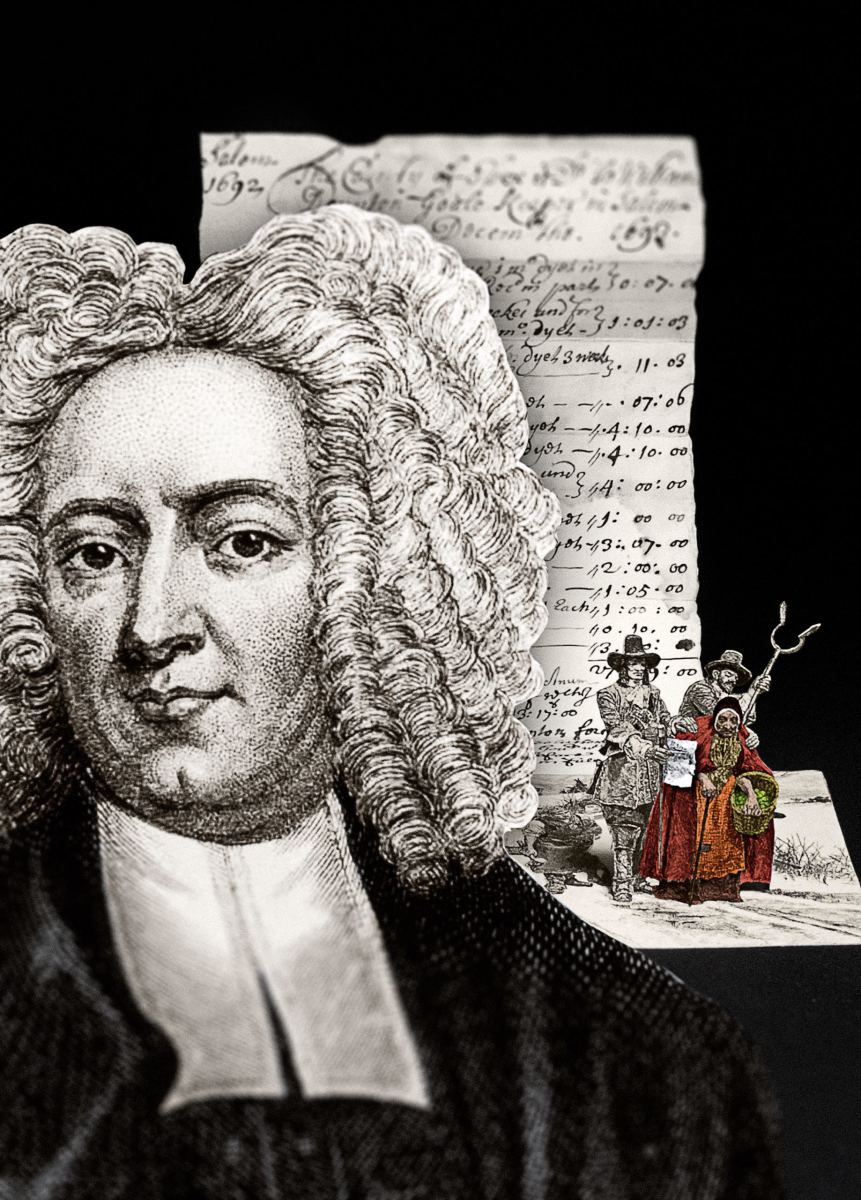


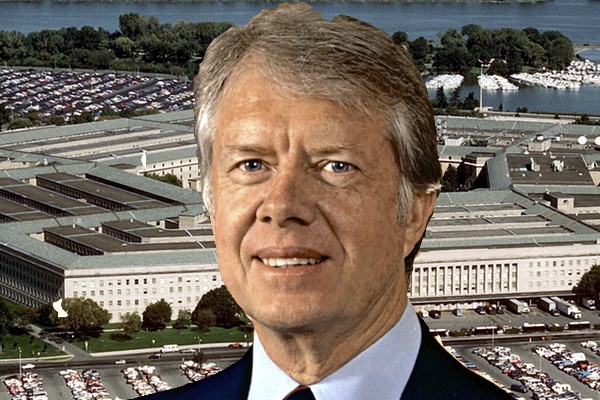




 El Imperio de Calibán