Feeds:
Entradas
Comentarios

Archive for marzo 2014

Pedestrian Modern: Shopping and American Architecture, 1925-1956

by Marshall Poe

New Books in History  March 13, 2014

David Smiley

David Smiley

Most of us have been to strip malls–lines of shops fronted by acres of parking–and most of us have been to closed 414HNi6tCpL._SL160_malls–massive buildings full of shops and surrounded by acres of parking. Fewer of us have been to open malls: small parks ringed by shops with parking carefully tucked out of sight. That’s because open malls–once numerous–have largely disappeared, having been replaced by strip malls, closed malls and, more recently, big-box stores.

As David Smiley points out in his wonderfully researched and beautifully illustrated book Pedestrian Modern: Shopping and American Architecture, 1925-1956 (University of Minnesota Press, 2013), the open mall was a response to a number of macro-historical, mid-twentieth century forces: the explosion of car culture, the decline of urban centers, the rise of suburbs, and, of course, mass consumerism. But he also shows that the open mall wasn’t just an banal machine for selling; it was a canvas upon which Modernist architects could create a uniquely American kind of Modernist architecture. The strip mall, the closed mall, and the big-box store may be artless, but the mid-century open mall certainly was not. It had style, as the many wonderful images in David’s book show.

Interestingly, the open mall is making a comeback. I visited one outside Hartford, Connecticut. Alas, it has none of the Modernist elements that made the original open malls so interesting. To me, it looked like a closed mall turned inside out.

Listen here

Read Full Post »

hnn-logo-new
America´s Dien Bien Phu Syndrome

by John Prados
Histrory News Network    March 12, 2014
Image via Wiki Commons.

Image via Wiki Commons.

March 13, 2014 marks the sixtieth anniversary of the day in 1954 when the Vietnamese revolutionaries known as the Viet Minh opened the Battle of Dien Bien Phu, which marked the end of the French imperial adventure in Indochina. General Vo Nguyen Giap, the Viet Minh commander, passed away just a few months ago and did not live to see this day. But Giap, who served as the defense minister of North Vietnam through the entire American War — and, indeed, many Vietnamese — always considered Dien Bien Phu their greatest moment.

It’s not hard to see why.

During America’s war in Vietnam, the North Vietnamese beneffitted from having a real army, trained over years, well-equipped by Chinese and Soviet patrons, and a well-entrenched state apparatus. At the time of Dien Bien Phu, by contrast, the Viet Minh controlled only portions of the land (outside of the major cities, naturally), faced economic challenges, and were already weary from years of bitter fighting. In addition, the logistical obstacles simply in mounting the effort to assault the remote French position were enormous.

Dien Bien Phu was a far-away mountain valley in the northwest quadrant of Vietnam, hundreds of miles from Viet Minh bases. Roads were few and mostly had not been maintained for a decade. To support an army there — and the Viet Minh numbered 50,000 men — required a scale of supply far beyond anything the Vietnamese had ever attempted. Their opponents, the French Expeditionary Corps, possessed all the advantages of a modern, Western army — tanks, guns, planes, elite paratroops and Foreign Legion units, sophisticated command control mechanisms, good intelligence regarding their adversary — and they fought in a region where the Viet Minh had made many fewer inroads with the population than in the coastal lowlands. The French had another major advantage: massive militaryaid from the United States, a torrent by comparison with Chinese and Soviet support for the Viet Minh.

But this did not mean the French expected victory to be easy at Dien Bien Phu. It was in many respects the final roll of the dice for the French war effort — and the generals knew it. Like their enemy, France had grown weary of the war. The mountain valley lay far from French bases too, and the total French lack of control of the ground in northwest Vietnam made Dien Bien Phu completely dependent on aerial supply. When Giap’s artillery opened a barrage on Dien Bien Phu’s airfield, the only way French troops could be resupplied was via airdrop. Within days Giap’s men captured positions that sealed it completely shut with anti-aircraft guns ringing the drop zone.

By then, the battle became an albatross around the French neck. Only American intervention in the form of Operation Vulture could have saved the French position. Washington struggled hard throughout the siege of Dien Bien Phu, and even after it ended, to craft conditions suitable for American military action. The effort to create a platform from which to intervene did not end with the Geneva agreements of 1954, or with the formation of the Southeast Asia Treaty Organization, or even with U.S. support for the nascent government of South Vietnam — and it ultimately led direct to America’s war in Vietnam.

The decades since Dien Bien Phu are littered with similar dramas. The typical production features a local ally — usually a government but sometimes an insurgent force — who possesses a modicum of power but is unstable, and an adversary (with varying degrees of power and determination) contesting some place the United States considers to have strategic importance. Today, the play is Crimea. Syria was yesterday. A year ago, Libya. Iraq (and its prelude). Afghanistan. Kosovo. Haiti. Somalia. Panama. Nicaragua. Lebanon. the Dominican Republic. The reviews of these productions can be left to others.

At Dien Bien Phu, the United States had a substantial capacity to act. But the lesson of Dien Bien Phu is that the critical variables lie in the stability of America’s local ally and in its own goals and interests, rather than U.S. firepower. At Dien Bien Phu American intelligence believed there was no reason the loss of the French garrison should affect the overall conduct of the war. But General Giap and Ho Chi Minh knew better. A weary American ally had decided the game was no longer worth the candle and wanted to get out of the war. That made Paris extraordinarily vulnerable to the impact of a military defeat in the Vietnamese mountains. Washington discovered it could not make Paris stick to the commitments the French made along the way as the U.S. strove to craft conditions for its intervention. Something similar appears to have happened in Afghanistan, where Hamid Karzai is backing away his own commitments to the United States.

In making their decisions on intervention, United States officials need to become much more sophisticated in their appreciations of the stability of local allies — and discerning of the goals and interests of those parties to conflict.

John Prados is a senior fellow of the National Security Archive in Washington, DC. His current ebook is Operation Vulture: America’s Dien Bien Phu. Read more of Prados’s work on his website. © John Prados, 2014

Read Full Post »

The Historian Who Unearthed ´Twelve Years as Slave´

New Yorker, March 7, 2014

Sue Eakin

Sue Eakin

Accepting the Oscar for Best Picture on Sunday—technically, it might have been Monday at that point—Steve McQueen took a moment to thank “this amazing historian Sue Eakin,” who “gave her life’s work to preserving Solomon’s book.” It was an unusual shout-out: we’re used to seeing Harvey Weinstein or God get thanked, not historians from Louisiana. But it’s safe to say that without Eakin, who died in 2009, at the age of ninety, none of us would be talking about Solomon Northup, or Patsey, or the other once-forgotten souls portrayed in this year’s Best Picture.

Eakin, who taught at Louisiana State University at Alexandria for twenty-five years, spent her career rescuing Northup’s memoir from obscurity. “There were five of us, and Solomon was the sixth,” Eakin’s son Frank said the other day, from his home in Texas. “There was never a time when he was not part of the conversation.” Eakin grew up near Cheneyville, Louisiana, the eldest of nine children, and discovered Northup when she was twelve. One summer day in 1931, her father, a planter, drove her in a flatbed truck to the nearby town of Bunkie, not far from the property once owned by Edwin Epps (the Michael Fassbender character). They were visiting Oak Hall Plantation, where her father had business with the owner, Sam Haas. Haas brought young Sue to the library on the second floor (“My mom was a big-time bookworm,” Frank says), where he handed her a dusty copy of “Twelve Years a Slave,” first published in 1853.

“I began reading the old book as rapidly as I could, becoming more and more excited with every page,” Eakin wrote later. “I recognized local place names like Cheneyville, where our mail was delivered.” The family names were familiar, too: the Tanners, the Fords, the McCoys. Eakin was rapt, but her father picked her up before she could finish reading. Back then, the book was in scant supply. Eakin didn’t find another copy until 1936, when she arrived at Louisiana State University and spotted the book at Otto Claitor’s Bookstore. She asked Mr. Claitor how much it cost. “What do you want that for?” he said. “There ain’t nothin’ to that old book. Pure fiction.” He sold it to her for twenty-five cents.

Eakin devoted the rest of her life to proving him wrong. As a white woman growing up in Jim Crow-era Louisiana, she had been forward-thinking about race. In 1944, she invited a black choir to sing at the Haas Auditorium, in Bunkie, causing community uproar. A burning cross landed on her front yard. After church one Sunday, she discovered some kids trying to set her house on fire. “I never let it worry me,” she later recalled. But her weapon of choice was history, and Solomon became her obsession. (Her many other books include histories of Cheneyville and Rapides Parish.) She wrote her master’s thesis on “Twelve Years a Slave,” and, in 1968, published the first modern edition. But her research continued. She contacted descendants of Northup and Epps, and helped preserve a side house on Epps’s former property. (In the movie, Chiwetel Ejiofor and Brad Pitt are shown building it.)

With state funding, she developed the Northup Trail, a tour of key locations from the book. “I said, ‘Mom, I know how much this means to you.’ But I didn’t want her expectations to be unmet,” Frank said. “All you had was a bunch of rusty signs. Not many people showed up.” Nevertheless, Eakin believed that someday Northup’s story would get its due. Frank recalled going to courthouses and descendants’ houses as a child. “If she had any news of anybody that could contribute, we were off to the races in the car with the fifty-pound tape recorder and an old camera,” he said. In 1983, she even wrote a musical based on Northup’s life.

Eakin spent her last years working on an expanded edition of “Twelve Years a Slave,” including the decades of research she had accumulated since 1968. But her health began to decline, and her eyesight was poor. Frank’s sister helped her edit the new version, and, in 2007, at the age of eighty-eight, Eakin published the enhanced edition, with maps, pictures, and historical notes. She wrote in the acknowledgments, “Now Solomon and I can rest.” Two years later, she died.

Every couple years, Eakin would get a phone call from someone interested in turning “Twelve Years a Slave” into a movie. Nothing came of it. (Besides, the story was in the public domain.) The year she died, there was another call—Frank spoke to someone and shrugged it off. It wasn’t until 2011, two years after his mother’s death, that Frank heard that Brad Pitt’s production company, Plan B, was making the film. He offered to help however he could. Steve McQueen flew Frank to the Hollywood première, where they discussed his mother’s contribution: “Steve said, ‘There wouldn’t be a movie if it wasn’t for your mom’s discovery when she was twelve.’ ”

Frank spent Oscar night at a viewing party in Texas. “When Brad Pitt introduced Steve, everything was complete silence,” he said. Hearing his mother’s name, he was dumbstruck. “I couldn’t believe my ears. I looked around and said, ‘Did did he say that?’ ” As the publisher of his mother’s edition and the audiobook, Frank has been busy in the wake of the film’s success. But mostly he’s happy to see his mother posthumously validated: “She never sought personal publicity. Her passion was history, getting the history out.” Even the Northup Trail is getting refurbished—no more rusty signs. “Yesterday, I was on the phone with the tourism commission,” Frank said. “They see this as a large tourism opportunity.”

Photograph: Courtesy of Frank Eakin.

Read Full Post »

index2The Plot to Kill Jeff Davis

By Ronald S. Coddington

New York Times, March 10, 2014

Samuel Kingston, a Union soldier and prisoner of war, languished in a dungeon on a late winter’s day in March 1864. The cell was in the basement of infamous Libby Prison in Richmond, Va., the capital of the Confederacy. A severe cough and cold racked his body. His cellmates were similarly affected. Ten in all, they were crammed into a dank, drafty cell not much larger than a common tent. Rebel guards provided Kingston and the others with nothing more than scraps of food for subsistence and an open bucket for a toilet. If some of the guards had had their way, the prisoners would be left to rot in the filth and cold of the converted brick warehouse.

Four of the cellmates were enlisted men of color, who were often abused, if not executed, by their Southern captors. But in the minds of the guards, the other six, including Kingston, had done something even more heinous: They were implicated in an alleged assassination attempt against the Confederate president, Jefferson Davis and members of his cabinet.

The mysterious plot to take out the senior leadership of the South was uncovered in papers found during a Union cavalry raid on Richmond. The stated purpose of the coup de main was to free federal troops held in Libby Prison and the nearby Belle Isle camp.

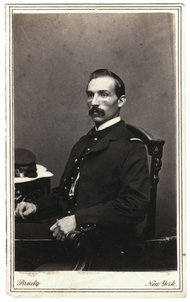
Collection of the author Samuel Kingston sat for this portrait in the photographer Mathew Brady’s New York City studio, circa 1863.

Samuel Kingston sat for this portrait in the photographer Mathew Brady’s New York City studio, circa 1863. Collection of the author.

The raid began on the evening of Feb. 28, 1864. A column of handpicked troopers, 3,584 sabers strong, crossed the Rapidan River at Ely’s Ford, about 65 miles north of Richmond. A half-dozen artillery pieces and a few supply wagons and ambulances accompanied the cavalrymen.

The brain behind the audacious operation was a junior cavalry commander in the Army of the Potomac who worked back channels to sell the plan to the Lincoln administration. Hugh Judson Kilpatrick, a West Point-educated brigadier driven by reckless personal ambition, had a penchant for suicidal charges and pushing his troopers to exhaustion. “Kill Cavalry,” as he became known, had started his career as a horse soldier in the summer of 1861 when he was named lieutenant colonel of the Second New York Cavalry. An amalgamated regiment composed of recruits from New York, New Jersey, Connecticut and Indiana, six of the 10 companies hailed from the Empire State.

Kingston was a latecomer to the regiment. A meticulous bachelor who worked as physician in the bustling community of Oswego, N.Y., he joined the Second as an assistant surgeon in May 1863. He had his baptism to war during the seven-week-long Gettysburg Campaign, although the regiment did not fight in the eponymous three-day battle that broke an unprecedented streak of victories by Confederate Gen. Robert E. Lee and his Army of Northern Virginia.

Half a year later, Kingston mounted his horse and joined his comrades on Kilpatrick’s Raid. Word of the incursion arrived in lightly defended Richmond before the Yankees. The Confederate War Department mobilized an irregular force of soldiers, government workers and volunteers to resist the invaders.

Library of Congress Artist Edwin Forbes sketched Kilpatrick’s Raid to Richmond, circa Feb. 28 to Mar. 11, 1864.

Artist Edwin Forbes sketched Kilpatrick’s Raid to Richmond, circa Feb. 28 to Mar. 11, 1864.
Library of Congress

On Feb. 29, during the first full day of the raid, Kilpatrick divided his troops into two columns. He rode hard with the main body of about 3,000 men south to Richmond, while a second, smaller column of 500 men headed to Goochland, northwest of the capital.

Kingston and the rest of the Second were part of the smaller column. It was under the command of Ulric Dahlgren, a 21-year-old colonel and son of a career Navy officer, John Dahlgren. “Ully” spent his boyhood steeped in all things military, and distinguished himself in Union blue. He had led a successful reconnaissance raid into Confederate-held Fredericksburg on Nov. 9, 1862; later, at Gettysburg, he had suffered a severe wound in the foot that resulted in the amputation of a leg below the knee. Still, he soldiered on.

Kilpatrick and his men encountered Richmond’s outermost defenses on March 1 and found them stronger than anticipated. “Kill Cavalry” balked. He turned east and skirmished with Confederates while he waited for Dahlgren’s column to arrive.

Dahlgren, unaware of Kilpatrick’s withdrawal, continued on to Goochland and made a dash for Richmond. According to Lt. Col. Mortimer B. Birdseye of the Second, “This regiment has the honor of being the only Union regiment that passed the outer line of defenses surrounding Richmond during its occupation by Confederate forces.” But Dahlgren and his men ran into stiff resistance as they closed in on the capital. Casualties mounted, and Kingston went to work to save as many men as he could.

Dahlgren pressed to within two-and-a-half miles of the heart of the capital when the defenders finally broke their momentum. Dahlgren acted to save his command. “It soon got too hot, and he sounded the retreat, leaving forty men on the field” stated one of Dahlgren’s aides, 2nd Lt. Reuben Bartley. Kingston, who was uninjured, remained with the wounded as Dahlgren and the survivors fled.
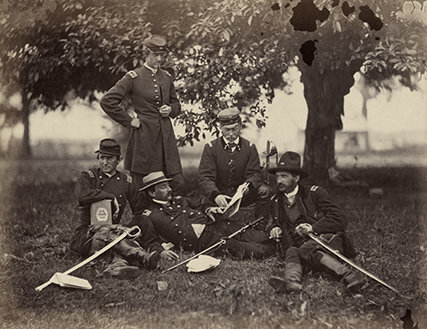
Ulric Dahlgren stands in “Studying the Art of War,” by photographer Alexander Gardner, circa June 1863. Library of Congress.

Ulric Dahlgren stands in “Studying the Art of War,” by photographer Alexander Gardner, circa June 1863. Library of Congress.

Dahlgren continued on. By now night had fallen, and in the confusion caused by the darkness and enemy activity the column became separated. One section eventually made its way back to Kilpatrick. The other section, under the command of Dahlgren, rode into an ambush arranged by about 150 Confederate cavalrymen and other local volunteers. They descended on the Yankee raiders. Dahlgren was struck and killed by four bullets, and the rest of his troopers were dispersed or captured.

Victorious Confederates found Dahlgren’s lifeless body and stripped it of clothing and valuables, including his wooden artificial leg. One man hacked off one of Dahlgren’s fingers to take a ring. Another, 13-year-old William Littlepage, came away with a cigar case, a memorandum book and a few papers.

Littlepage and his comrades read one of the papers with fascination. “Special Orders and Instructions” provided details about the raid. One statement stood out among the rest: “The men must be kept together and well in hand, and, once in the city, it must be destroyed and Jeff Davis and his cabinet killed.”

The papers were forwarded through military and political chains of command and ultimately to Davis. Publication of the contents days after they were discovered rocked Richmond. Calls for retribution and retaliation rippled across the South. The North promptly denied any assassination plans and declared the documents to be forgeries.

Dahlgren’s body, which had been unceremoniously dumped in a muddy grave near the place he fell, was disinterred and put on display in Richmond. “Large numbers of persons went to see it. It was in a pine box, clothed in Confederate shirt and pants, and shrouded in a Confederate blanket,” reported The Richmond Whig on March 8, 1864.

While this circus played out on the streets of the capital, Kingston and his white cellmates were informed that they had been condemned to death as felons for their role in the alleged assassination attempt. “This news appeared to have a very depressing effect on Dr. Kingston,” noted Lieutenant Bartley, a fellow prisoner.

Kingston’s cough and cold worsened, and he lost his appetite. On March 21, as he lay near death, the Confederates removed him from his cell and sent him North. He survived the trip home, and with good food and care came back to life. He eventually returned to the regiment, was promoted to full surgeon, and served in this capacity until the end of the war.

The Confederates never followed through on their promise to execute the prisoners, which was most likely an idle threat by overzealous guards. But their ill treatment exacted a grim toll. According to Bartley, of the six officers imprisoned in the dungeon at Libby Prison, only three survived. He did not mention the fate of the four black soldiers.

Kingston was forever damaged by the ordeal. Back home in Oswego, he was frequently incapacitated by illness, and often doctored himself. His mental health appears to have suffered as well. An acquaintance described him as “a very odd & peculiar person.” Still, he managed to practice medicine and work as a druggist. A cerebral hemorrhage ended his life in 1889, at age 53. His wife, Anne, whom he had married in 1875, and two daughters survived him.

Follow Disunion at twitter.com/NYTcivilwar or join us on Facebook.


Sources: Samuel T. Kingston military service record, National Archives and Records Administration; New York Monuments Commission, “Final Report on the Battlefield at Gettysburg”; John Dahlgren, “Memoir of Ulric Dahlgren”; Philadelphia Inquirer, March 4, 1864; Frank Moore, “The Rebellion Record: A Diary of American Events”; Richmond Whig, March 8, 1864; The New York Times, March 10, 1864; The War of the Rebellion: A Compilation of the Official Records of the Union and Confederate Armies; Anne E. Kingston pension record, National Archives and Records Administration.


Ronald S. Coddington

Ronald S. Coddington is the author of “Faces of the Civil War” and “Faces of the Confederacy.” His most recent book is “African American Faces of the Civil War.” He writes “Faces of War,” a column for the Civil War News.

Read Full Post »

51+epS1rw0L._SL160_Americans talk a lot about the flow of Mexican immigrants across their southern border. To some that flow is seen as patently illegal and dangerous. To others it’s seen as unstoppable and essential for the functioning of the U.S. economy. Everyone agrees that something must be done about it though, in fact, little is ever done. It’s an American problem that seems to have no American solution.

But, as José Angel Hernández points out in his pathbreaking book Mexican American Colonization during the Nineteenth Century: A History of the U.S.-Mexico Borderlands (Cambridge University Press, 2012) , it’s not just an American problem: it’s also a Mexican one and always has been. In the wake of the Mexican American War (1846-48), the United States appropriated a huge chunk of what was Northern Mexico. This act of–what else can you call it?–naked imperialism left a lot of Mexican citizens stranded across the new border. The Mexican authorities might not have been able to get their territory back, but they were quite interested in getting their countrymen back. In pursuit of this objective, they mounted repatriation campaigns designed to do just this. They were largely unsuccessful. The reason had less to do with the attractiveness of returning to Mexico–the Americans were not doing a terribly good job of protecting the Mexicans against the Native Americans who basically controlled the region–than it did with the corruption of the Mexican officials who ran the campaign. It’s a fascinating and largely forgotten story. Listen in.

Read Full Post »

Nina Simone: The Antidote to the «We Shall Overcome» Myth of the Civil Rights Movement 

by Ruth Feldstein

HNN   March 3, 2014


When it comes to civil rights, it is the season of fiftieth anniversaries: this past June was the fiftieth anniversary of the murder of activist Medgar Evers. In August, Americans marked fifty years since the March on Washington, and in September, the horrific deaths of Addie Mae Collins, Denise McNair, Carole Robertson and Cynthia Wesley, four young girls killed when Ku Klux Klan members planted a bomb at the 16th Street Baptist Church in Birmingham, Alabama. The months ahead will bring the fiftieth anniversary of Mississippi Freedom Summer; the brutal murder by members of the Ku Klux Klan in Mississippi of civil rights workers James Chaney, Andrew Goodman, and Michael Schwerner; and in July, passage of the Civil Rights Act.

For many Americans, these anniversaries — of both heady times and painful moments — are ultimately reassuring. Yes, the country was wracked by violence, as African Americans were subjected to bombings, beatings, dogs, hoses, and murder. But the now-iconic image of King at the March on Washington, and a story of civil rights that culminates in passage of landmark legislation, affirm success. As President Obama put it in September when he commemorated the murder of four young girls in Birmingham, the bombing had “galvanized Americans all across the country to stand up for equality and broadened support for a movement that would eventually lead to the passage of the Civil Rights Act of 1964.”

But there are other anniversaries worth remembering that offer another narrative of the civil rights movement, one easy to overlook. Perhaps not surprisingly, this narrative is a less comfortable one, illuminating the difficult feelings about racism, the dashed dreams, and the demands for autonomy that were evident in black communities — in the north as well as the south — during black freedom struggles. In March and April of 1964, singer/songwriter Nina Simone gave several performances at Carnegie Hall. In Concert, the seven-song album that came from these recorded concerts, marked a crucial transition in Simone’s career: the Southern-born and classically-trained musician, known for her “supper club” music and as a “songstress for the elite,” engaged directly with the politics of black liberation, and became one of the entertainers most closely associated with black activism. In “Pirate Jenny” Simone took Kurt Weill and Bertholt Brecht’s song about class relations in London and transformed it into a poor black woman’s fantasy of vengeance against white townspeople in a “crummy southern town.”

In “Go Limp,” she spoofed the sexual antics among nonviolent civil rights protesters, and thus spoofed nonviolence itself; in “Old Jim Crow,” she declared that Jim Crow had “been around too long” and “was all over now.”

The album reached its musical, lyrical and political peak with track 7, “Mississippi Goddam.” Simone had written the song several months earlier, in September, just after hearing about the church bombing in Alabama. (She later said that it came to her in a “rush of fury, hatred and determination” as she “suddenly realized what it was to be black in America.”) “Mississippi Goddam” was a political anthem. With an upbeat tempo, the “show tune,” as Simone described it, offered incendiary lyrics filled with anger, despair, and insistence. “Me and my people are just about due,” sang Simone, with urgency. She rejected the notion that race relations could change gradually; she discarded the myth that discrimination only existed in the South; and she shattered the assumption that African Americans would patiently use the legislative process to seek political rights. As she declared toward the end of “Mississippi Goddam”:

But this whole country is full of lies
You’re all gonna die and die like flies
I don’t trust you anymore
You keep on saying “Go Slow.”

Coming less than a month after the March on Washington for Jobs and Freedom in Washington, D.C. and Martin Luther King’s now-iconic “I have a dream” speech, Nina Simone provocatively departed from conventional wisdom about civil rights. The anniversary of this album matters because in a moment that many people today remember as the high water mark of liberal, interracial, church-based activism that culminated in passage of landmark civil rights legislation, Simone imagined another kind of black freedom, one that a few years later, would widely be known as black power. Contrary to the neat historical trajectories which suggest that black power came late in the decade and only after the “successes” of earlier efforts, Simone’s album makes clear that black power perspectives were already taking shape and circulating widely — in organizations, but also on vinyl albums that music fans played around the world. Tied inexorably to the March on Washington and the church bombing in Birmingham, In Concert is an album that expressed, and helped to transform black activism in the 1960s.

Nina Simone was not a solitary figure, and the album that she recorded fifty years ago did not come out of nowhere. In Concert is a window into a world beyond prominent, now-celebrated leaders (mostly male), and public protests. Hers are not the melodies that crowds have recuperated at recent fiftieth anniversary celebrations. But to remember In Concert is to remember that “civil rights” never meant just one kind of activism and that “We Shall Overcome” was not the only soundtrack to the movement. To mark this anniversary is to mark the swirling and contradictory ways Americans from all walks of life envisioned freedom in the early 1960s, and the ways that they expressed these political demands imaginatively as well as with marches and boycotts.

Ruth Feldstein is Associate Professor of History at Rutgers University, Newark and the author of How it Feels to Be Free: Black Women Entertainers and the Civil Rights Movement.

Read Full Post »

« Newer Posts